
Smaller is not always better
Quick facts
- CPU:
- ARM 710T
- RAM (KB):
- 8192
- Storage (MB):
- -
- Display:
- Greyscale LCD with 480x160 resolution
- Operating system:
- Epoc32/Symbian 5
- Year introduced:
- 1999
- Power source:
- Built-in rechargeable battery
- Connectivity:
- Serial docking connector and IrDA
- Dimensions (mm):
- 157×79×17
- Weight (g):
- 199
- Built-in apps:
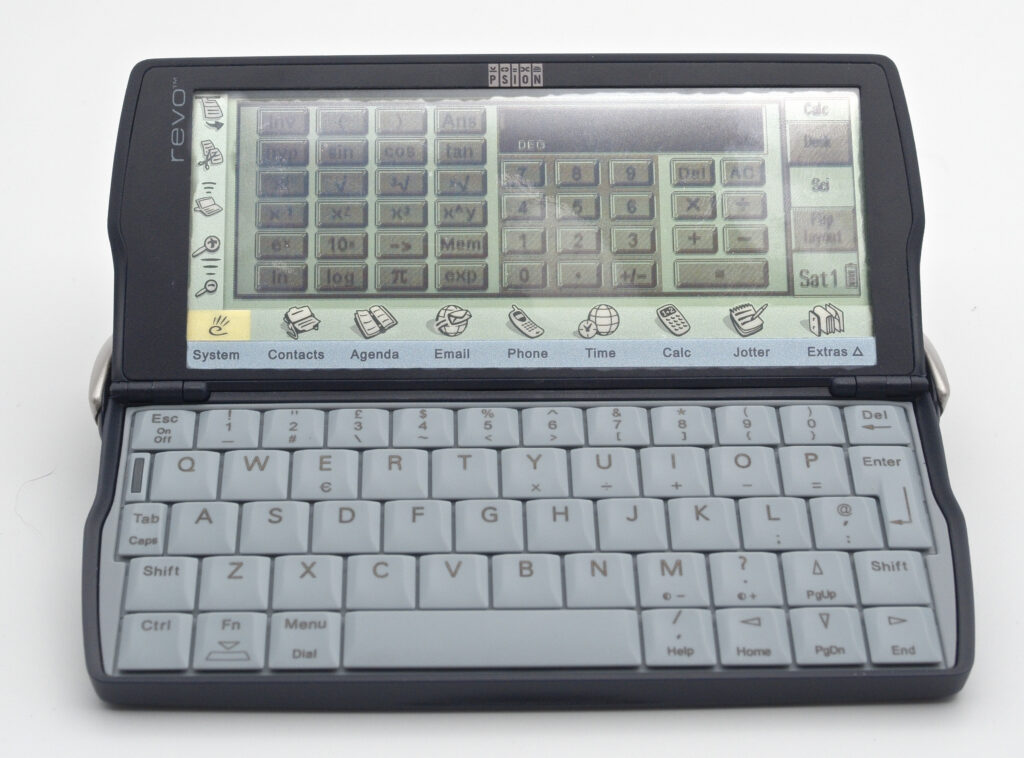
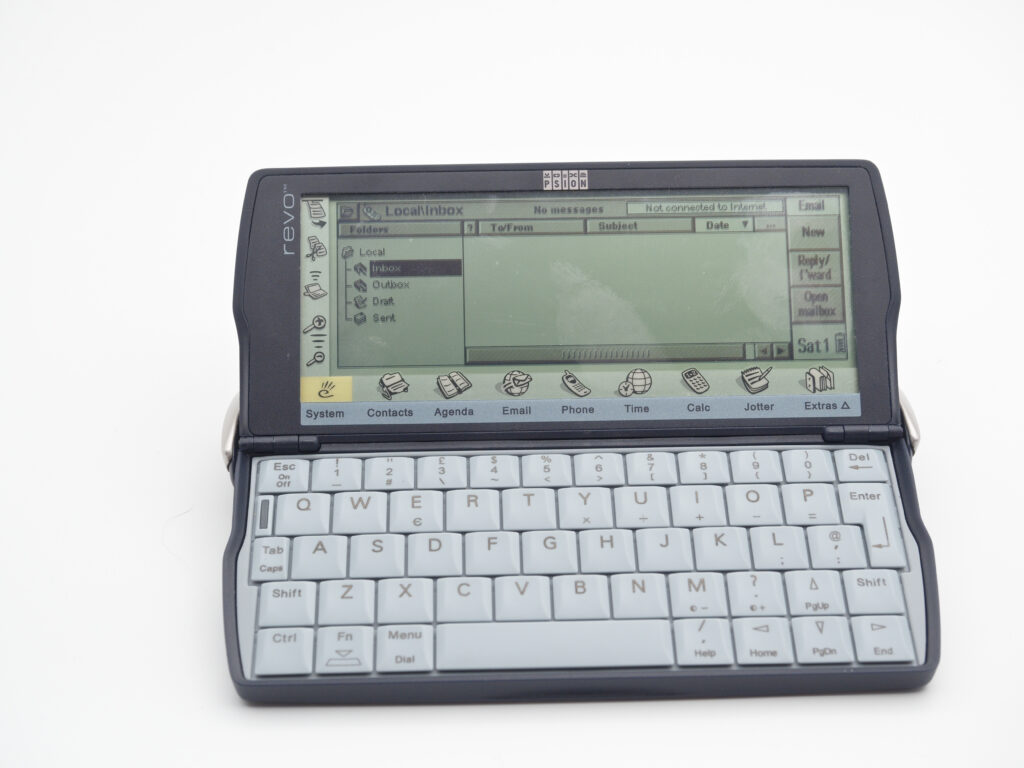
- Agenda, Jotter, Phone, Contacts, E-mail, Calc, Word, Sheets
- Input method:
- Keyboard and stylus
Introduction
Psion, one of the true pioneers in handheld computing, needed something that could compete with the increasingly popular line of shirt-pocketable PDAs from Palm. The year is 1999, and competition in the PDA market is fierce. Palm and Handspring have captured a significant share of the market, and Microsoft—together with various hardware manufacturers—is also aiming to establish Windows CE as a major platform for stylus-driven handhelds.
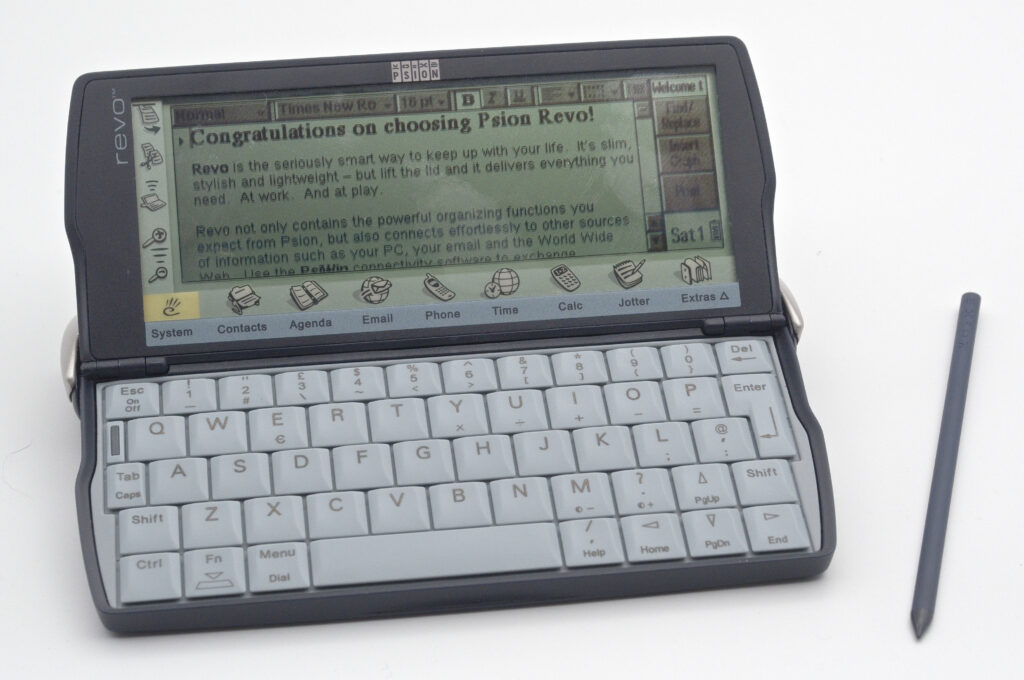
Psion had released its highly successful Series 5 and Series 5mx two years earlier. While often described as “technically perfect”, they were arguably too large to comfortably fit in a shirt pocket. Enter the Psion Revo, which can essentially be described as a miniaturised Series 5mx.
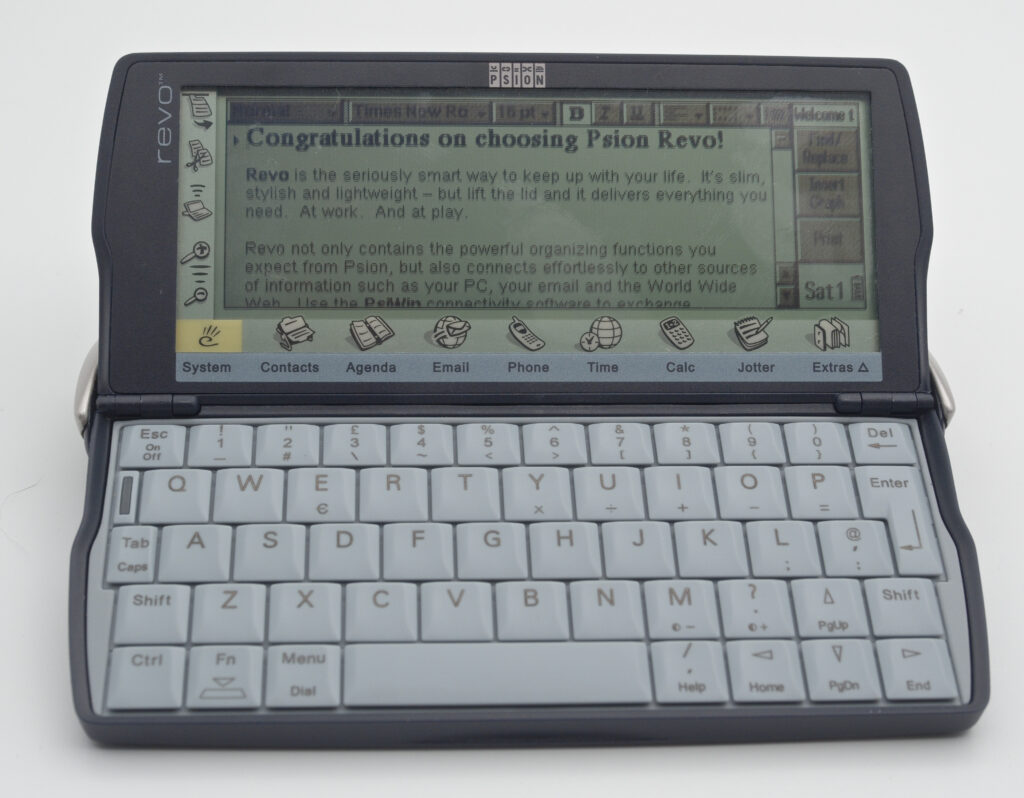
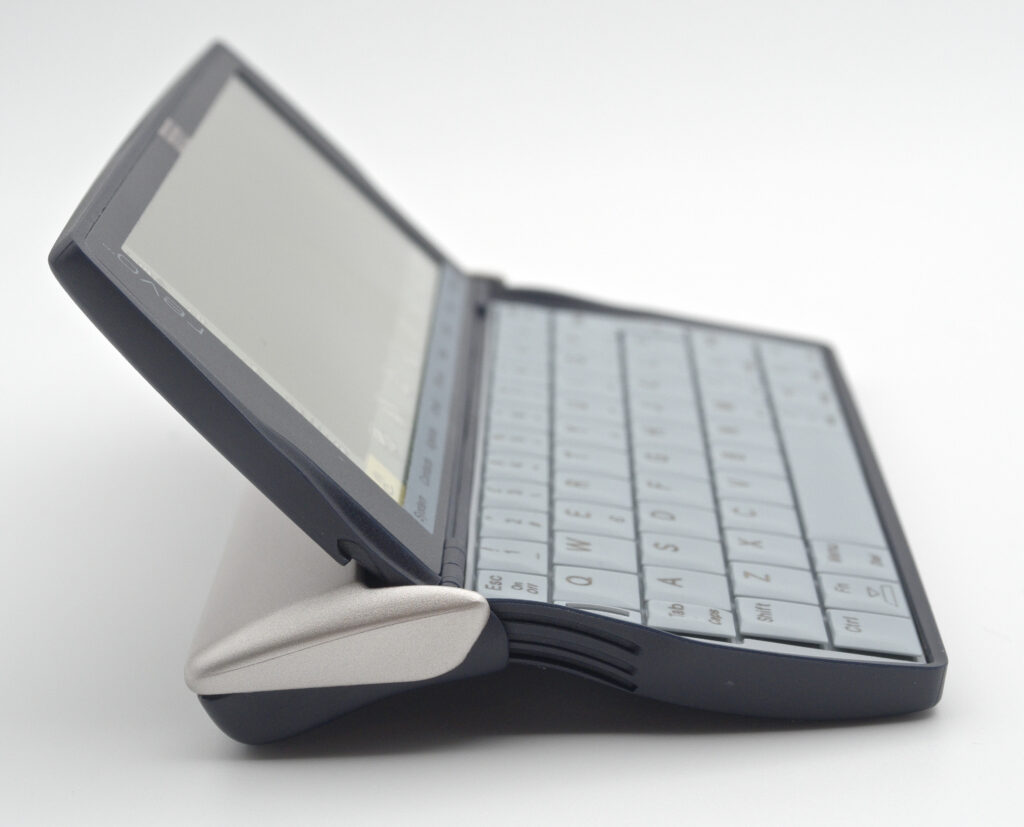
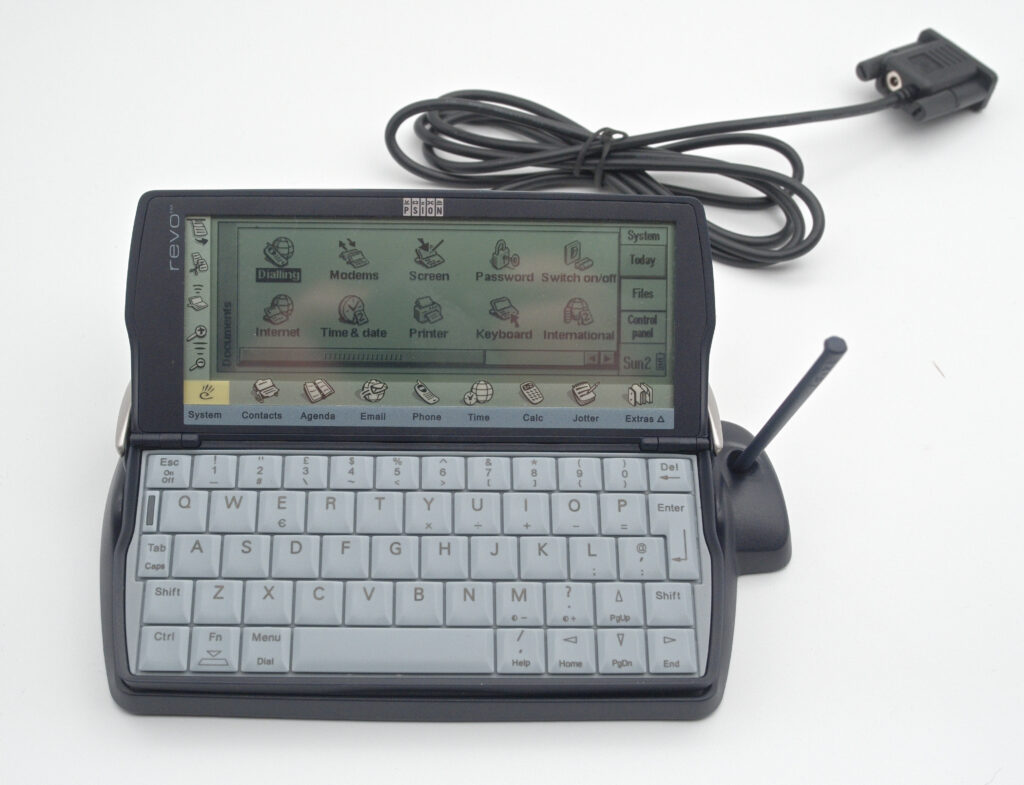
To achieve this reduced size, Psion made several compromises. The most obvious are the smaller screen and keyboard. Less obvious changes include the use of a non-user-replaceable rechargeable battery, the removal of the CompactFlash expansion slot, the lack of a backlight, and a simpler plastic stylus.
In hindsight, the Revo can also be seen as a sign that Psion was struggling to adapt to a rapidly changing market. The Psion Revo (and the later Revo Plus) would become the last true consumer-oriented PDA from the company, before it shifted its focus towards enterprise and industrial markets.
Hardware
The Revo is powered by an ARM CPU (ARM710T) running at 36 MHz and was available with either 8 MB or 16 MB of RAM. The 16 MB model was marketed as the Psion Revo Plus, addressing one of the main limitations of the original version.
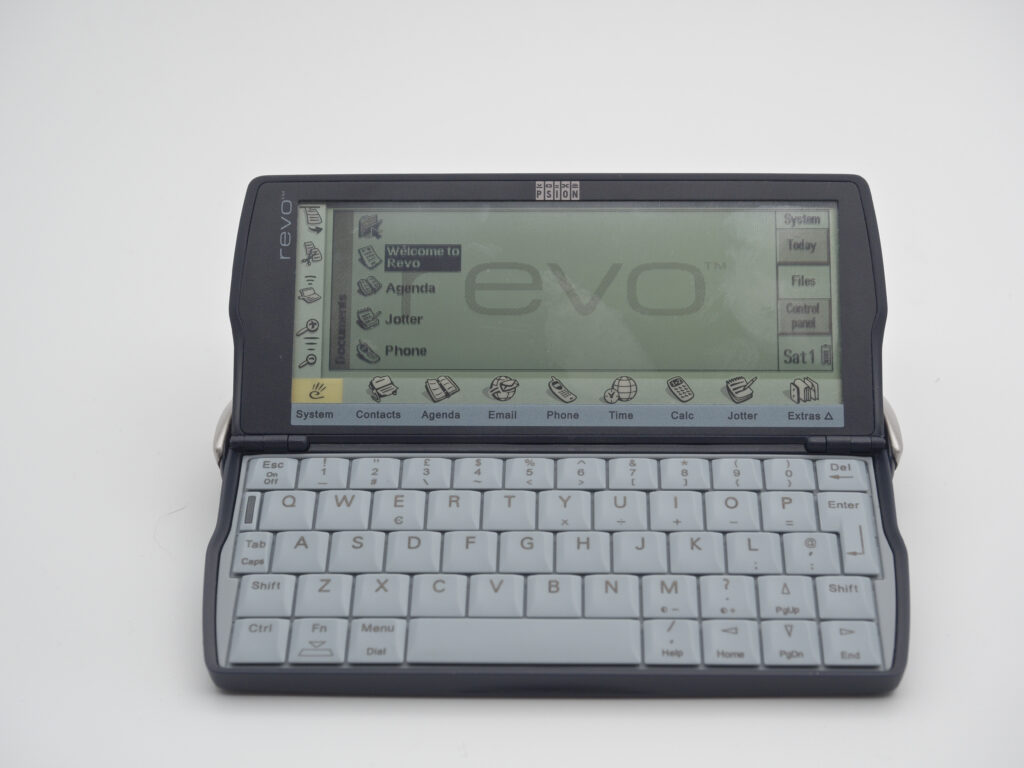
It features a greyscale LCD display with a resolution of 480 × 160 pixels (compared to 640 × 240 on the Series 5mx). Notably, the display lacks a backlight, which makes the device difficult to use in low-light conditions.
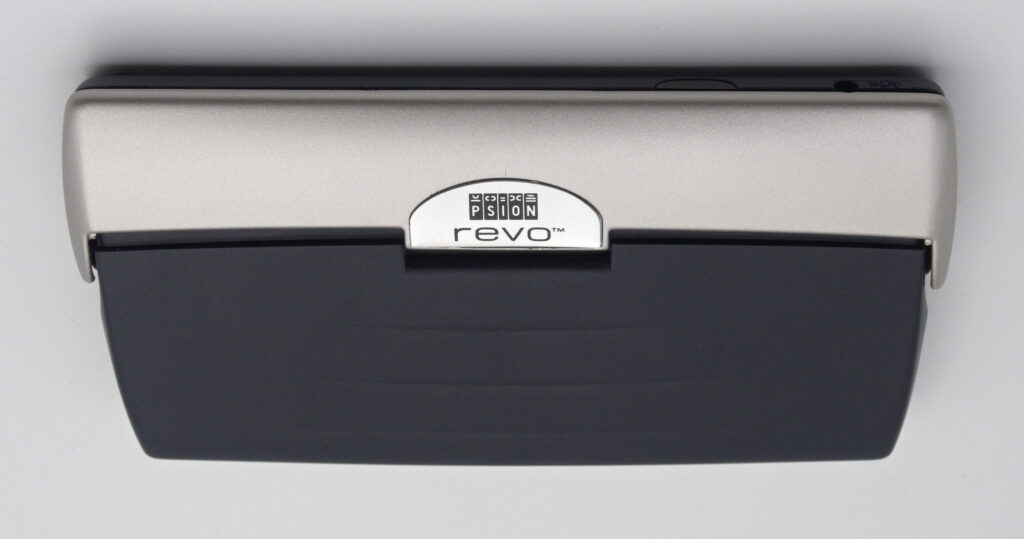
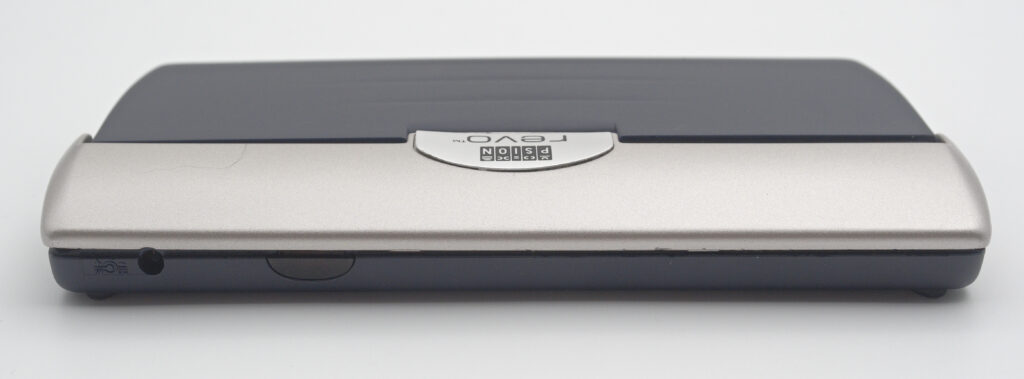
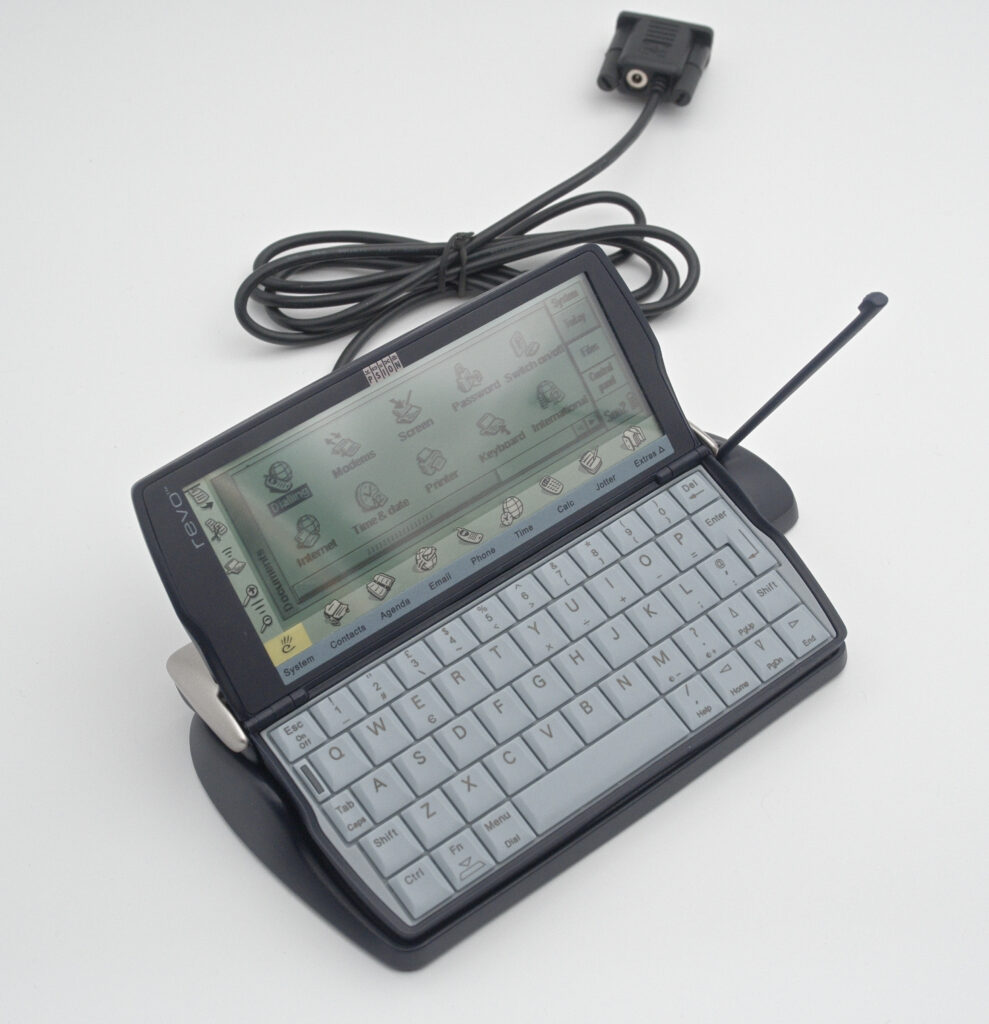
Input is provided via a compact QWERTY keyboard and a stylus. The device connects to a PC using a proprietary serial docking connector located at the bottom of the unit, typically used together with the supplied docking station.
Wireless communication is supported via an integrated IrDA transceiver, which in practice serves as the only cable-free method of transferring data.
Unlike earlier Psion devices, the Revo has no expansion slot of any kind. This significantly limits storage and backup options compared to the Series 5mx, which supported CompactFlash cards.
Software
The Revo runs EPOC32, a multitasking operating system with system-wide features such as zooming and clipboard-based copy-and-paste between applications.
The built-in applications form a comprehensive suite of PIM and office tools, including word processing, spreadsheets, and database functionality. Compared to the Series 5mx, the Revo ROM lacks the Sketch application. However it can easily be installed by the user. A notable feature is the ability to embed objects—such as graphs from the spreadsheet—directly into documents.
As the Revo lacks any form of expansion storage, all software must be installed via the serial connection using the PsiWin software supplied on CD-ROM.
In use
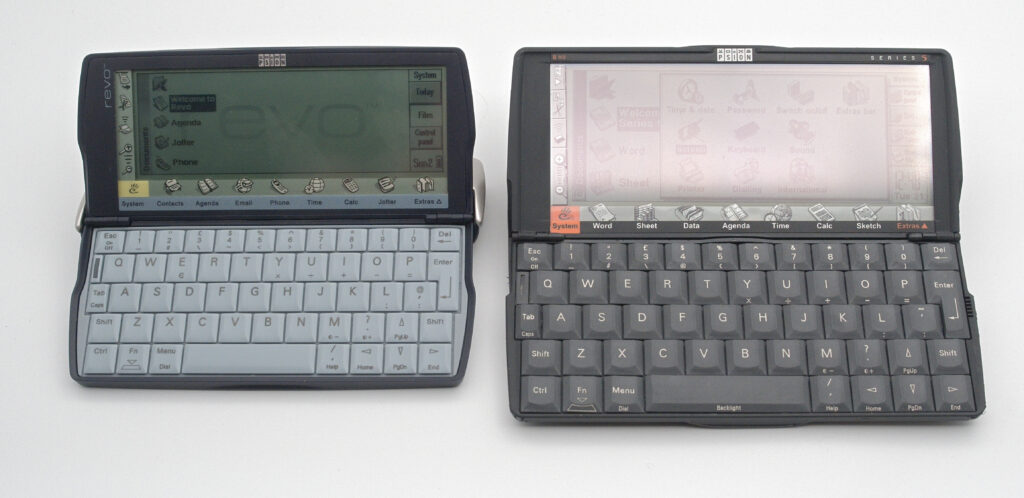
As the Revo can be seen as a scaled-down version of the Series 5mx (represented in my collection by the rebranded Ericsson MC218), it is natural to compare the two.
While the Series 5mx stands out as a masterpiece of hardware engineering—particularly due to its sliding keyboard mechanism—the Revo feels more compromised. The keyboard is notably stiff, with very little key travel. If it were not for the audible click from the built-in speaker, it would sometimes be difficult to tell whether a keypress has been registered.
The casing also appears to be made from a less premium type of plastic, contributing to an overall impression of reduced build quality. At an introductory price of USD 399, however, it was not positioned as a budget device.
The lack of a backlight further limits usability, especially compared to competing devices from Palm and Windows CE manufacturers.
That said, the software experience remains excellent. The same powerful and elegant EPOC environment found on the Series 5mx is fully present, and virtually everything a user might need is either built into ROM or available on the included CD-ROM.
Curator’s note
The Revo was the first Psion PDA to feature a built-in rechargeable battery, which unfortunately also makes it one of the most problematic models to maintain today.
Unlike earlier Psion devices, there is no removable battery or backup cell. If the battery is fully depleted, all data is lost. After more than two decades, the original NiMH cells are inevitably dead, as was the case with both of my units.
Due to the compact construction and relatively fragile casing, disassembly is not straightforward. Once inside, however, it is quite feasible to construct a replacement battery pack using two AAA NiMH cells, reusing the original wiring.
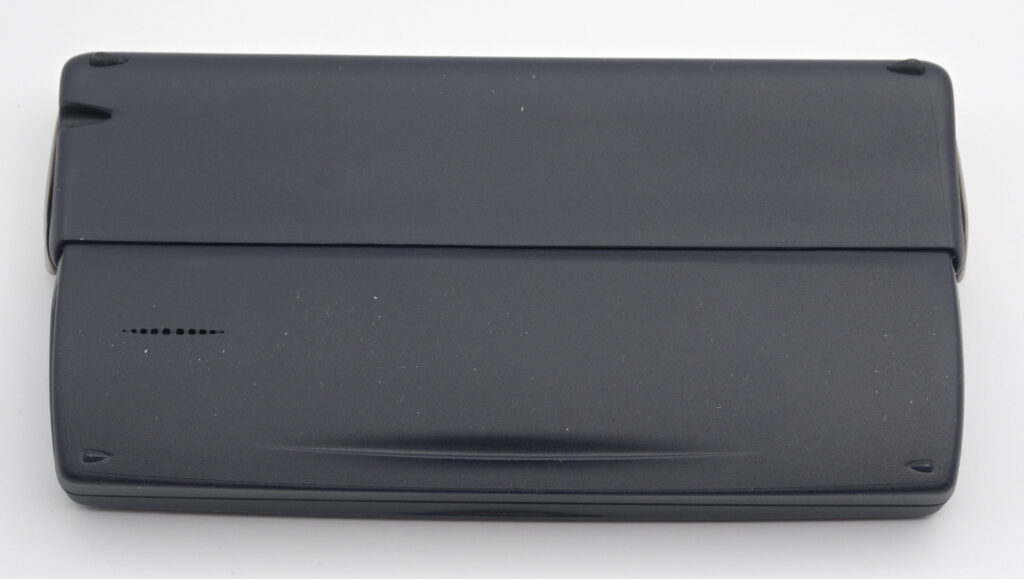
Reassembling the unit properly, on the other hand, is significantly more challenging. I have so far not managed to achieve a perfect result, which may be noticeable in the photographs.
As the last true PDA from Psion, the Revo is an essential part of the collection.
It also represents an interesting moment in time, when competition in the PDA market had intensified to the point where Psion needed to rethink its approach. Their response was to prioritise portability and reduce the price (approximately USD 100 less than the 5mx). However, these changes resulted in a device that, while more compact, is arguably less enjoyable to use than its larger predecessor.
References
Wikipedia page on Psion Revo
PsionWelt article on the Revo and Revo Plus (in German) archived by Wayback machine
Chapter 1 of Psion Power Buch – an excellent overview of all handheld computers from Psion, including the revo.