
The first commercial smartphone
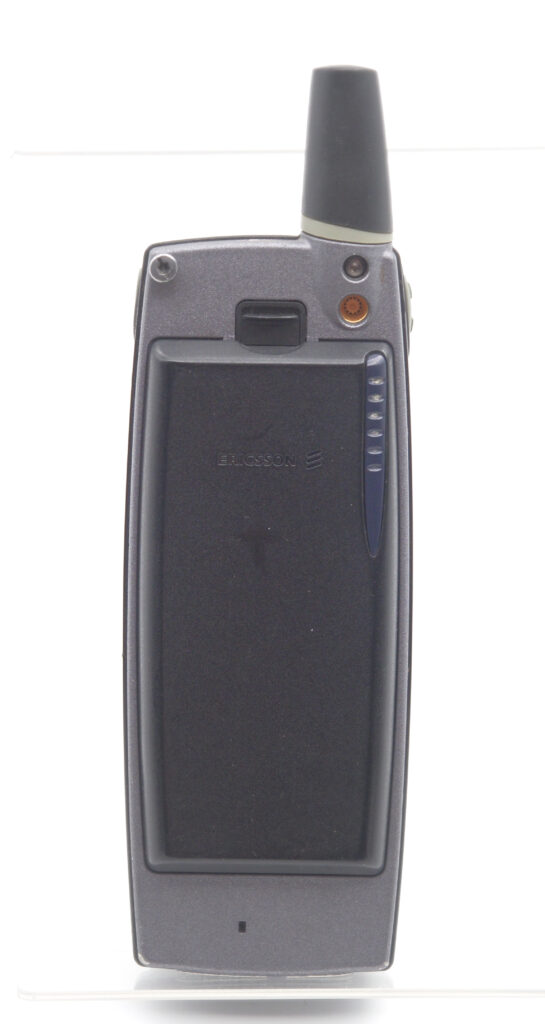
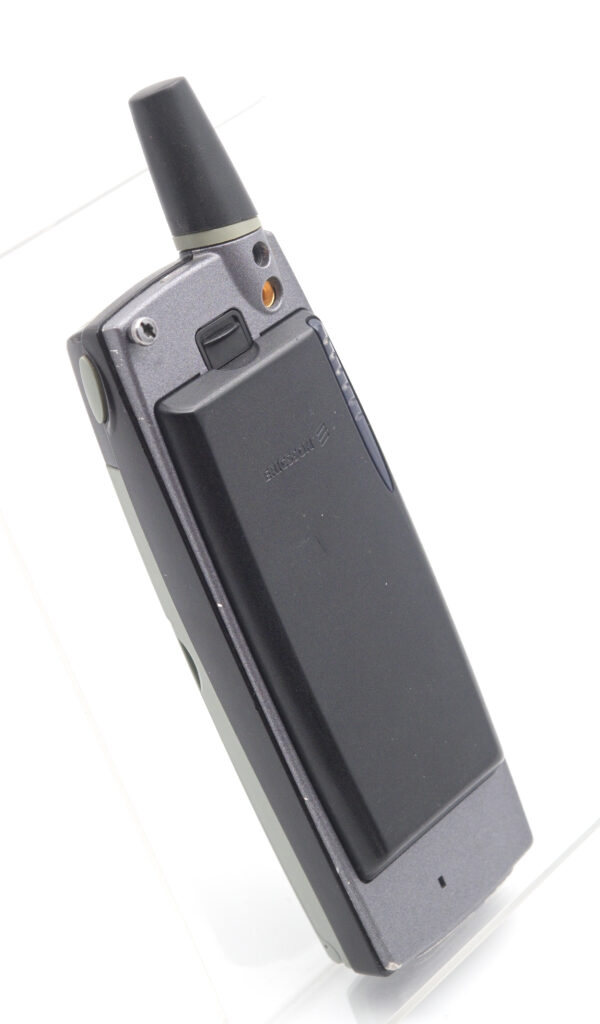
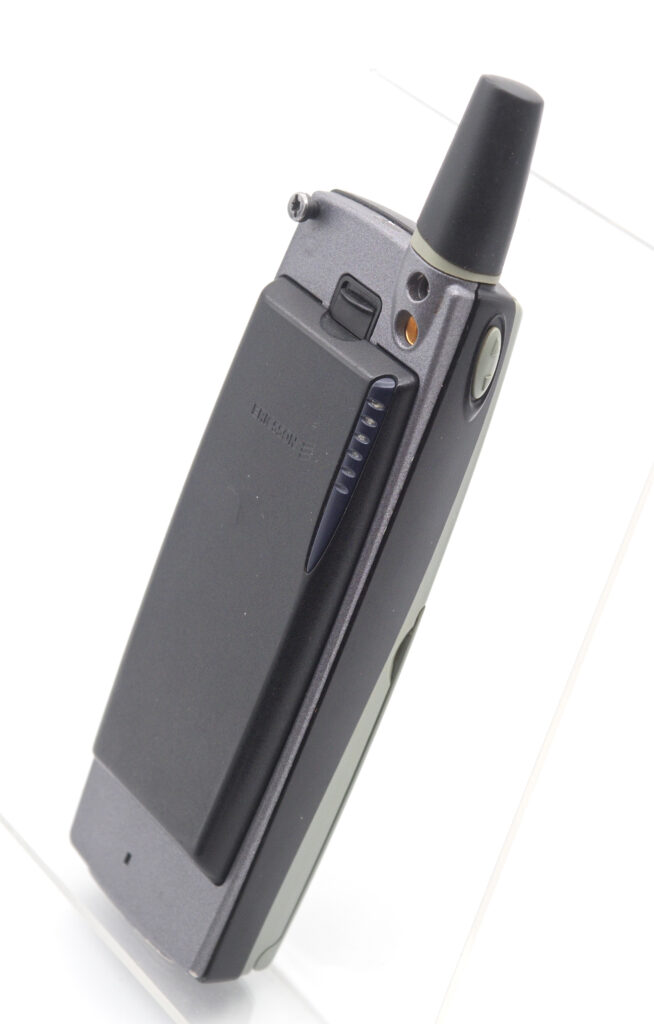
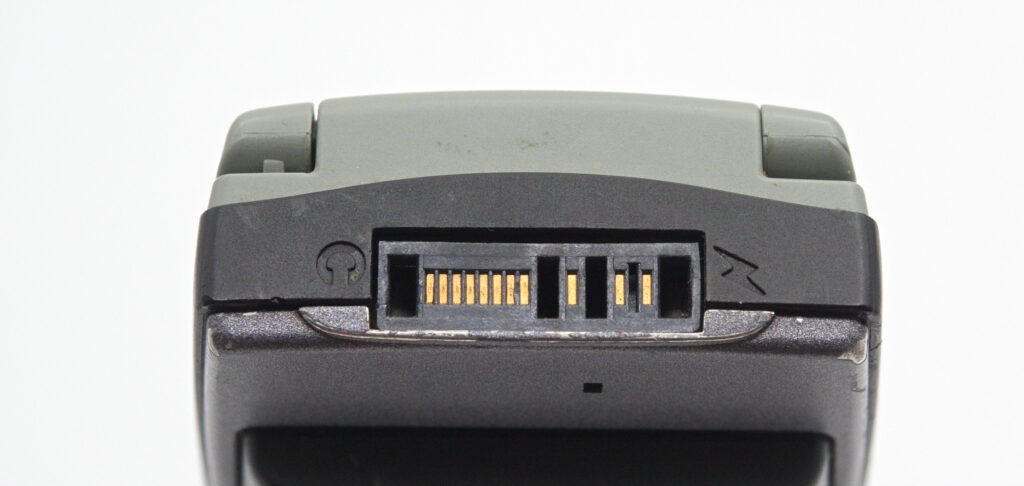
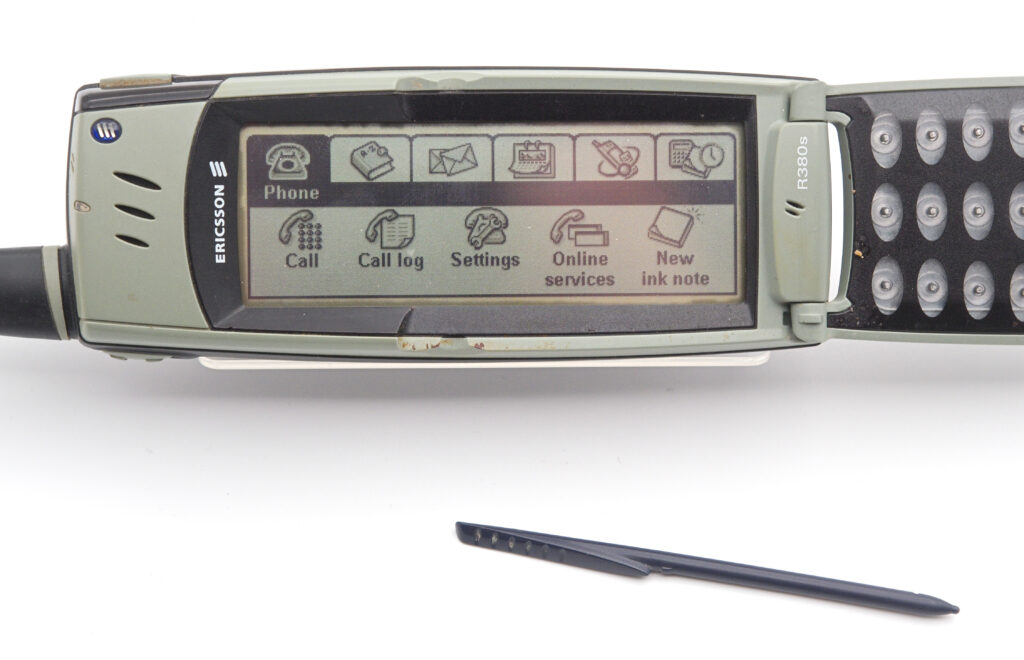
Quick facts
- CPU:
- ARM 910T @ 36 MHz
- RAM (KB):
- 2048
- Storage (MB):
- 4
- Display:
- 3.5-inch monochrome LCD display with 120x360 resolution
- Operating system:
- Symbian EPOC32 Release 5u
- Year introduced:
- 2000
- Power source:
- User replaceable Li-ion battery
- Connectivity:
- Serial (proprietary connector) + IrDA 1.1
- Dimensions (mm):
- 50x130x26
- Weight (g):
- 164
- Built-in apps:
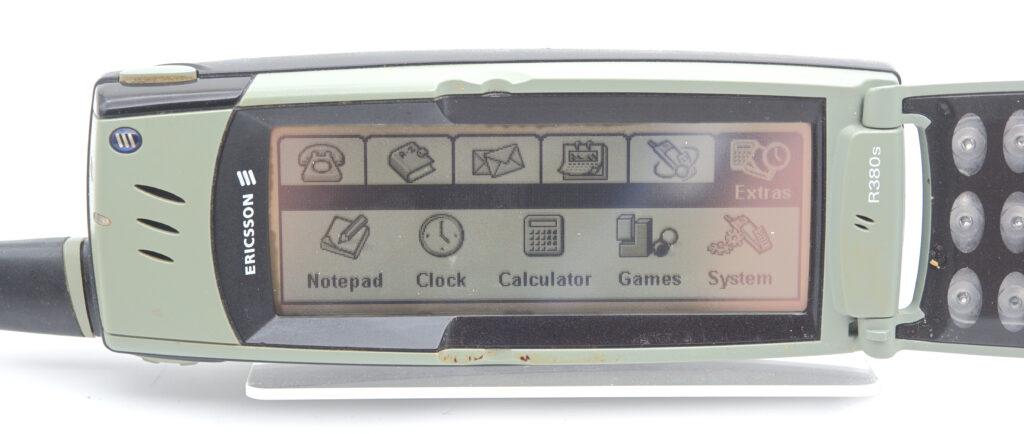
- Phone, Contacts, Messaging, Calendar, WAP, Extras (Note pad, clock, calculator, games, configuration)
- Input method:
- Stylus
Introduction
Released in 2000, the Ericsson R380 is often referred to as “the first smartphone”. While that description is not entirely wrong, it is also somewhat simplified. From a functional point of view, the IBM Simon, released as early as 1994, combined mobile phone and PDA functionality long before the R380 appeared. However, it was never marketed as a smartphone.
Ericsson had also developed an earlier smartphone prototype called GS88 (project name “Penelope”), but the project was cancelled before commercial release. Ericsson had decided that all future smartphones should be based on software from the newly formed Symbian consortium instead. Since Penelope was based on the GEOS operating system, the project effectively became obsolete once that decision had been made.
As one of the first commercially available devices marketed specifically as a smartphone, the R380 introduced many of the concepts we now associate with the term: a cellular phone capable of data communication, built-in PIM applications, and a graphical touch-screen user interface.
Compared to modern smartphones, however, it lacked features such as downloadable applications, photography, video recording, and music playback. Supporting such functionality would have required significantly more processing power than the built-in ARM 710T processor running at 36 MHz. In addition, mobile data networks at the time relied on circuit-switched GSM data connections with speeds of up to 9.6 kbps, which severely limited practical Internet usage.
Hardware
Two devices in one
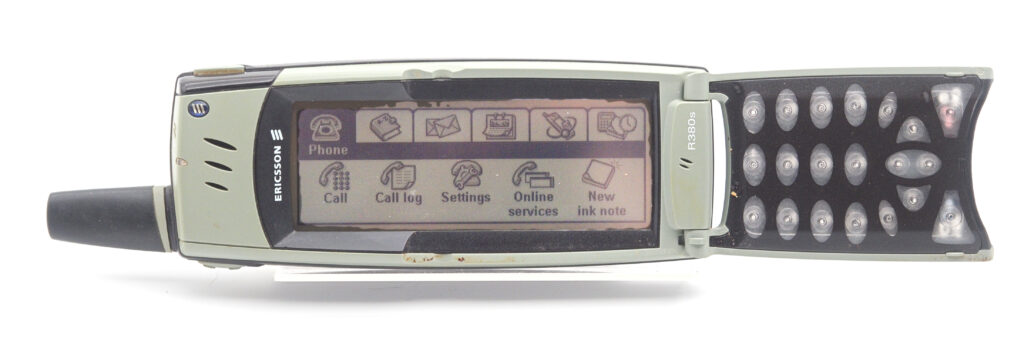
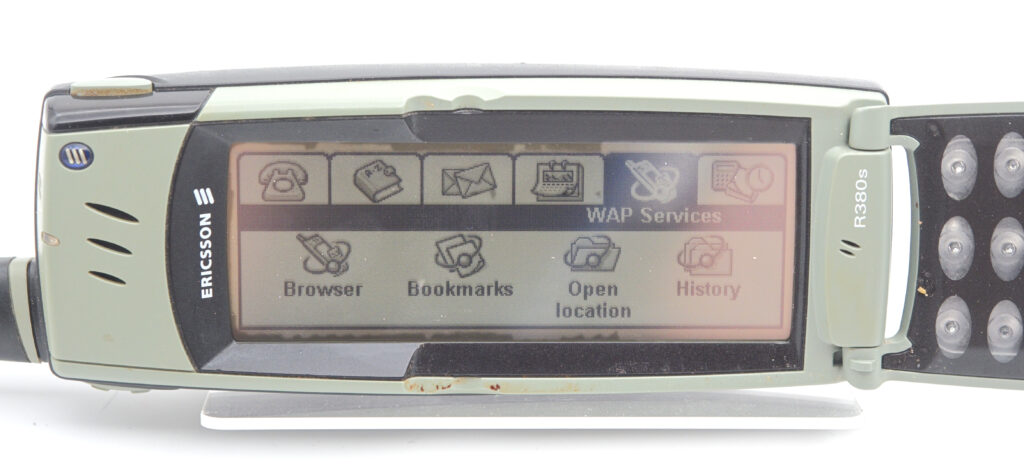
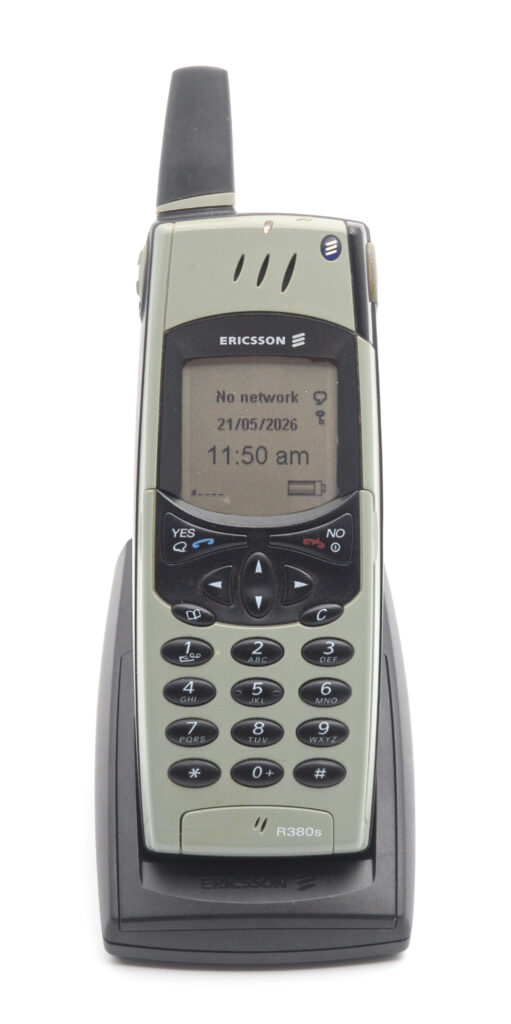
The Ericsson R380 is a remarkably clever piece of engineering. On one hand, it functions as a fairly conventional GSM phone with a standard numeric keypad. By flipping the keypad open to the side, however, the entire display is revealed, exposing a graphical user interface based on Symbian EPOC32.
This operating system is closely related to the software used in the Ericsson MC218, which itself was based on the same platform as the Psion Series 5mx. In fact, the phone keypad does not have a separate electrical connection to the system at all — the keys physically press against specific areas of the touchscreen digitizer when the phone is closed.
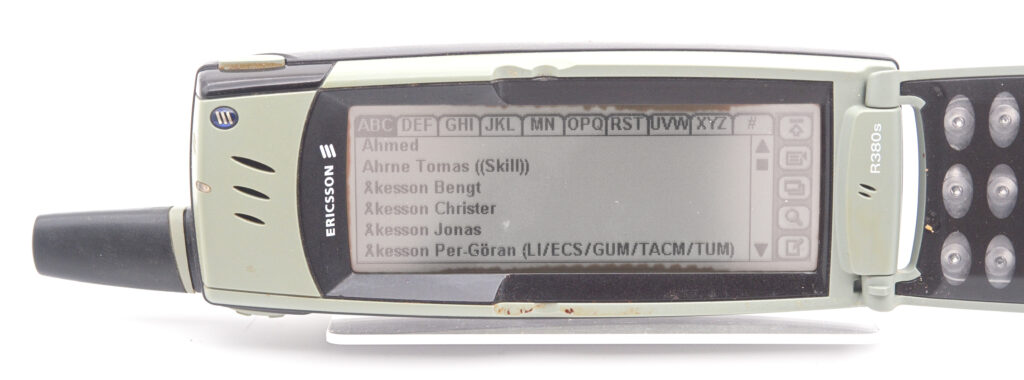
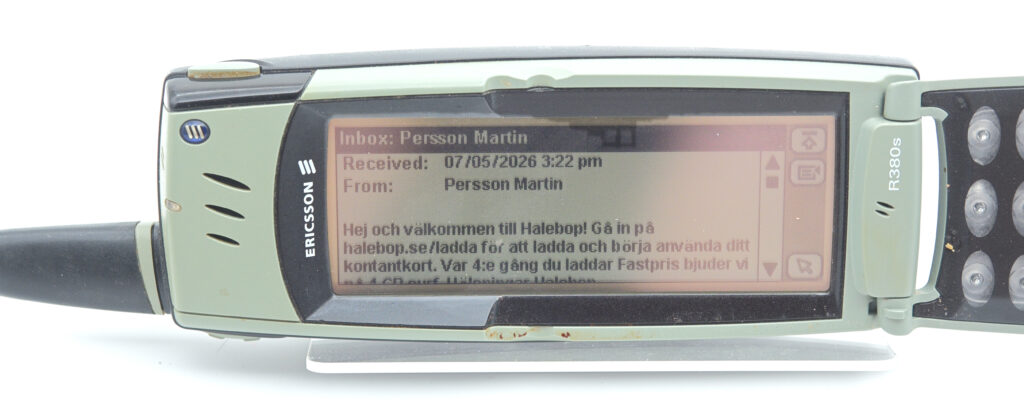
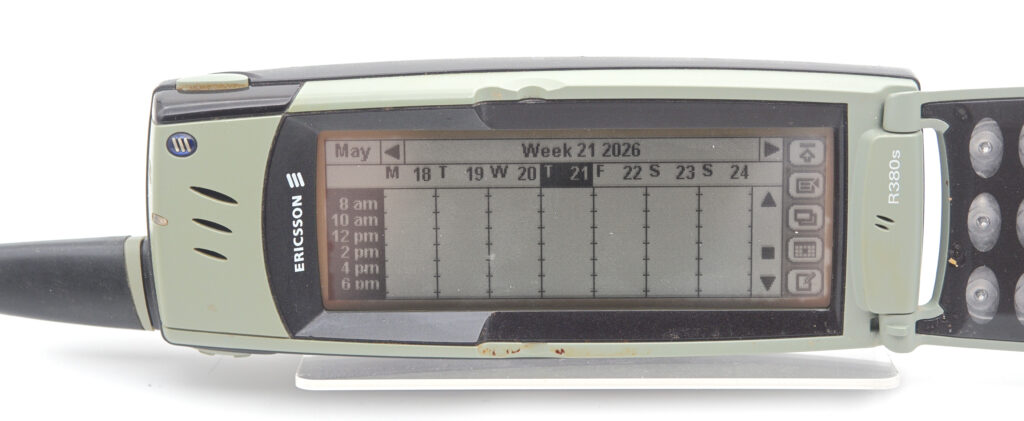
The display resolution in graphical mode is 120 × 360 pixels. It is monochrome only, but the contrast is excellent and remains highly readable even today.
Two CPUs
The R380 actually uses two separate processors. The graphical user interface and EPOC32 operating system are powered by an ARM 710T processor running at 36 MHz — the same CPU family used in the Psion Series 5mx. The GSM functionality, meanwhile, is handled by a separate processor integrated into an Ericsson-developed proprietary ASIC.
This architecture achieved at least two important goals:
- It simplified regulatory certification, since the graphical user interface did not need to be treated as part of the GSM subsystem.
- It reduced development time by allowing Ericsson to reuse existing GSM software from earlier phones while also reusing software components from the MC218 project.
The R380 contains 4 MB of ROM and 2 MB of RAM. User data is stored in approximately 1.2 MB of non-volatile internal memory.
Three variants — R380s, R380 World, and R380e
The R380 was released in three variants:
- R380s — intended for the European market, supporting GSM 900 and 1800 MHz.
- R380 World — aimed primarily at the North American market, supporting GSM 1900 MHz while retaining GSM 900 for roaming.
- R380e — a slightly updated model released about a year later.
Datacomm
Although GPRS had already been standardised when the R380 was released, commercially available chipsets supporting the technology were not yet ready. As a result, the R380 only supports circuit-switched GSM data connections with speeds of up to 9.6 kbps.
When connected to a PC, the phone provides an RS-232 compatible serial interface through a proprietary cable. It also supports infrared communication using IrDA 1.1 compatible hardware.
Synchronization with a PC was handled using the supplied Ericsson R380 Communications Suite software.
Software
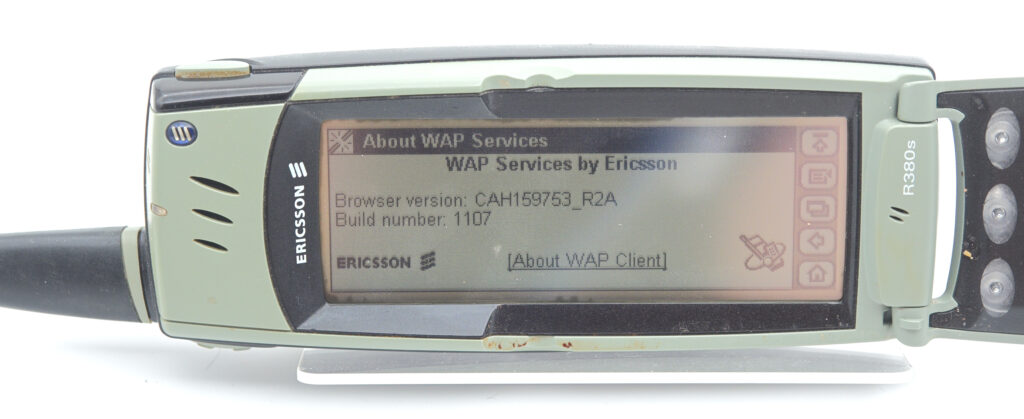
The R380 includes most of the applications users had come to expect from a PDA at the time, along with communication-focused software such as a built-in WAP browser.
WAP (Wireless Application Protocol) was introduced by telecom companies as a way to improve the user experience over extremely slow and sometimes unreliable mobile data connections. Around the year 2000, WAP was at the height of its popularity, but it quickly faded once faster technologies such as GPRS and later UMTS became widespread.
In everyday use, the graphical user interface feels surprisingly responsive, and there is rarely any uncertainty about whether a tap on the screen has been registered.
As mentioned earlier, the included applications were effectively fixed. App stores and downloadable mobile applications had not yet become part of the smartphone ecosystem.
The R380 represents the transition from pure PDAs and traditional mobile phones to the combined devices that would later become known as smartphones or communicators.
Having worked at Ericsson during that era naturally makes it an especially meaningful device to include in my collection.
References
Review from 2001 in Pen Computing