
A hint of things to come
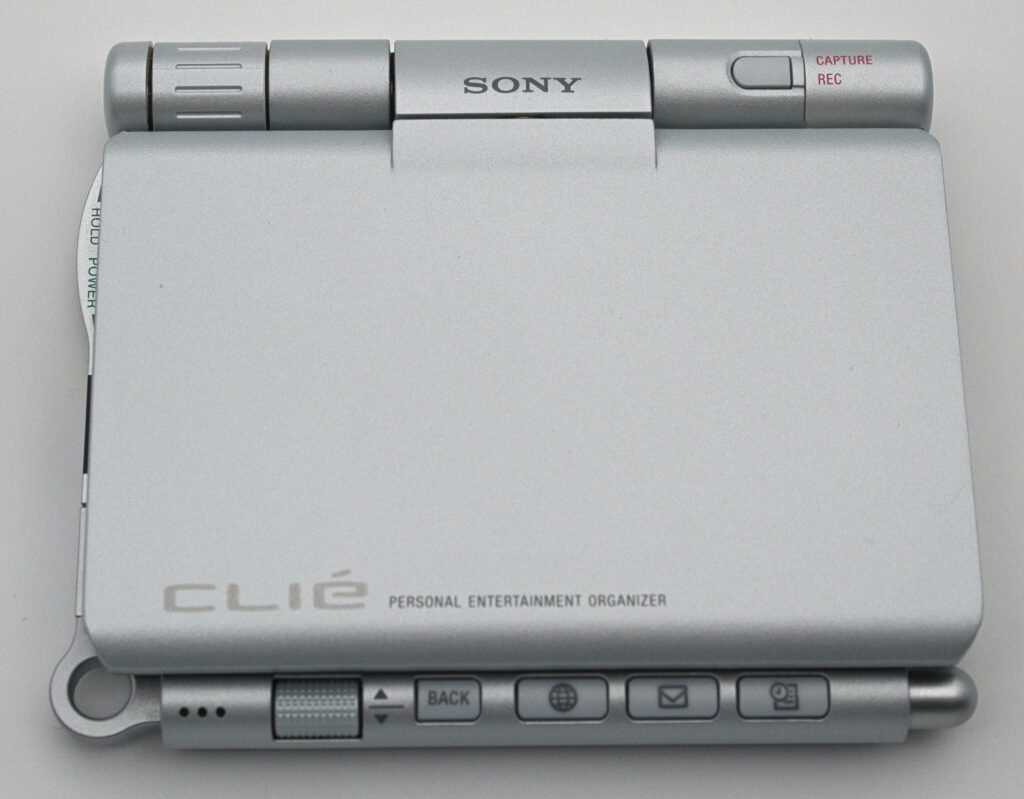
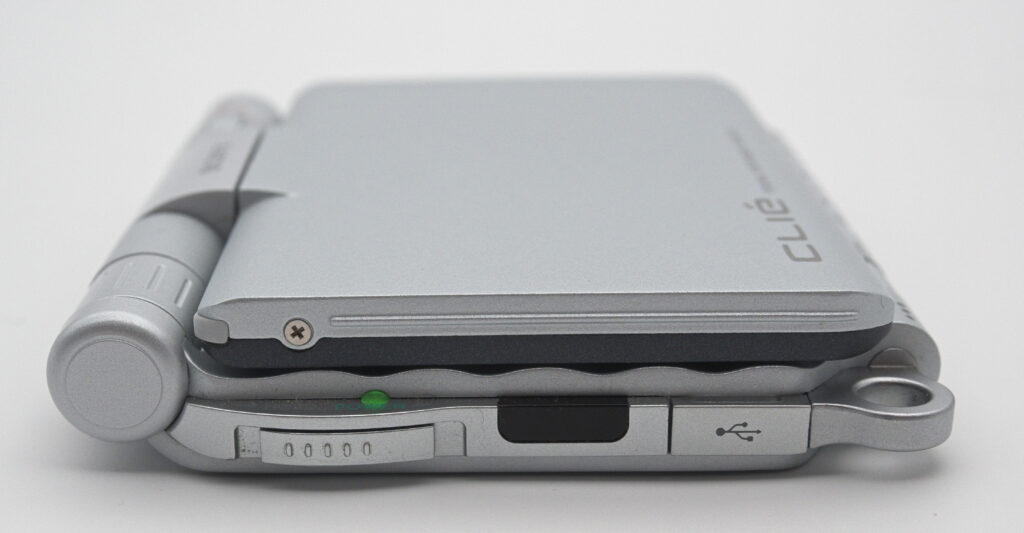
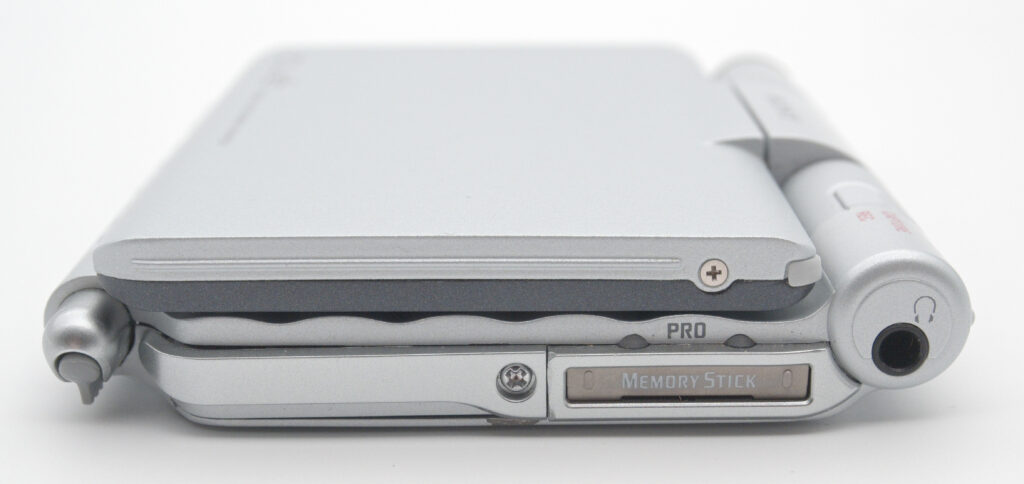
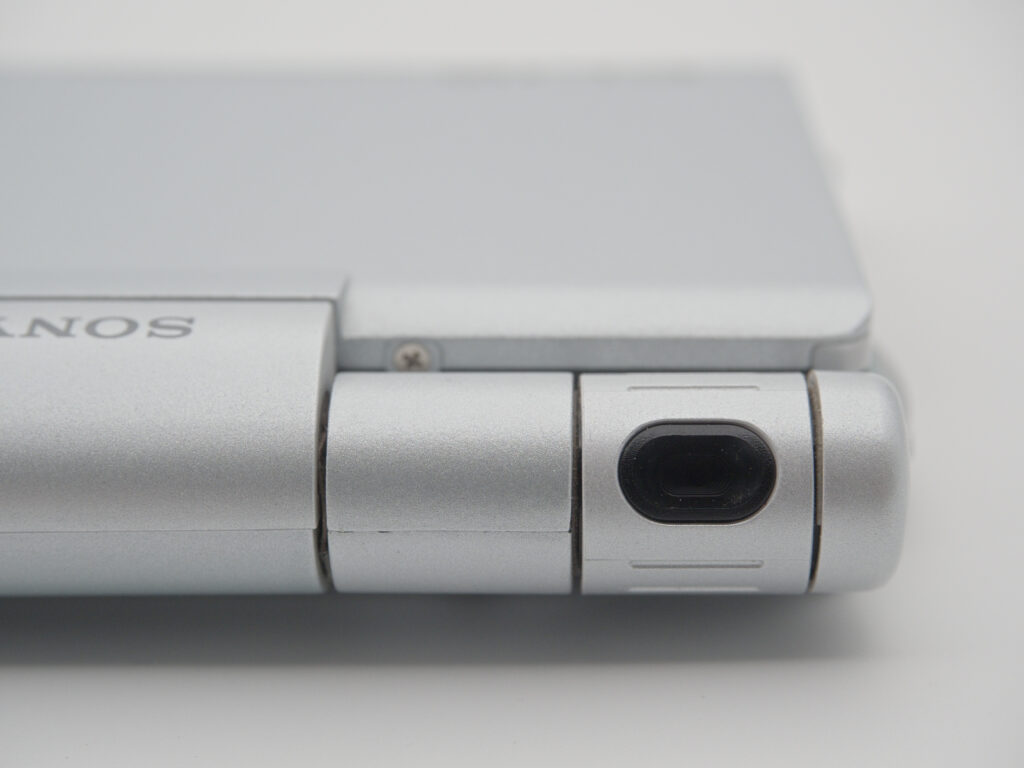
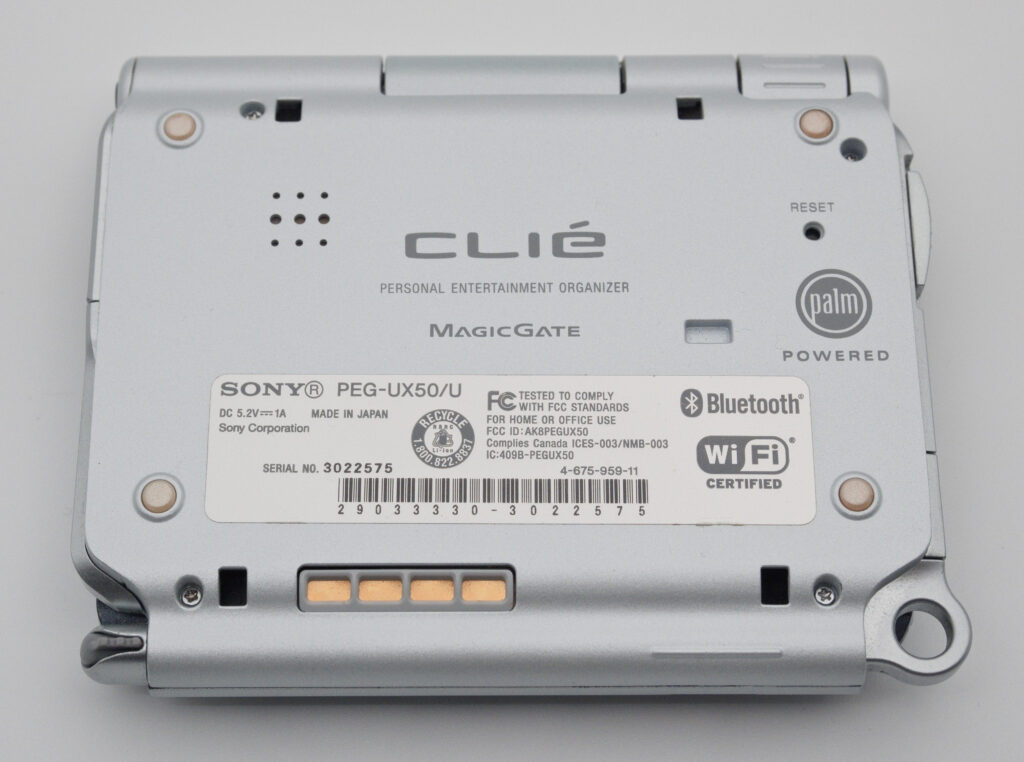
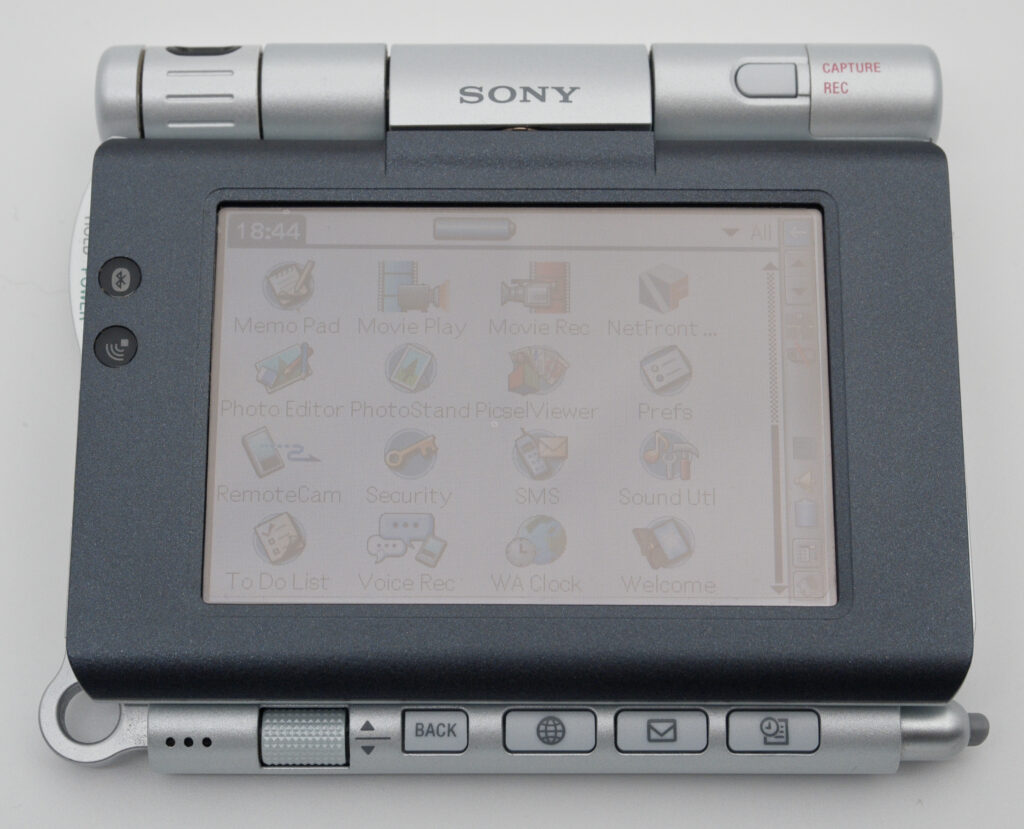
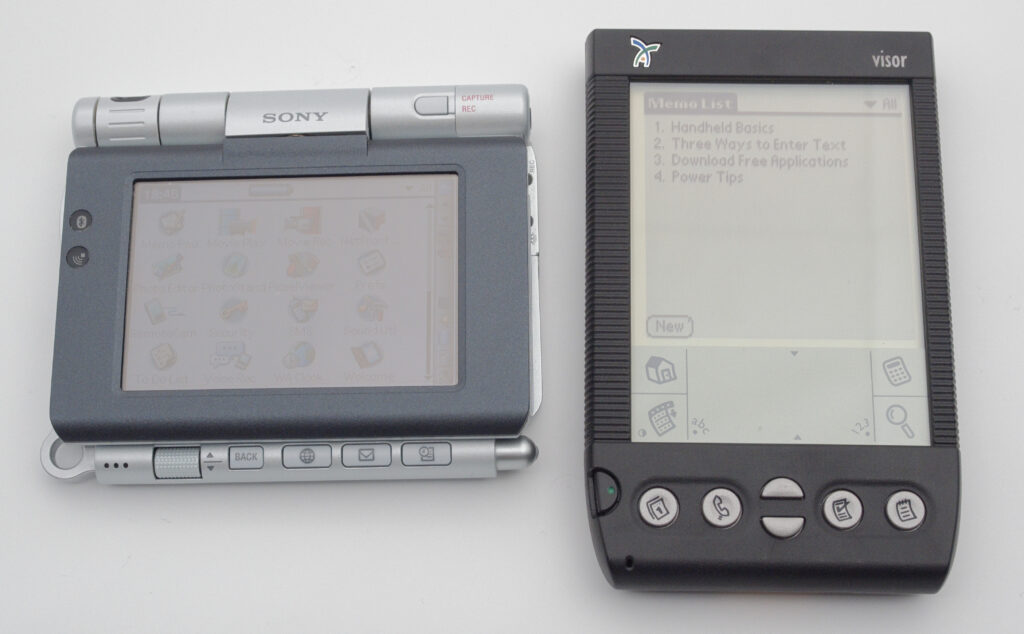
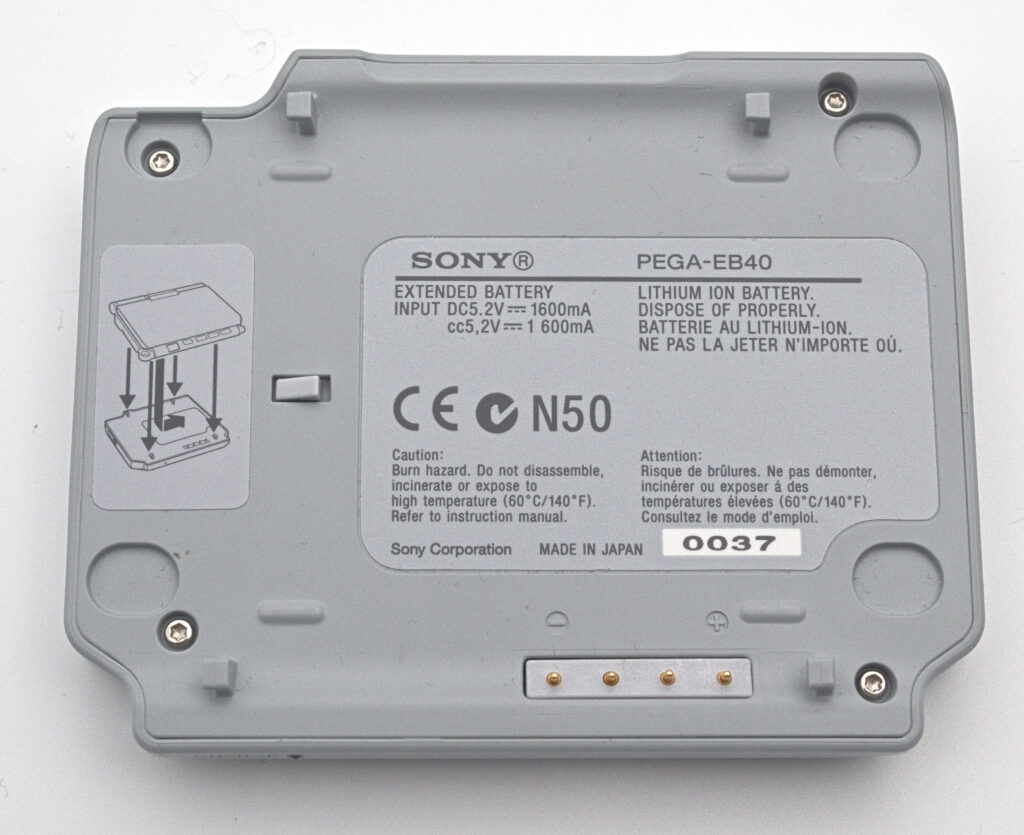
Quick facts
- CPU:
- Sony CXD2230GA
- RAM (KB):
- 16384
- Storage (MB):
- 104
- Display:
- 320x480 TFT with 65000 colours
- Operating system:
- PalmOS 5.2
- Year introduced:
- 2003
- Power source:
- Built-in LiOn-battery. Add-on battery available.
- Connectivity:
- USB, IrDA 1.2, WiFi (802.11b), Bluetooth
- Dimensions (mm):
- 105x89x18
- Weight (g):
- 180
- Built-in apps:
- All PalmOS apps plus Camera, Movie player, Audio player, Netfront 3 (web), Clié Mail, Voice recorder, Clié Organizer, Clié Viewer
- Input method:
- Keyboard and stylus
Introduction
Sony, one of the largest companies in the consumer electronics industry, naturally wanted a share of the rapidly growing PDA market. By the late 1990s the market had expanded significantly, not least thanks to Palm and its highly successful PalmOS-powered devices.
Sony had experimented with handheld devices earlier, most notably with the Sony Magic Link in 1994, which ran the Magic Cap operating system. However, commercial success was limited. Magic Cap was considered difficult to develop software for, and the Sony hardware itself was somewhat underpowered to run such an advanced operating system.
Sony therefore abandoned its earlier platforms and instead licensed the most popular PDA platform of the time — PalmOS — from Palm. In 2000 Sony launched a new family of PDAs based on this system under the name Sony Clié. The UX50 featured here was one of the most advanced models in that lineup.
How to compete in a crowded market
Entering the market relatively late, Sony needed to differentiate its products from those already offered by Palm, Handspring and IBM. Sony chose to position its devices as multimedia-oriented PDAs, adding features such as cameras, media players and support for the company’s proprietary Memory Stick storage format. Sony even printed the phrase “Personal Entertainment Organizer” on the devices themselves.
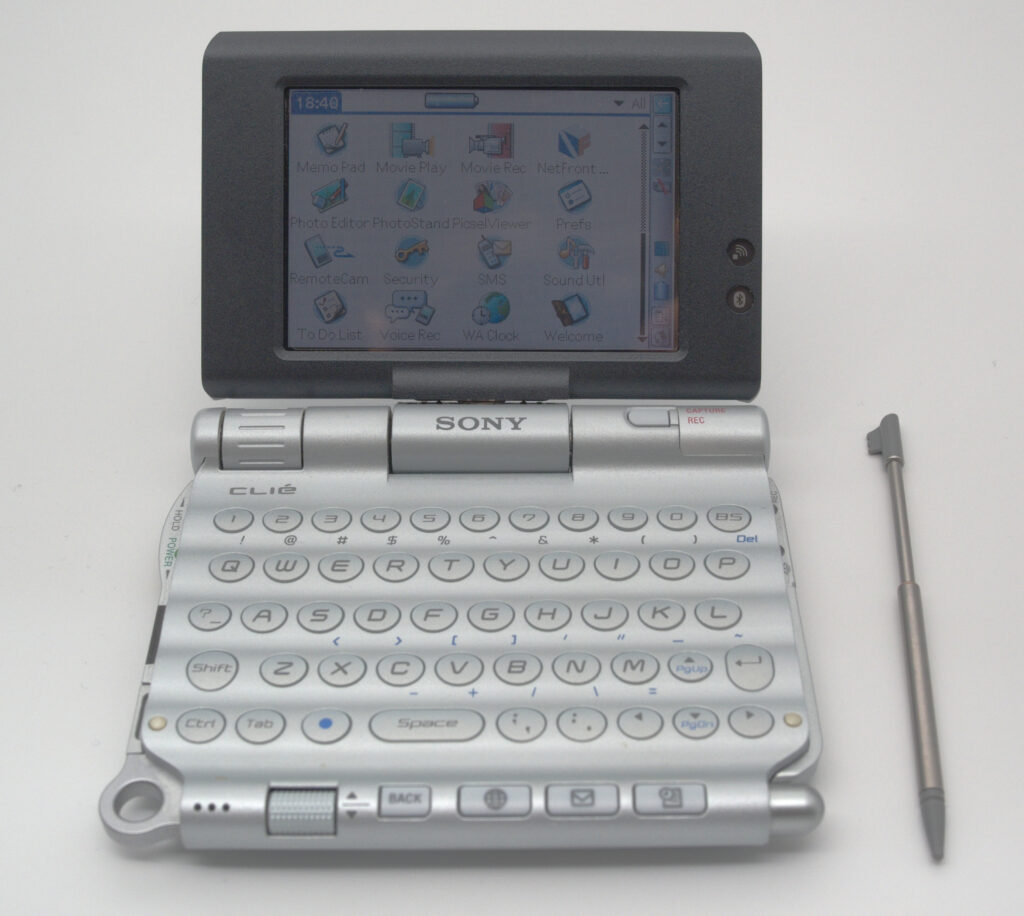
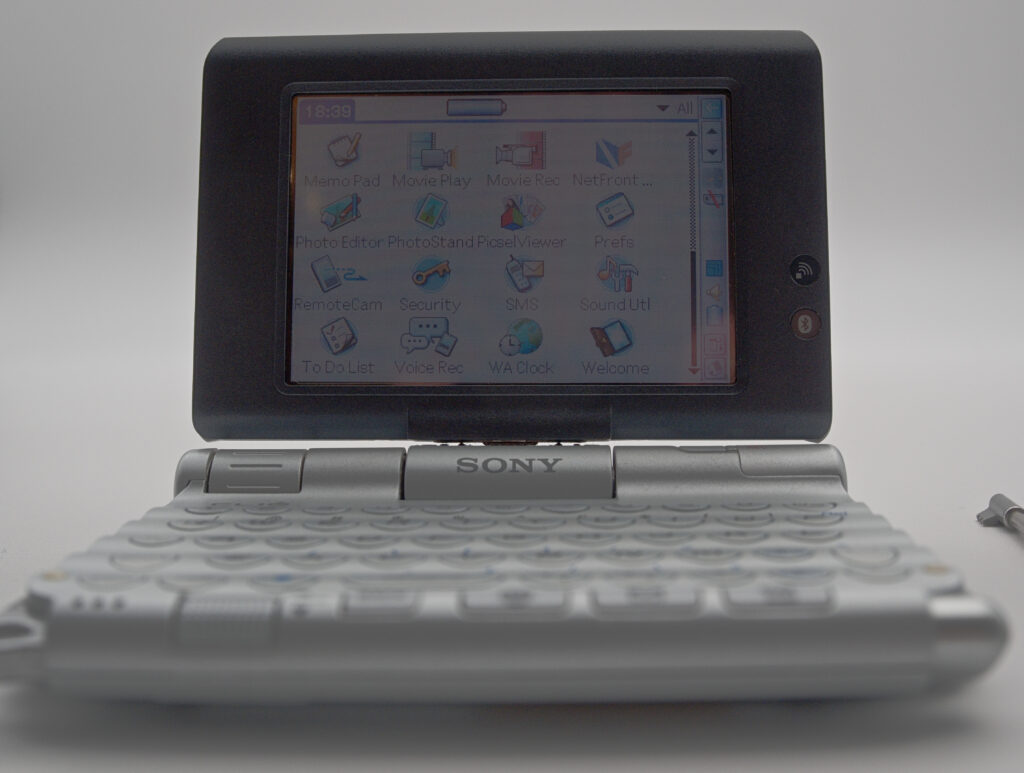
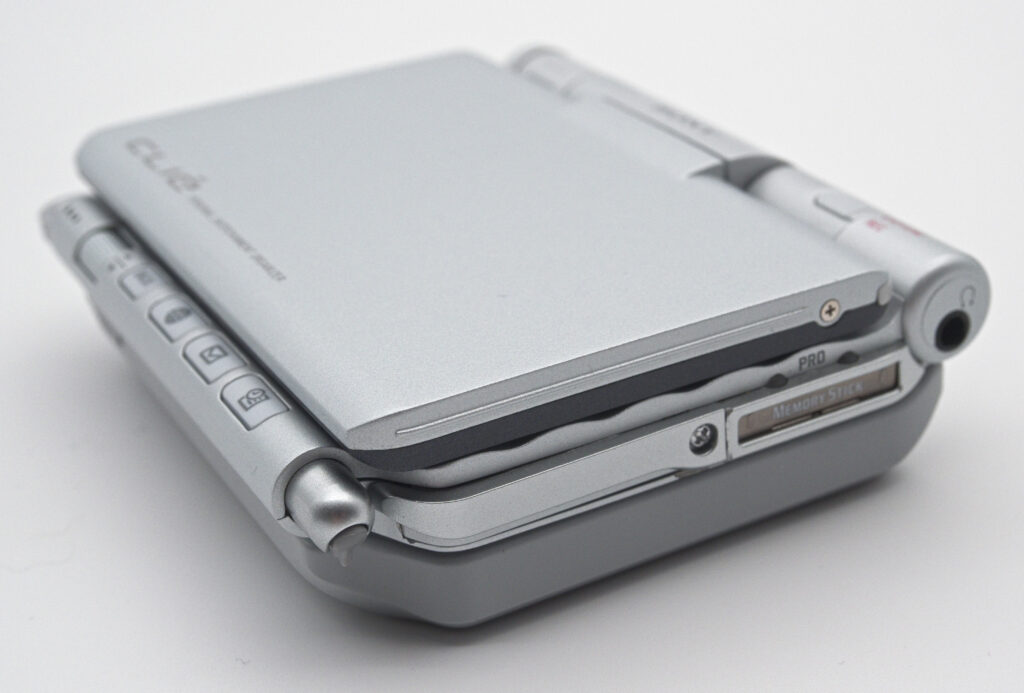
One of the most advanced models was the Sony Clié UX50, introduced in 2003. Designed in a compact “micro-laptop” form factor, the UX50 was exceptionally advanced for its time. Its industrial design was top-notch, and small details such as the scroll wheel and the carefully designed power button helped set Sony apart from more utilitarian devices from companies like Palm.
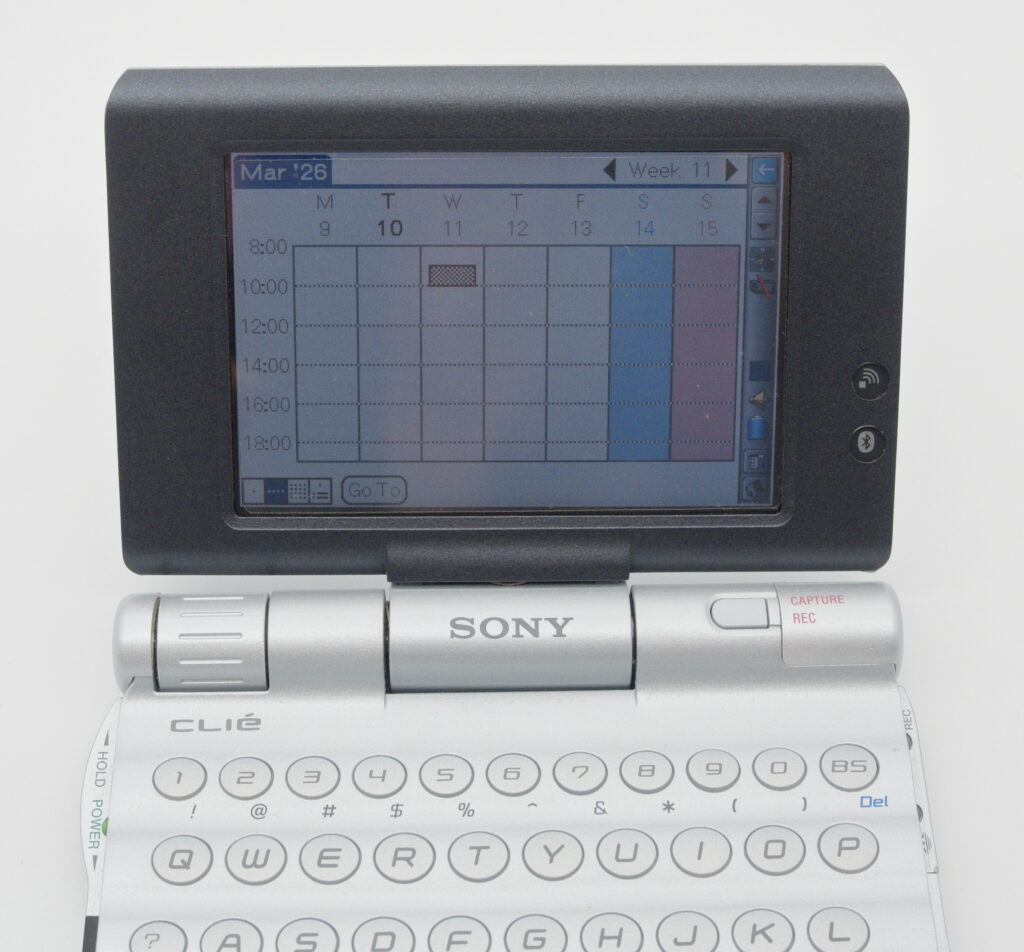
The UX50 featured a high-resolution 320×480 colour TFT display, a built-in keyboard, and support for IrDA 2, USB, and Sony’s proprietary Memory Stick storage. A special variant called MagicGate Memory Stick supported copyright protection technology, which was still relevant in the early 2000s. This was required to play protected media encoded using ATRAC3, the same format used in Sony’s MiniDisc players.
Another notable feature was the built-in rotating camera, which could capture both still images and short video clips — something that was still relatively novel at the time. This feature, and the fact that Sony developed its own CPU/SoC for this unit, likely contributed to the device’s high introductory price of USD 650.
The UX50 also included both Bluetooth and WiFi radios, though it lacked cellular connectivity. Users who wanted an integrated phone could instead choose the Sony Ericsson P900, released around the same time and based on the Symbian/UIQ platform.
For users who did not need WiFi and wanted to save around USD 100, Sony offered the UX40, which was otherwise almost identical to the UX50.
Sony’s unique additions to PalmOS
Sony did not only introduce a unique hardware design to the PalmOS ecosystem — it also developed several custom applications and modifications to existing Palm software.
Some of these modifications were necessary because the UX50 used a rectangular display, unlike the square screens found on most Palm devices. Others were intended to help Sony differentiate its devices in an increasingly competitive market.
Notable Sony applications included:
- Sony Clié Camera – Used to capture photos and record short video clips
- Movie Player – Allowed users to watch converted TV shows or movies stored on a Memory Stick
- Sony Audio Player / SonicStage – Music playback software supporting both MP3 and ATRAC3
- NetFront 3 – An advanced web browser for its time, supporting HTTP and early HTTPS encryption. It also reformatted web pages to fit the relatively small PDA display
- Clié Mail – An e-mail client capable of handling attachments
- Voice Recorder – Allowed voice memos to be recorded using the built-in microphone, even when the lid was closed
- Clié Organizer – A more advanced alternative to Palm’s standard PIM applications
- Clié Viewer – A file manager capable of displaying images, videos and voice memos and sending them via Bluetooth or WiFi
- Palm Desktop for Clié – Sony’s customized version of Palm’s PC synchronization software
The keyboard
Most PalmOS users were accustomed to entering text using a stylus and the Graffiti handwriting system. The UX50 also includes a stylus and supports Graffiti input, but using it can feel somewhat awkward.
Because the device operates primarily in landscape orientation, the on-screen Graffiti writing areas overlap the display rather than being neatly placed beneath it as on traditional Palm devices. This remains the case even when the screen is folded flat over the keyboard to resemble a more traditional PDA form.
For this reason, most users likely relied on the built-in keyboard instead.
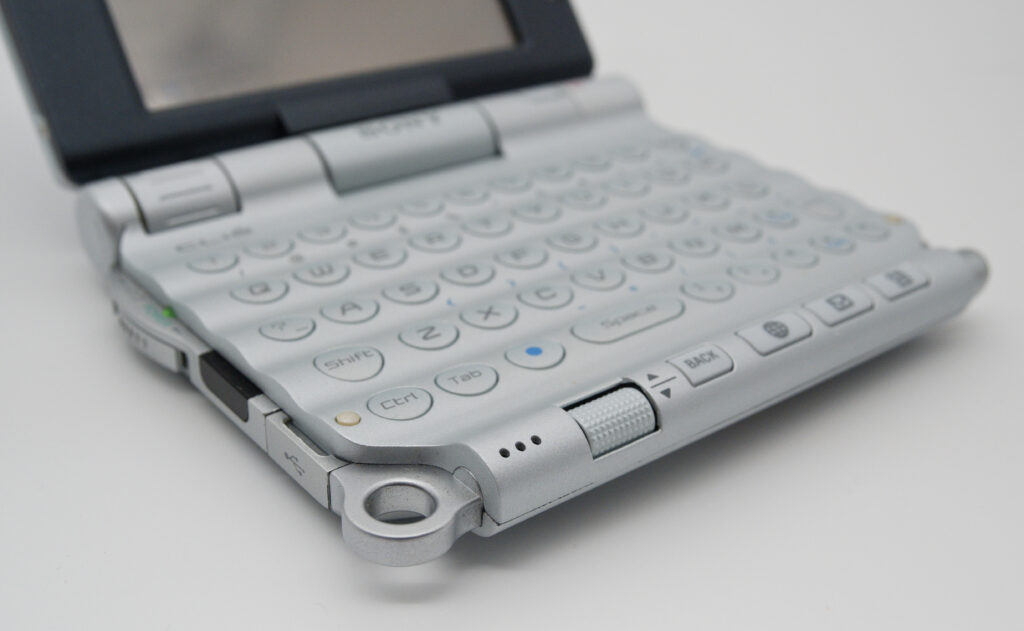
The keyboard is surprisingly comfortable to use and still works well more than two decades later. It has a distinct “clicky” feel and requires slightly firm key presses, but provides clear tactile feedback. A special blue-dot shift key allows access to additional characters such as brackets and slashes.
Below the keyboard are the scroll wheel, a back button, and dedicated function keys for launching the web browser, e-mail client and organizer.
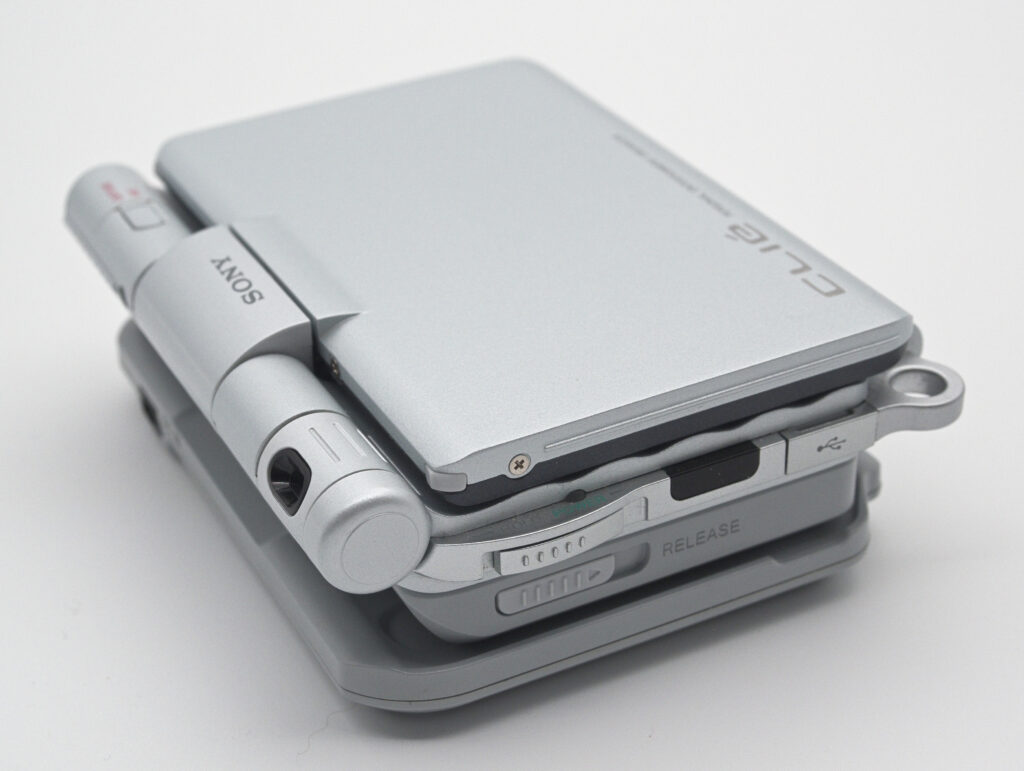
Interestingly, to the left of the scroll wheel and microphone there is a large metal loop, suggesting the device could be attached to a strap or backpack. The manual does not explain its purpose, and considering the high price of the device, it seems unlikely many users would actually carry it that way. It may simply have been a design statement.
Connectivity
The UX50 was one of the best connected PDAs of its time, supporting:
- IrDA version 1.2
- USB
- WiFi (802.11b)
- Bluetooth
Synchronization with a PC was typically performed using a customized version of Palm Desktop together with a USB cable.
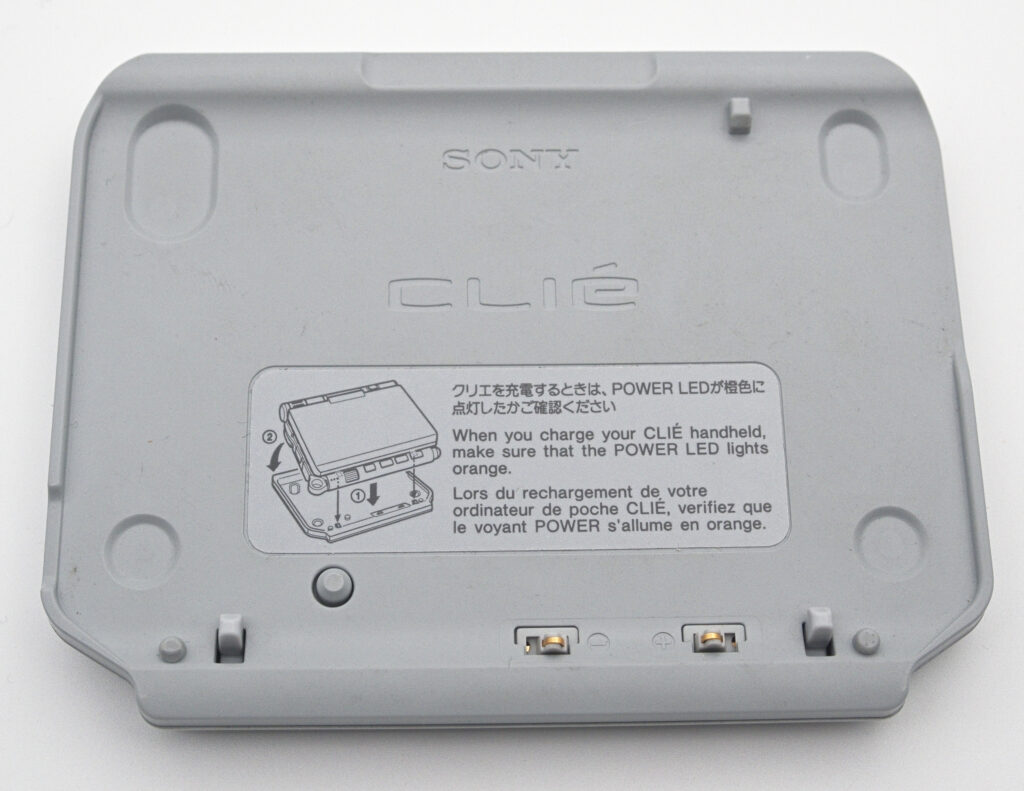
Interestingly, the UX50 used a standard mini-USB connector, which was somewhat unusual for Sony. The company was well known for proprietary connectors, and this device is no exception: the charging connector is completely proprietary and requires a dedicated Sony charger.
How successful was Sony?
It should also be noted that Sony was far from a minor player in the PalmOS ecosystem. During the early 2000s the company was Palm’s largest licensee and released roughly forty different PalmOS-based devices under the Clié brand between 2000 and 2005. The UX50 therefore represents the culmination of several years of development rather than a one-off experiment.
Looking back, 2003 may represent the technological peak of the PDA era, but it was also the moment when the market began shifting toward other types of devices: smartphones, handheld gaming systems and dedicated music players.
With products such as the Sony Ericsson P900 smartphone appearing around the same time as the UX50 — and costing only slightly more — the appeal of a high-end standalone PDA became increasingly limited.
At the same time, the already popular Apple iPod and other MP3 players were capturing the portable media market.
Consumers who still wanted a separate PDA often opted for cheaper Palm or Windows Mobile devices, some of which could be purchased for as little as USD 100.
Sony eventually decided to exit the PDA market in 2005, shifting its focus instead toward portable gaming with the launch of the PlayStation Portable (PSP).
Timeline: The transition from PDA to smartphone
| Year | Device | Significance |
|---|---|---|
| 2001 | Handspring Treo 180 | One of the first widely available devices combining PDA functions with a mobile phone |
| 2002 | Sony Ericsson P800 | Early touchscreen smartphone running Symbian |
| 2003 | Sony Clie PEG-UX50 | A highly advanced multimedia PDA with WiFi, camera and keyboard |
| 2003 | Sony Ericsson P900 | The follow-up to P800 |
| 2003 | Palm Tungsten T3 | One of the most powerful traditional PalmOS PDAs |
| 2007 | Apple iPhone | Marked the beginning of the modern smartphone era |
The Sony Clié UX50 represents a remarkable piece of industrial design and a fascinating glimpse of the future of mobile computing.
With its keyboard, WiFi connectivity, camera and multimedia capabilities, it contained many of the elements that would later define the modern smartphone — even though it lacked cellular connectivity.
It is also unusual in that it uses PalmOS, whereas many non-Palm devices of the time had already begun moving toward Microsoft Windows Mobile. The UX50 therefore offers an interesting example of what Sony could achieve by combining its own design philosophy with Palm’s operating system.
References
Complete manual for the UX40 and UX50
A review from 2003 (the Gadgeteer)
Wikipedia page on the Sony CLIÉ UX-series
The creation of Sony CLIé from ObsoleteSony