
The Unifier
Quick facts
- CPU:
- Z80 @ 10 MHz
- RAM (KB):
- 1024
- Storage (MB):
- ca 0.5 (RAM) plus 2 MMC slots
- Display:
- 240x160 pixels, monochrome, no backlight
- Operating system:
- Siemens proprietary
- Year introduced:
- 2000
- Power source:
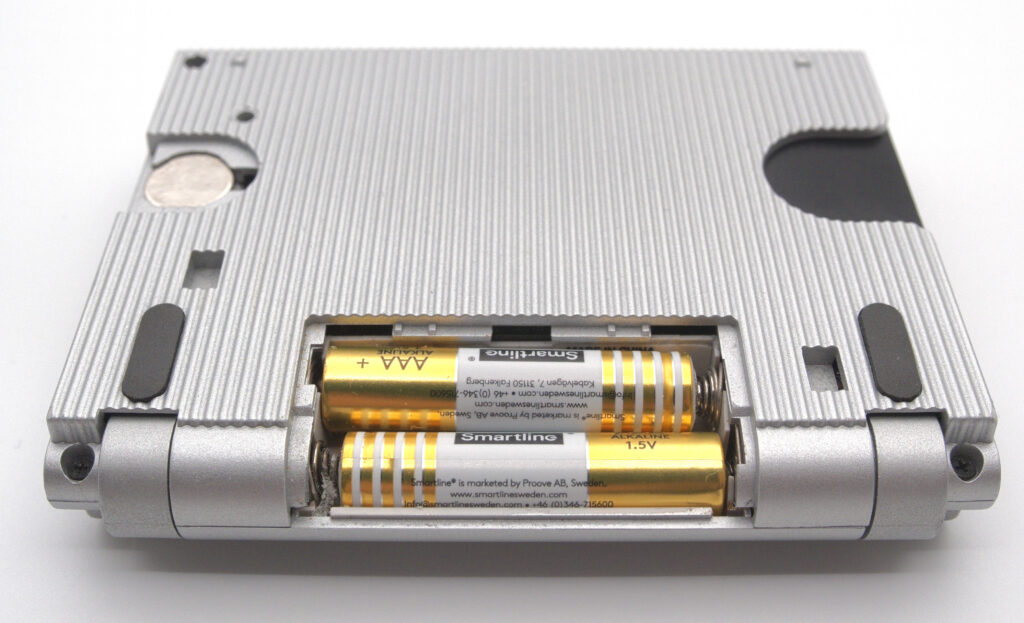
- 2 x AAA batteries. CR1220 coincell for memory backup
- Connectivity:
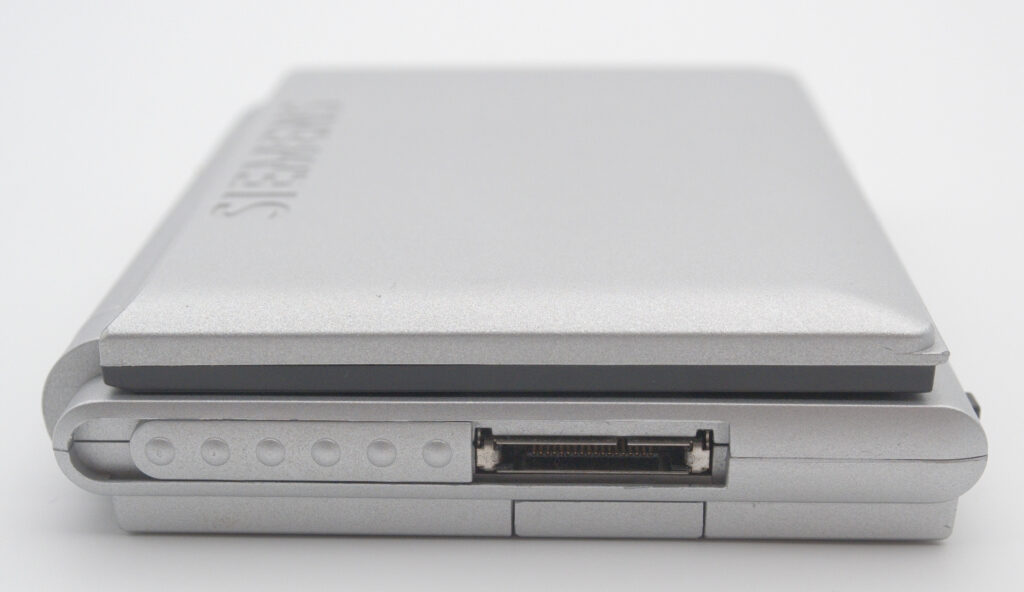
- IrDA, Serial (proprietary connector)
- Dimensions (mm):
- 108x87x21
- Weight (g):
- 173
- Built-in apps:
- Address book, Calendar, To-do list, Notes, E-mail, WAP
- Input method:
- Keyboard
Overview
Siemens IC35 – The Unifier
Introduction
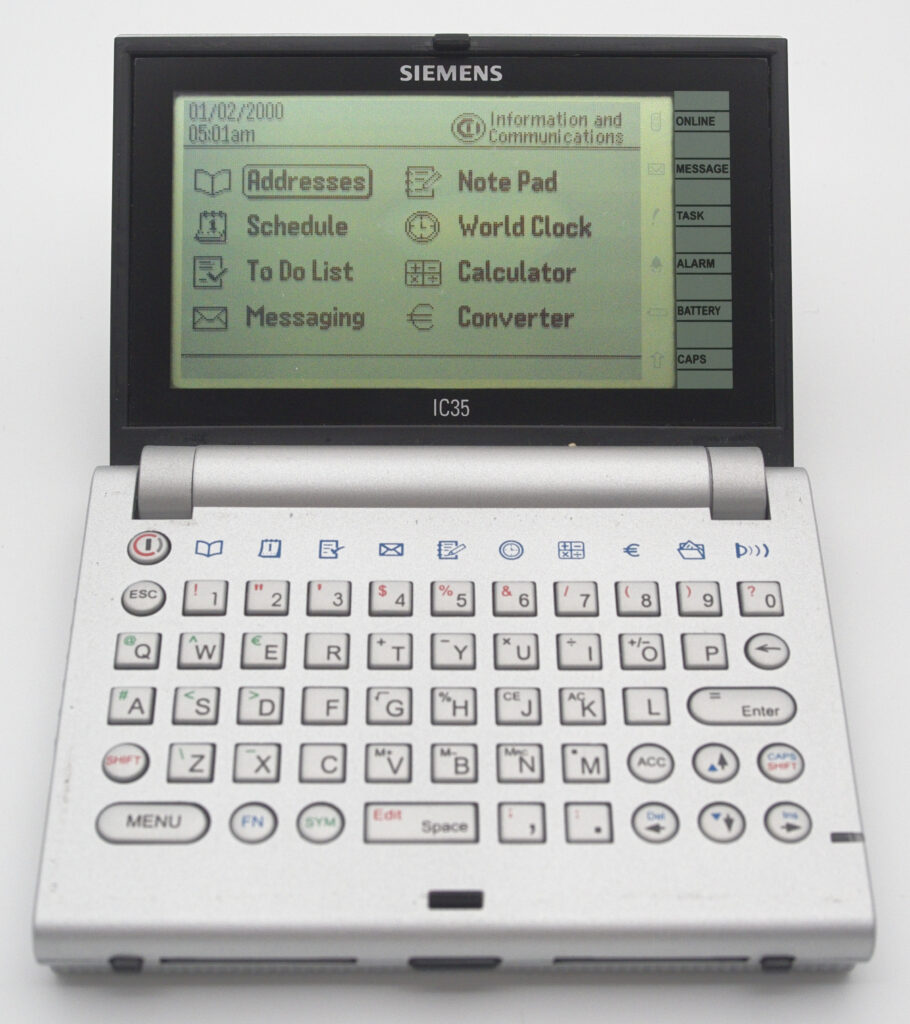
In the year 2000, Siemens introduced a small PDA with a physical keyboard called the IC35. It was positioned as a companion device to a Siemens mobile phone. At the time, Siemens was one of the three major European manufacturers of mobile network equipment, alongside Nokia and Ericsson. All three companies had been experimenting with different types of PDAs and early “communicators” or smartphones, and Siemens was arguably the last to enter this particular space. For example, Ericsson introduced its MC12 – “the mobile companion” with a similar feature set already three years earlier.
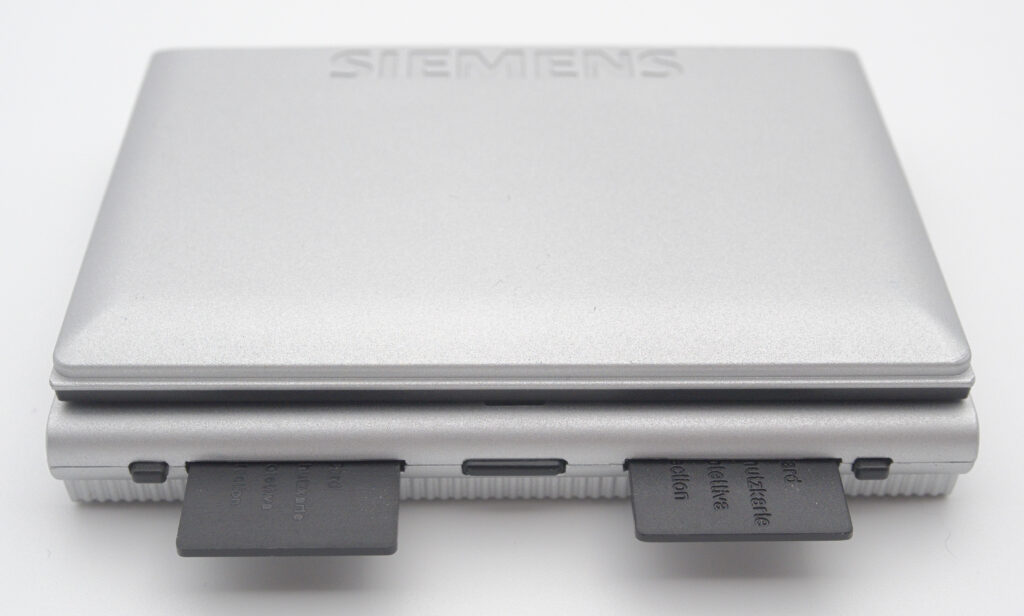
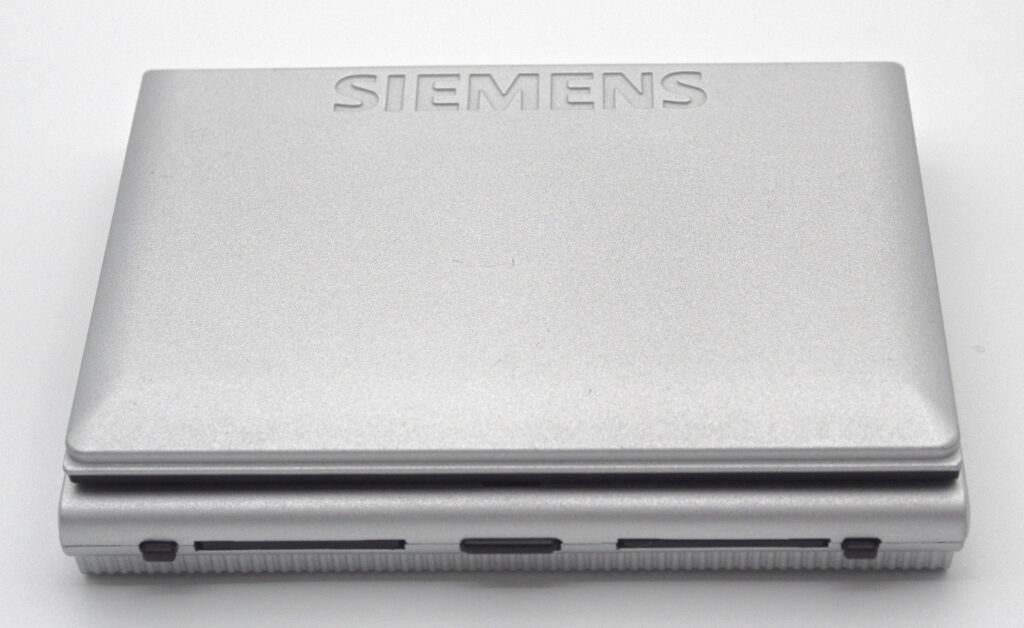
The IC35 is a peculiar device. On one hand, it offers all the expected PDA functionality, combined with additional communication features when paired with a Siemens GSM phone, such as e-mail, WAP browsing, and file transfer. It also includes two slots for the then newly introduced MMC (MultiMediaCard), a format developed by Siemens in cooperation with SanDisk. In that sense, it appears quite modern.
On the other hand, the device feels outdated even at launch. The display resembles those found in mid-1990s devices, and the CPU architecture dates back even further. By 2000, portable media playback had already begun to emerge, yet the IC35 offers none of that functionality. At launch, it was priced at 450 DEM (approximately 210 USD), making it affordable, though not particularly cheap.
Basic PDA functionality
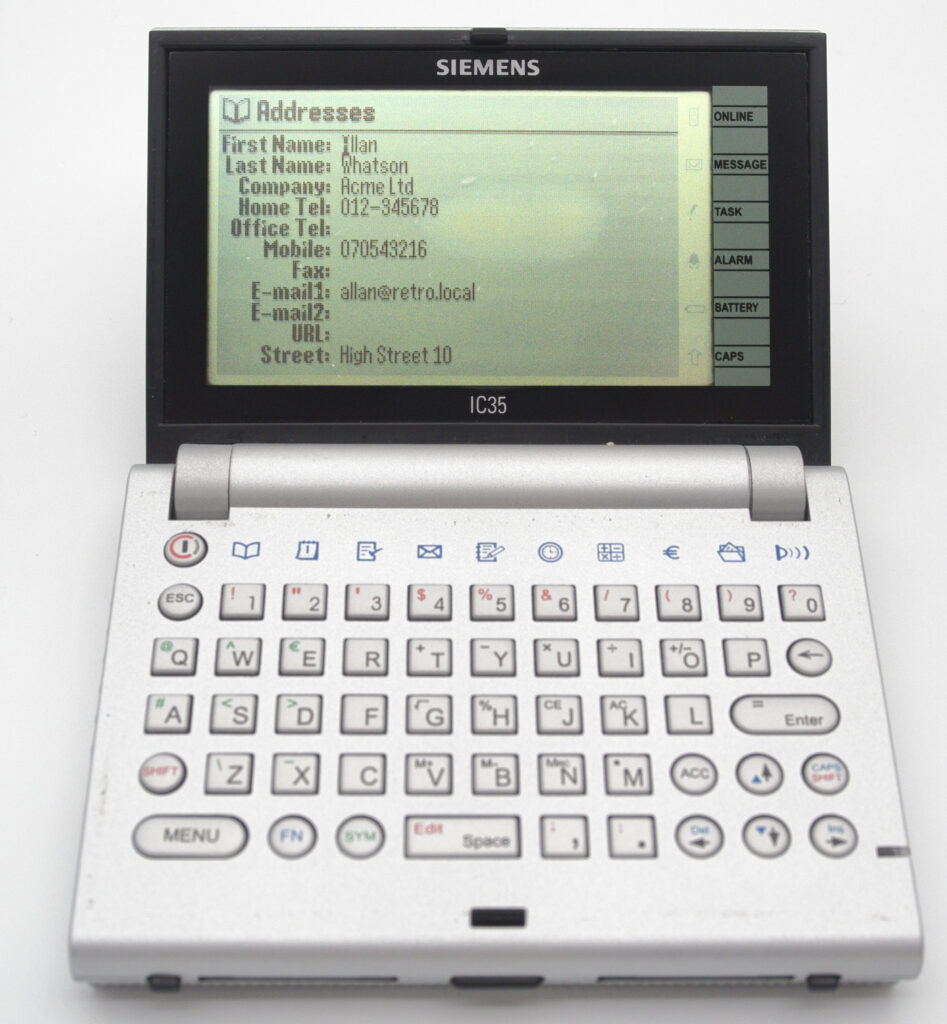
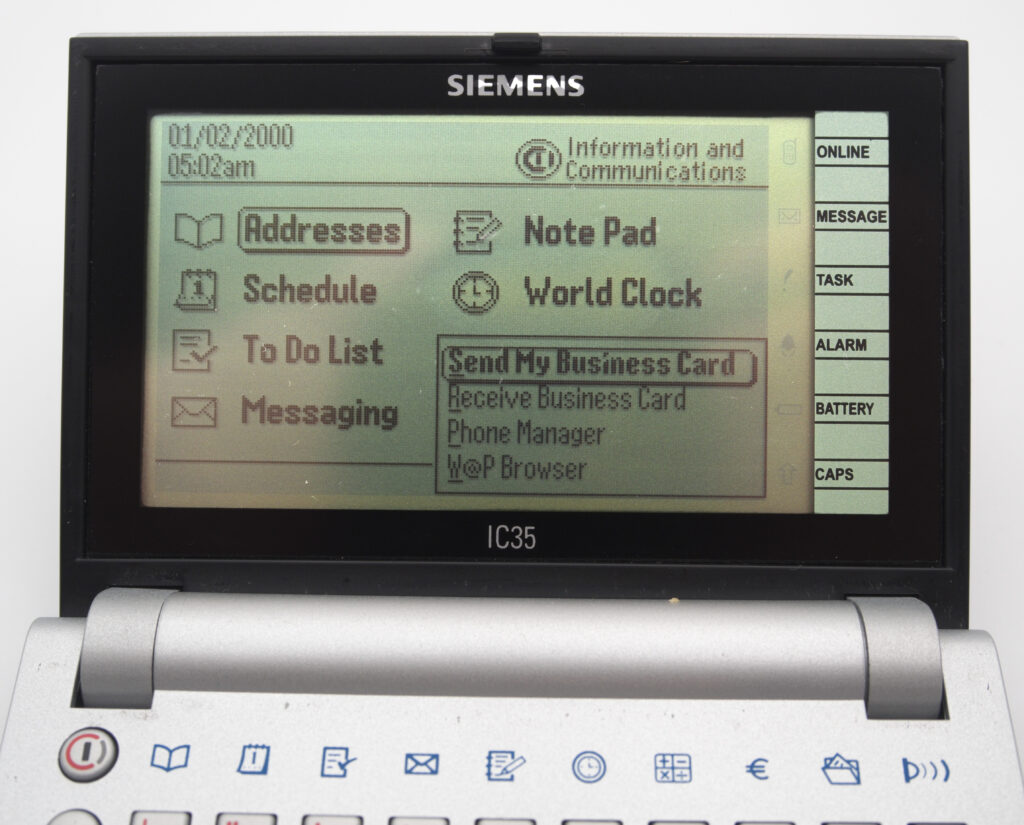
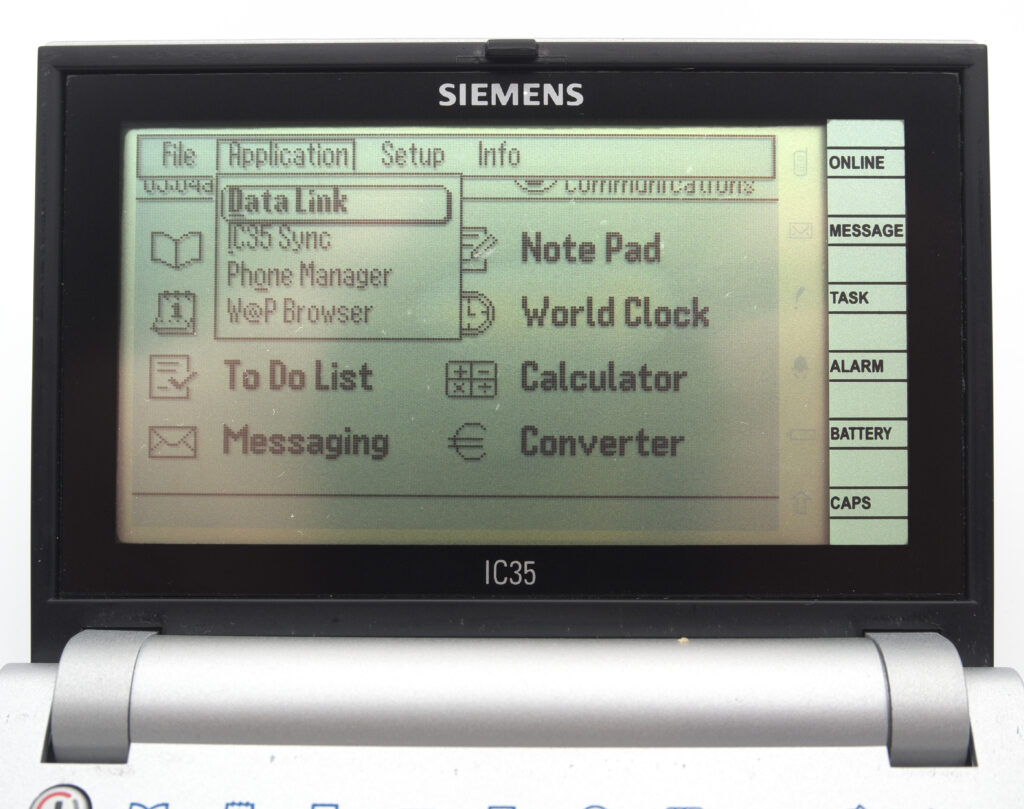
Like most PDAs of its time, the IC35 includes an address book, calendar, to-do list, note-taking application, world clock, and calculator. A currency converter is also provided. The “owner information” entry in the address book can be sent as a business card to other users, even to users of other ecosystems such as Palm OS devices.
Data transfer is handled either via the built-in IrDA interface or through a connected GSM phone. Siemens made the unusual decision to develop both the operating system and the applications in-house, rather than licensing software from Palm, Psion, or Microsoft, as many competitors did. This results in a truly unique user experience.
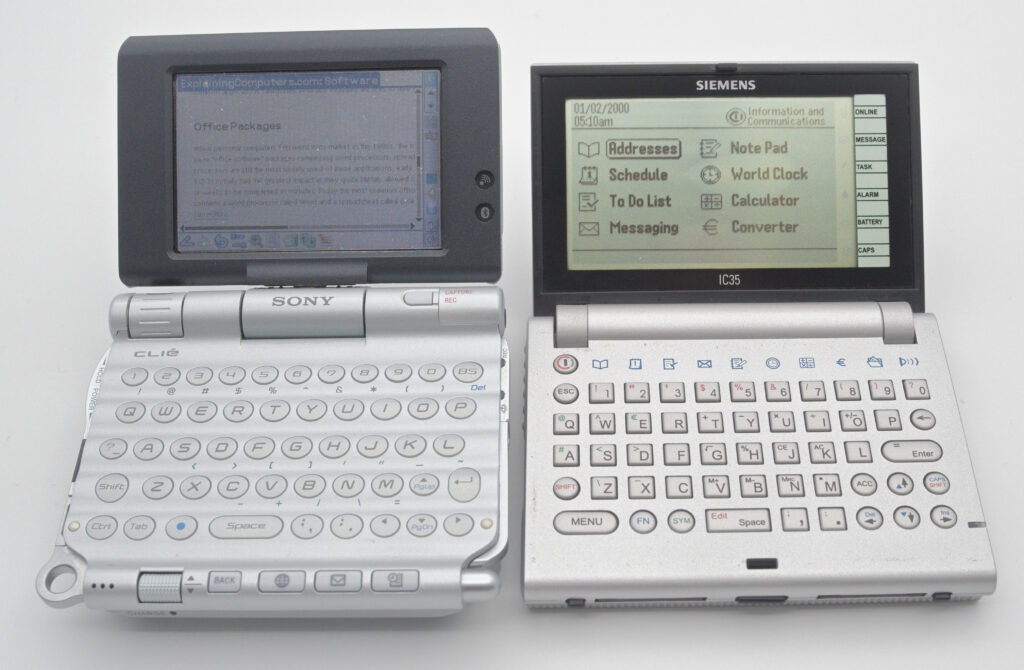
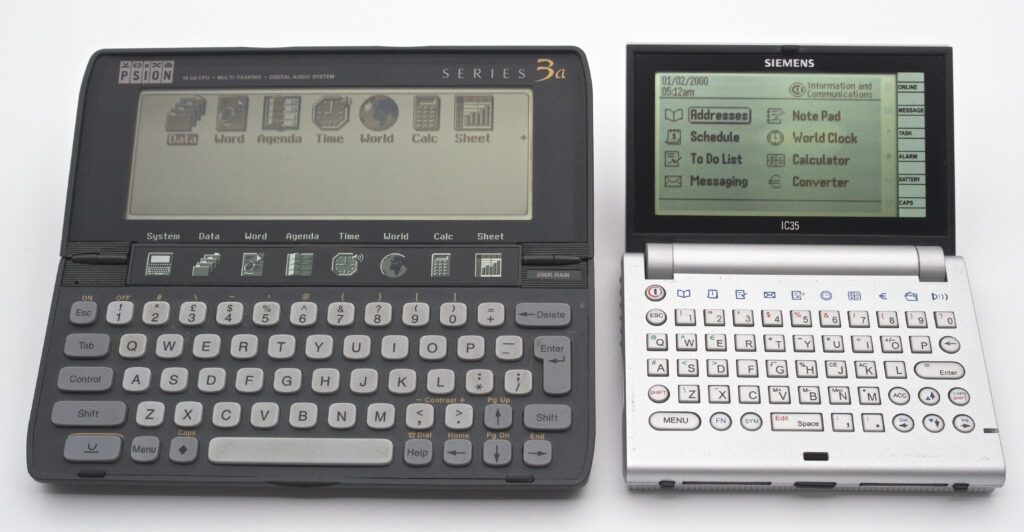
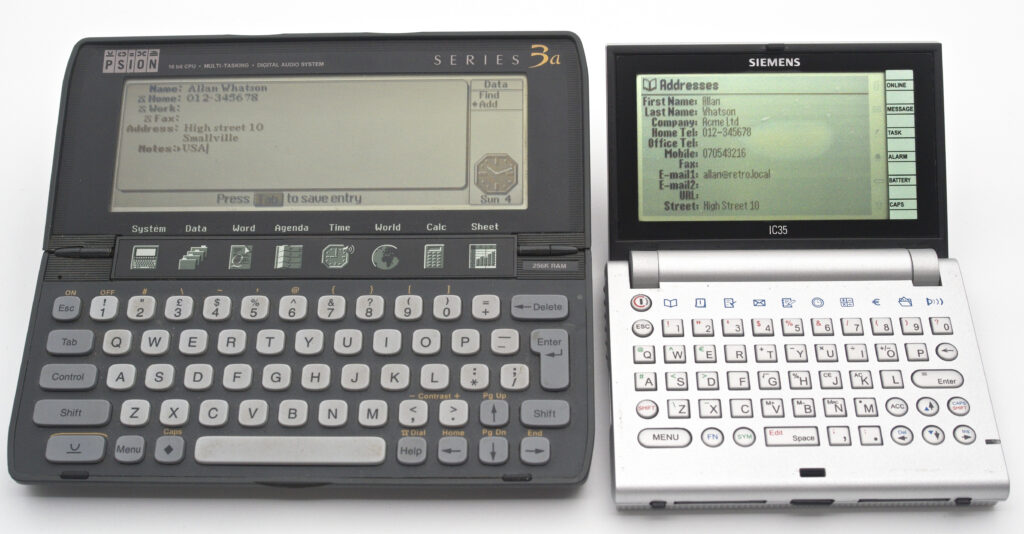
Some users may appreciate this approach, but I personally find it lacking. The interface is entirely keyboard-driven, which invites comparison with other keyboard-based PDAs such as the Psion Series 3a — introduced seven years earlier. When placed side by side, both the visual design and overall usability of the Psion feel significantly more modern than those of the IC35.
Differentiating features
As a companion device to a Siemens mobile phone, the IC35 includes several communication-focused applications. These allow the user to send and receive SMS messages and e-mail, and likely also to manage the phone’s address book.
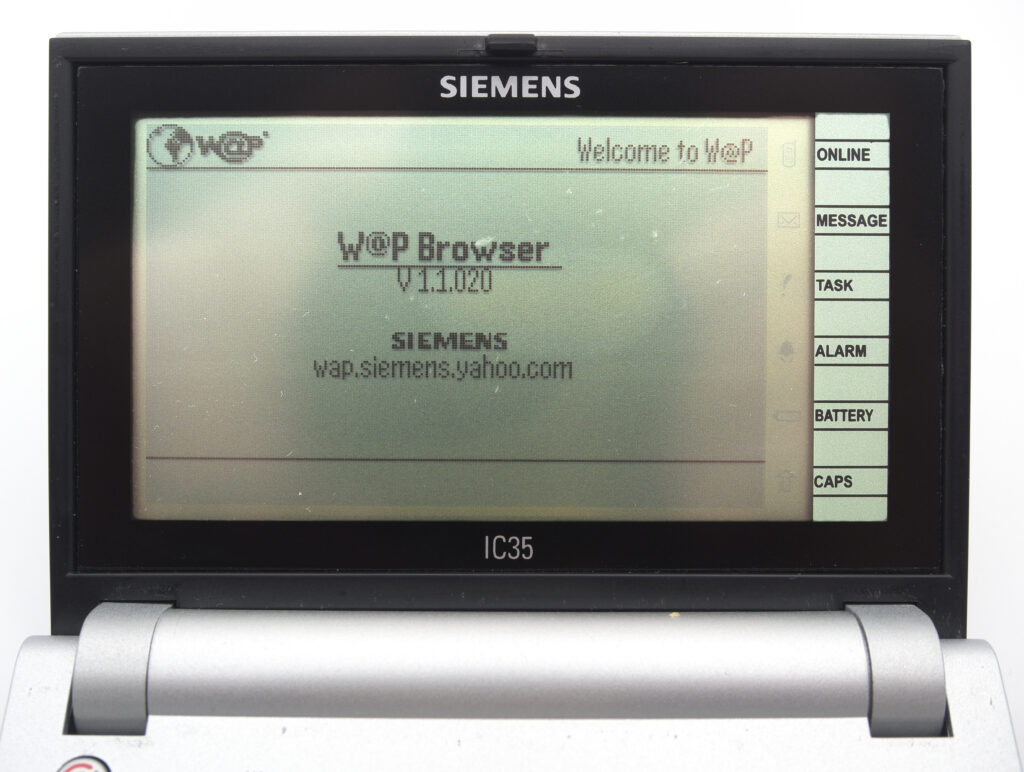
The most innovative feature at the time was the built-in WAP browser. WAP (Wireless Access Protocol), introduced around 1999 by major mobile industry players in Europe and the United States, enabled access to a simplified version of the web. Devices connected to a WAP gateway operated by the mobile network operator, which translated between WAP-specific formats and standard web technologies such as HTTP and HTML.
Because WAP used a more restricted format (WML instead of HTML), pages could be delivered more efficiently over slow data connections such as early GPRS networks. However, as network speeds increased, users quickly gravitated toward the full web experience, and WAP declined just as rapidly as it had appeared.
Hardware
The IC35 features a basic monochrome display without backlight. It is capable of displaying simple graphics, but the resolution is limited and contrast is not particularly good.
The keyboard is usable but consists of very small, soft-touch keys, making touch typing impractical. Compared to entering text using T9 on a mobile phone, it represents a clear improvement. However, when compared to later devices of similar size—such as the Sony Clié UX50—the IC35’s keyboard feels significantly less refined.
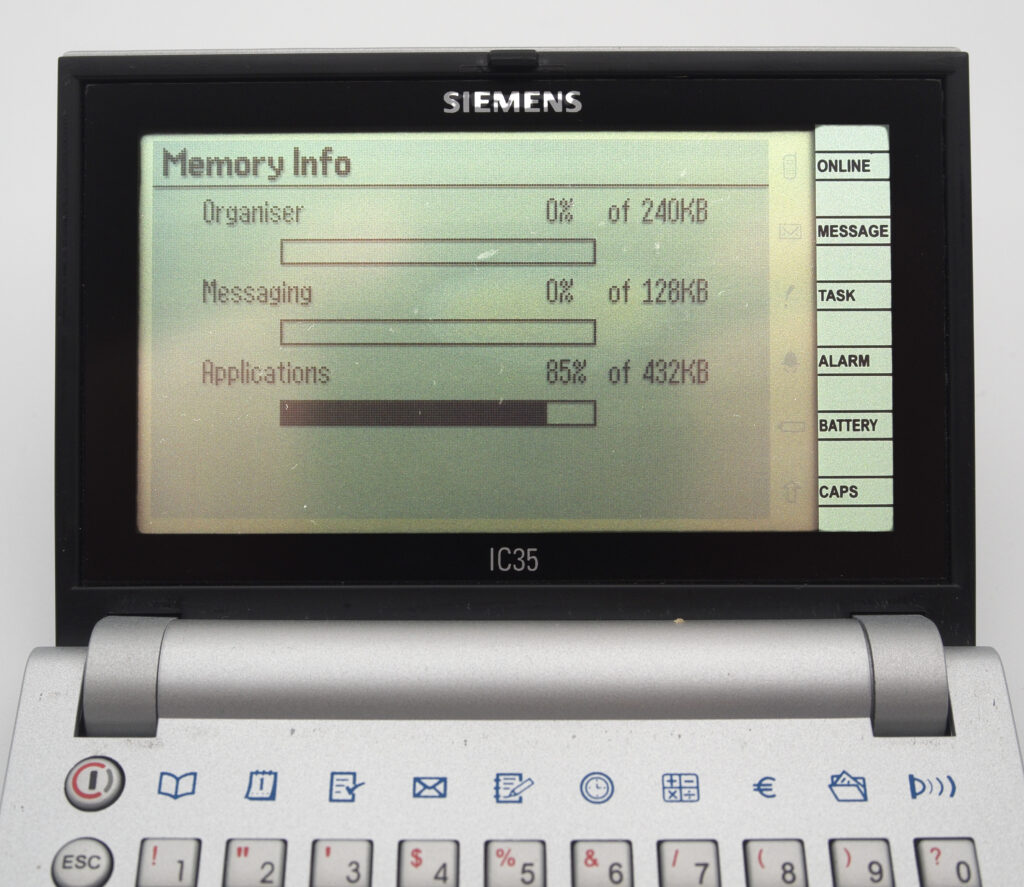
Internally, the device is powered by an 8-bit Z80 processor running at just under 10 MHz, which was already outdated by the year 2000. This was likely a cost-saving decision to reach a specific price point. The device includes only 1 MB of RAM, seemingly partitioned between different functions. While this may sound limiting, the lack of multimedia capabilities reduces memory demands. In addition, the presence of not one but two MMC card slots allows for storage expansion.
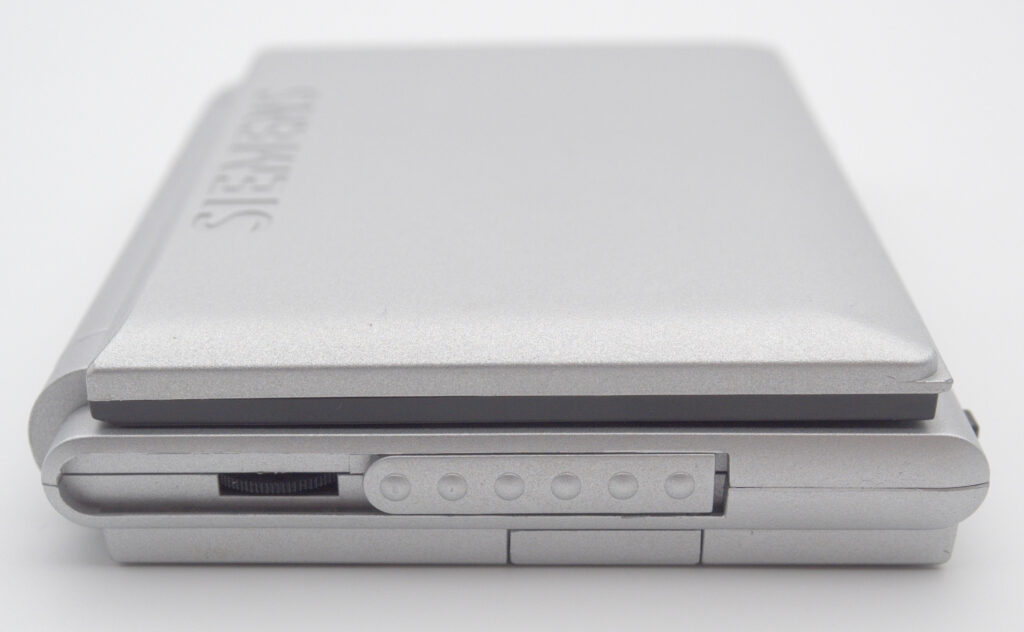
Interestingly, it also features a smart card slot — similar to the cards used today for corporate ID and authentication. It is unclear what the intended use for this slot was at the time of its release, but it likely reflects early ambitions around secure identification, digital signatures, and mobile access to online services.
Communications
The IC35 offers two primary methods of communication:
A proprietary serial connector, used with a docking station to connect the device to a PC
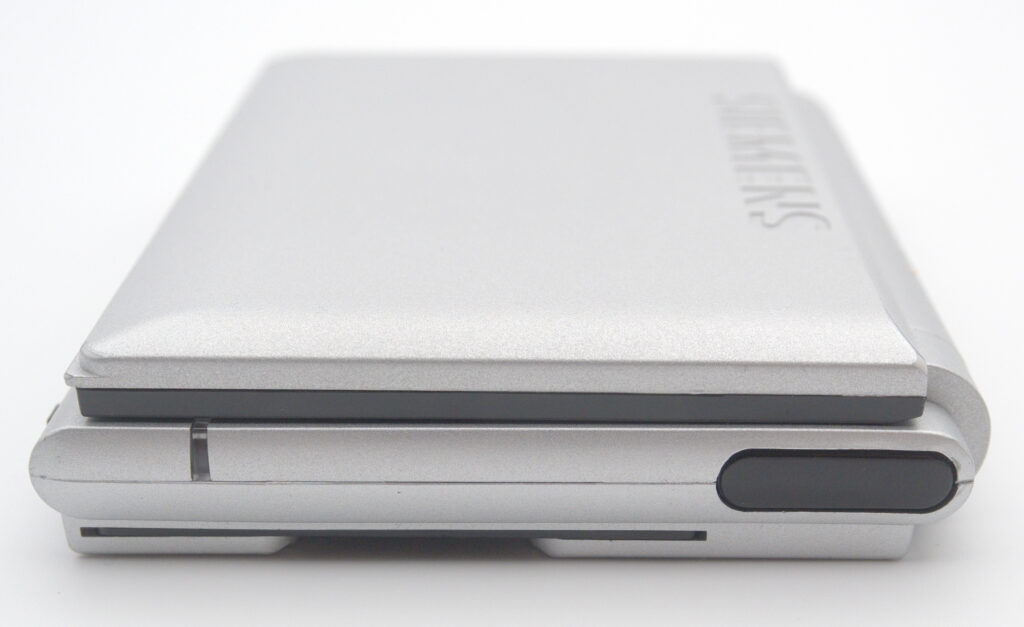
A built-in IrDA transceiver, typically used to connect to a Siemens mobile phone. Contacts can be transferred using this interface. Interestingly, the IC35 is able to exchange business cards not only with other Siemens devices, but also with devices from other ecosystems. In testing, a contact was successfully transferred to a PalmOS device (Handspring), suggesting support for standard formats such as vCard over IrDA.
What about the slogan?
Siemens chose the slogan “Siemens IC35 – The Unifier” for this device. What did they mean by that?
At the time, the computing world and the communications world—particularly mobile communications—were still largely separate. The IC35 was designed to bridge that gap and bring the two together in a single solution.
This was achieved by connecting the IC35 to a Siemens mobile phone, either via IrDA or a serial cable. Once connected, the device could send and receive SMS messages, manage the phone’s address book, and browse WAP-enabled websites.
In that sense, the IC35 represents an early attempt at convergence—something that would later become standard in modern smartphones.
The Siemens IC35 is a true outlier in my collection. It runs an operating system that is not shared with any other major PDA platform. It represents one of the earliest attempts to integrate mobile data services such as WAP into a handheld device, and it does so in a way that is quite different from both Palm and Psion.
At the same time, it is an example of a product that was already technologically outdated at launch, particularly in terms of display and processing power. This combination of ambition and compromise makes it a fascinating device from a historical perspective—and a worthy addition to the collection.
References
More pictures including pictures from the inside of the IC35 from Old-organizers.com
Video review by Youtube user MOSCHUSS (in German)