
Everything You Need to be Mobile


Quick facts
- CPU:
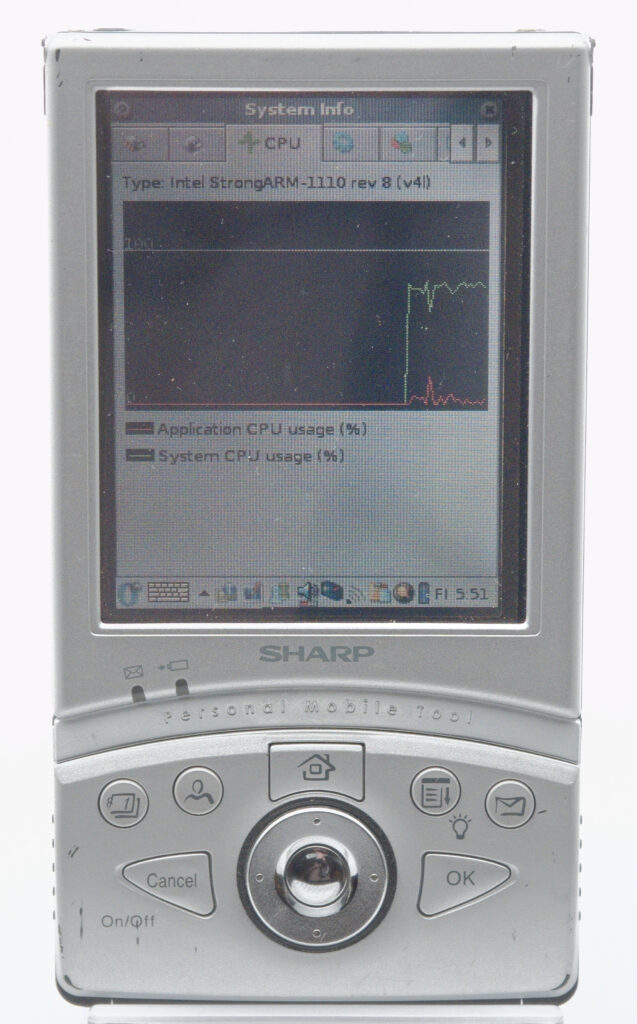
- Intel StrongARM @ 206 MHz
- RAM (KB):
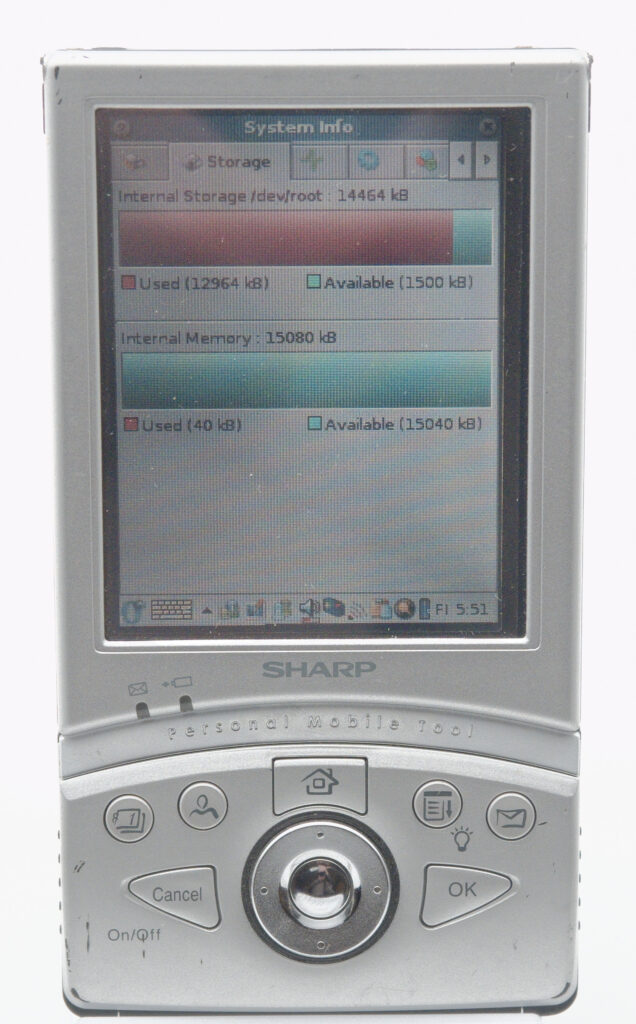
- 31999
- Display:
- 3.5-inch colour display with 240x320 resolution. Backlight.
- Operating system:
- Embedix/Qtopia alt. OpenZaurus/Opie
- Year introduced:
- 2002
- Power source:
- User-replaceable Li-ion battery (900 mAh)
- Connectivity:
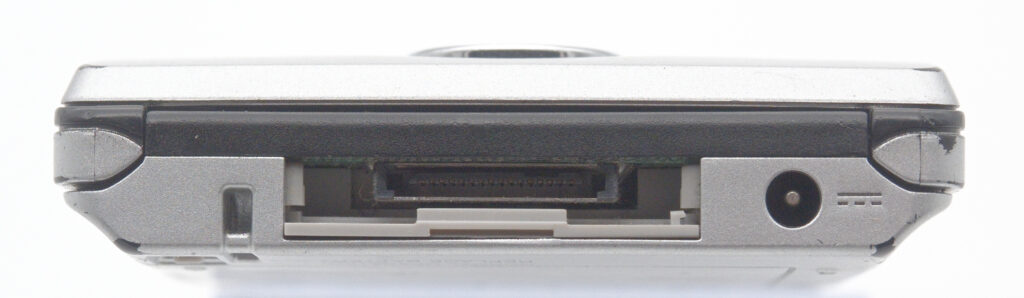
- Serial (proprietary connector) and IrDA
- Dimensions (mm):
- 74x137x18 (w/o protective cover)
- Weight (g):
- 193
- Built-in apps:
- Address book, Calendar, ToDo list, Memo, Hancom Word, Hancom Sheet, e-Mail, Opera, Media player
- Input method:
- Keyboard and Stylus
Introduction
While many of the PDA manufacturers of the 1990s and later had a background in making personal computers, Sharp had a different heritage. A long-time expert in display technology and power-efficient electronics, Sharp was one of the early companies to introduce calculators and so-called data banks. These were essentially calculators with the added ability to store simple data, usually phonebook or address information.
Sharp took this concept one step further with the Wizard line of organisers, exemplified here in this museum by the Sharp IQ-7000. These devices were sold in large numbers, especially in Sharp’s home market of Japan. But as competition intensified, Sharp needed to move further into true PDA territory. One early endeavour was to act as a subcontractor for Apple in the development of the Newton MessagePad H1000. However, being a subcontractor was not enough; Sharp wanted to compete on its own terms, which led to the introduction of the Zaurus line of PDAs.
The Zaurus SL-5000 featured here is not the first, nor the last in the product line, but it is the first to attempt something completely new: Linux as its operating system. This was a bold move from Sharp, as almost no one had used Linux in a PDA before, apart from the Agenda VR3 released less than a year earlier. Sharp used the Embedix distribution of Linux (based on a 2.4 kernel), with Qtopia from Trolltech providing the user interface and PIM applications.
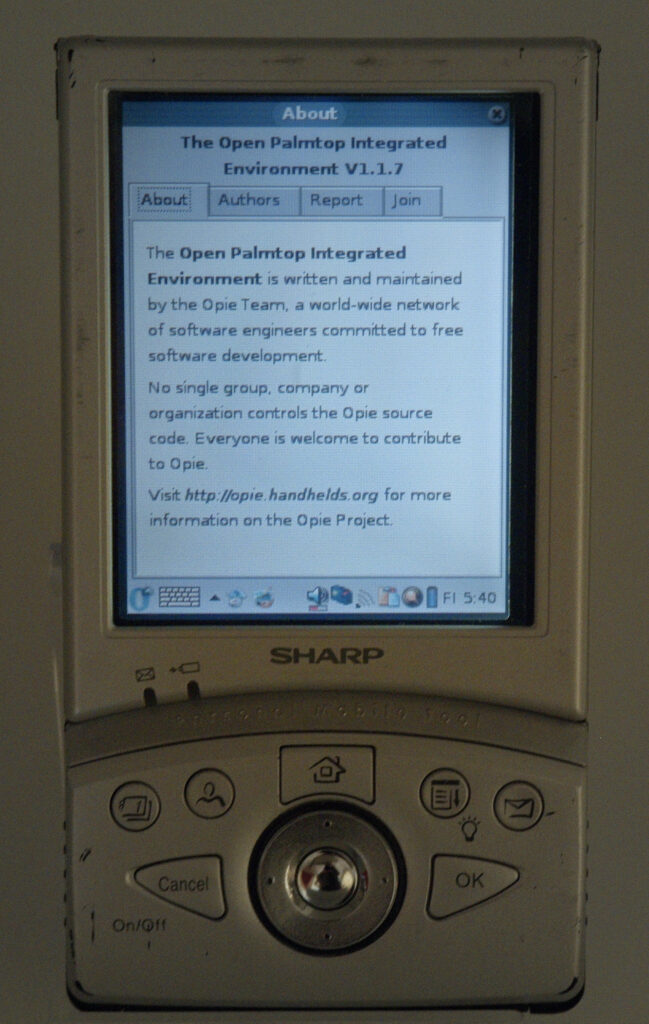
Being one of the first relatively open PDA platforms, the Zaurus SL-5000D generated significant interest in the developer community. Not long after its release, an alternative operating system — OpenZaurus — based entirely on free and open source components became available. Although the Zaurus was based on Trolltech’s Qtopia environment, the version provided by Sharp was not entirely open. This led the community to develop Opie (Open Palmtop Integrated Environment), a fork of Qtopia 1.x built on Qt/Embedded, offering a fully open and more flexible alternative.
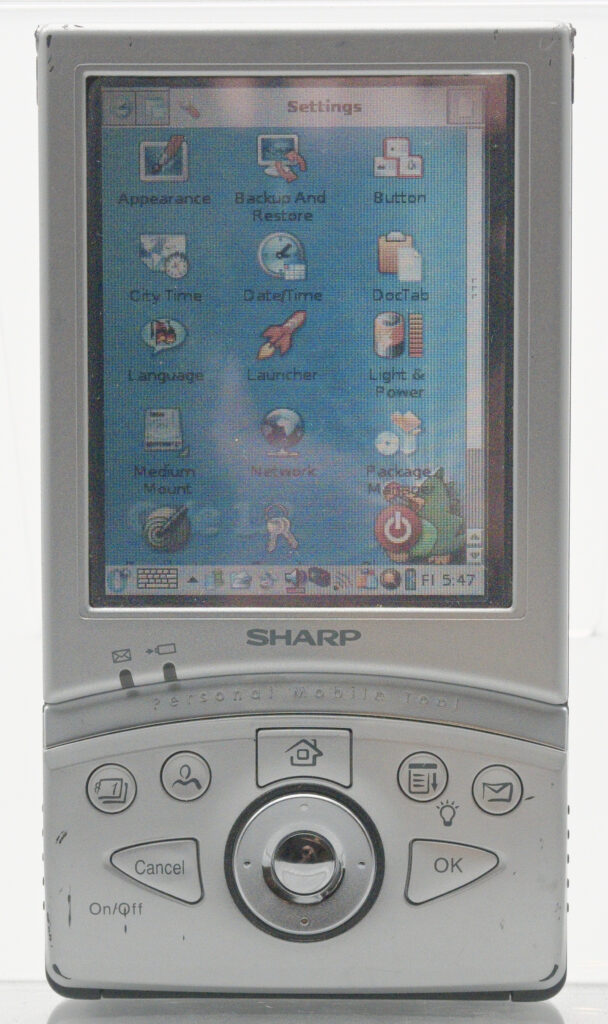
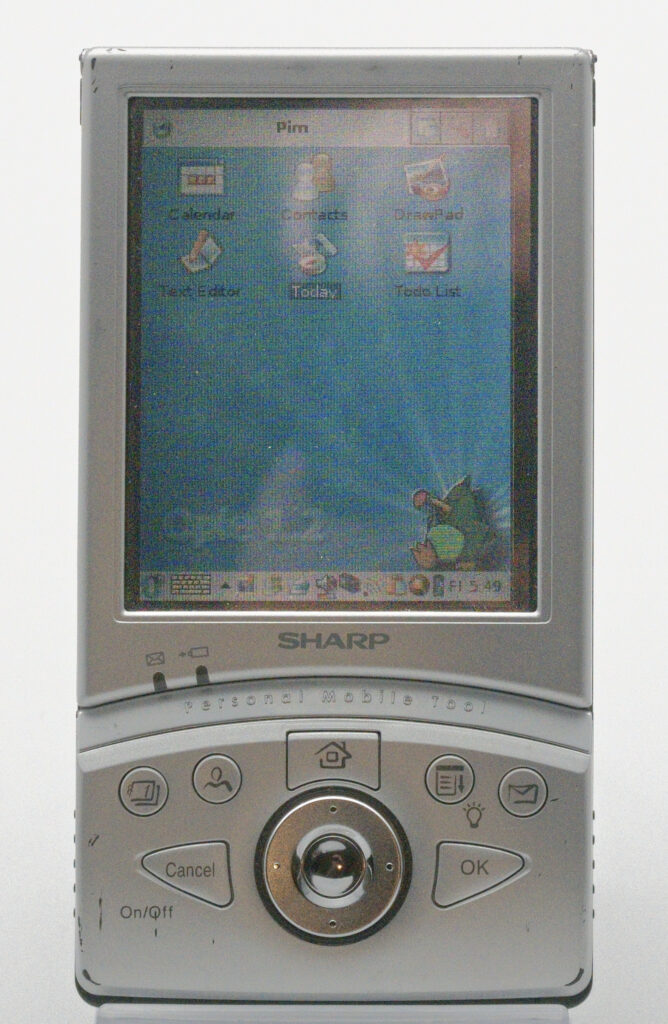
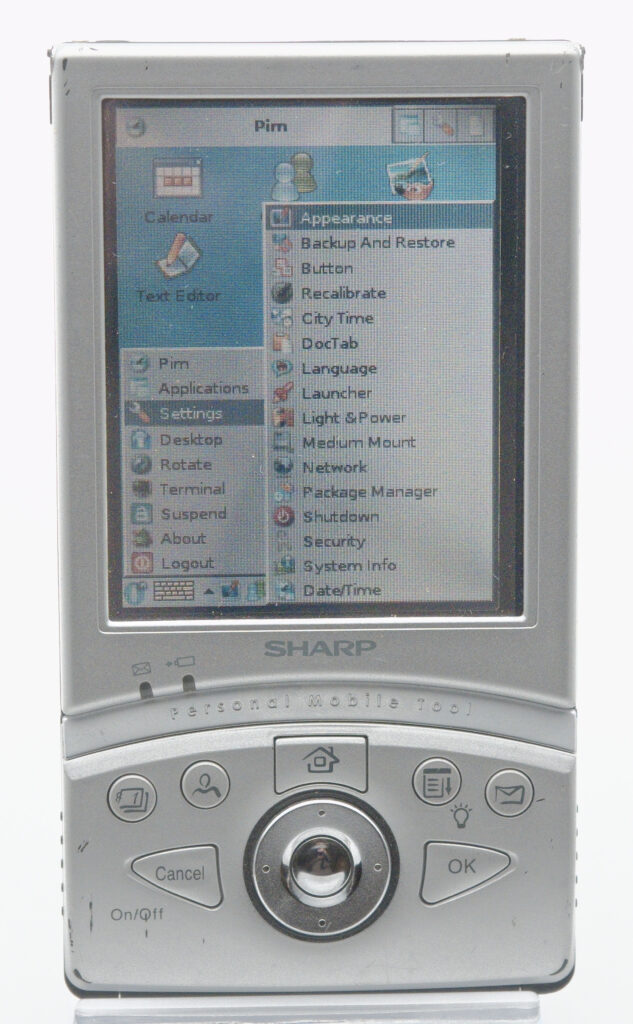
The SL-5000 in my collection runs this OpenZaurus software instead of the original Zaurus OS (Embedix + Qtopia). One can only guess that the former owner was either a developer, or a tinkerer like myself 🙂
The naming
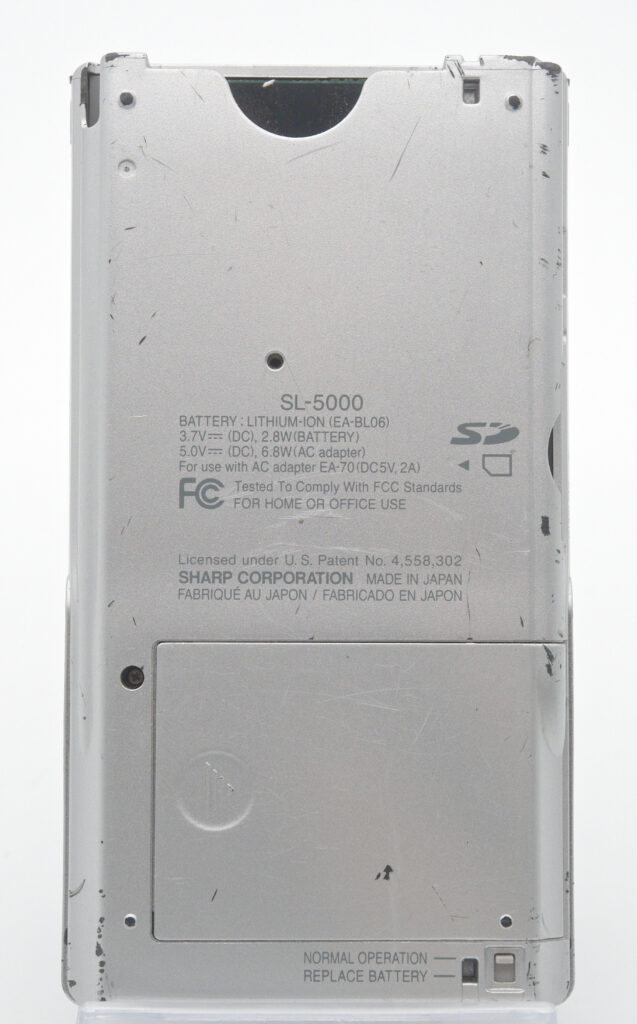
My unit bears the SL-5000 designation. This should not exist, if you go by information available on the Internet. It should either be the SL-5000D, which is the designation of the developer model containing 64 MB of RAM, or the SL-5500, which has the same specifications that my unit appears to have (32 MB). Perhaps my unit was sold in a different market or was an early production variant? We may never know.
Hardware
The Zaurus SL-5000 features a powerful Intel StrongARM CPU running at 206 MHz and 32 MB of RAM. It has a 3.5-inch colour display with backlight and a resolution of 240×320. The display is touch-sensitive and a stylus is provided. It also features a semi-transparent cover that can be removed if desired.
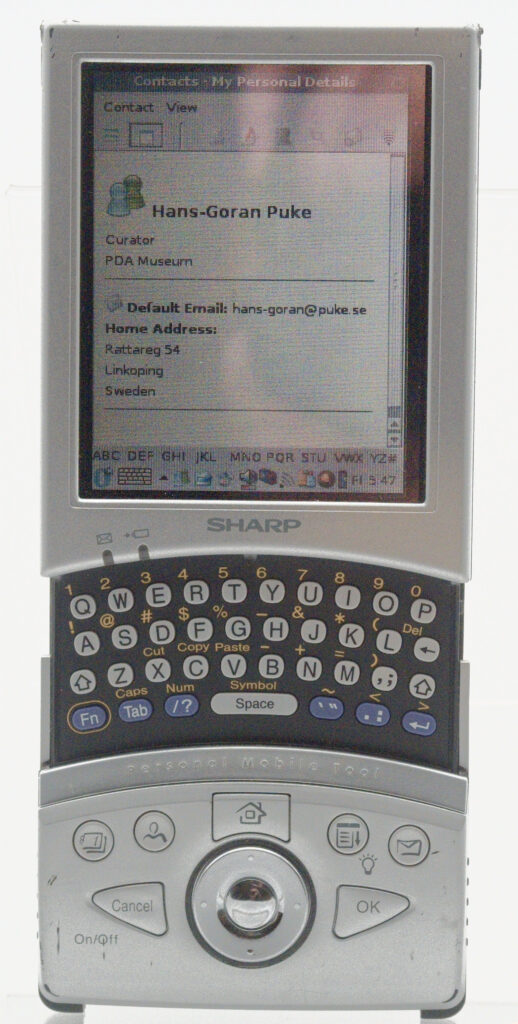
The stand-out feature (besides the software), however, is the sliding keyboard. The keyboard, consisting of 37 miniature keys, is normally concealed by the part of the PDA containing navigation and shortcut buttons. This part can be pushed down and, when doing so, the keyboard is revealed. The keyboard is well constructed, providing tactile feedback similar to BlackBerry units of the time.
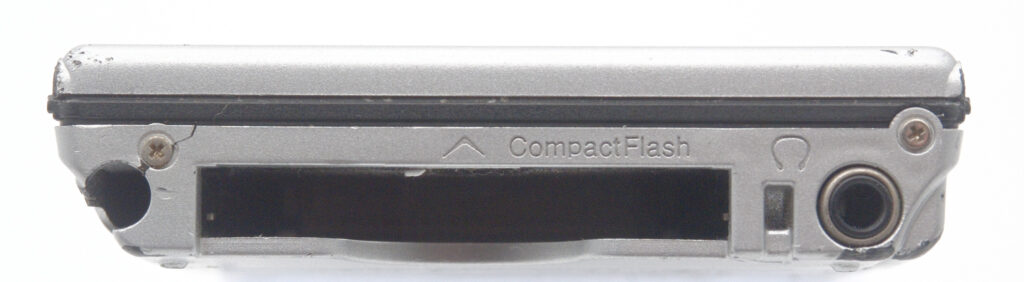
The Zaurus also features both a CF card slot and an SD card slot. With the addition of a CompactFlash WiFi card, the Zaurus could connect to wireless networks using standard Linux tools like iwconfig.
It has a serial port and supports IrDA for infrared communications. USB is provided through the docking station. The unit is powered by a user-replaceable Li-ion battery. Several accessories were available, one of the more interesting being a “Digital Camera Card” that slotted into the CF card slot.
Software
Sharp provided the unit with Embedix — a Linux distribution — and Qtopia from Trolltech, which handled the user interface. Superficially, this environment looked similar to Windows Mobile devices that appeared later. The usual PIM applications were included: Address Book, Calendar, ToDo list and Memo.
For communications, it included e-mail and the Opera browser. Hancom Sheet and Hancom Word provided some compatibility with Microsoft Office formats. A media player was also included, best used with wired headphones, as the built-in speaker was not well suited for music playback, and Bluetooth was not yet available.
As an alternative, users could download and install the OpenZaurus environment, and my unit came with that installed. OpenZaurus used the same Linux kernel as the Embedix version provided by Sharp, but replaced proprietary components that were not available to the open source community with open alternatives. The result was an operating system that was fully open and largely compatible with the original software environment.
Personal reflection
If Sharp took such a radical decision to use Linux instead of Palm OS or Windows CE, why does it feel like the Zaurus could just as well have used Windows CE in the first place? The environments are strikingly similar from a user experience point of view. Yes, under the hood things are completely different, but why should the user care? Perhaps it was simpler for Sharp to work with Linux than to collaborate with Microsoft, or perhaps they wanted to retain a larger share of the platform for themselves. We may never know.
From a tinkerer’s perspective, this PDA is a treasure: with a CompactFlash WiFi card installed, I will be able to connect the Zaurus to my network and SSH into it — turning this early 2000s PDA into a fully networked Linux machine.
So was it a success or not? This is a difficult question to answer. On one hand, only a few PDAs were ever sold with Linux preinstalled, so in that sense it was not a success. On the other hand, with Embedix and Qtopia, Sharp demonstrated that Linux was a viable operating system for handheld devices — a path that would later be followed by Google with Android in 2008.
The Zaurus SL-5000 is one of the first PDAs to feature Linux as its operating system. It is also one of the first to allow the user to choose a different operating system — OpenZaurus — and install it instead. This level of openness was unheard of at the time, making the SL-5000 a favourite among developers and tinkerers alike. It can also be seen as an early precursor to the Android operating system, arriving six years before it.
References
Brochure for Sharp Zaurus SL-5500
The Definitive Guide to Sharp’s Japanese and International Zaurus Models, by Ulrich Plate