
The world’s first smartphone
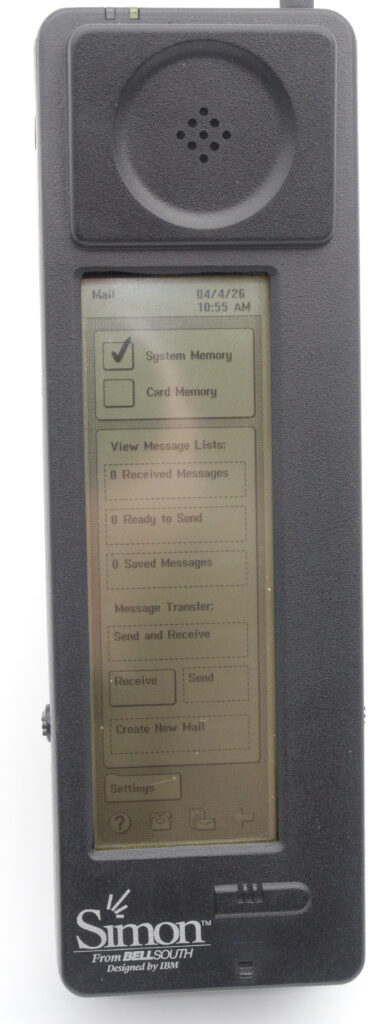
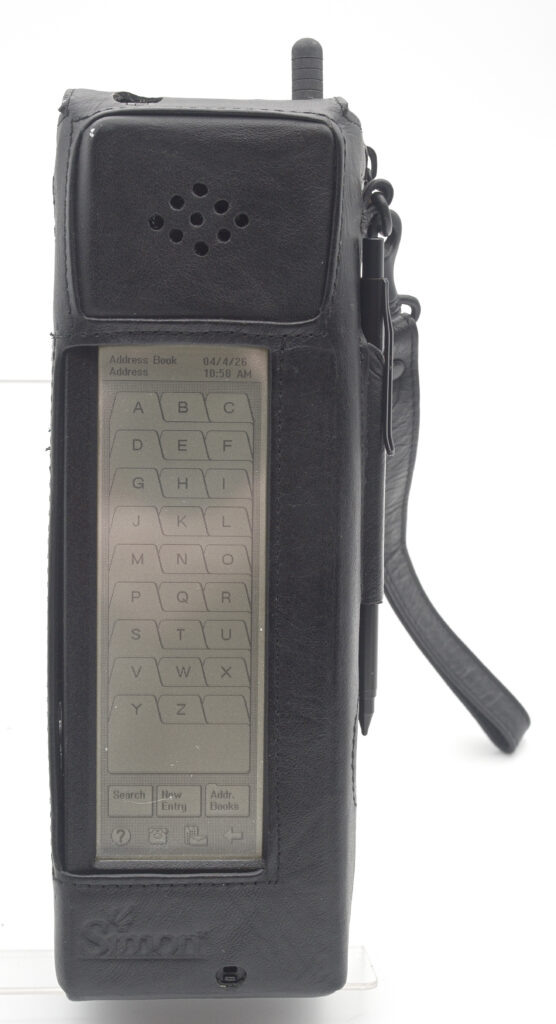
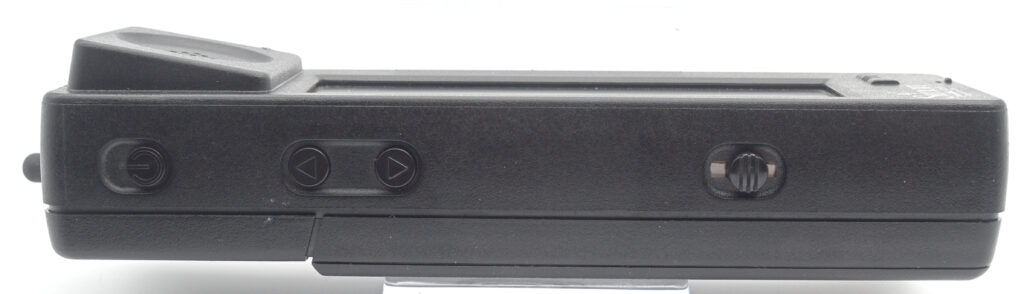
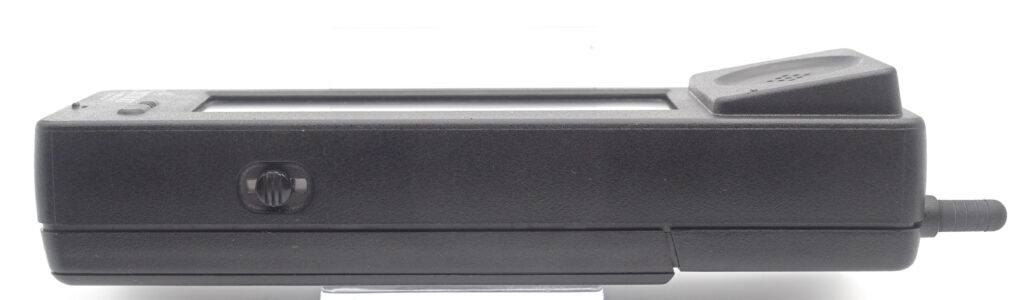
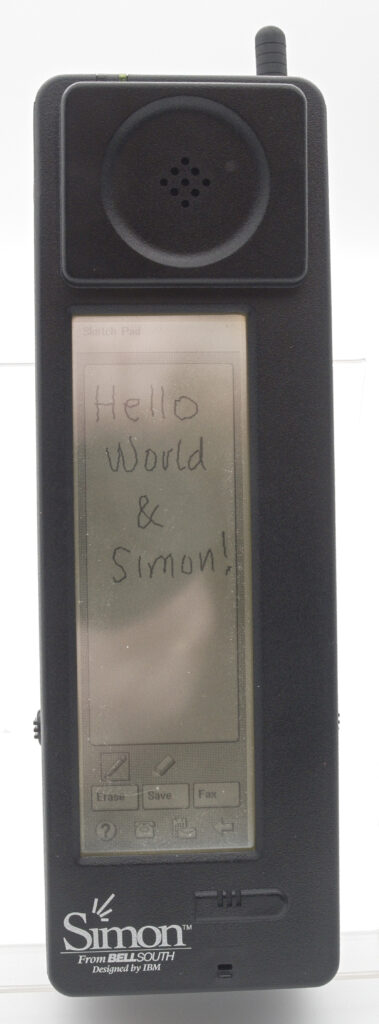
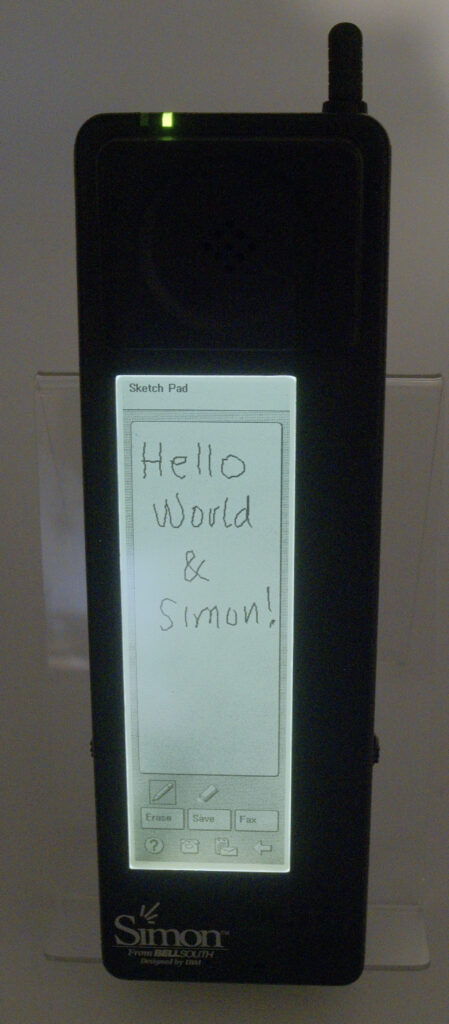
Quick facts
- CPU:
- NEC V30HL @ 16 MHz (x86 compatible)
- RAM (KB):
- 1024
- Storage (MB):
- 1
- Display:
- 5-inch 160 × 293 pixel monochrome backlit
- Operating system:
- ROM-DOS+Navigator
- Year introduced:
- 1994
- Power source:
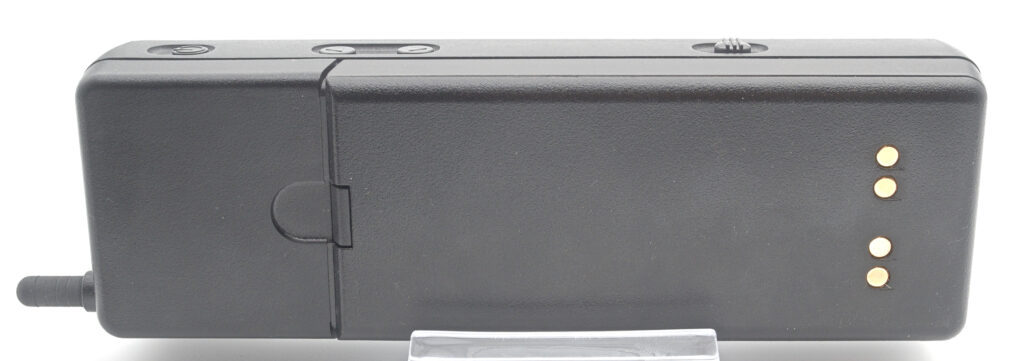
- 7.5V NiCd battery, user replaceable
- Connectivity:
- Serial, modem, Cellular (using built-in 2400 bps modem)
- Dimensions (mm):
- 200x64x38
- Weight (g):
- 500
- Built-in apps:
- Calendar, Address book, ToDo-list, Notes, Sketch, Scramble, E-mail, Fax
- Input method:
- Stylus
Background
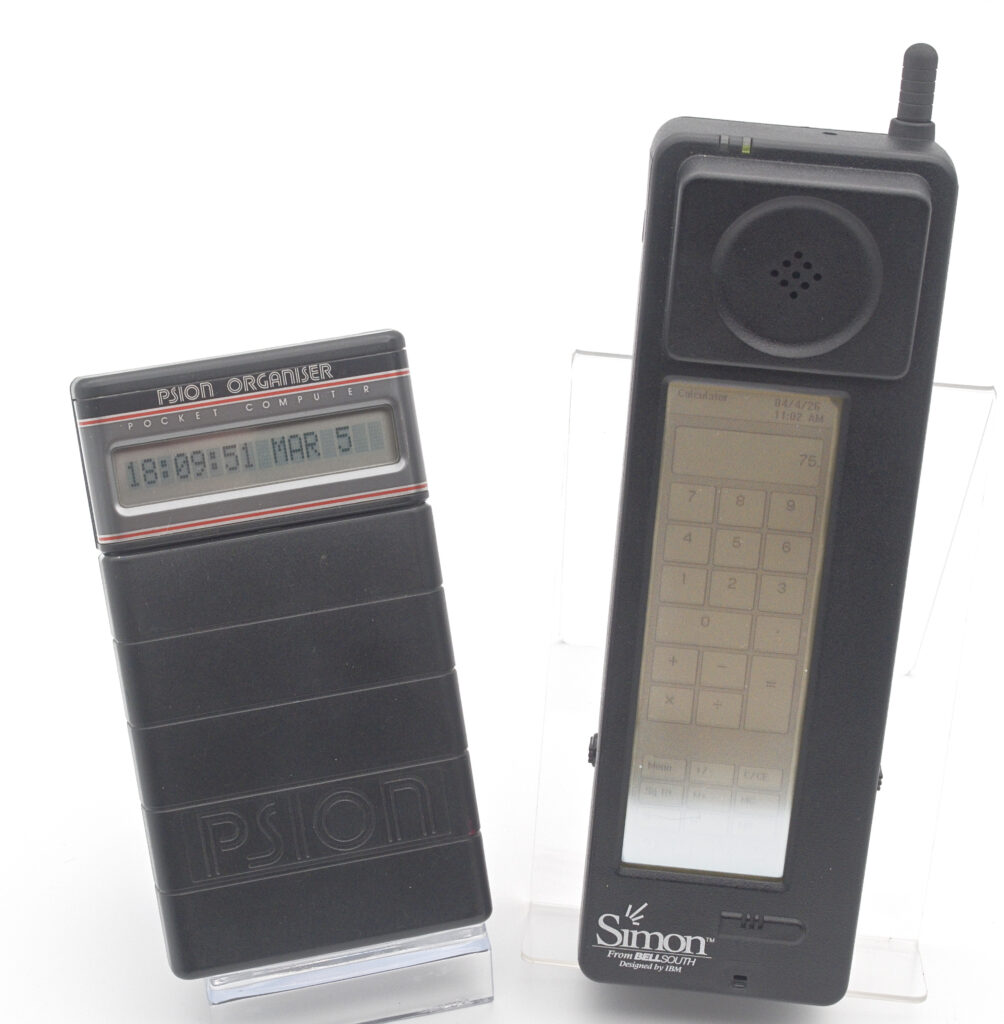
Back in 1992, the world was a very different place. Mobile phones were primarily used by business professionals who could afford the high per-minute fees charged by cellular network operators, and handheld computers such as the Psion Series 3 had only just appeared.
It was in this context that BellSouth, a US-based cellular operator, and IBM began discussions about creating a device that could combine the connectivity of a mobile phone with the utility of a handheld computer. At the time, the term “PDA” had not yet been coined.
After two years of development — and with the help of Japanese electronics giant Mitsubishi Electric — their vision became reality in the form of the “BellSouth Simon, designed by IBM”.
The IBM Simon is often described as the world’s first smartphone, and while that label is technically correct, it does not fully capture how unusual this device really is. Released in August 1994, the Simon combined a mobile phone with a touchscreen-based personal information manager, and even supported fax and email — features that would not become commonplace for many years.
Yet, despite its impressive capabilities, it feels less like a product of its time and more like a glimpse of a future that had not yet arrived.
The AMPS network
The Simon operated on the AMPS cellular network. AMPS was a first-generation (1G) analogue cellular system used widely in the United States and parts of South America. In Europe, however, operators had already begun deploying second-generation digital networks such as GSM.
Because AMPS was an analogue system designed for voice communication, the Simon had to rely on a built-in modem to transfer data. This worked in much the same way as a home computer connecting to services such as CompuServe or America Online over a dial-up connection.
The modem operated at 2400 bits per second. For comparison, GSM with GPRS would later offer around 9600 bits per second, and contemporary landline modems could reach speeds of 33.6 kbps.
Pricing was another major limitation. Unlike later digital networks, where users were billed based on the amount of data transferred, AMPS charged by connection time. Combined with the low data rates, this made data communication both slow and expensive.
This, along with the fact that the Simon itself retailed for around $1200 without a subscription (roughly $2500 today), likely explains why it sold only around 50,000 units and remained on the market for just six months.
In the United States, AMPS was later replaced by D-AMPS, a digital evolution of the same system. Since this required new hardware, the Simon quickly became obsolete.
The hardware
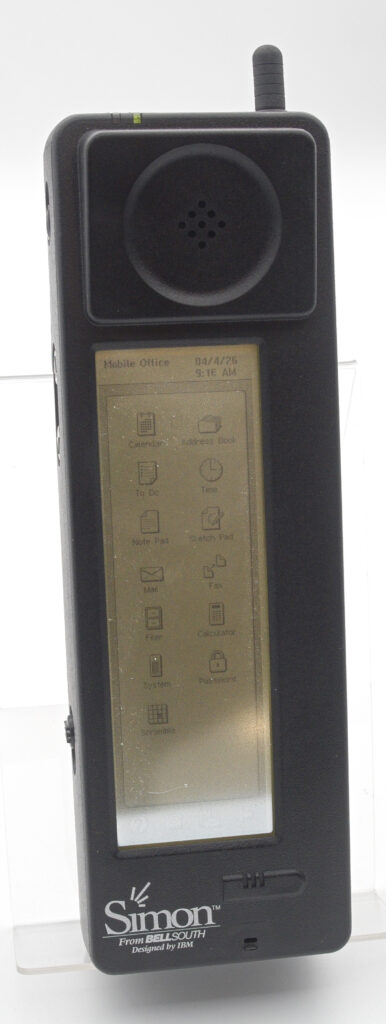
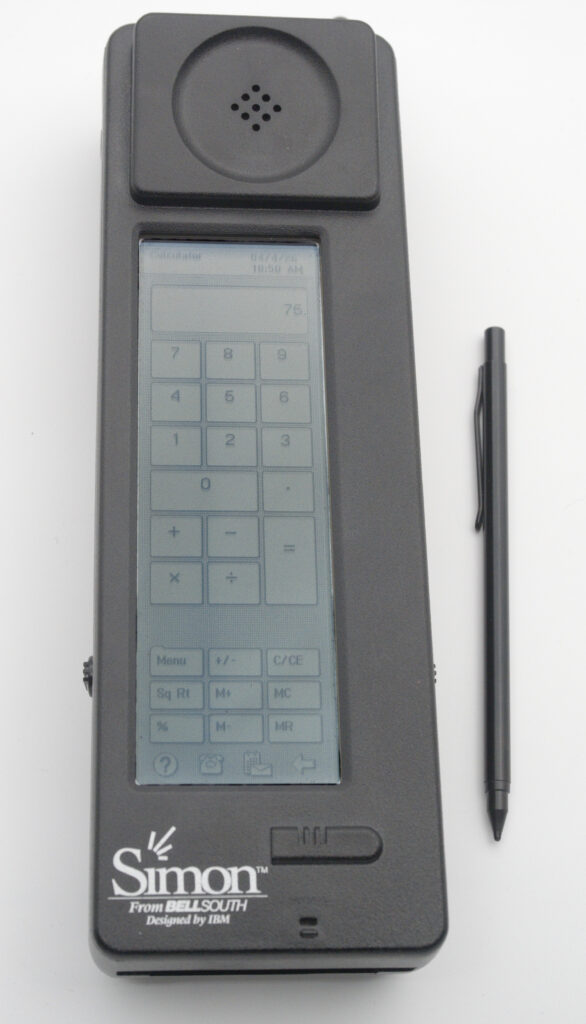
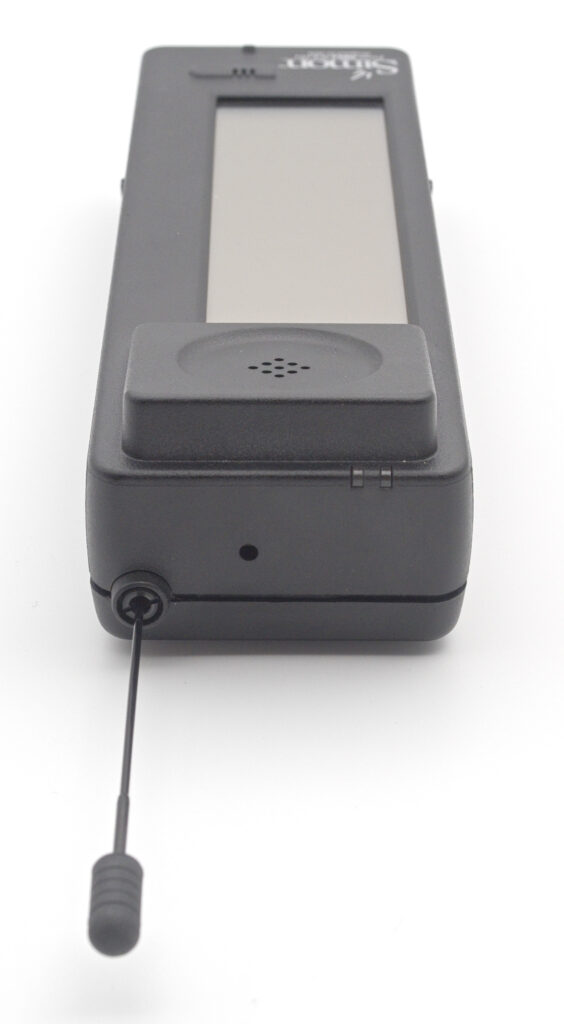
The Simon is, quite simply, a brick. Weighing around half a kilogram, it is far too large to fit comfortably in a pocket. Instead, it was supplied with a leather carrying case featuring a hand strap. The stylus, required to operate the resistive touchscreen, had its own dedicated slot in the case.
The display has an unusual rectangular shape by modern standards, but offers a surprisingly usable resolution. It is monochrome, but features a decent backlight (likely LED rather than electroluminescent).
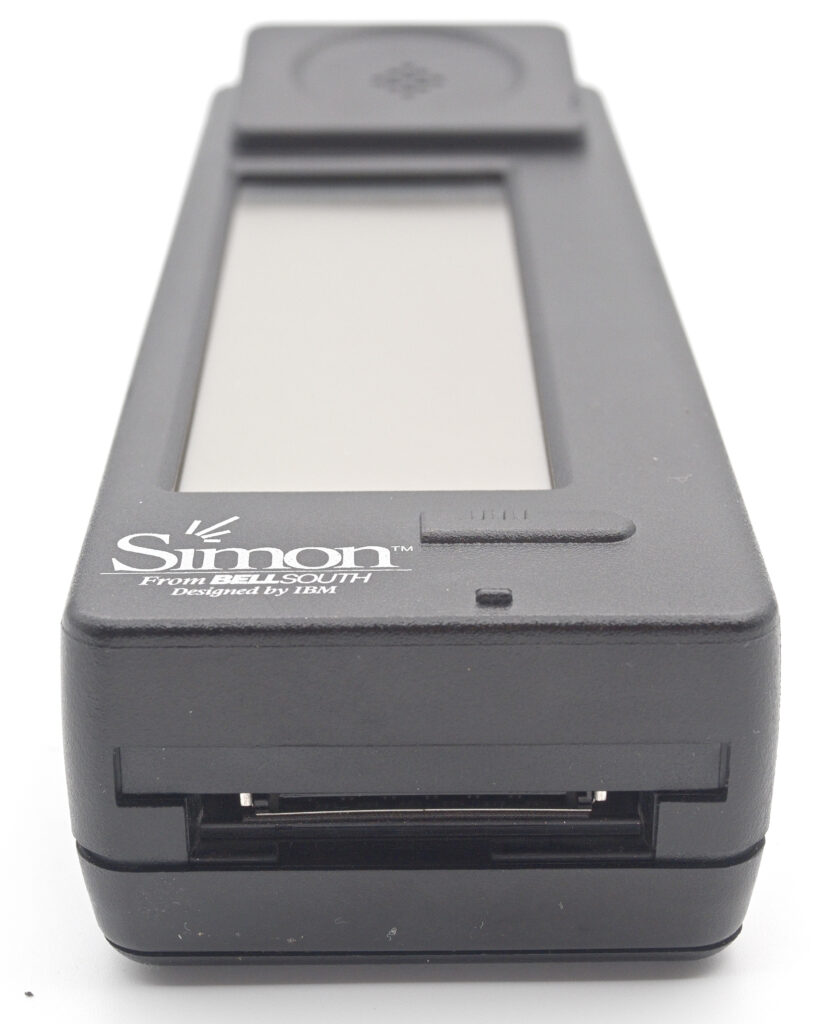
Internally, the device is powered by a system-on-a-chip that includes an x86-compatible processor. At the bottom of the unit is a PCMCIA slot, allowing expansion with memory cards, modems and other peripherals. Next to it is a serial port using a proprietary connector.
The software
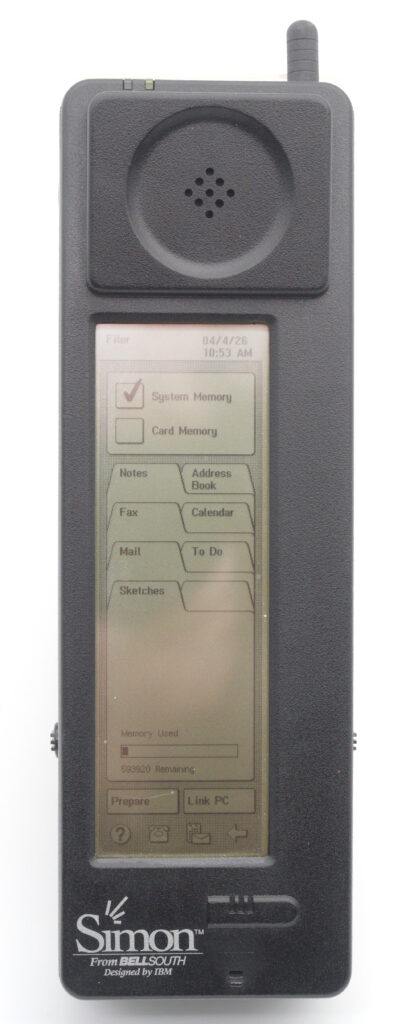
The Simon runs a variant of DOS known as ROM-DOS, developed by Datalight. IBM built a graphical user interface on top of this, called “Navigator”. The user is never exposed to a DOS prompt.
Interaction is entirely stylus-based, although the on-screen buttons are large enough to allow basic operation with a finger when making phone calls.
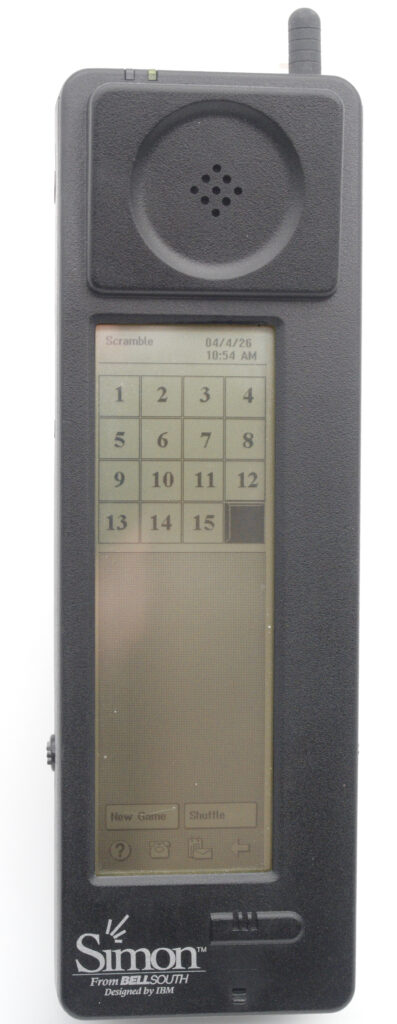
Navigator includes the typical PIM applications: a calendar, address book, to-do list and notes. It also features a drawing application called “Sketch” and a game named “Scramble”.
As a connected device, the Simon can also send and receive both email and fax messages. Despite the limited hardware, the interface feels reasonably responsive.
Unlike later platforms such as Palm OS or Symbian, the Simon never developed a significant third-party software ecosystem. In fact, only a single known commercial third-party application — “DispatchIt!” by PDA Dimensions — was ever released for it.
Commercially
In purely commercial terms, the Simon must be considered a failure. It sold approximately 50,000 units and was withdrawn from the market after only six months.
However, viewed as a technological experiment, it was remarkably successful. It demonstrated that it was possible to combine a mobile phone and a handheld computer into a single device — and that such integration offered clear advantages over attempting to connect separate devices via cable or infrared.
It can be argued that the IBM Simon is more of a mobile phone — or smartphone — than a traditional PDA, and therefore does not strictly belong in a PDA-focused collection.
However, it represents a crucial moment in the evolution of mobile computing. It was the first device to truly merge telephony and personal information management into a single unit.
At a time when only a handful of manufacturers were experimenting with PDAs — and when companies like Ericsson, Nokia and Apple had nothing comparable — the Simon stood alone.
For that reason, it is not just relevant, but essential to include in this collection.