
A multimedia device in your pocket
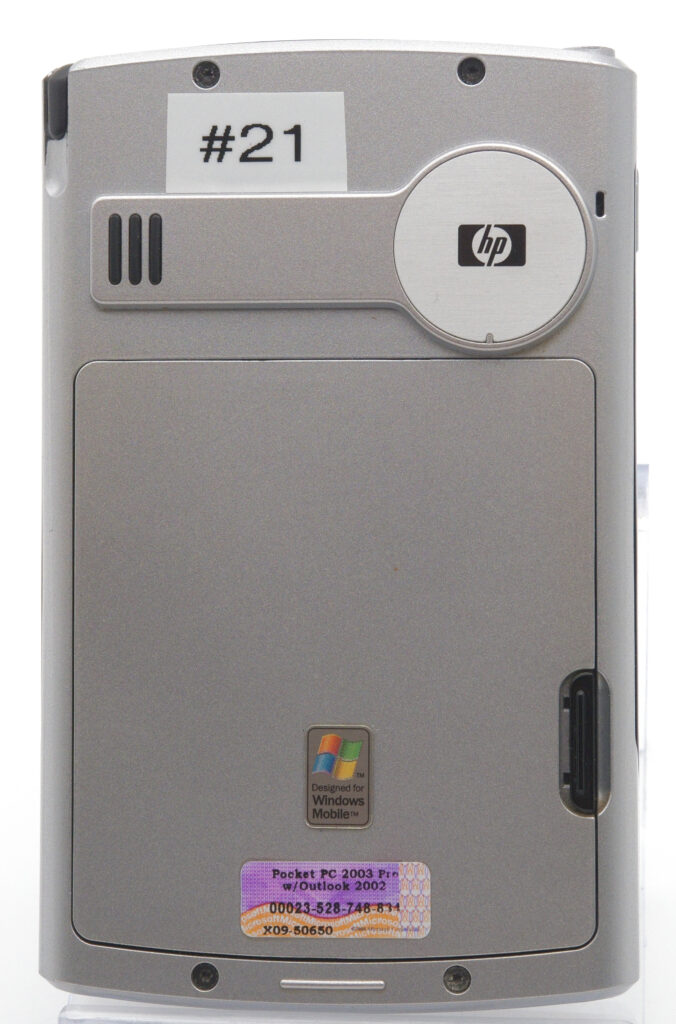
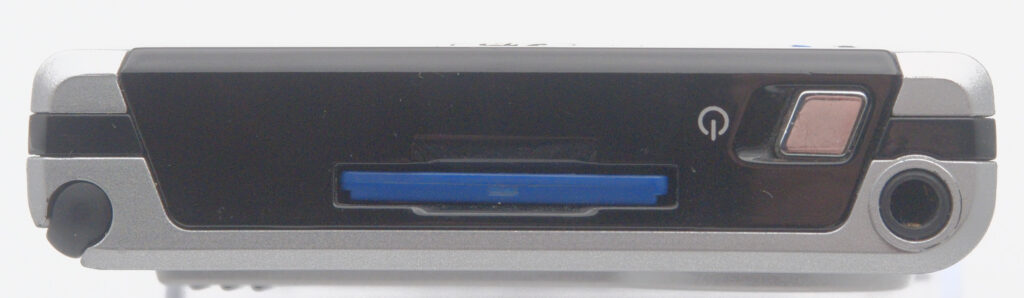

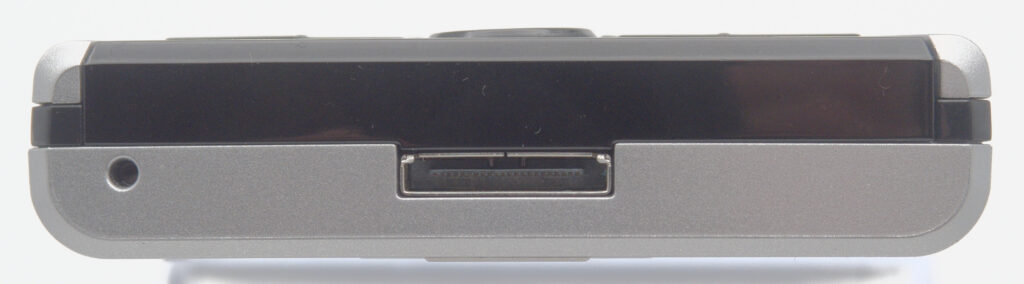
Quick facts
- CPU:
- Samsung S3C2440 @ 300 MHz
- RAM (KB):
- 64000
- Storage (MB):
- 4
- Display:
- 3.5-inch back-lit colour display with 240x320 pixel resolution
- Operating system:
- Pocket PC 2003 SE
- Year introduced:
- 2004
- Power source:
- Replaceable Li-ion battery
- Connectivity:
- USB 1.1, IrDA, Bluetooth 1.1, Wifi 802.11b
- Dimensions (mm):
- 114x71x16
- Weight (g):
- 158
- Built-in apps:
- Pocket Word, Excel, Outlook, HP Image Zone, Pocket TV Pro, Nevo and more
- Input method:
- Stylus
Overview
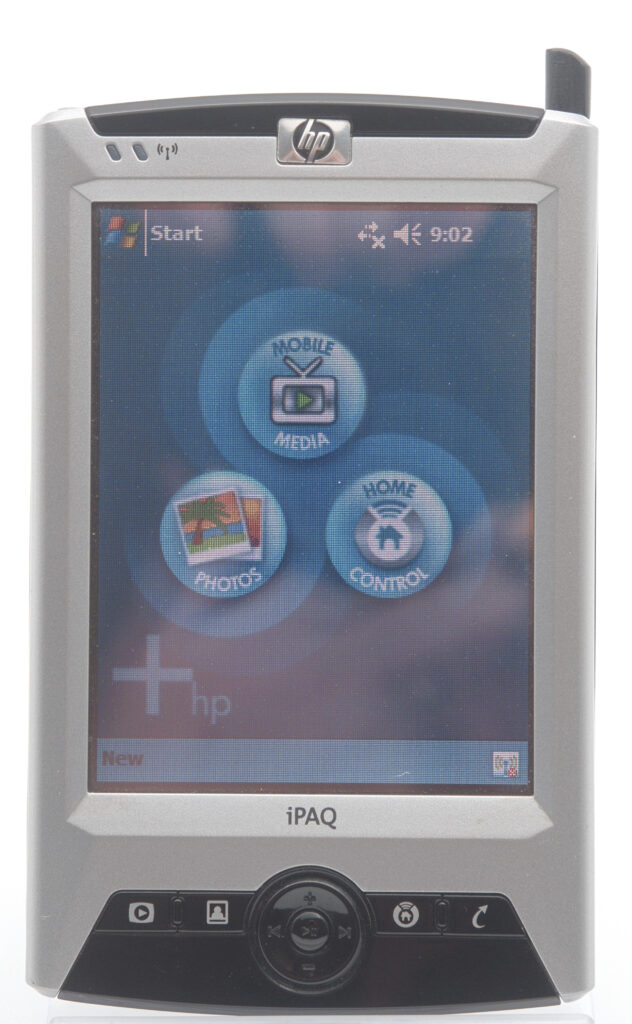
The iPAQ rx3115, introduced by HP in late 2004, is a PDA from the closing years of the PDA era. Smartphones already existed at this point, but had not yet become mainstream, and the iPhone was still several years away.
The rx3115 runs the then-popular Microsoft Pocket PC 2003 SE operating system, which in many ways resembles Windows XP on the desktop—albeit adapted for a much smaller screen and operated primarily using a stylus.
The HP iPAQ rx3115 can be seen as a “scaled-down” version of the iPAQ rx3715. The latter includes a built-in 1.3-megapixel digital camera, a feature that the rx3115 lacks.
Software
The bundled software was comprehensive, particularly in the PIM and Office categories. It included Pocket Outlook as well as mobile versions of Word and Excel. Thanks to the built-in microphone, loudspeaker, and a dedicated hardware button, voice recording was both simple and convenient.
To differentiate the device in an increasingly crowded market, HP chose to position it as a multimedia device. The rx3115 is capable of displaying photos, as well as playing both video and audio files, thanks to its relatively powerful Samsung S3C2440 CPU running at 300 MHz.
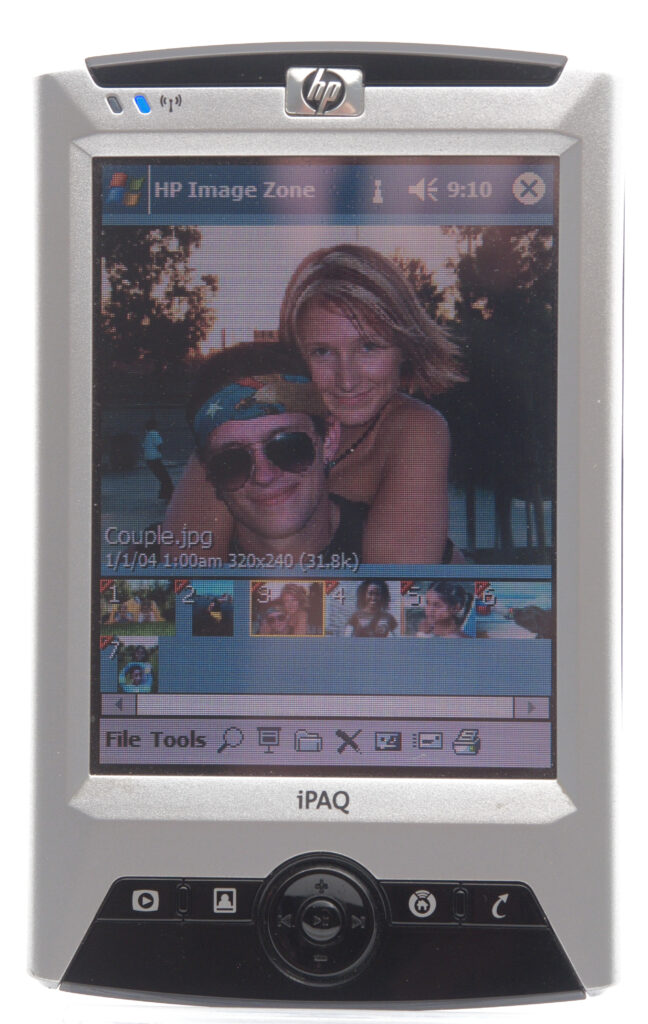
Microsoft included Windows Media Player 9 for media playback, while HP added its own HP Image Zone application for viewing, editing, and even printing photos. For MPEG video playback, users could rely on Pocket TV Pro.
With the bundled PC version of HP Image Zone installed on a home computer, it was even possible to stream media over a wireless connection—an impressive feature at the time.
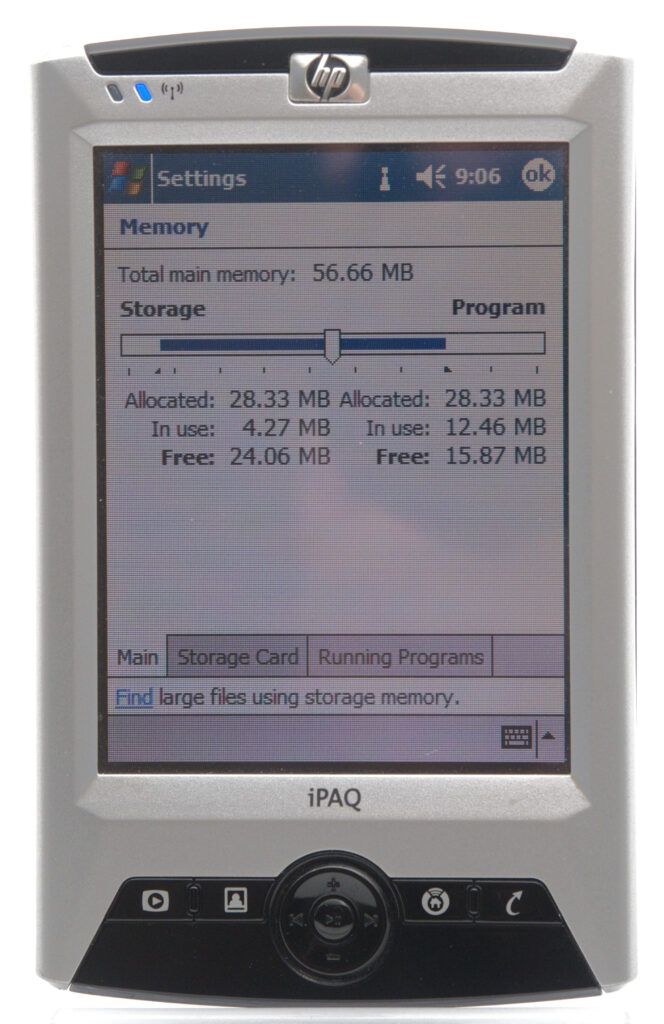
In practice, however, using the rx3115 as a multimedia device required an SD card, as the built-in storage was very limited. While the device featured 64 MB of RAM—some of which could be allocated for storage—only 4 MB of persistent flash storage was available to the user.
Wireless functionality
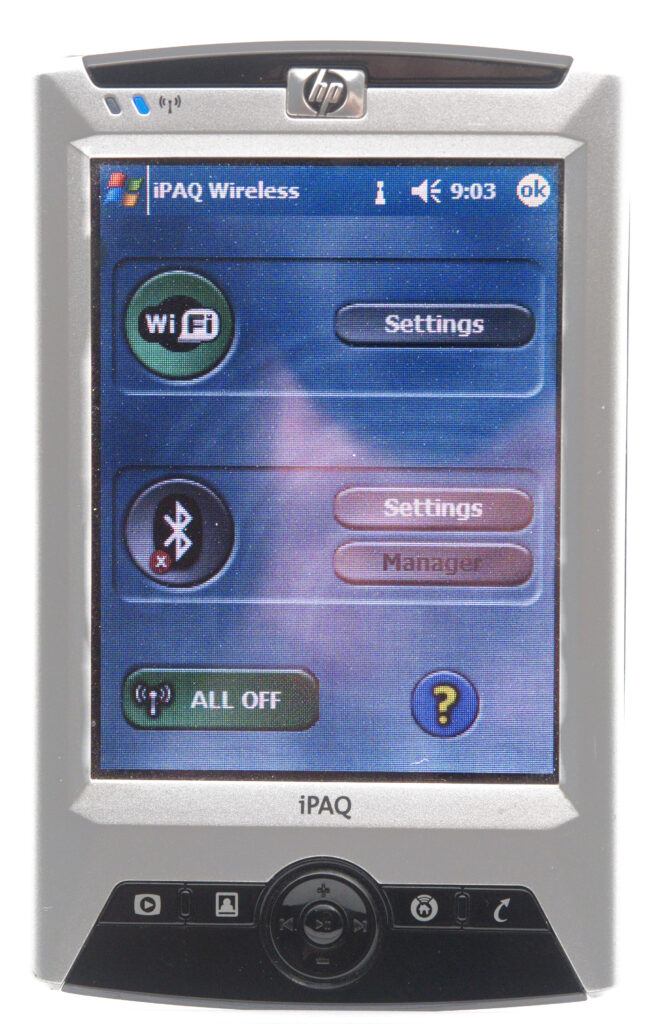
HP equipped the rx3115 with both Bluetooth 1.1 and WiFi (802.11b), along with a dedicated application to manage wireless connections.
In addition, the device includes an infrared (IrDA) port, which could be used in several ways:
- Transferring data between devices
- Synchronizing with a compatible PC
- Printing to IR-enabled printers
- Acting as a universal remote control for TVs and other home electronics
For the latter use case, HP bundled the Nevo application, which turned the PDA into a surprisingly capable remote control.
Syncing with a PC
Like all Pocket PCs of its time, the rx3115 relied on Microsoft ActiveSync for synchronization with a Windows PC—most commonly running Windows XP.
ActiveSync was provided on a CD included in the box, along with a proprietary USB sync cable, stereo headphones, and an AC adapter.
The competitive landscape in 2004
With the rx3115, HP managed to hit something of a sweet spot. The device was compact enough to fit comfortably in a pocket, yet offered a capable display and a rich software bundle—all at a relatively affordable price.
However, competition was fierce. Not only was HP competing with Palm and its ecosystem, but many traditional PC manufacturers had also entered the PDA market. At the same time, smartphones were beginning to emerge as a new category.
Within just a few years, this shift would render standalone PDAs obsolete, and HP—like most other manufacturers—would exit the market entirely.
This is a PDA that I personally owned and used almost daily for a period of time, until I eventually transitioned to a smartphone.
Devices from this generation were, in many ways, more feature-rich and dependable than early smartphones from manufacturers such as Ericsson, Nokia, and Motorola.
Comparing the rx3115 to a modern smartphone, however, is a completely different story. By today’s standards, the display feels dim and low-resolution, and the need to rely on a stylus for input quickly becomes cumbersome.
Only a few years later, Apple would fundamentally change the user experience—and render devices like this a thing of the past.
References
Product highlights from Crutchfield
Review from 2005 by OSNews