
Way ahead of its time – and still unlike anything else
Quick facts
- CPU:
- MIPS R3000
- RAM (KB):
- 4096
- Storage (MB):
- 8
- Display:
- 480x320 LCD with 16 levels of greyscale. Backlight.
- Operating system:
- Magic Cap 3.1
- Year introduced:
- 1998
- Power source:
- User replaceable Li-ion rechargeable battery and CR123 for backup
- Connectivity:
- Magic Bus, IrDA, Modem
- Dimensions (mm):
- 185x113x34
- Weight (g):
- 500
- Built-in apps:
- Notes, Calendar, Address book, E-mail, Fax, Clock, Calculator etc
- Input method:
- Stylus
Background
The DataRover840 is an unusual device. It is one of the few PDAs that run the Magic Cap operating system from General Magic. General Magic started as a spin-off from Apple, where Marc Porat had some revolutionary ideas about how mobile computing should work. He realised that a mobile computer would always be less powerful than a stationary one, so instead of trying to work around this limitation, it became part of the computing model: more demanding tasks would be handed off to more capable servers, and the results returned to the mobile device.
A key component of this vision was the language Telescript, which allowed tasks to be dispatched from the mobile device to remote servers. These servers could belong to different companies and perform different kinds of work. In essence, this was a precursor to what we today call cloud computing and software agents.
Radical as this idea was at the time, Apple’s board was not entirely convinced. However, Marc Porat managed to persuade them to spin off the project into a separate company and allow external investment. The new company was called General Magic. Initial members included Apple, Sony and Motorola. Later, companies such as Matsushita, Philips, British Telecom and AT&T joined. By that time, Apple had also started developing its own competing mobile device — the Newton.
The DataRover840
The DataRover840 was not the first mobile computer to run Magic Cap. That distinction belongs to Sony with the Magic Link. Motorola was also early with the Envoy, which is featured elsewhere in this museum. However, the DataRover 840 was, in the opinion of many, the first truly usable Magic Cap device. In the years that had passed since the release of the Magic Link, hardware had improved significantly, and Magic Cap itself had evolved into a more refined third-generation system.
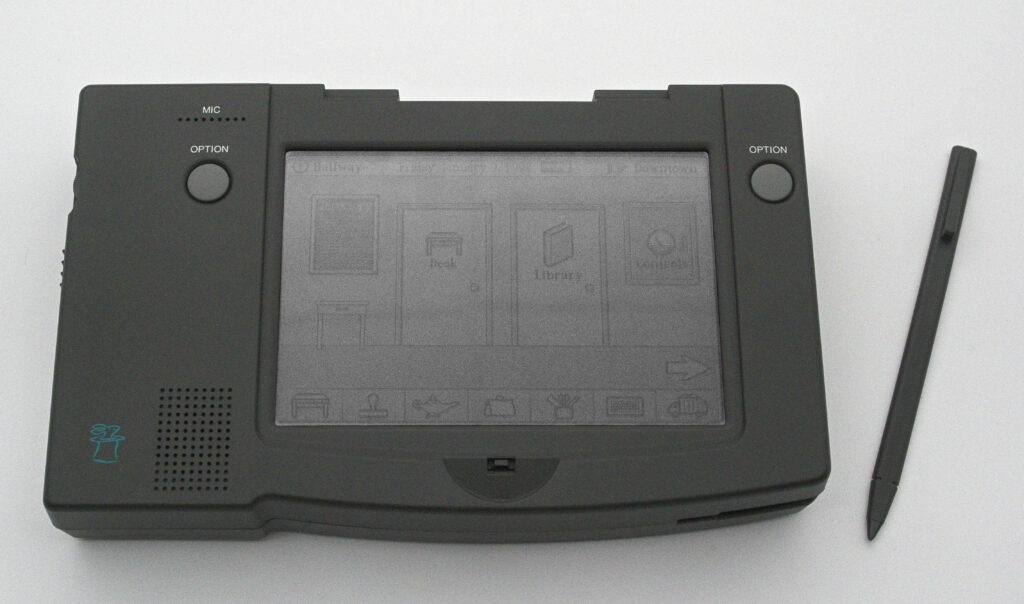
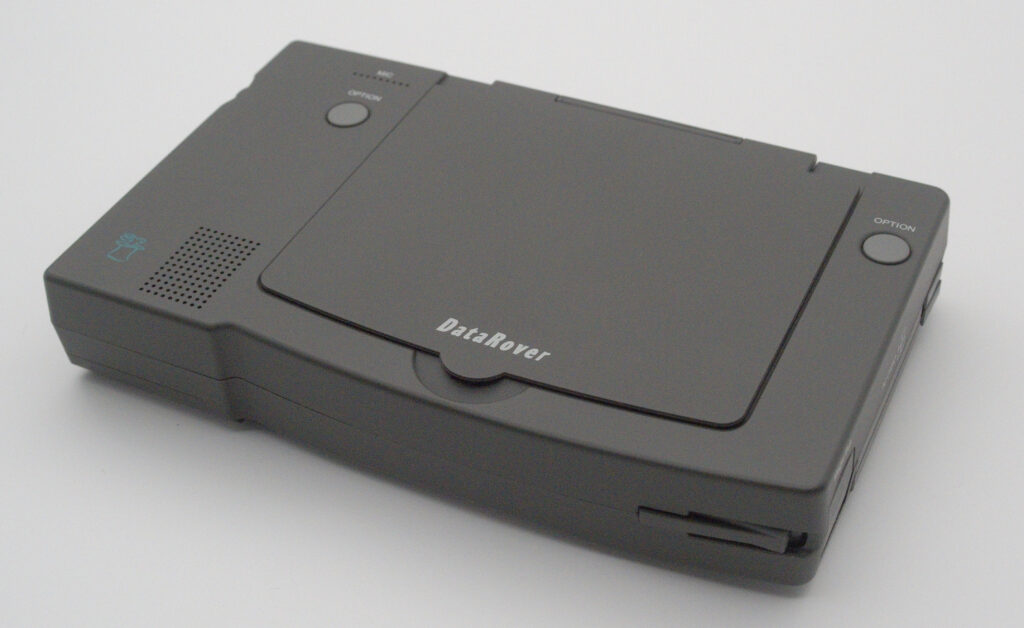
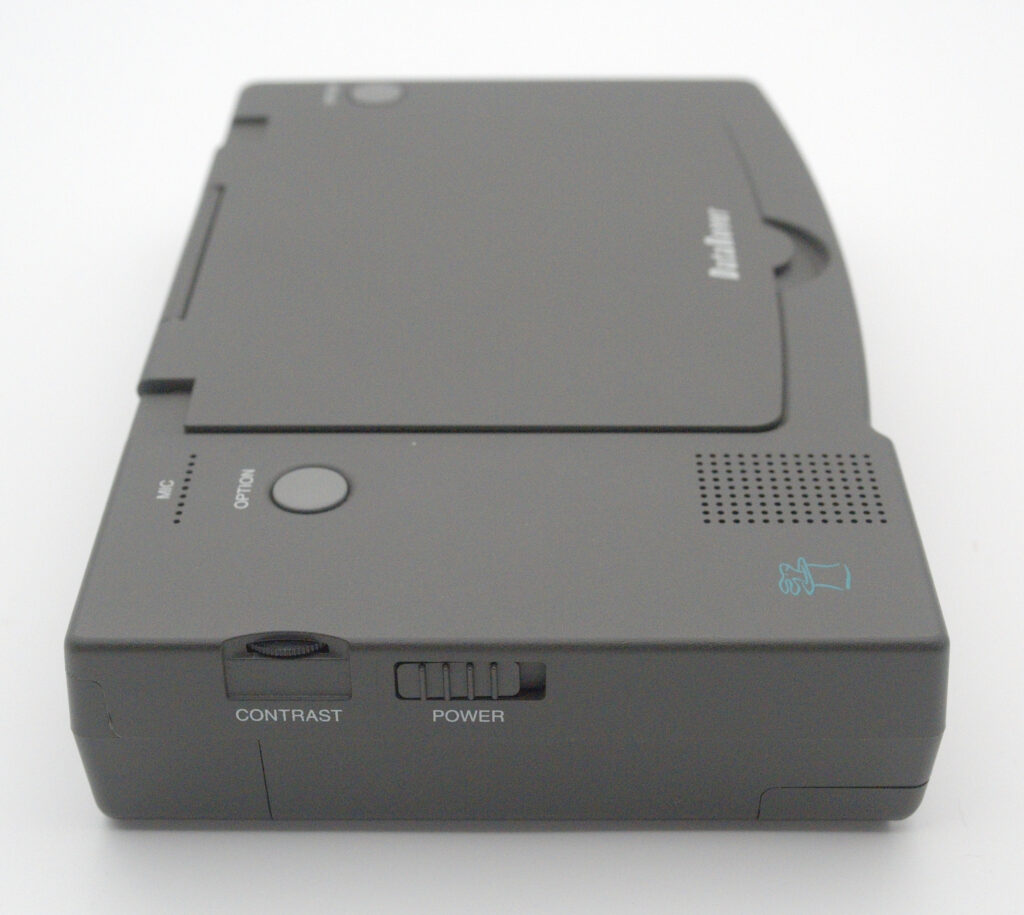
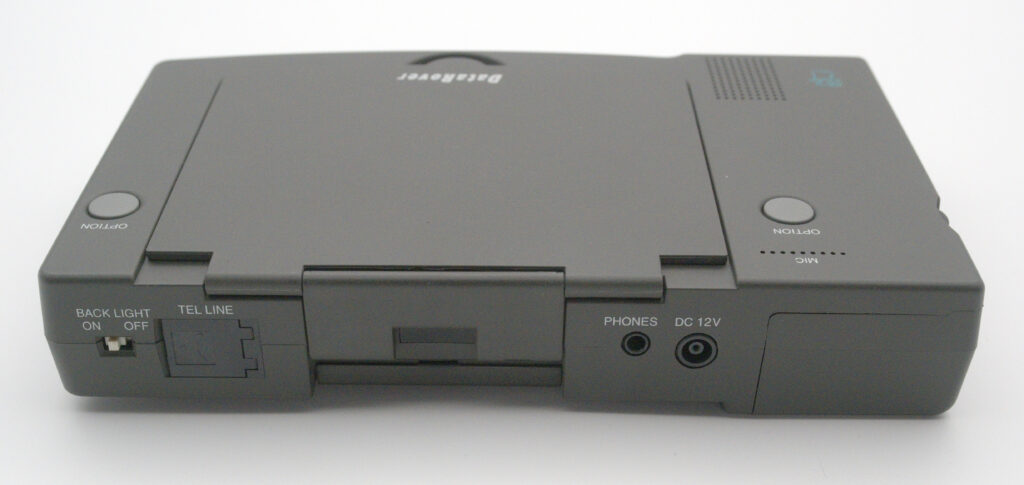
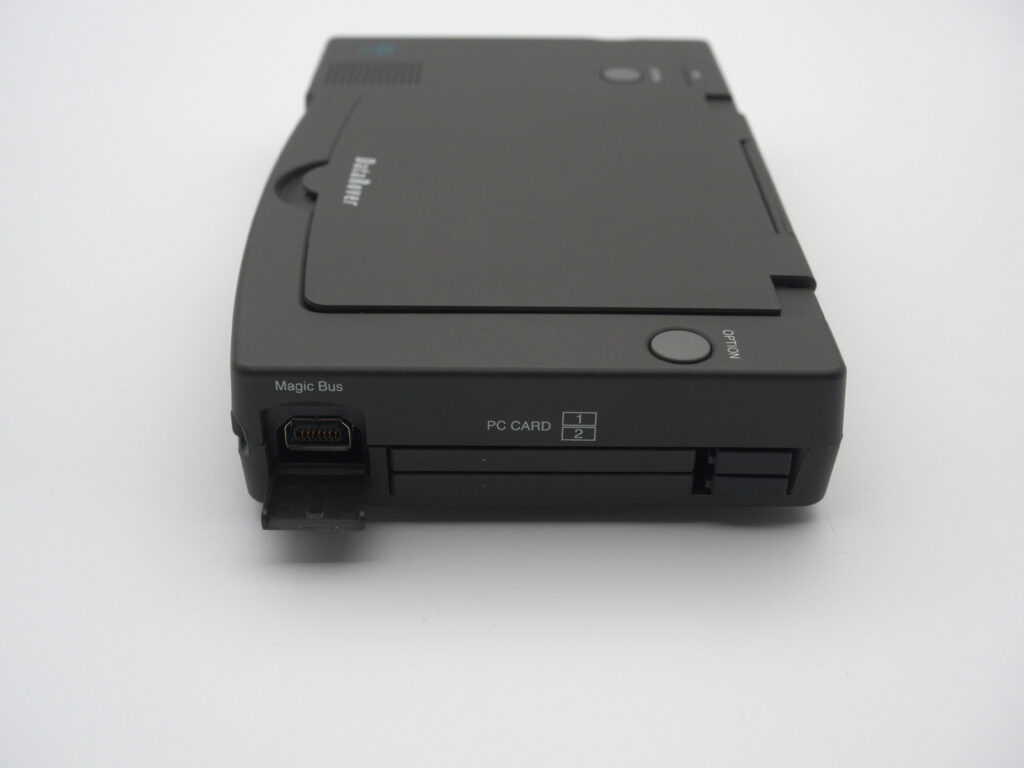
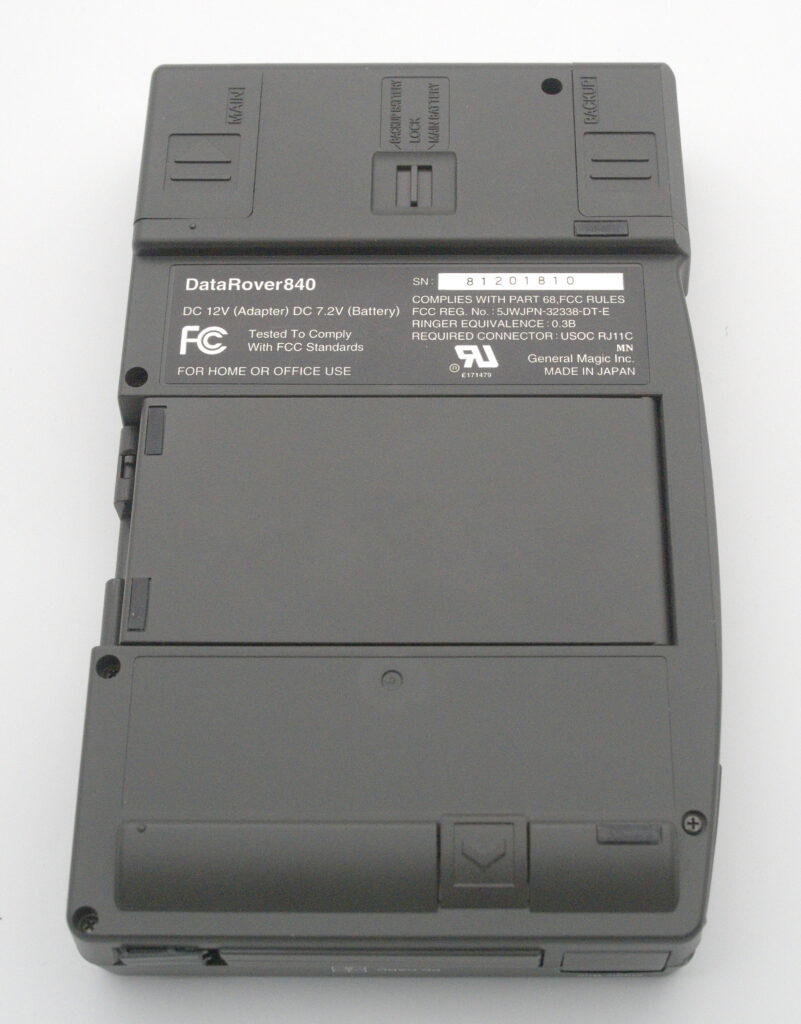
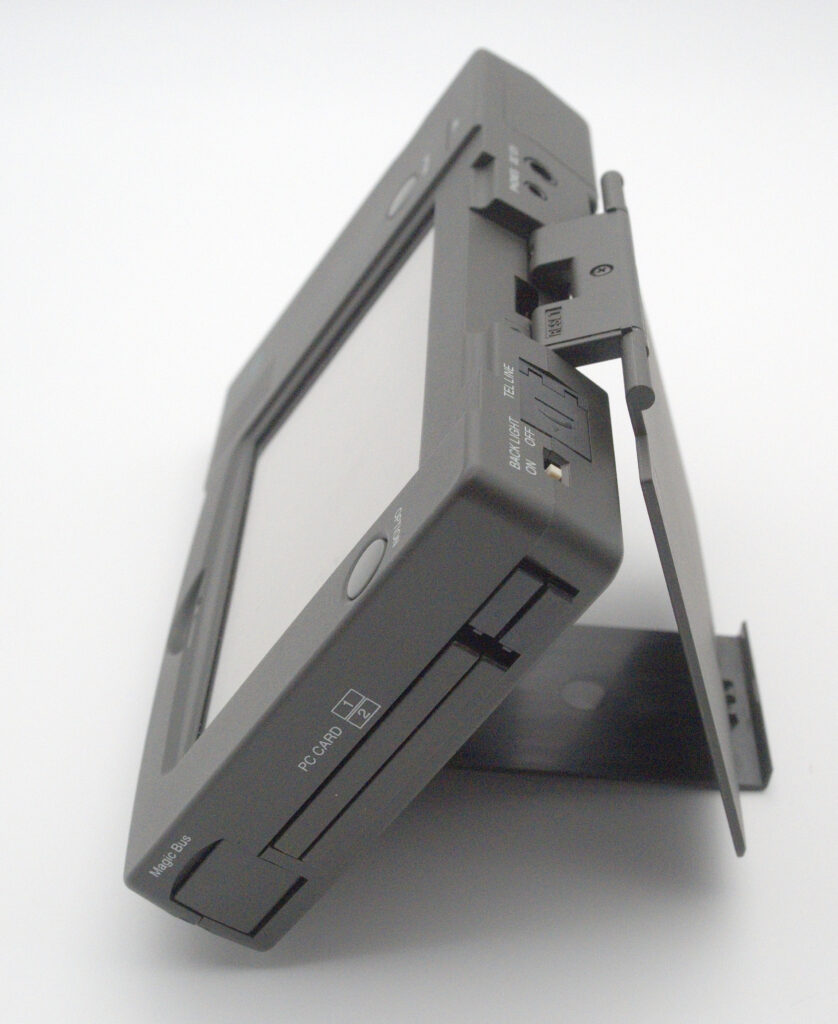
The DataRover840 is not something you would slip into your pocket. It is better carried in a briefcase when not in use. The device features a touch-sensitive, backlit greyscale display with sixteen levels of grey, operated using a stylus. It also includes a built-in 14,400 bps landline modem, two PC Card slots for expansion, and two substantial batteries powering a MIPS R3000 RISC CPU. The main battery is of the same type used in Sony camcorders of the era.
The casing includes a protective cover that can be folded back and used as a stand — a simple but effective design detail.
At around 1000 USD, the DataRover840 was not cheap, but still less expensive than the Motorola Envoy, which cost around 1500 USD. Like many early “tablet-style” PDAs, it was clearly aimed at business users.
Magic Cap 3.1
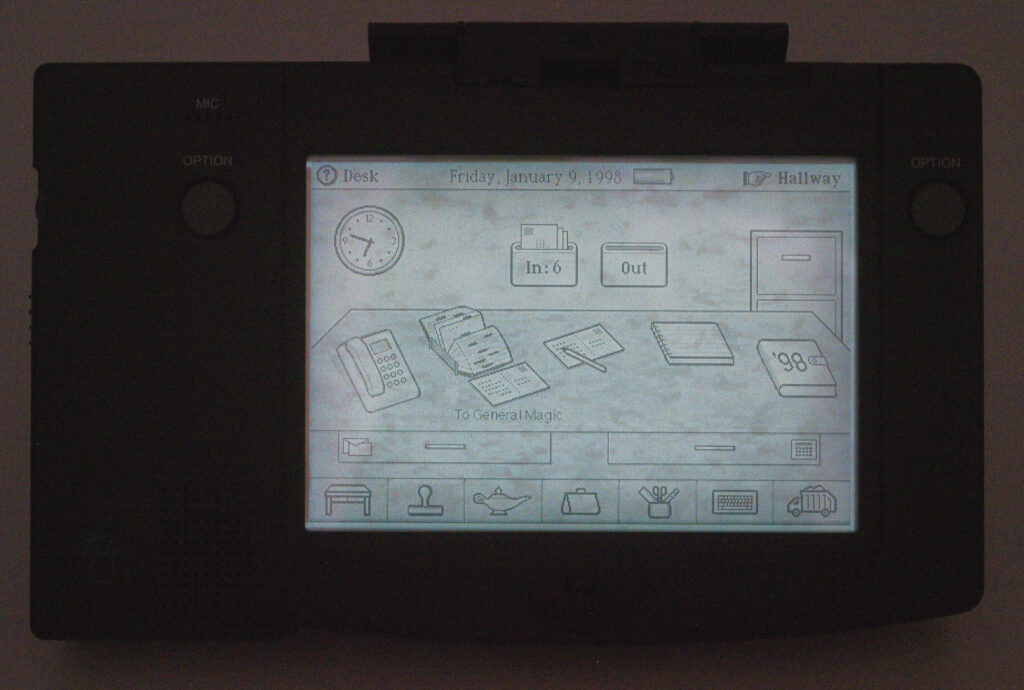
Magic Cap is unlike any other operating system I have encountered. It models places and objects from the real world and presents them using highly detailed pictograms. So if you think that Apple or Microsoft operating systems introduced the desktop metaphor — think again. Magic Cap does not merely simulate a desktop. It presents an actual desk.
On the screen you are greeted by a literal desk, complete with familiar items such as a telephone, a Rolodex (address book in card format), a postcard, a notebook and a calendar. On the wall behind the desk you will find a clock, an in-box and out-box, and a filing cabinet. In one of the drawers, there is even a calculator.
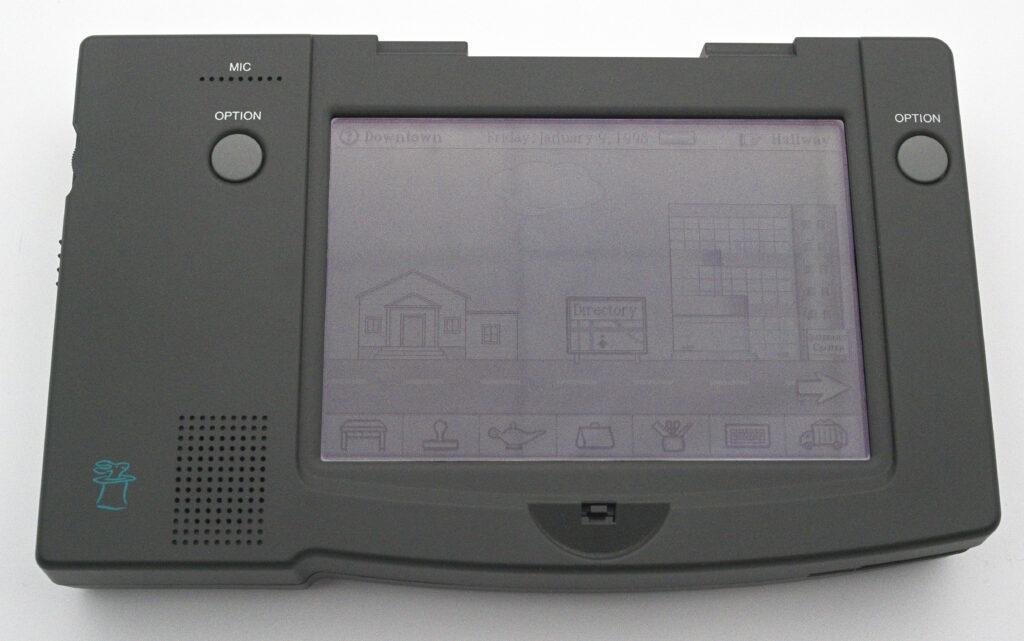
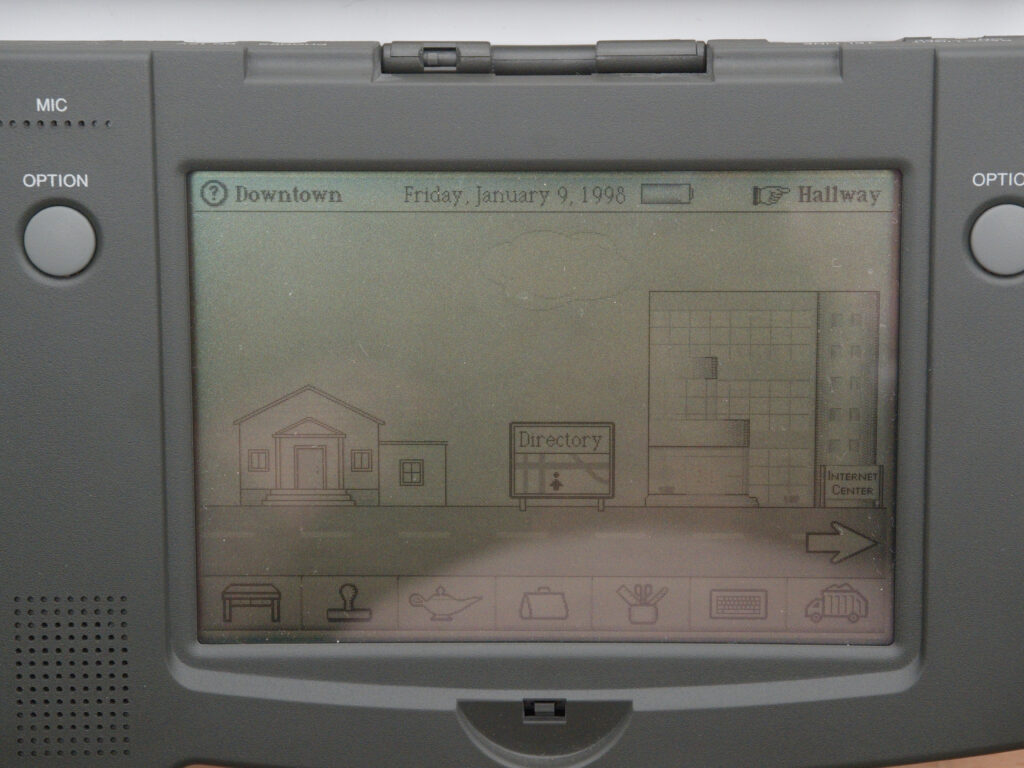
But the desk is only one of several places in Magic Cap. From there, you can move into the hallway, where you will find a directory, storage areas and various other objects. Stepping outside takes you to the street, where you will find the “Internet Center” — the place where you configure connections to an Internet Service Provider.
With its built-in modem and e-mail client, the DataRover 840 allows you to send and receive e-mails with relative ease. Thanks to its microphone and speaker, it can even function as a speakerphone.
The experience of using a Magic Cap device is unlike anything else I have tried. Most systems expose the user to concepts such as files and hardware devices. Magic Cap does not. Instead, you interact with representations of real-world objects — notes, cards, messages — without ever needing to think about how or where data is stored. You simply place things where they belong: on your desk, in a drawer, or in a filing cabinet.
Hardware is equally abstracted away. If something needs to be sent as an e-mail or fax, the system simply uses the modem. As a user, you do not need to understand how it works. One charming example of this approach is that incoming e-mails arrive as physical-looking envelopes, complete with stamps.
Was it a success?
Far from it. General Magic was founded in 1990. The first Magic Cap device, Sony’s Magic Link, was released in 1994, and the DataRover 840 followed a few years later. None of these devices achieved commercial success, and in 2000 General Magic (by then renamed DataRover) ceased operations.
So why did it fail? There are several likely reasons:
- To fully realise the vision of Telescript, agents and distributed computing, the devices would have required wireless connectivity — something that was not widely available at the time.
- Price. A 1000 USD mobile device in the mid-1990s was out of reach for most people.
- Size. These devices required a bag or briefcase, in contrast to the pocketable PalmPilot and later Windows CE devices.
It is a pity that there were no real successors to these systems, as the user interface remains one of the most imaginative and coherent ever created for a mobile device.
As arguably the most refined implementation of Magic Cap — a truly revolutionary operating system — the DataRover 840 deserves a place in any museum of PDAs or pocket computers. It stands out not only for what it is, but for what it represents: a completely different vision of how mobile computing could have evolved.
It is fascinating to see how different it was — and still is — compared to anything else in my collection, with the possible exception of the Motorola Envoy, which runs an earlier version of Magic Cap.
References
Magic Cap resources, but Josh Carter
Magic Cap for Windows (lot’s of screen-shots)