
Quick facts
- CPU:
- ARM 9EJ-S Core, 1999, 32 bit, single-core
- RAM (KB):
- 4096
- Storage (MB):
- 32
- Display:
- 2.6 inch, 240x160 resolution Transreflective TN, 64K colours
- Operating system:
- BlackBerry OS 4.0
- Year introduced:
- 2004
- Power source:
- User-replaceable 900mAh Li-ion battery
- Connectivity:
- GSM/GPRS, mini-USB, IrDA, Bluetooth
- Dimensions (mm):
- 75x113x22
- Weight (g):
- 139
- Built-in apps:
- Messaging, Calendar, Address-book, Todo-list, Notes, Calculator etc
- Input method:
- Keyboard, scroll-wheel
BlackBerry 7290
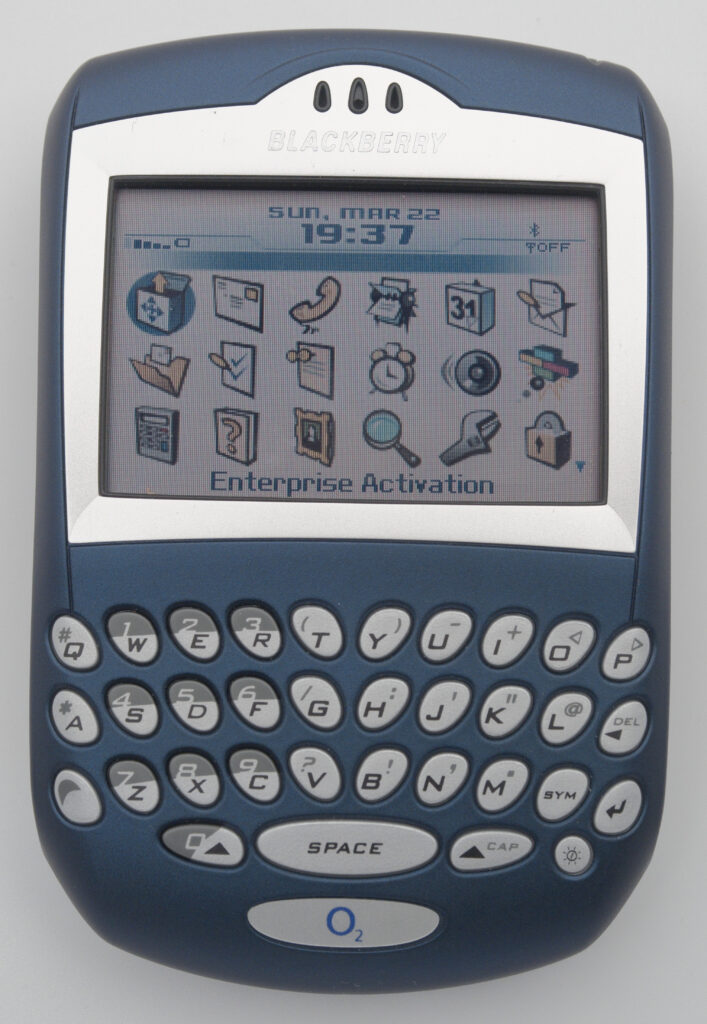
The BlackBerry 7290, or more correctly the RIM BlackBerry 7290, is a GSM mobile phone released in 2004 by the Canadian company Research In Motion (RIM).
It was neither the first nor the last device from RIM. In fact, the company had already introduced its first messaging product in 1999. However, those early devices were “two-way pagers” rather than full mobile phones. Messaging was always the cornerstone of RIM’s design philosophy. The keyboard, the form factor, and the display readability were all carefully engineered to provide the best possible messaging experience.
At a time when many competitors were beginning to offer email functionality using standard protocols such as SMTP, POP3, and IMAP, RIM chose a completely different path. They recognized two major obstacles to mobile email adoption: the limited bandwidth of GPRS networks and the security concerns of corporate customers.
To address these challenges, RIM developed a proprietary infrastructure centered around the BlackBerry Enterprise Server (BES). This system improved both efficiency and security through several key innovations:
- Secure, proprietary communication protocols between the device and the enterprise servers
- Data compression to minimize bandwidth usage over slow GPRS connections
- Push-based messaging, allowing emails to be delivered instantly without constant polling
Why is this in a PDA museum?
You may wonder why a mobile phone is featured in the PDA Museum. Normally, it would not be. However, the BlackBerry occupies an interesting middle ground.
At the time, it competed directly with PDAs thanks to its strong focus on messaging and personal information management. In many ways, it can be seen as a PDA with an integrated GSM radio—eliminating the need to carry a separate mobile phone.
What made BlackBerry devices so popular?
During the early 2000s, BlackBerry devices became extremely popular, particularly in enterprise environments.
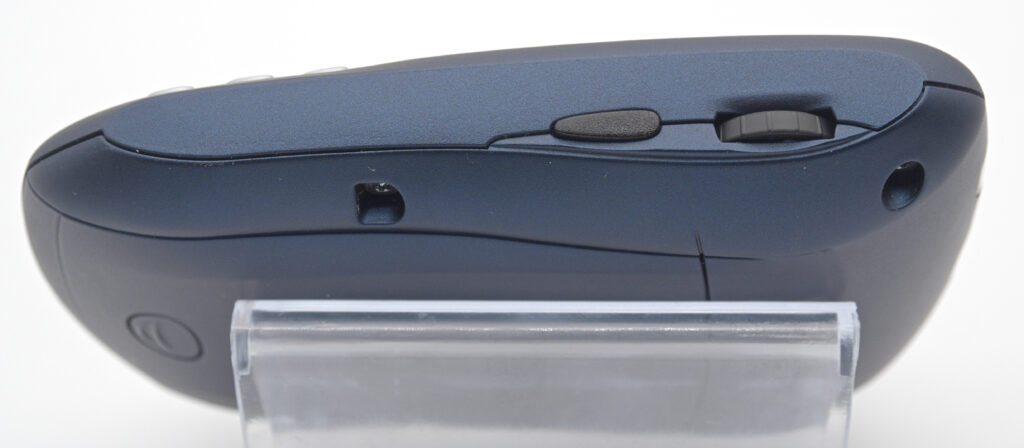
Security was a major factor, but usability played an equally important role. The device was designed for efficient one-handed operation. Instead of a stylus, it used a three-way scroll wheel combined with a dedicated back button.
The scroll wheel allowed you to navigate menus and icons by rolling it up or down. Pressing it inward acted as a selection mechanism. The back button, positioned just below the wheel, made navigation intuitive and fast.
The 38-key keyboard is often regarded as one of the best ever made. The keys are easy to press, with a distinct tactile click that provides clear feedback.
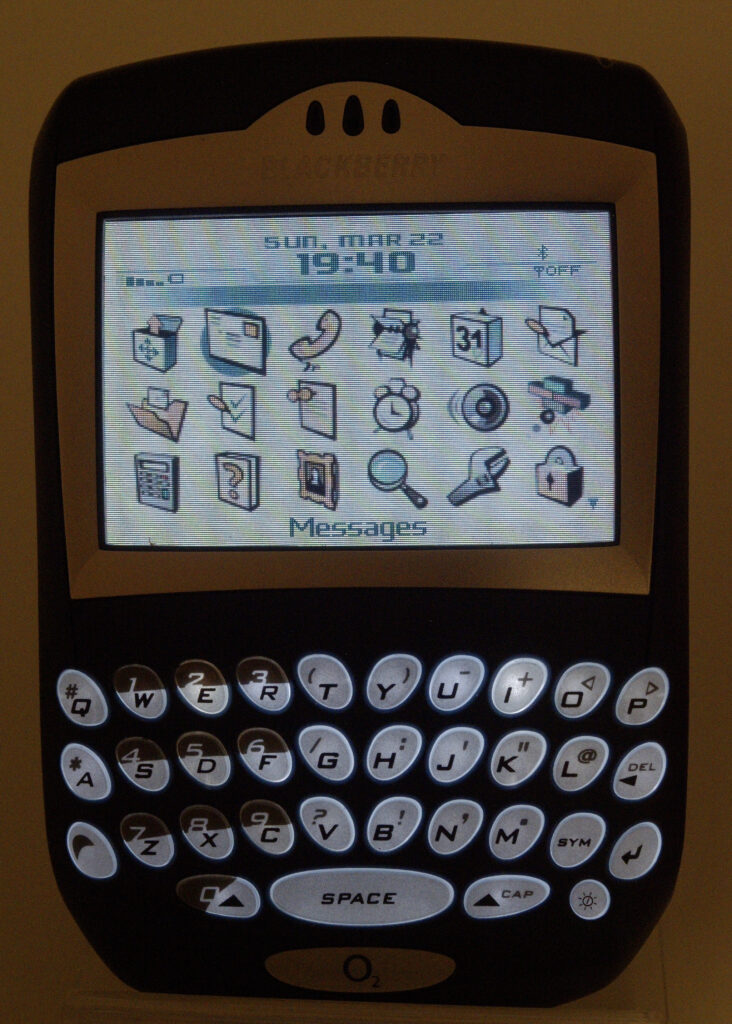
The device also features two levels of backlight for both the display and keyboard, making it highly usable in low-light conditions. In bright environments, the transreflective display technology ensures that readability actually improves with increased ambient light.
The hardware
The BlackBerry 7290 features a single-core 32-bit ARM processor and 4 MB of RAM. The operating system and applications are stored in 32 MB of ROM.
The display measures 2.6 inches diagonally and has a resolution of 240 × 160 pixels. While modest by modern standards, it was perfectly adequate for its intended purpose. The screen supports up to 65,536 colours.
There is no expandable storage, and the device is compact with a slightly curved design that makes it comfortable to hold.
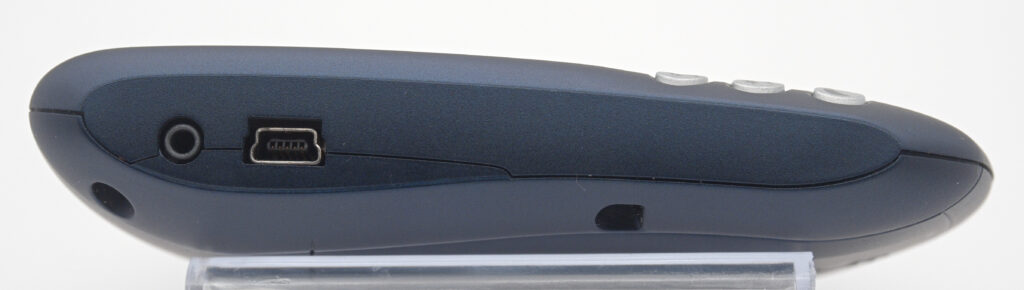
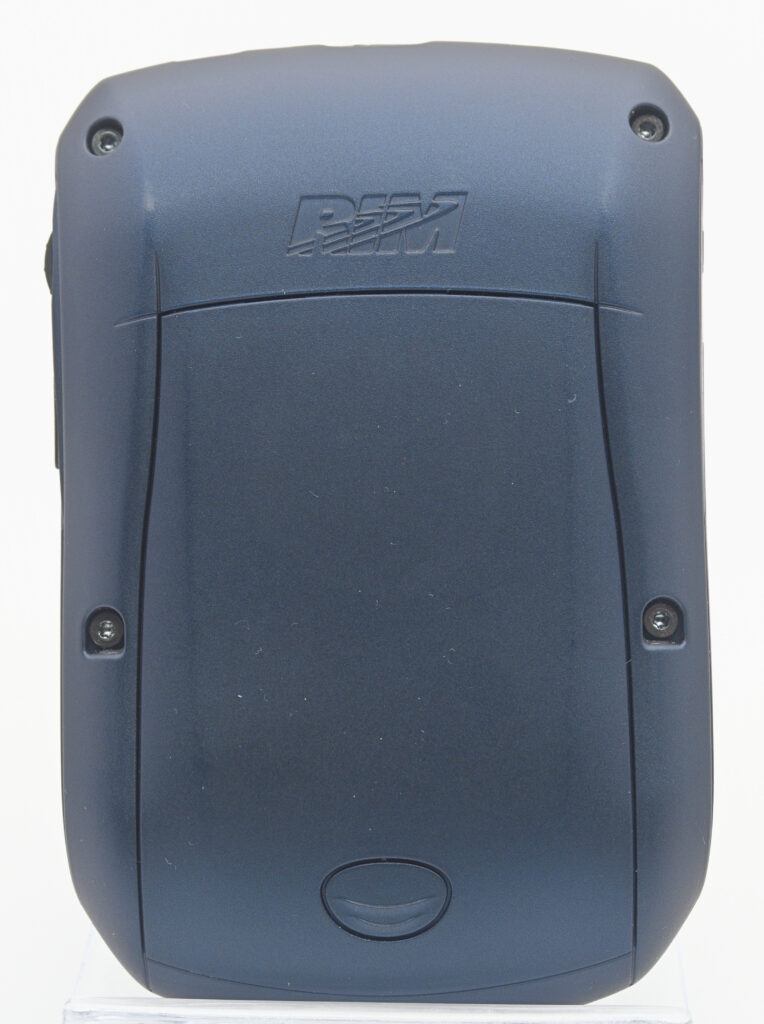
Power is provided by a user-replaceable Li-ion battery, charged via a mini USB connector.
The software
RIM developed its own operating system along with a suite of applications.
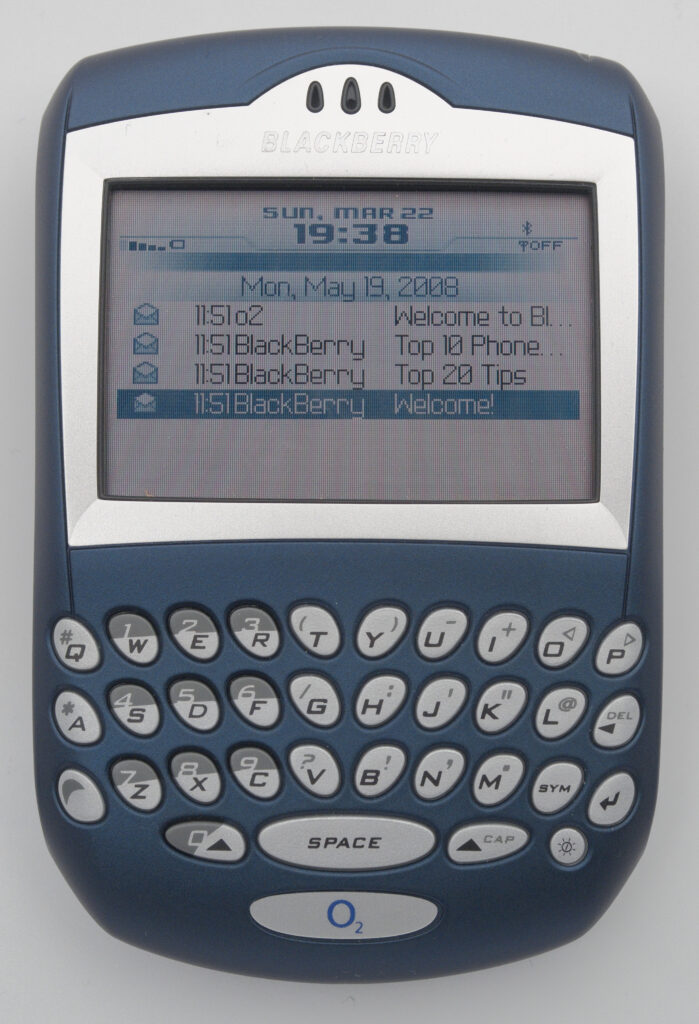
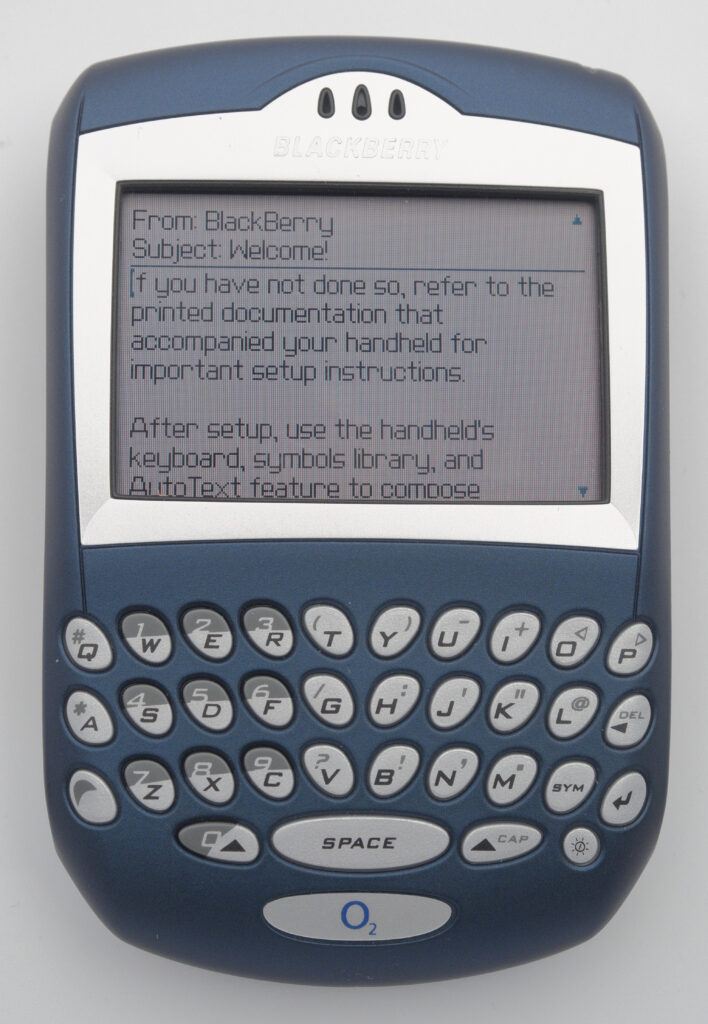
Standard PIM applications are included, such as Calendar, Notes, Calculator, and a To-Do list. However, the centerpiece is the messaging application, designed to work seamlessly with enterprise email systems in a secure and bandwidth-efficient way.
A range of third-party applications was also available at the time.
Communications
As a GSM phone, the primary communication method is via the cellular network.
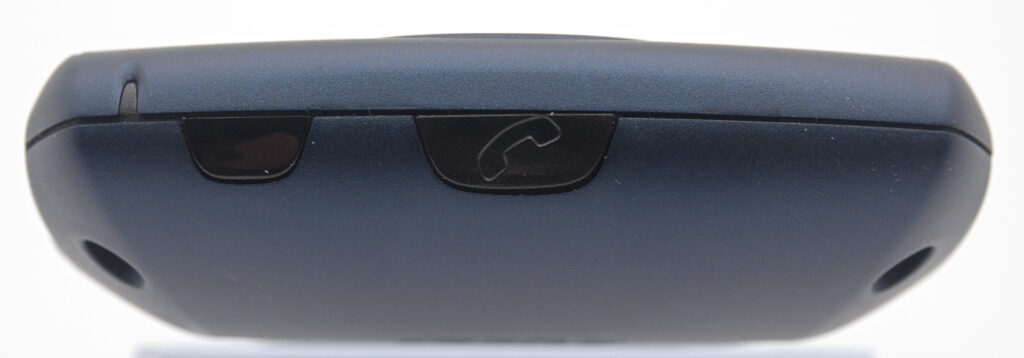
The device can also be connected to a computer using the mini USB port. An IrDA port is located at the top for transferring PIM data, and Bluetooth 1.1 is included for use with wireless headsets. This was BlackBerry’s first model to feature Bluetooth.
No Wi-Fi support is available.
Is it possible to use a BlackBerry today?
As a standalone device for managing PIM data and syncing with a PC, the answer is yes.
However, for its main purpose—secure mobile messaging—the answer is unfortunately no. BlackBerry devices relied on proprietary infrastructure operated by BlackBerry and mobile carriers. These services have since been shut down, and no official alternative exists.
The technology was never open-sourced, likely due to its complexity and the continued value of related patents.
I never owned a BlackBerry myself, but it was widely discussed during my time working at Ericsson.
Everyone in the mobile industry recognized that RIM had developed something special—particularly in terms of security and efficient use of limited network bandwidth. Companies like Ericsson and Nokia attempted to replicate this functionality, but typically stayed within standard IETF-based protocols.
The BlackBerry 7290 represents an important evolutionary step between traditional PDAs and modern smartphones. It is both a highly capable messaging device and, in many ways, a very competent PDA.