
What a tablet would look like in 1993

Quick facts
- CPU:
- NEC V20 @ 7.5 MHz, emulating Intel 8088
- RAM (KB):
- 4096
- Storage (MB):
- -
- Display:
- 5-inch monochrome LCD with 320x256 resolution
- Operating system:
- DOS 3.3/GEOS 2.0/PenRight!
- Year introduced:
- 1993
- Power source:
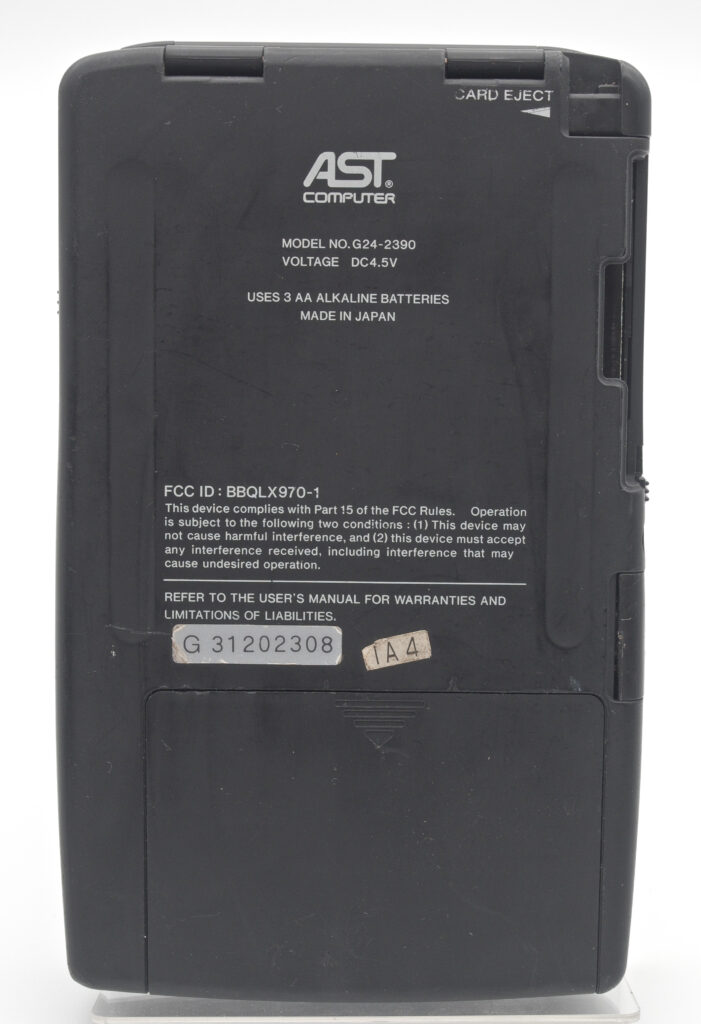
- 3xAAA batteries, with 2xCR2032 for RAM backup
- Connectivity:
- Serial, IR optional PCMCIA modem card
- Dimensions (mm):
- 25x178x108
- Weight (g):
- 450
- Built-in apps:
- Address book, Date book, Note Book, Pocket Quicken, World Clock, Calculator, AOL
- Input method:
- Pen/Stylus
Overview
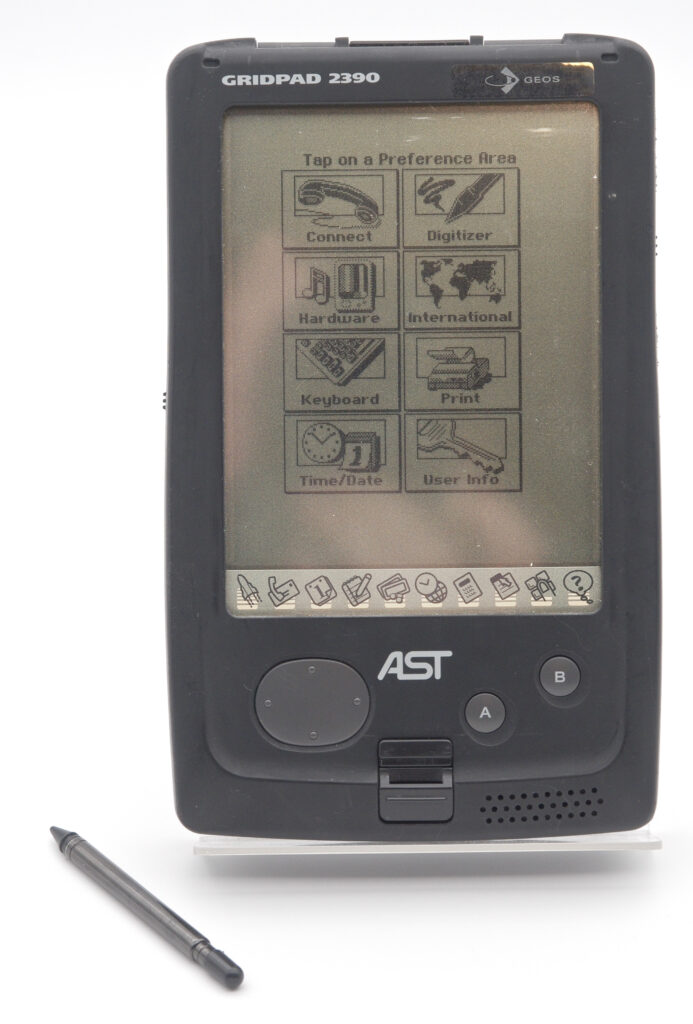
Before the arrival of the PalmPilot, Palm Computing was a software company. It developed the Graffiti handwriting recognition system and licensed it to various hardware manufacturers. One of these was Grid Systems, which used it in its GridPad line of handheld computers.
The GridPad devices were primarily designed as professional tools for applications such as inventory management and medical journaling. Due to their size, weight, and relatively high price, they were not aimed at consumers. Some models were even used by the U.S. military, although those featured rugged aluminum enclosures rather than the plastic casing found on this unit.
So why AST GridPad? In 1993, AST Research acquired Grid Systems, which at the time was a subsidiary of Tandy Corporation.
Released in 1993, the GridPad 2390 was the final model in the GridPad series—and also the smallest and lightest. The first GridPad, the 1900 model, had been introduced only four years earlier, in 1989.
The AST GridPad 2390 was also sold under several other names, including the Casio Zoomer (Z-7000), XL7000, and Tandy Z-PDA. At just 0.43 kg, it is by far the lightest of the GridPad models and is entirely battery-powered.
To achieve this, AST used a significantly more power-efficient CPU than the 80386-class processors found in earlier models. The 2390 instead uses an Intel 8088-compatible CPU (NEC V20) running at 7.5 MHz. Combined with an operating system built on GEOS over MS-DOS—heavily focused on graphics—this makes the device anything but a speed monster.
Hardware
The GridPad 2390 features a modest CPU, but its 4 MB of RAM was quite generous for its time. The operating system resides in ROM and cannot be modified, meaning that RAM is used for all user data.
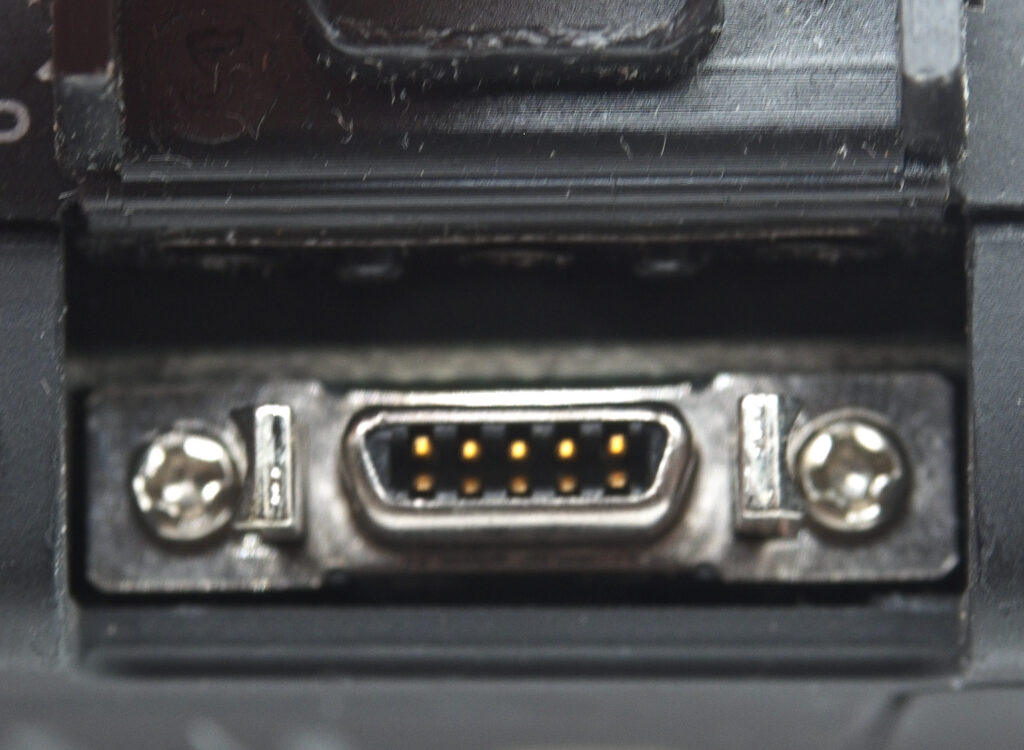
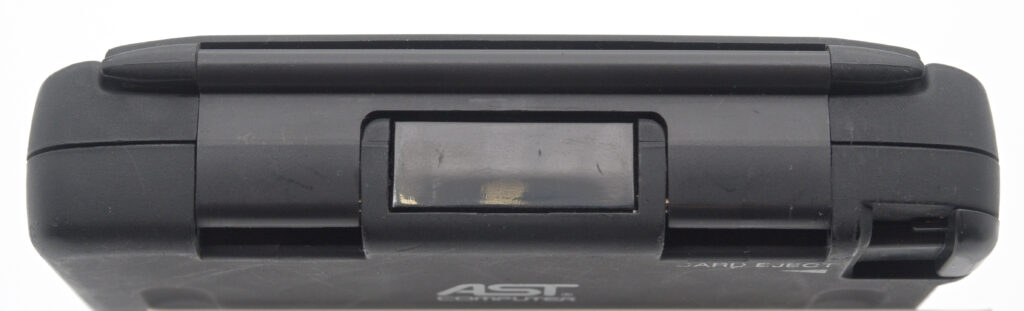
The device includes a Type II PCMCIA slot, which can be used for both memory expansion and communication cards. An infrared (IrDA) port located at the top allows wireless data exchange with other devices. It also features an RS-232C serial interface using standard signalling, although the connector itself is a miniature D-sub type that is not commonly found elsewhere.
Software
What truly sets this device apart is its software stack and input method. The operating system is composed of several layers:
- Datalight ROM-DOS 3.31, a derivative of MS-DOS
- GeoWorks GEOS 2.0, providing the graphical user interface
- PenRight!, handling pen-based input
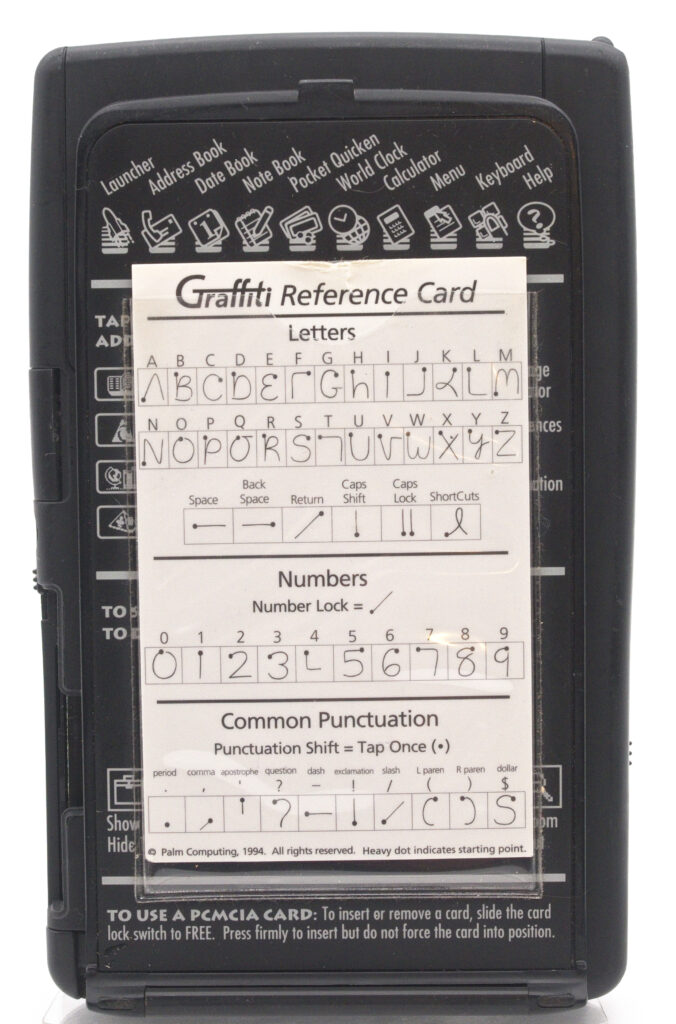
- Graffiti, Palm Computing’s handwriting recognition system
Using the GridPad is a mixed experience. On one hand, GEOS is impressively well-designed compared to other graphical environments of the time. On the other hand, the limited processing power of the NEC V20 CPU introduces noticeable delays. It can take roughly half a second from writing a character to seeing it recognized and inserted into text.
That delay—repeated for every character—makes longer text input impractical. Fortunately, an on-screen keyboard is also available, which can provide faster input if used in a stable environment.
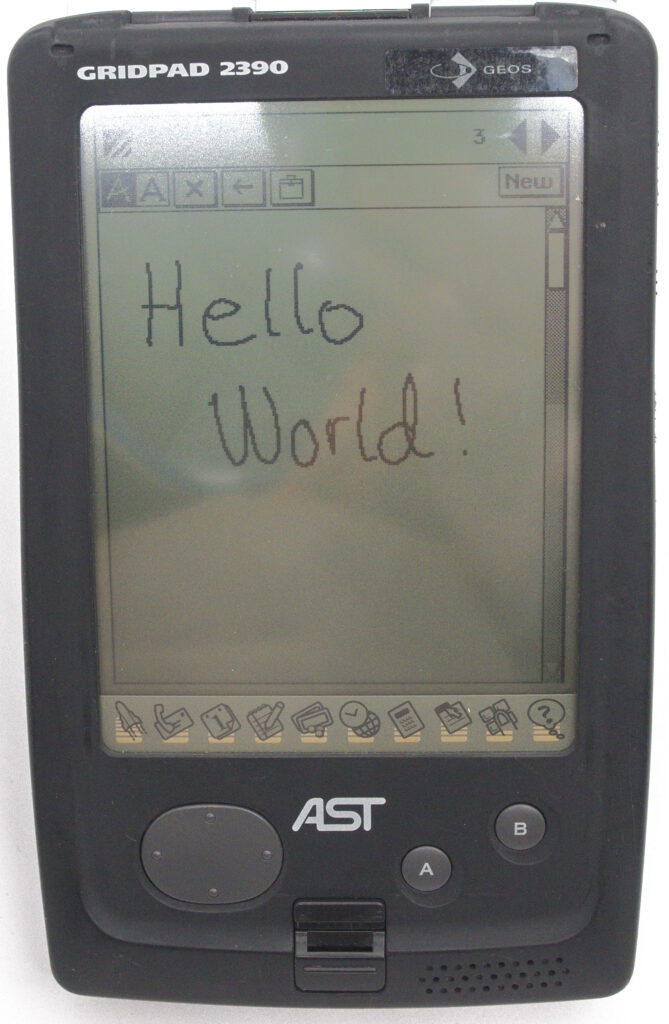
One particularly interesting feature is the ability to enter notes graphically. This is not limited to a dedicated notes application but is also available in other contexts, such as the calendar.
In addition to the operating system, the GridPad includes standard PIM applications and Pocket Quicken (for finance tracking) and even a shortcut for connecting to America Online—a reminder of the pre-Internet era.
Communications
The GridPad includes a serial port for connecting to other computers. While the signalling follows the RS-232C standard, the physical connector is a compact D-sub variant, likely requiring a dedicated cable.
An infrared transceiver located at the top enables wireless communication. Additionally, a PCMCIA modem card was available at the time, allowing dial-up connectivity over landline telephone networks.
The AST GridPad 2390 is interesting for several reasons.
First, it predates the PalmPilot, yet already includes Graffiti handwriting recognition—at a time when Palm was still purely a software company.
Second, it uses GEOS as its graphical interface, a platform that had only a brief presence in handheld computing.
And third, it can be seen as an early predecessor to modern tablets. Its form factor is closer to something like an iPad mini than to most other PDAs of its time. At the same time, its functionality remains firmly rooted in the PDA world, with the added ability to take handwritten graphical notes.
References
Specifications from ClassicBits