
An attempt to spark new life into the PDA
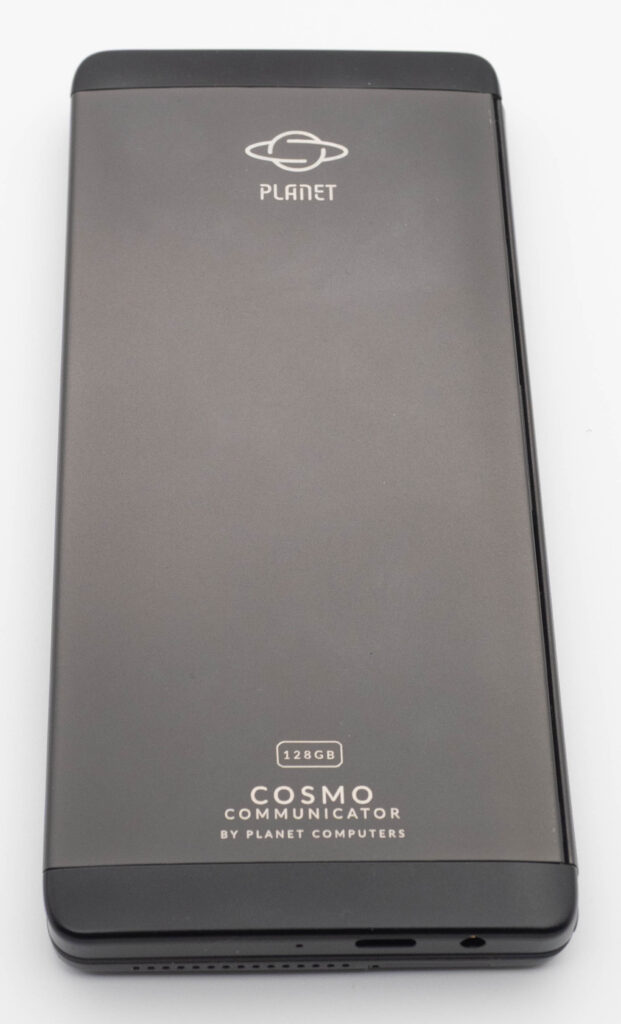
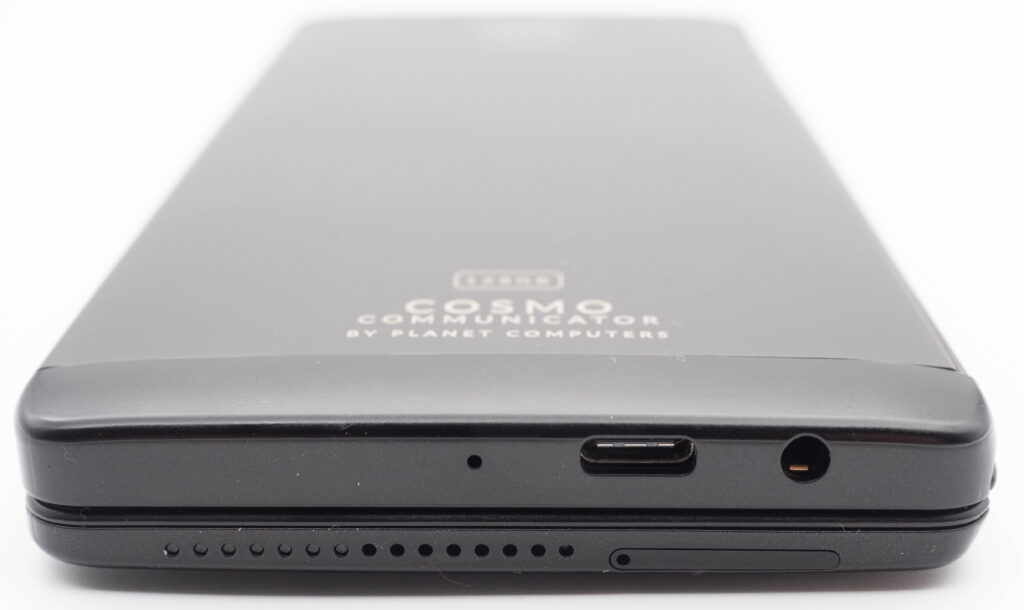
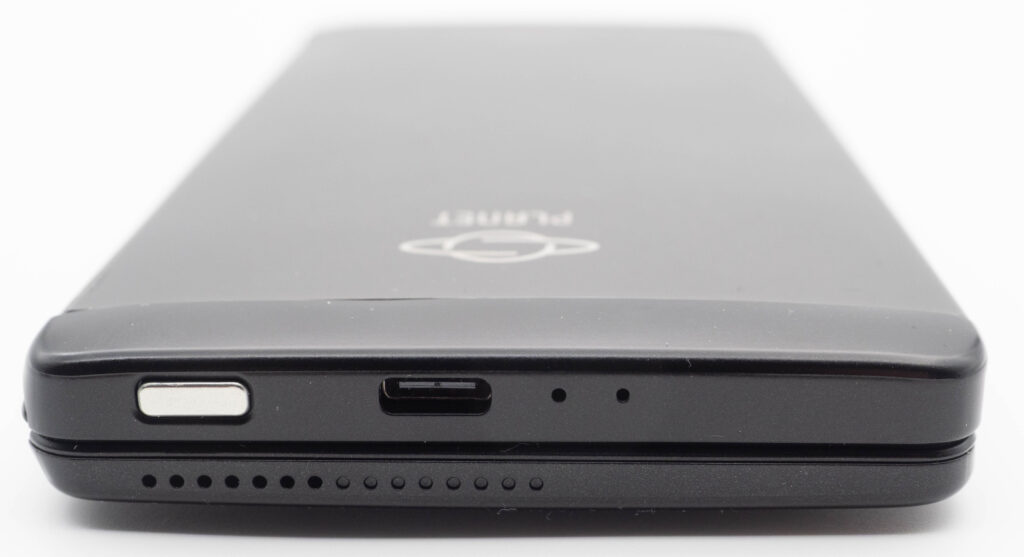
Quick facts
- CPU:
- MediaTek Helio P70 (MT6771), Octa-core (4× Cortex-A73 @ 2.1 GHz + 4× Cortex-A53 @ 2.0 GHz)
- RAM (KB):
- 6291456
- Storage (MB):
- 131072
- Display:
- 6.0" internal touchscreen, 2160 × 1080 (FHD+), color LCD 1.91" external OLED display (notifications/status)
- Operating system:
- Android 9
- Year introduced:
- 2020
- Power source:
- Built-in Li-ion battery (4220 mAh)
- Connectivity:
- 4G LTE, Wi-Fi 802.11 a/b/g/n/ac, Bluetooth 5.0, GPS/GLONASS, NFC, USB-C
- Dimensions (mm):
- 171x79x15
- Weight (g):
- 325
- Built-in apps:
- Agenda, Notes, Ledison, Data, Airmail, Voice Assistant
- Input method:
- Keyboard and touch
Overview
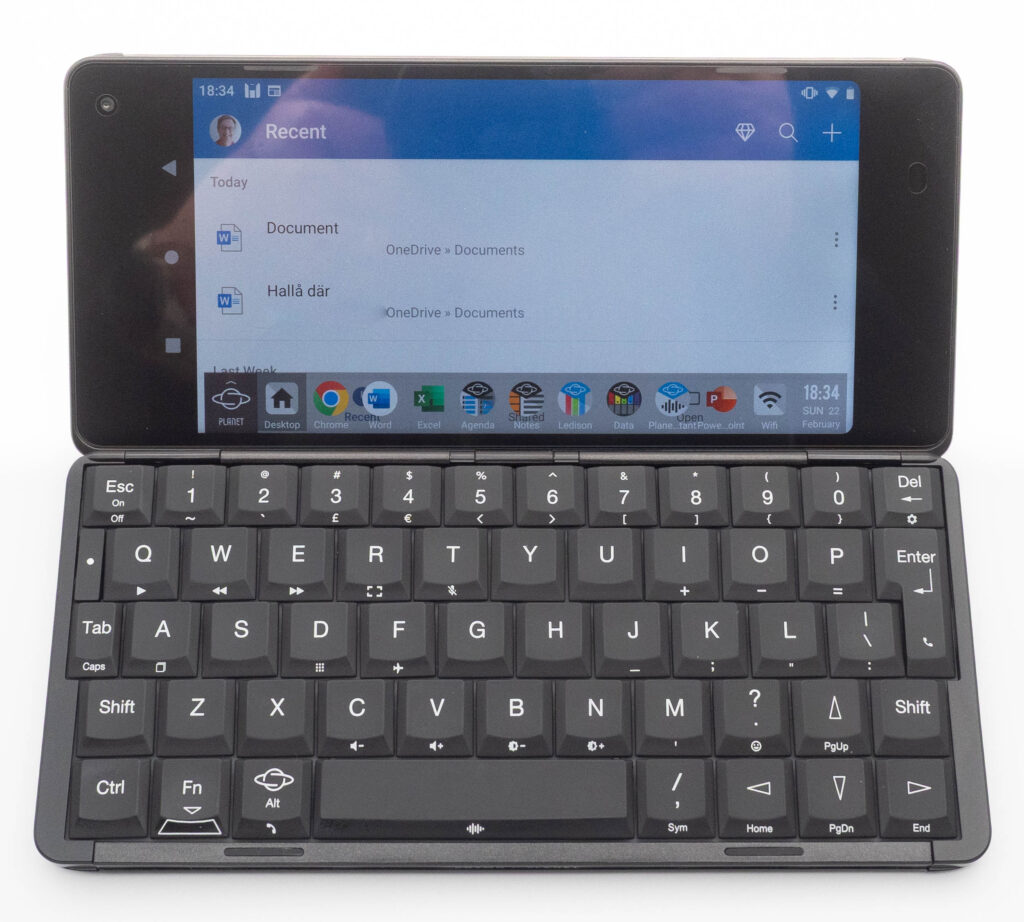
What do you get when you take the ideas and general physical construction of the Psion Series 5mx from the late 1990s and combine them with modern (circa 2020) hardware and software? The answer is the Cosmo Communicator — a mobile phone with clear PDA ambitions, created by Planet Computers in the UK.
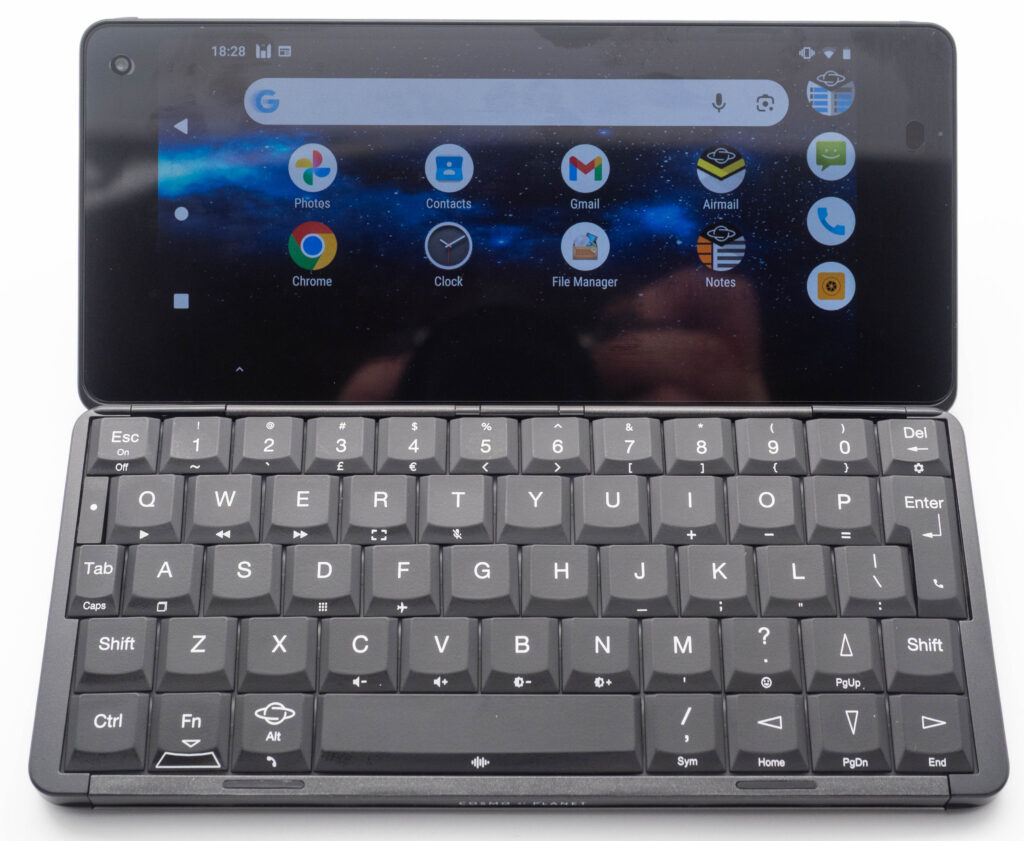
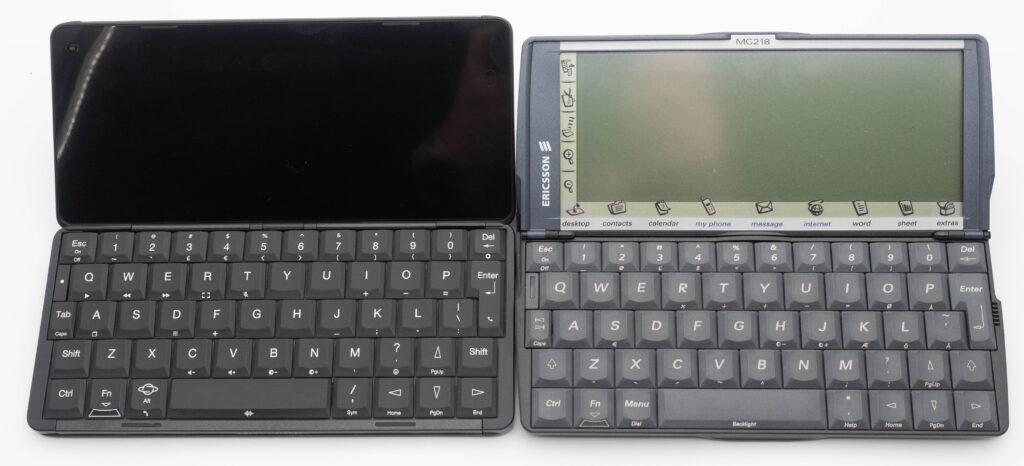
As seen in the gallery above, where the Cosmo is placed next to the Ericsson MC218 (itself a rebranded Psion Series 5mx), the similarities are striking — especially in the keyboard that not only looks the same, but in fact has the same placement of keys and secondary functions. This is no coincidence: the original designer of the Psion Series 5 keyboard, Martin Riddiford, was involved in the development of the Cosmo’s keyboard as well.
Hardware
The Cosmo Communicator is powered by a MediaTek processor and equipped with 6 GB of RAM. It features a 24-megapixel camera and 128 GB of internal storage, expandable via microSD.
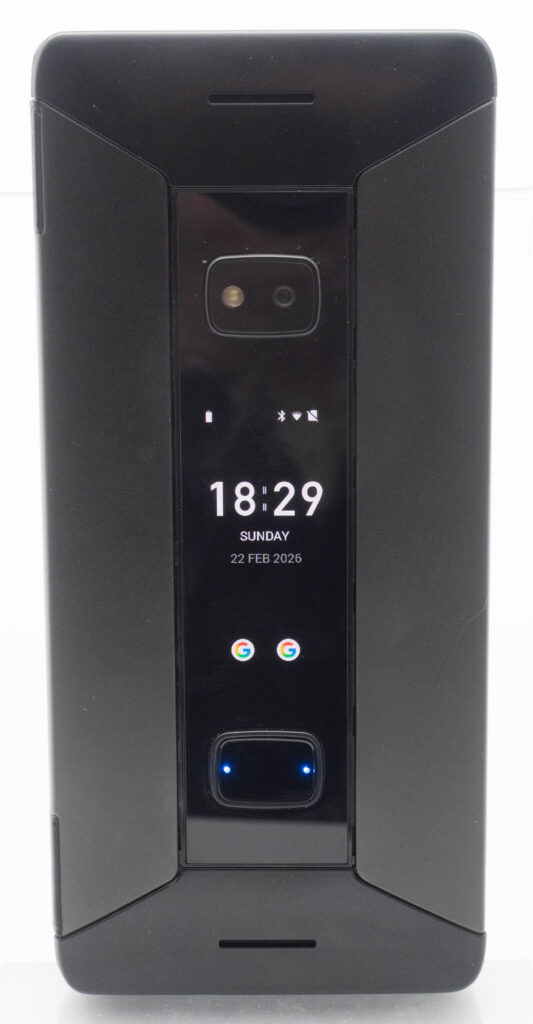
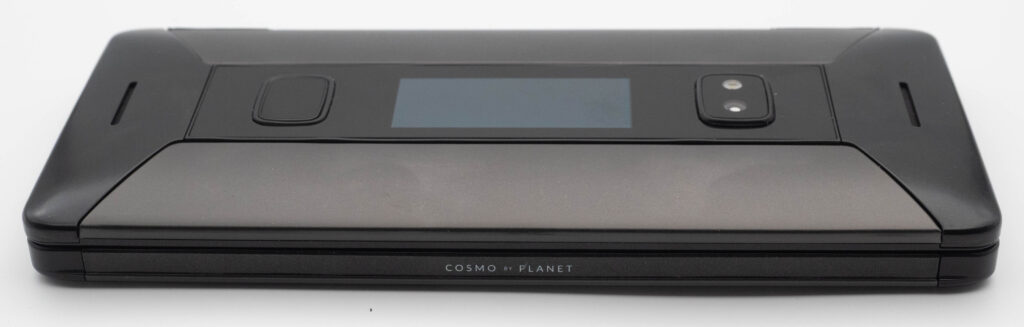
The main display is a high-resolution touchscreen with good brightness and contrast, while a secondary external AMOLED display shows time, date, and notifications when the device is closed — an elegant nod to classic clamshell communicators.
The device is powered by a user-replaceable 4,220 mAh lithium-ion battery and supports fast charging via USB-C. At launch in 2020, its specifications placed it firmly in the mid-range Android phone segment — respectable, but not flagship-level.
Software
The Cosmo shipped with Android 9 and received only a minor software update after release. As of 2026, it is still sold with Android 9, despite Android 16 being current at the time of writing. Since Android 9 no longer receives security updates, users should be aware that using the Cosmo as a primary phone entails certain risks.
Planet Computers included several proprietary applications:
- Agenda
- Notes
- Ledison
- Data
- Airmail
- Planet Voice Assistant
- FM radio (requires headphones to be plugged in)
Of these, Ledison — used to configure the external notification display — is the most unique. The other applications largely replicate functionality already available through the Google Play ecosystem.
The Cosmo can also run Linux, and Planet Computers provides the necessary tools and documentation. However, installing Linux requires repartitioning the internal storage, which results in data loss and makes the process less accessible to casual users. The version of Linux provided is Debian 10 (aka “Buster”) and most of the hardware features specific to the Cosmo Communicator are supported.
Historical Context
The Cosmo Communicator occupies a unique position in the history of handheld computing. It is not a descendant of the classic PDA era, but rather a conscious attempt to revive it in a world that had already moved on to glass-slab smartphones and virtual keyboards.
Planet Computers, the company behind the Cosmo, was founded by people with roots in the original Psion organization—the same company that, in the 1990s, defined much of what a PDA could be. With earlier products such as the Gemini PDA, Planet Computers set out to bring back a form factor that prioritized productivity, tactile input, and long-form text entry over pure media consumption.
Released in 2020, the Cosmo Communicator reflects both the ambition and the challenges of this revival. On one hand, it combines modern smartphone hardware, cellular connectivity, and contemporary operating systems (Android and Linux) with a clamshell design and a full physical keyboard, echoing the communicators and keyboard-equipped PDAs of the late 1990s and early 2000s. On the other hand, it exists in a market that had largely abandoned physical keyboards, leaving it as a niche device for enthusiasts, writers, and technologists rather than a mass-market product.
Historically, the Cosmo is best understood as an outlier and a statement: proof that the PDA concept did not entirely disappear, but instead re-emerged in a modernized, experimental form. It stands as a bridge between two eras—one defined by stylus-driven organizers and compact keyboards, and another dominated by touchscreens and app ecosystems—highlighting both how far mobile technology has evolved and what some users still felt was lost along the way.
Comparison to its ancestor
As the Cosmo Communicator was developed roughly twenty years after its conceptual predecessor, the Psion Series 5mx, it is instructive to examine how far technological development progressed over those two decades. The table below compares some of the most important hardware characteristics of the two devices.
| Parameter | Psion Series 5mx (1999) | Cosmo Communicator (2020) | Index (Cosmo ÷ Psion) |
|---|---|---|---|
| CPU (clock / cores) | ~36.9 MHz, 1 core | (assumed) 2.0 GHz × 8 cores | — |
| CPU power index (GHz-cores) | 0.0369 | 16.0 | 434× |
| RAM | 16 MB | 6 GB (6144 MB) | 384× |
| Built-in storage (internal) | ~16 MB (ROM) | 128 GB | 8192× |
| Expandable storage | CompactFlash | microSD | — |
| Main screen resolution | 640×240 | 2160×1080 | 15.2× |
| Serial / wired data speed (reference) | 115200 bit/s | USB 2.0: 480,000,000 bit/s | 4167× |
| Battery energy (approx.) | ~6 Wh (2×AA) | ~16 Wh (Li-ion) | 2.7× |
| Typical battery life (real world) | 2 weeks (typical use) | 1 day (typical smartphone use) | 0.07x |
| Power draw (active heavy use) | 0.5W | 2W | 0.25x |
The numerical differences are striking. In terms of processing power, memory capacity, storage, display resolution, and data transfer speeds, the Cosmo surpasses the Psion by several orders of magnitude. Even its battery stores nearly three times as much energy.
But what does this dramatic increase in capacity actually translate into in practical terms?
In short, it enables entirely new categories of functionality that were either impossible or impractical in the late 1990s. For example, a modern device such as the Cosmo can:
- Function as a full-featured mobile phone
- Stream and display high-resolution video content
- Determine its geographical position via GPS and provide turn-by-turn navigation
- Access the modern Internet using secure HTTPS protocols
- Capture, edit, and share high-resolution photos and video
- Perform many tasks that previously required a desktop or laptop computer
At the same time, it is worth noting that the core purpose of both devices remains surprisingly similar: personal information management, communication, and mobile productivity. The difference lies not in the concept itself, but in the scope and scale of what the hardware now makes possible.
Experience using it
In practice, the Cosmo is an intriguing experiment. On one hand, it is a fairly ordinary mid-range Android phone. On the other, it attempts to revive the PDA concept in hardware form.
However, the context has changed dramatically since the Psion 5mx era. In the late 1990s, being able to type long emails or documents on the go without carrying a heavy laptop was revolutionary. Today, laptops are lighter, thinner, and more powerful, and most users are comfortable typing on virtual keyboards.
This leaves the Cosmo with a narrow audience — perhaps people like myself, who enjoy exploring unconventional devices simply because they exist.
While it might have served as a viable daily-driver phone with a usable hardware keyboard, several issues limit its practicality:
- It is large and heavy compared to modern smartphones
- It runs an outdated version of Android with no ongoing security support
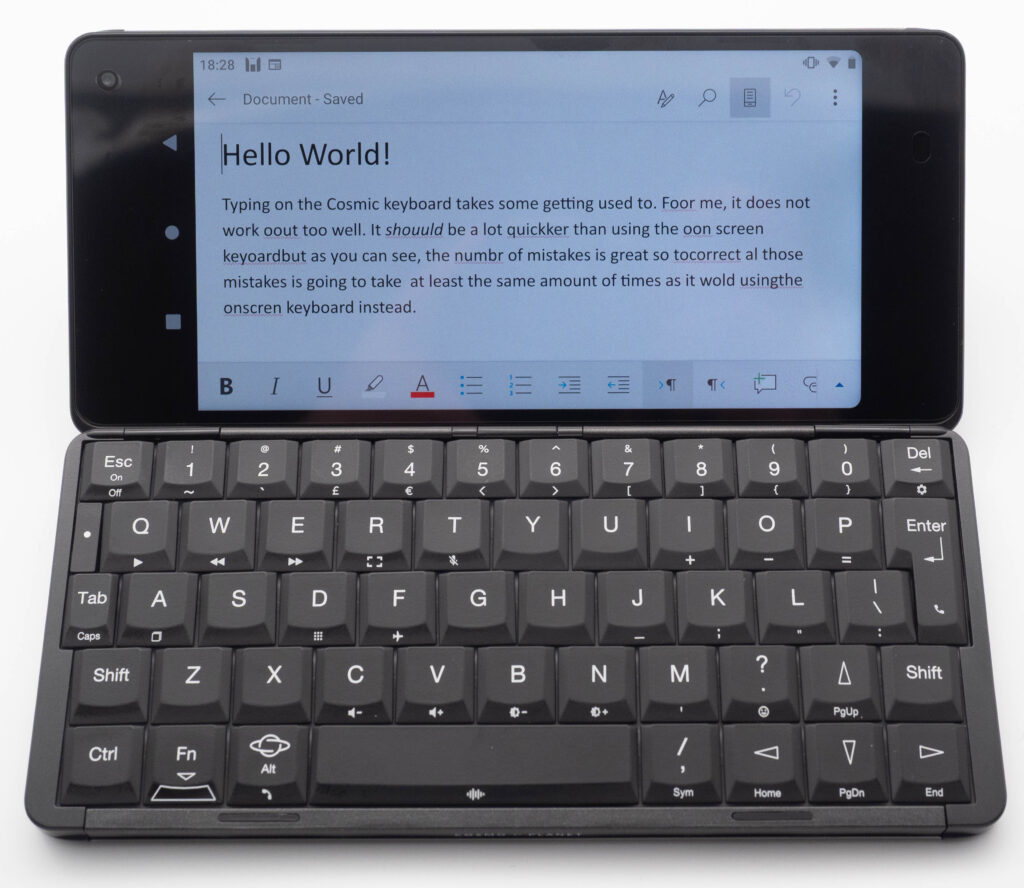
- The keyboard suffers from key bounce and occasional missed keystrokes, leading to typing errors (see gallery example)
As an attempt to breathe new life into a market segment widely considered obsolete, the Cosmo Communicator is a fascinating device. It is particularly interesting given that one of the original Psion designers contributed to its development.
However, Planet Computers appears not to have had the resources to turn this ambitious concept into a sustainable long-term platform. The lack of major Android updates and the slow response to user concerns have limited the device’s longevity and undermined confidence in its future.
Nevertheless, as a historical artefact, the Cosmo stands as evidence that the PDA idea — compact, keyboard-focused mobile productivity — never entirely disappeared. It simply became a niche.
References
Ted’s Salmagundi – a review of the Cosmo Communicator from 2020