
Your Mobile Companion
Quick facts
- CPU:
- ARM 710T @ 36.864 MHz
- RAM (KB):
- 16384
- Storage (MB):
- 16
- Display:
- 640x240 LCD with 16 levels of grey. Backlight.
- Operating system:
- EPOC32 (Symbian)
- Year introduced:
- 1999
- Power source:
- 2 AA-batteries. 1 CR2032 for backup.
- Connectivity:
- Serial (RS323) and IR
- Dimensions (mm):
- 170x90x23
- Weight (g):
- 354
- Built-in apps:
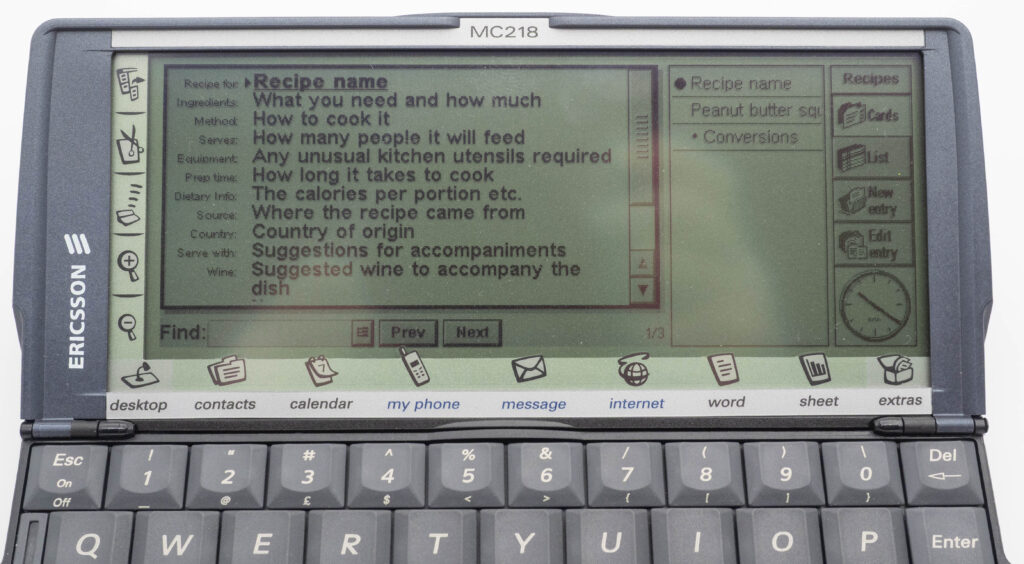
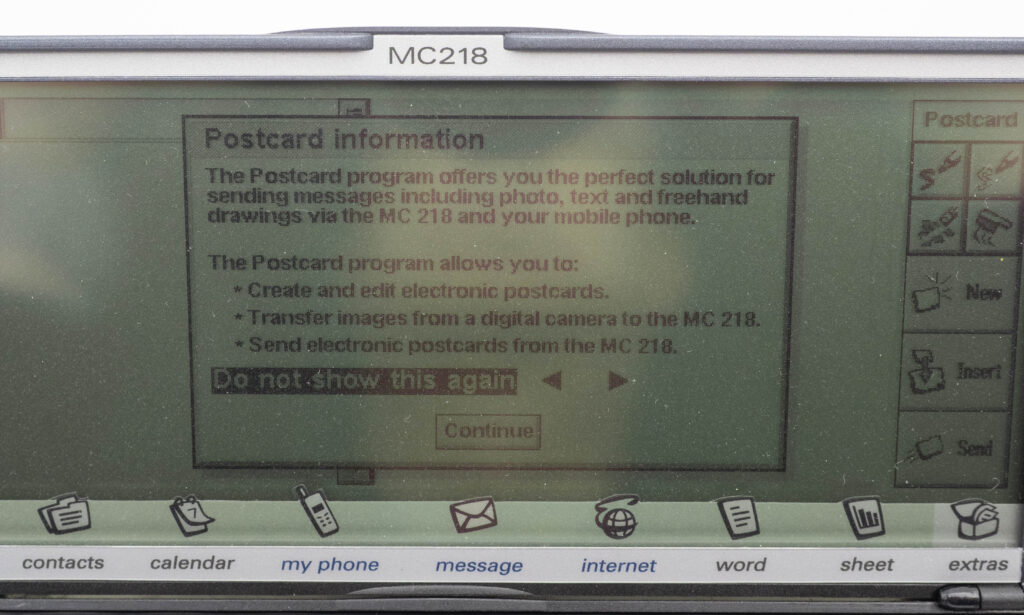
- Contacts, Calendar, My phone, Message, Internet, Word, Sheet, Record, Comms, Postcard, Jotter, Spell, OPL, Data, Time, Calc, Bombs, Sketch
- Input method:
- Keyboard and Stylus
Overview
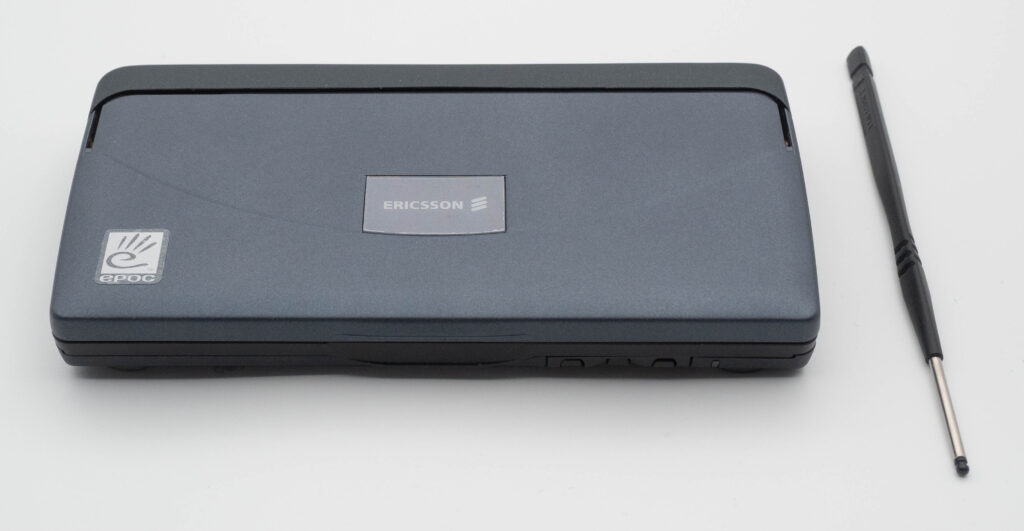
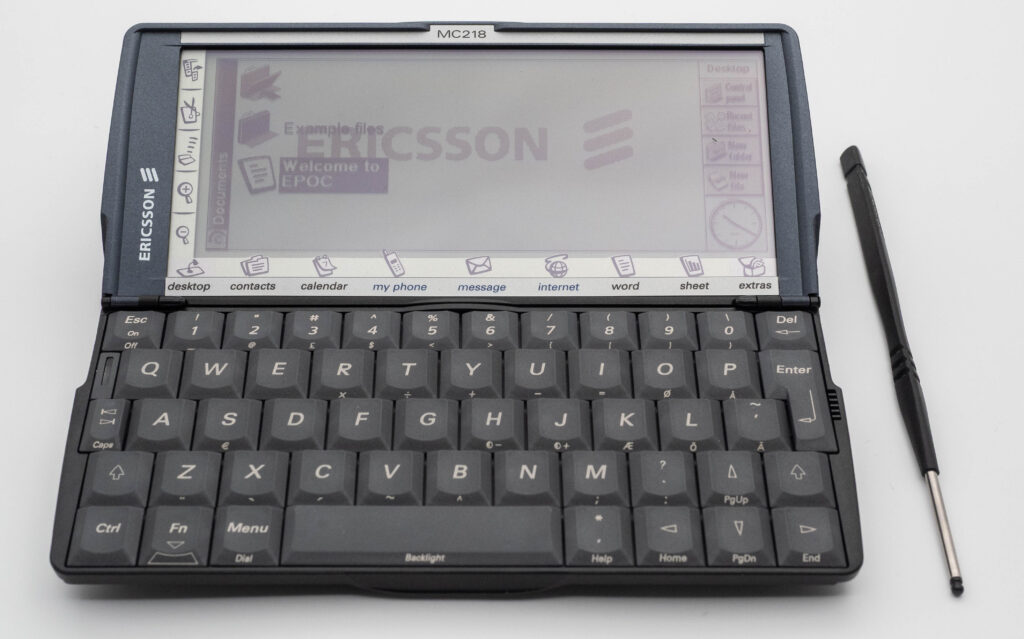
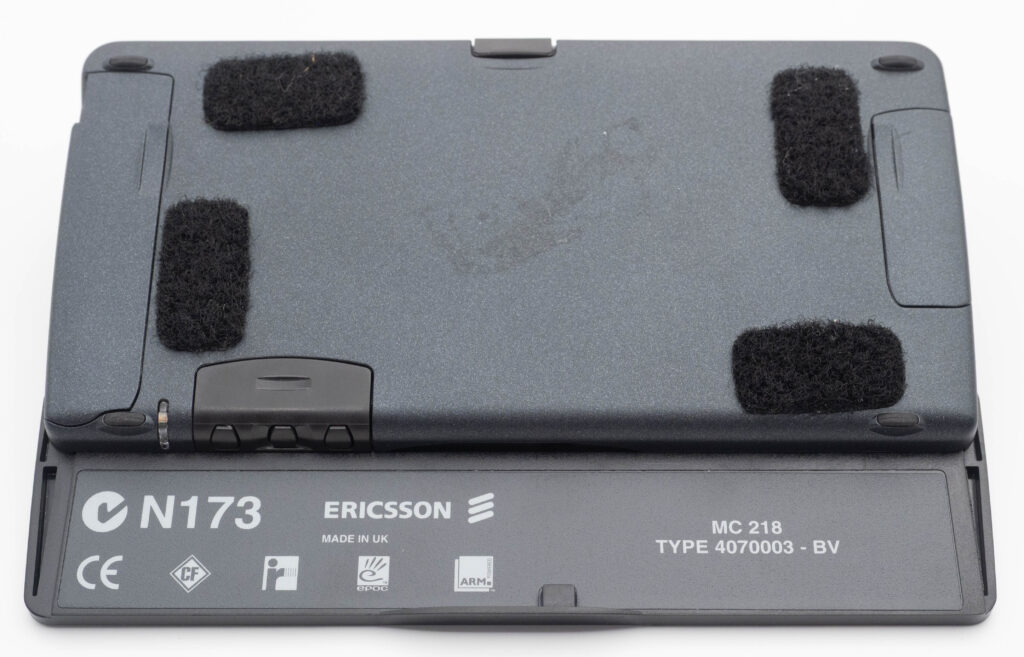
With the MC218, Ericsson abandoned its earlier cooperation with HP, which had resulted in the MC12 and MC16 models, and instead partnered with British PDA manufacturer Psion. The MC218 was essentially a rebranded Psion Series 5mx, although Ericsson made a number of changes to both the exterior design and the software content of the 16 MB ROM.
Industrial design and branding
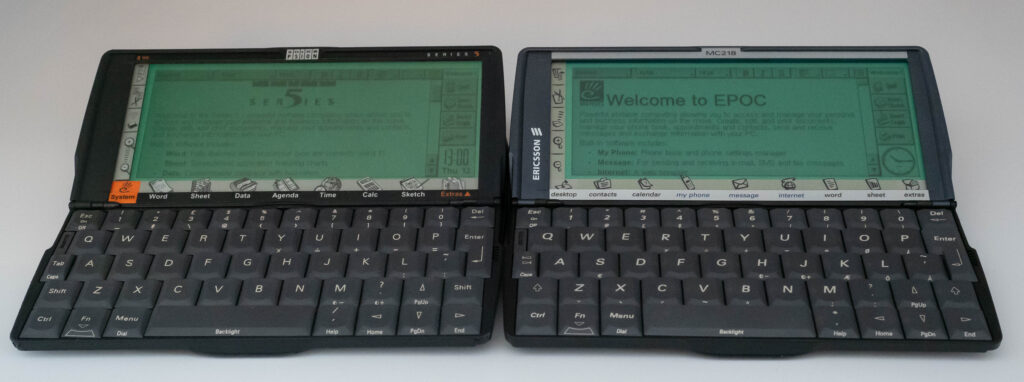
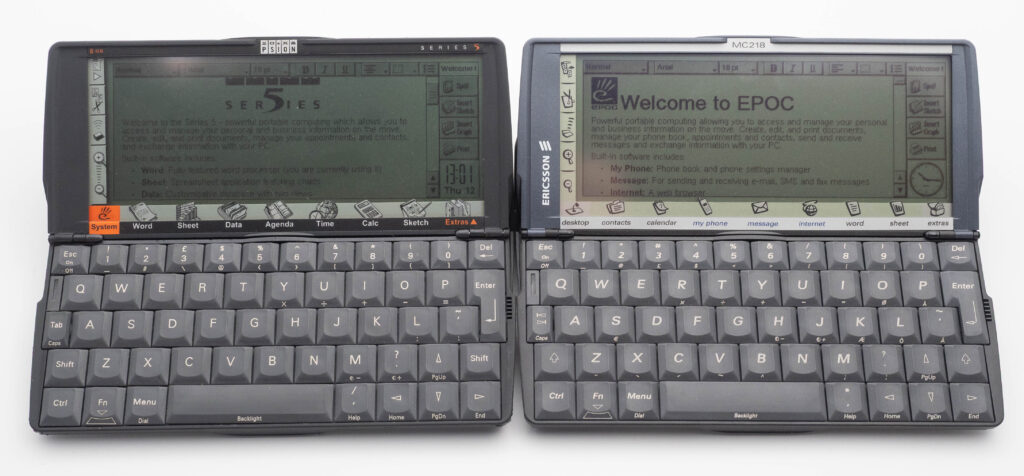
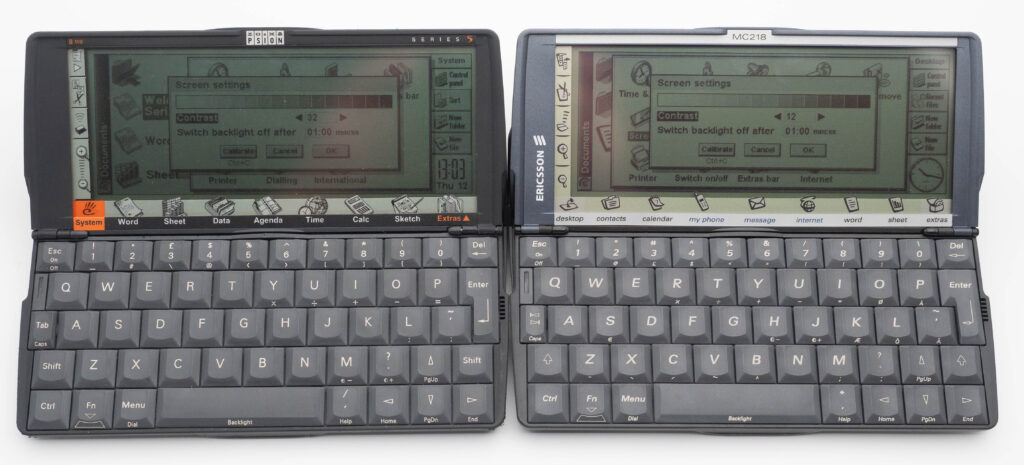
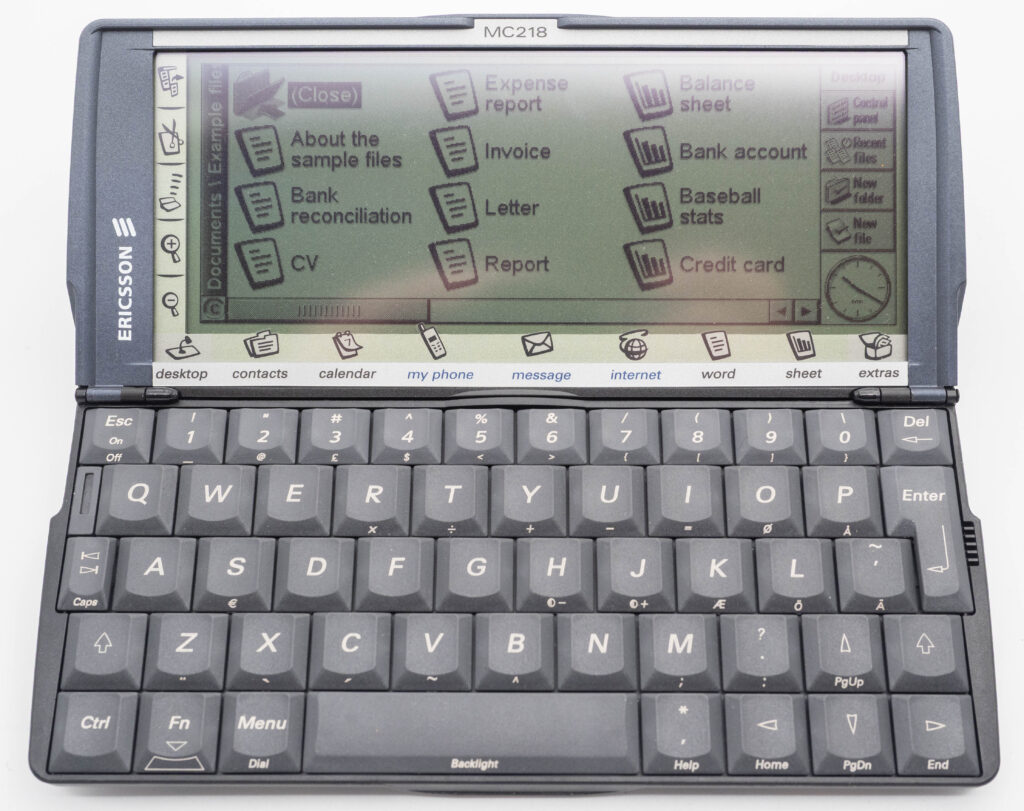
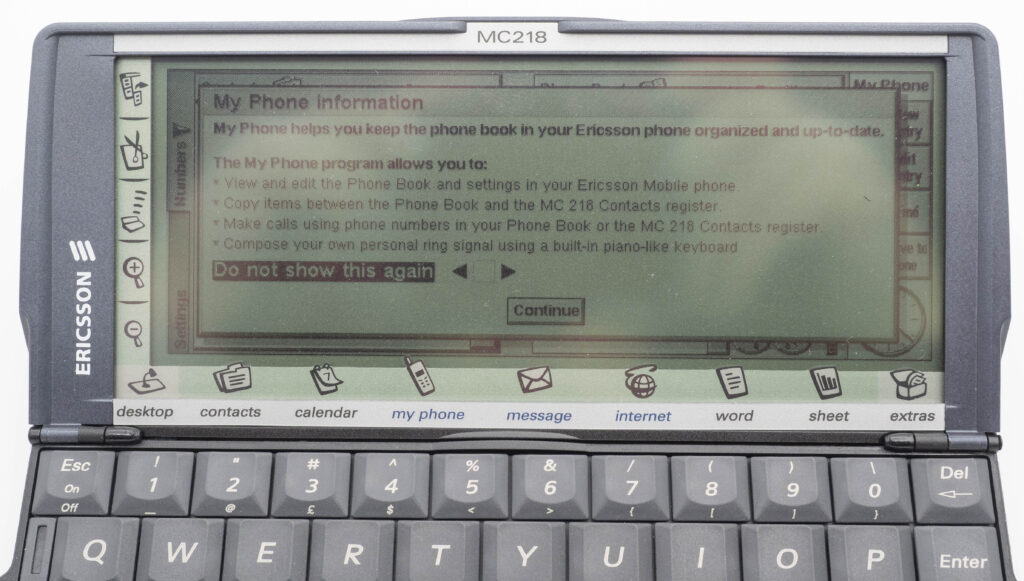
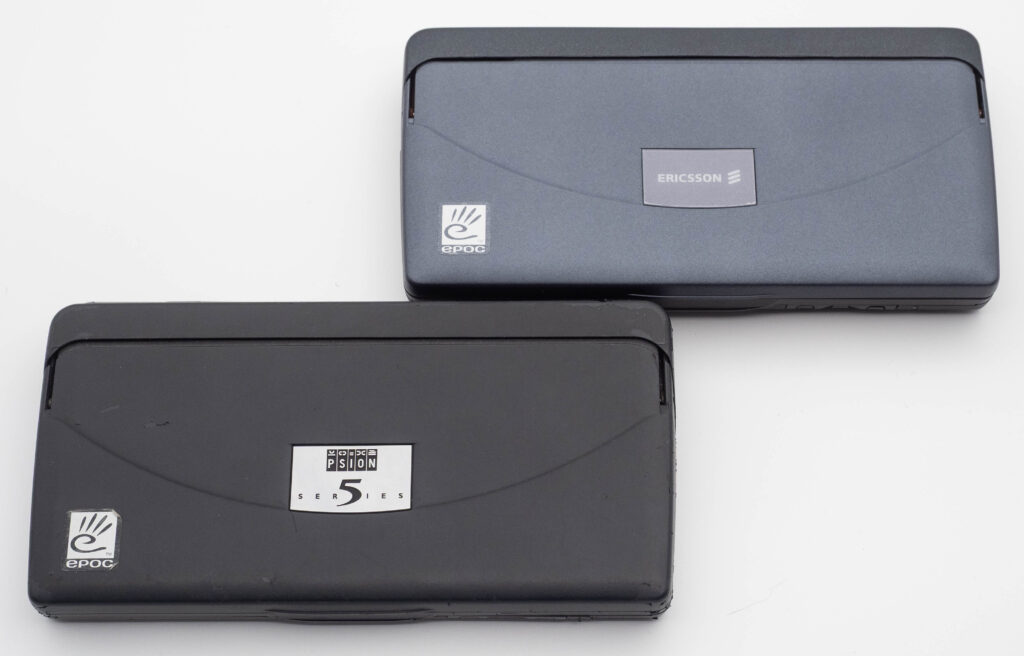
When placing the Series 5mx and MC218 side by side, the differences are subtle but noticeable. Ericsson opted for a slightly different colour scheme— often described as “Ericsson blue”— and replaced Psion’s bold orange accents with more subdued black-and-white icons. The silk-screened application bar beneath the display was also redesigned.
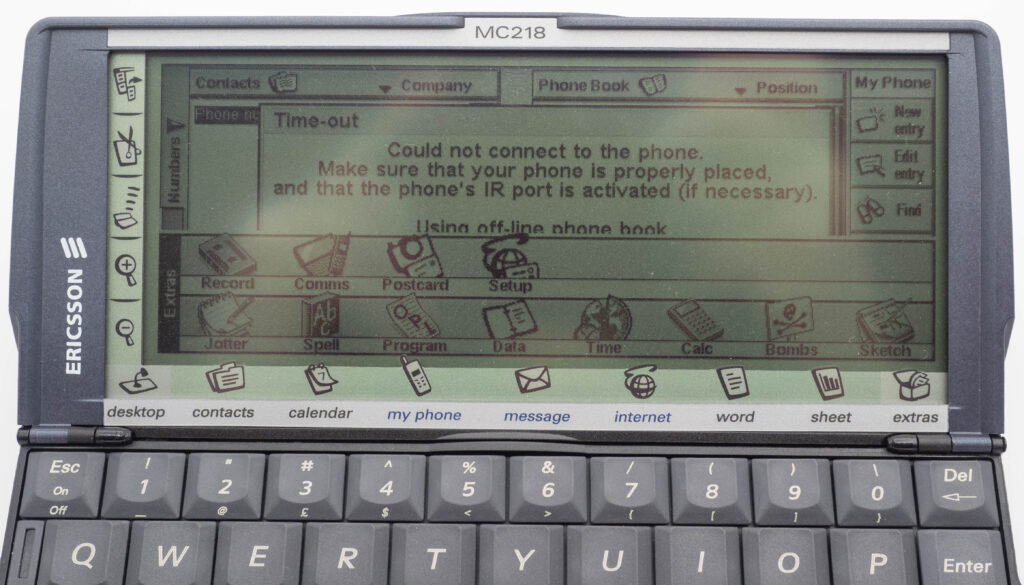
Marketed explicitly as a Mobile Companion—which is what the letters “MC” in the name stand for—Ericsson highlighted applications related to phone and network connectivity. The “My phone” and “Internet” icons were given prominent positions on the quick-access bar. As a consequence, applications such as Calc and Jotter, which had direct access on the Psion Series 5mx, were moved into the Extras submenu.
A small but interesting detail is that Ericsson renamed Psion’s Agenda application to Calendar, likely choosing a term that was more universally recognised.
Software integration and connectivity
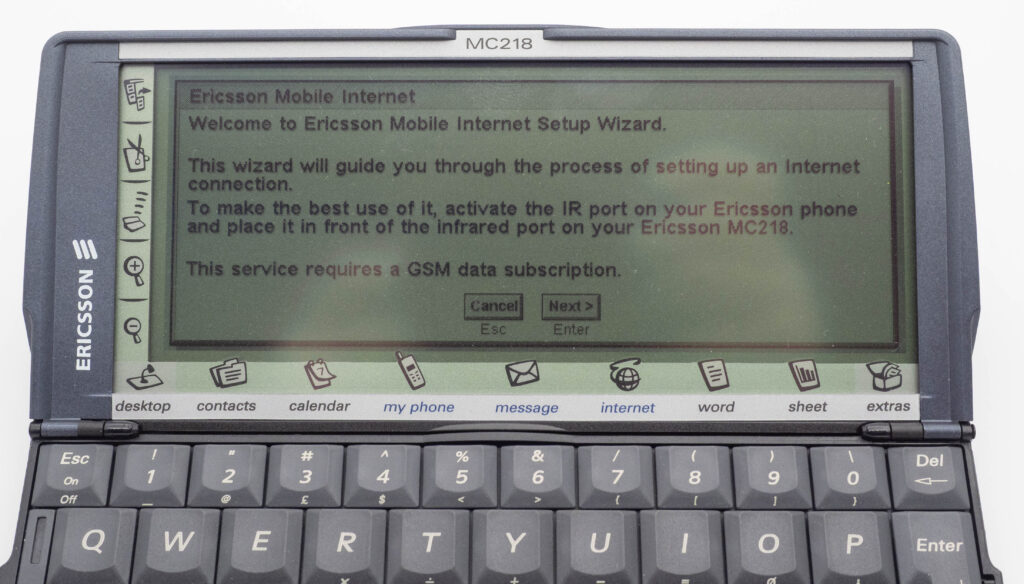
One Ericsson-specific addition was the My phone application. This allowed users—presumably all owners of an MC218—to manage the phone book of a compatible Ericsson GSM phone directly from the PDA, as well as create and manage ringtones.
Using either a serial cable or the built-in infrared transceiver found on some Ericsson phones, the MC218 could connect to bulletin board systems using its VT100 terminal emulator and X-Modem or Y-Modem file transfer protocols. Internet access was also supported, either via WAP (Wireless Application Protocol), which was specifically designed for small screens, or via standard HTML over HTTP. This functionality was made possible by the MC218’s built-in soft modem.
Hardware evolution
From the perspective of someone already familiar with the original Psion Series 5, the MC218 and the Series 5mx represent an evolutionary rather than revolutionary step. Nevertheless, several meaningful upgrades were introduced:
- The ROM containing the EPOC32 operating system was increased from 12 MB to 16 MB
- RAM was doubled from 8 MB to 16 MB
- The CPU was replaced with a newer ARM processor running at twice the clock speed (36.9 MHz)
- The display was sourced from a different manufacturer, resulting in slightly improved contrast (see the side-by-side images in the gallery above)
Most other aspects remained unchanged, including the excellent sliding keyboard and the use of two standard AA batteries for power.
Market position and legacy
Introduced in 1999, the MC218 was a highly capable device for its time. However, competition in the PDA market had reached its peak. Devices based on Palm OS, as well as Microsoft’s Pocket PC platform, were rapidly gaining traction.
Reliable sales figures for the MC218 are difficult to find, but the absence of a direct successor suggests that it was not a commercial success. The collaboration with Psion did, however, continue in a different form with the creation of Symbian, a joint venture between Psion, Nokia, Ericsson, and Motorola. Symbian aimed to standardise operating systems for emerging smart devices, particularly smartphones.
Ericsson later introduced its first smartphone, the R380, also part of this collection. It was based on Symbian with Ericsson’s own UIQ user interface. Nokia, meanwhile, built a wide range of Symbian-based smartphones using its own Series 40 and Series 60 user interfaces—but that is another story.
As a former Ericsson employee, I had the opportunity to follow the development of handheld devices and smartphones closely. The MC218 was the third and final entry in Ericsson’s brief exploration of stand-alone PDAs. It represents a true mobile companion: a dedicated handheld device which, when paired with a suitable GSM phone, could provide Internet access and support many tasks normally associated with a full PC.
After earlier experiments with HP, Ericsson was evidently dissatisfied with the price and performance of Microsoft Windows CE–based devices and instead turned to Psion. This choice ultimately helped pave the way for Ericsson’s later smartphone developments.
References
Phonedb.net spec sheet of the Ericsson MC218
Eric Lindsays page about he MC218