
It’s time to take your computer in hand!
Quick facts
- CPU:
- ARM 7100 @ 18.432 MHz
- RAM (KB):
- 8192
- Storage (MB):
- 6
- Display:
- 640x240 Backlit LCD with 16 levels of greyscale
- Operating system:
- Epoc32
- Year introduced:
- 1997
- Power source:
- 2xAA batteries + 1xCR2032 for backup
- Connectivity:
- IR and Serial
- Dimensions (mm):
- 170x90x23
- Weight (g):
- 354
- Built-in apps:
- Word, Sheet, Data, Agenda, Time, Calc, Sketch, Bombs, Spells, Comms, Record, OPL
- Input method:
- Keyboard and Stylus
Overview
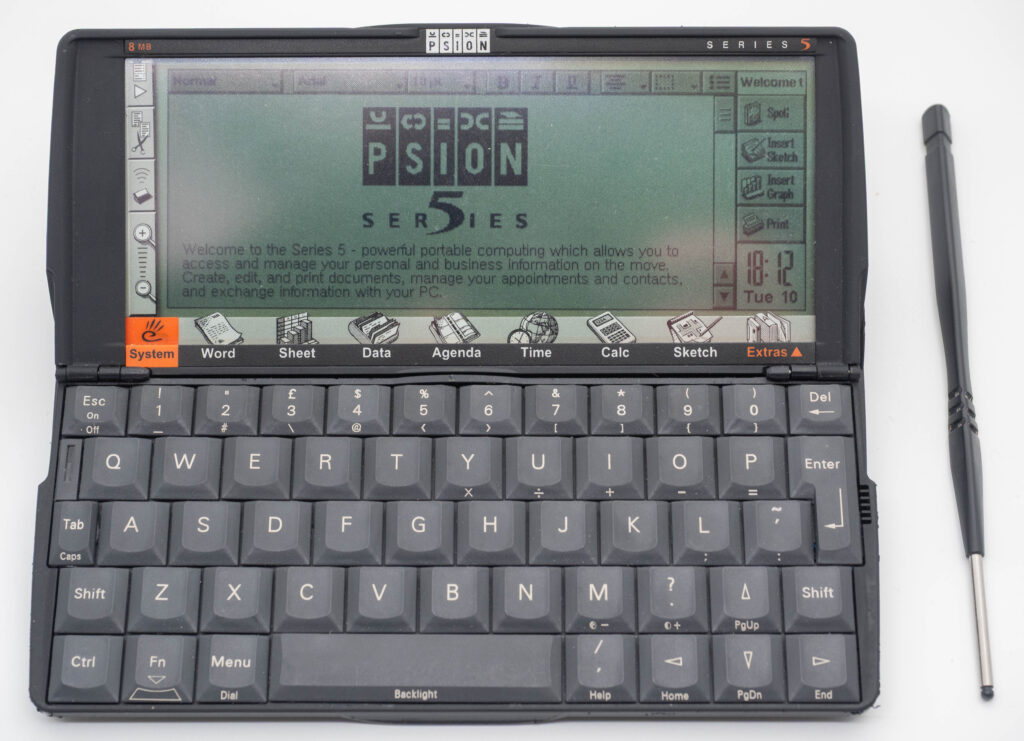
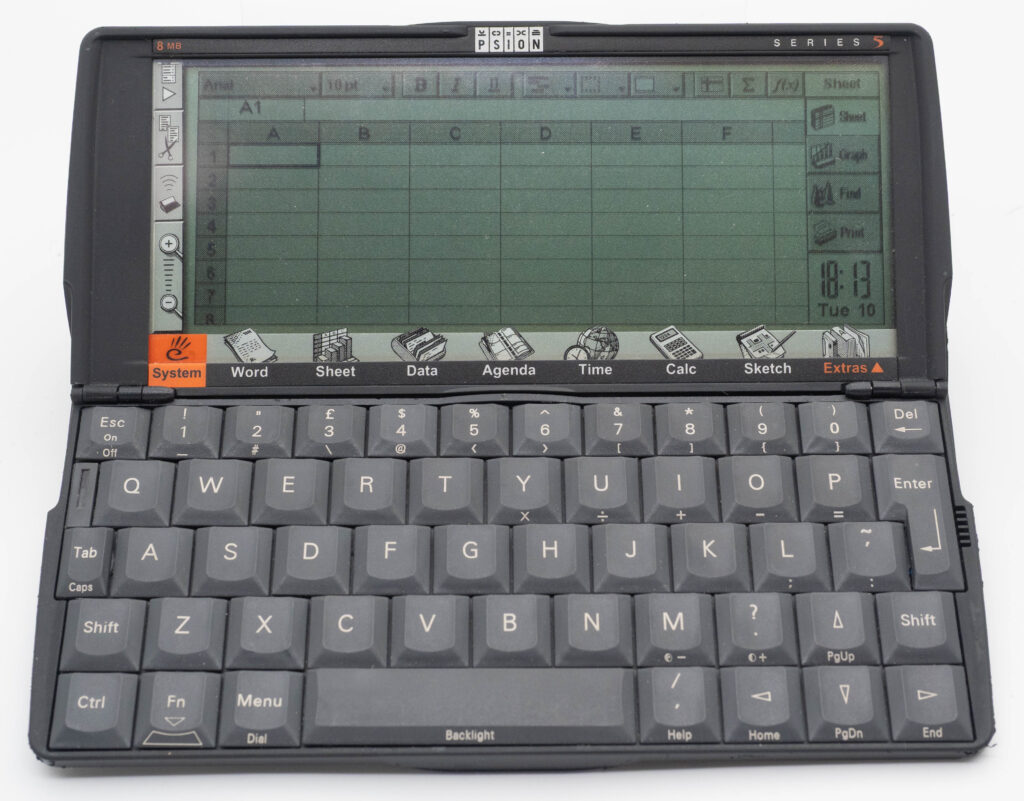
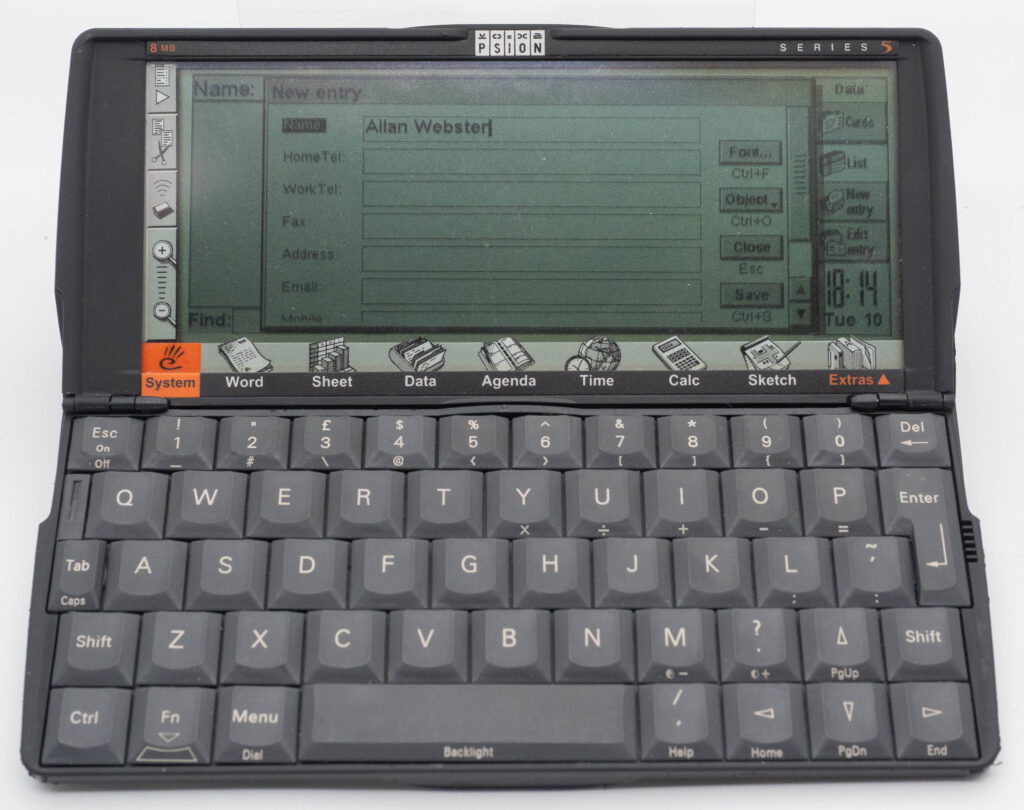
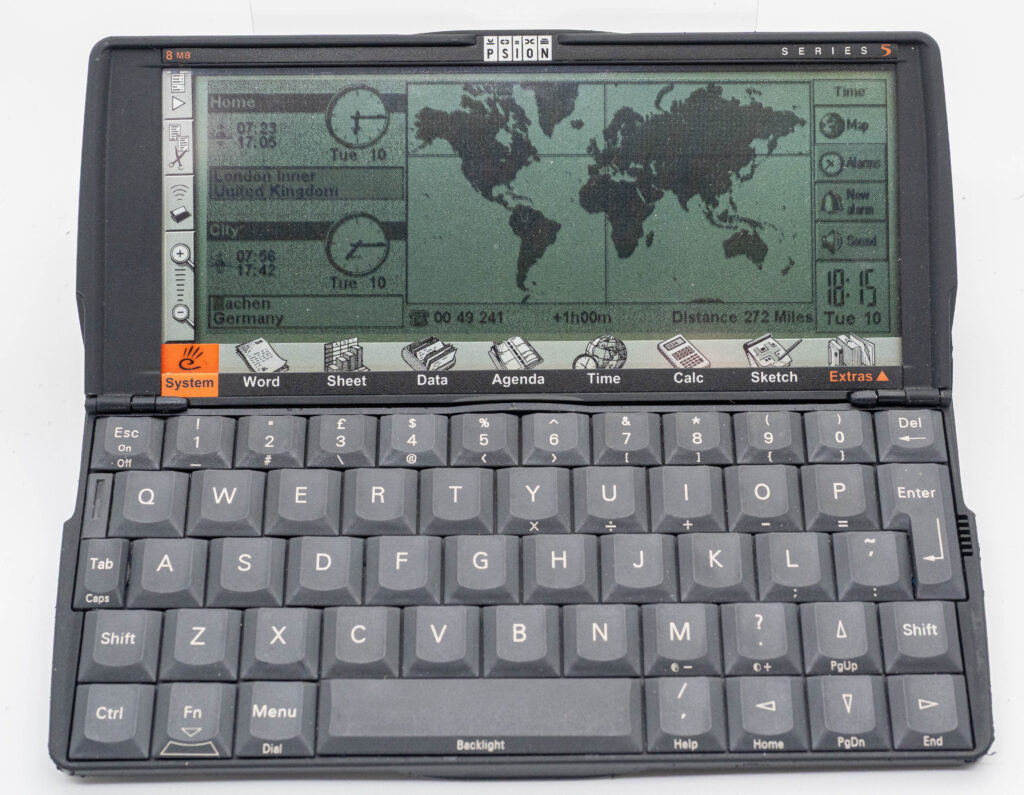
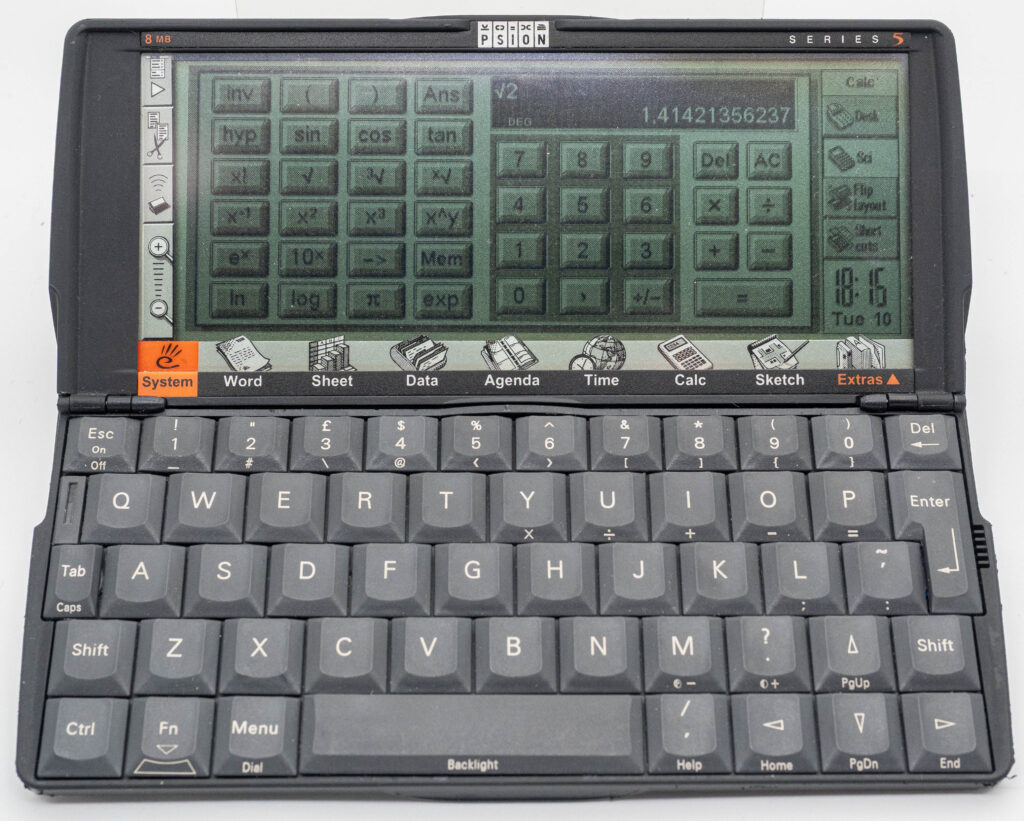
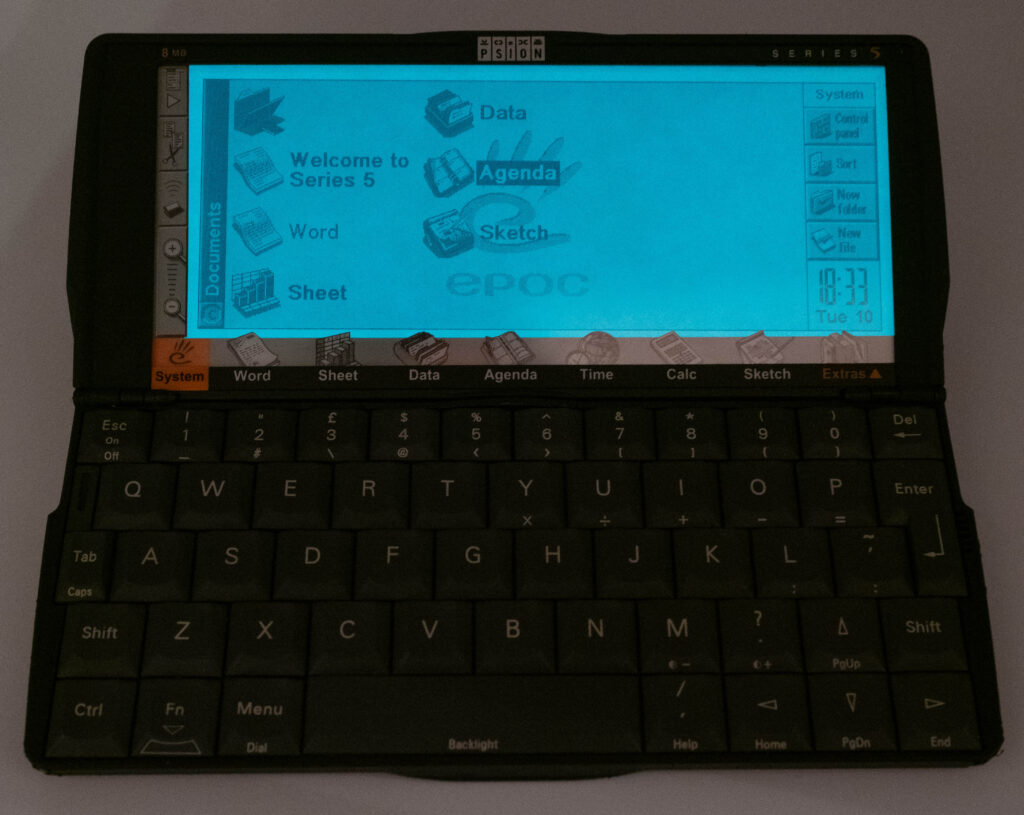
Buoyed by the success of the Psion Series 3a, Psion did not rest on its laurels. The Series 5 built on the same fundamental idea as its predecessors, but in almost every other respect it was an entirely new device. It introduced a new CPU based on the ARM architecture, came equipped with a generous 8 MB of RAM, and featured a much larger, backlit display with a resolution of 640 × 240 pixels—often referred to as “half-VGA”—capable of displaying 16 levels of greyscale.
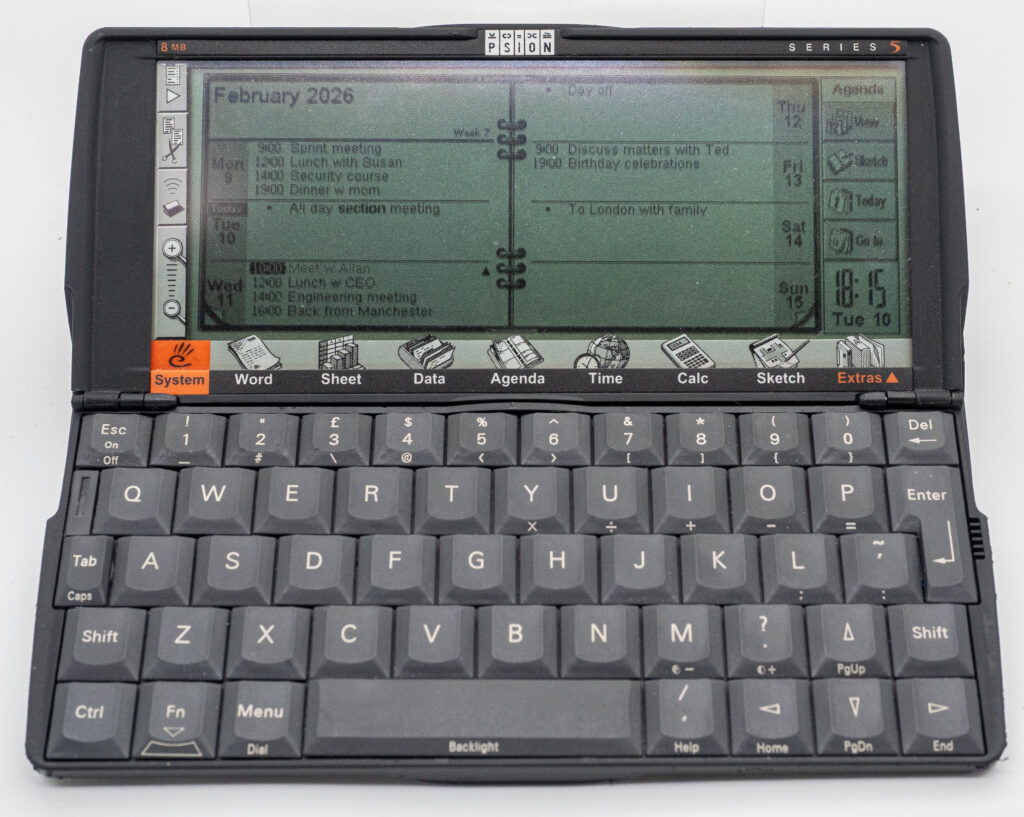
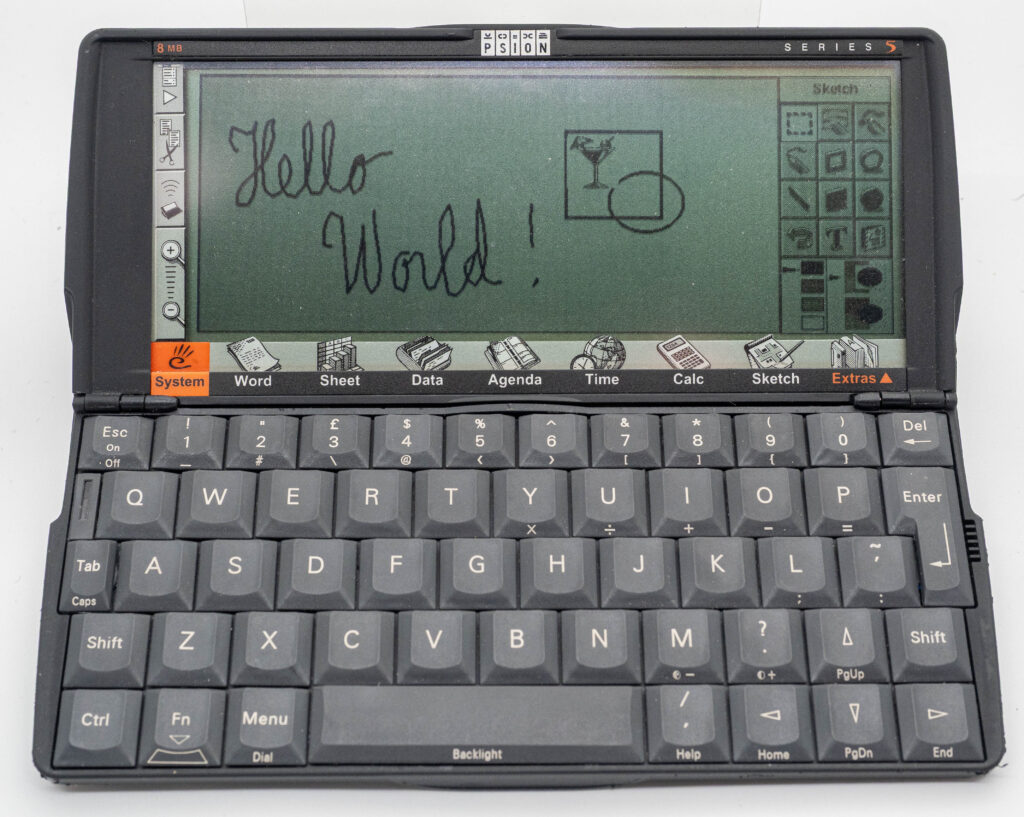
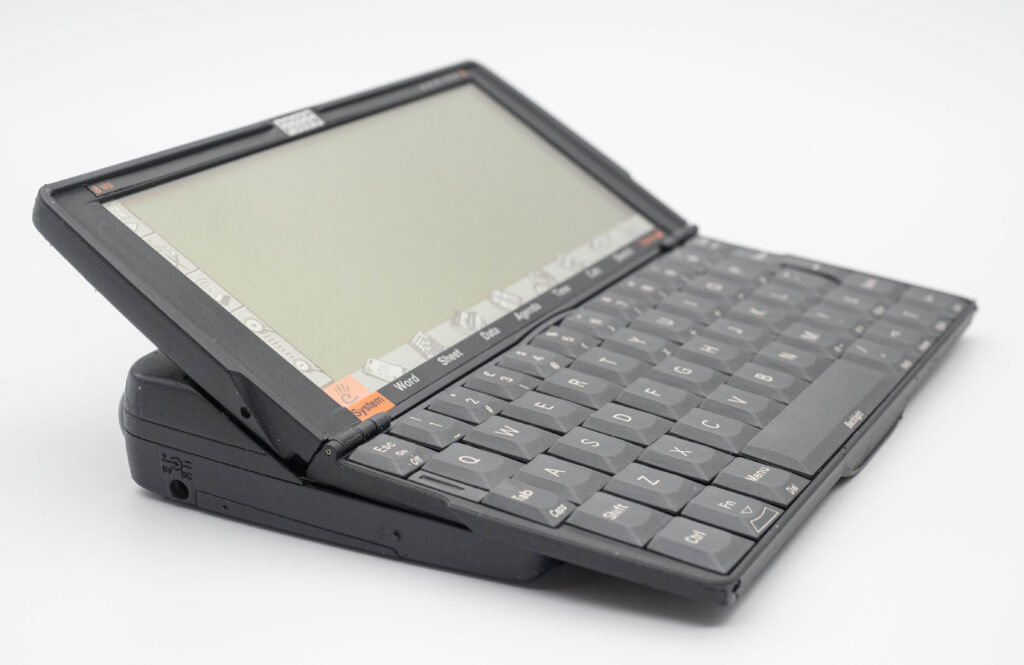
Most striking of all, however, was the revolutionary keyboard mechanism. When the unit was opened, the keyboard slid out and expanded the device, making the Series 5 significantly larger during use than when carried. This clever design allowed Psion to combine true touch-typing with a form factor that was still portable. For the first time in a Psion device, a stylus was also included. The touch-sensitive interface supported applications such as Sketch, which allowed users to draw freehand and paste their drawings directly into other applications, including the Agenda calendar.
Not everything was seen as an improvement by customers already owning a Psion Series 3a, however. The addition of a touch-sensitive layer on the display, together with support for 16 levels of greyscale, resulted in a screen with noticeably lower contrast. Combined with the highly reflective surface, this made the Series 5 harder to read in many lighting conditions compared to its predecessor. These shortcomings were addressed in the successor, the Series 5mx, which featured a display with improved contrast.
At launch in 1997, the Psion Series 5 was a premium handheld: the UK retail price for an 8 MB model was approximately £499 including VAT, while in the United States early listings put the 4 MB version at around $599 and the 8 MB model at about $699.
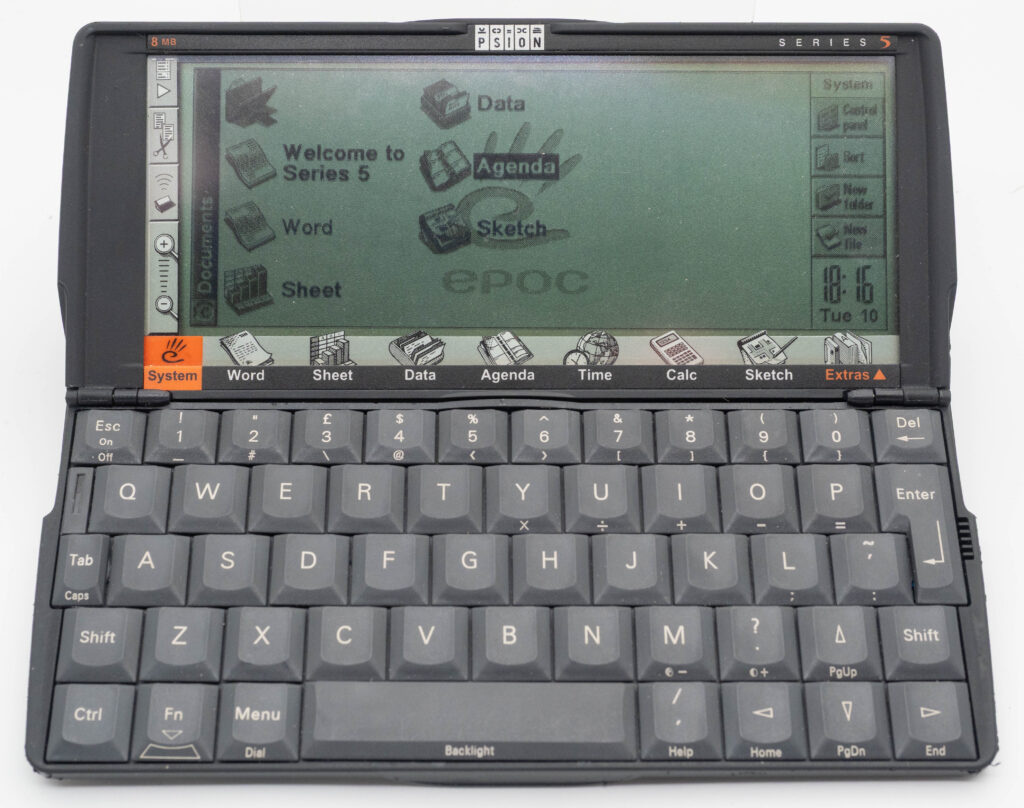
Equally impressive was the suite of software included as standard. In addition to the expected PIM applications, the Series 5 shipped with highly capable word processing and spreadsheet programs. The operating system, EPOC32, was fully multitasking and designed around a document-centric model that allowed content to be shared seamlessly between applications. A demonstration document shipped with every unit illustrated this elegantly: a bar chart created in the Sheets application appeared embedded inside a Word document. Double-clicking the chart opened the spreadsheet, allowing both the data and the chart’s appearance to be modified. Selecting “Done” returned the user to the word processor, where the changes were immediately reflected.
At the time, not even Microsoft, with its then seven-year-old OLE (Object Linking and Embedding) technology introduced with Windows 3, could offer such a fast or elegant workflow.
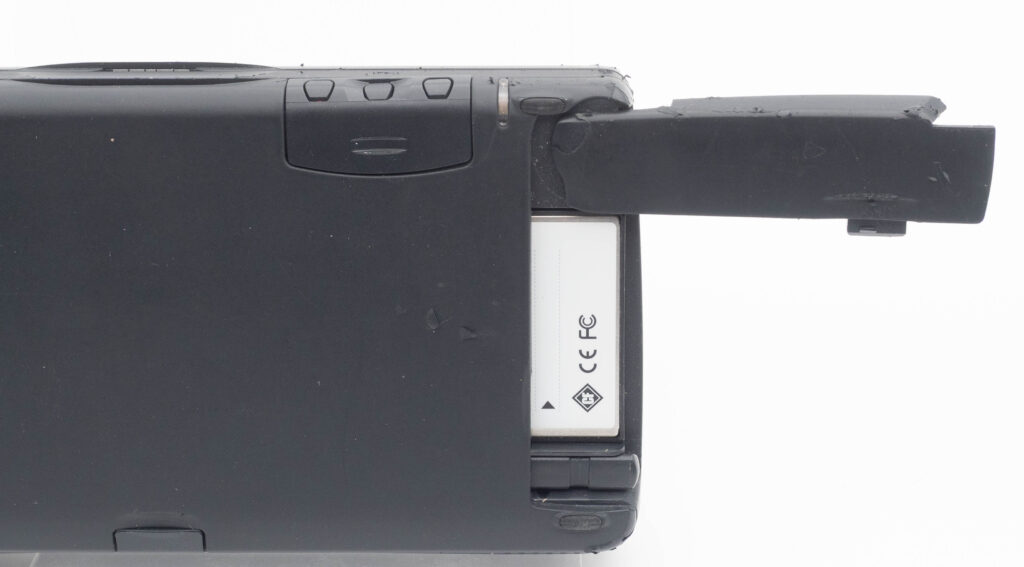
Documents created on the Series 5 were normally stored in RAM. In addition to the two AA batteries that powered the device for several weeks, a CR2032 lithium coin cell ensured that memory contents were preserved should the main batteries become depleted. Users could also expand storage using CompactFlash cards, which could hold documents as well as additional applications. Psion adopted Microsoft-style drive naming, referring to internal RAM storage as drive C: and the CompactFlash card as drive D:.
Beyond the built-in applications, there was a thriving ecosystem of third-party software available for the Series 5. Psion itself sold the Presentation application—roughly comparable to Microsoft PowerPoint—as an optional add-on.
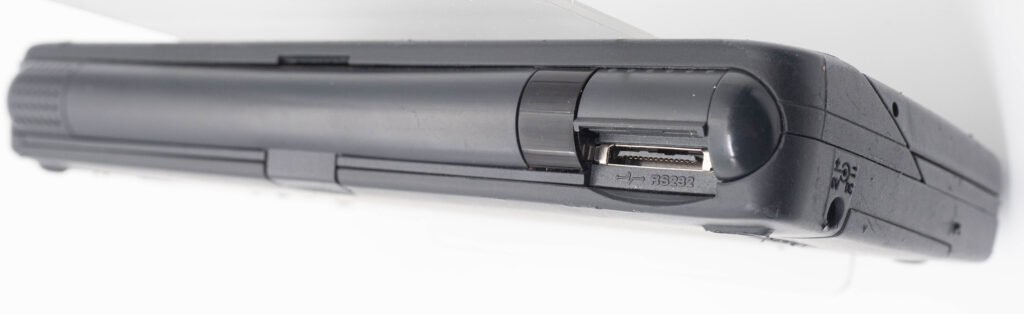
In terms of connectivity, the Series 5 offered two primary communication methods: infrared and a serial interface. A cable with Psion’s proprietary serial connector was included in the box, along with the PsiWin desktop software, which enabled synchronisation with a PC.
Compared to the Palm Pilot, introduced the same year, Psion targeted business professionals who valued a complete and highly productive handheld computer, even at the cost of a slightly larger form factor. Palm, by contrast, focused on simplicity and immediacy.
The Psion Series 5, together with its successor the Series 5mx, represents the finest engineering of any PDA in my collection. This applies equally to the hardware—most notably the ingenious sliding keyboard—and to the software, which remains a pleasure to use even today. I believe two factors prevented it from achieving the same level of mass-market success as the Palm Pilot: first, the form factor, which required a jacket or coat pocket rather than a shirt pocket; and second, the fact that it was British rather than American.
References
Detailed spec sheet at phonedb.net
Read my story on Psion Plc – The rise and fall of a British Mobile Computing pioneer
Chapter 1 of Psion Power Buch – an excellent overview of all handheld computers from Psion, including the Series 5