
When improvements does not lead to a better product
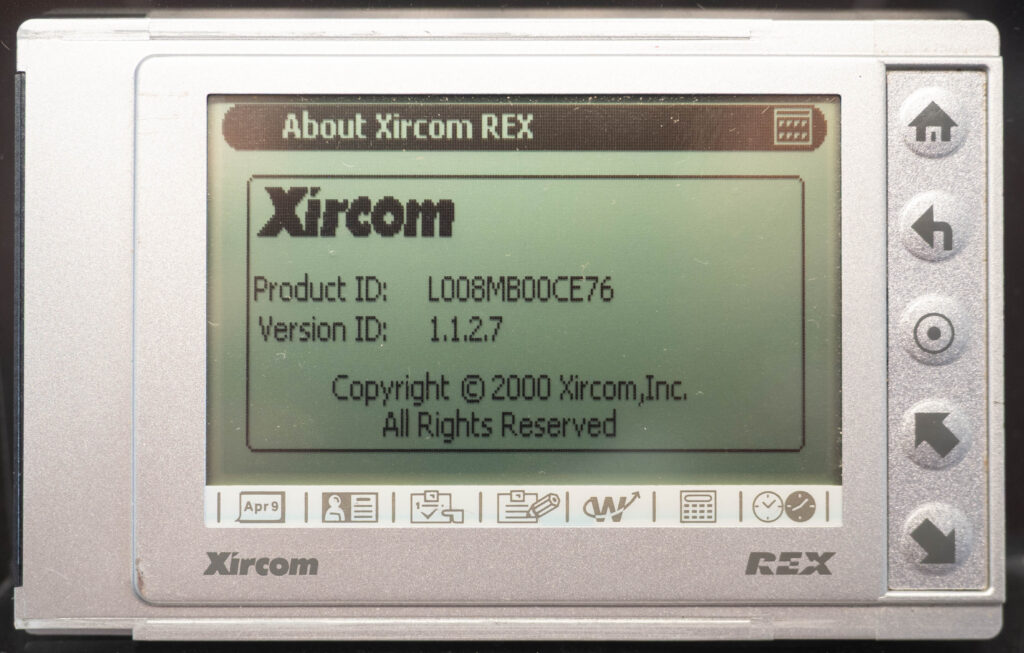
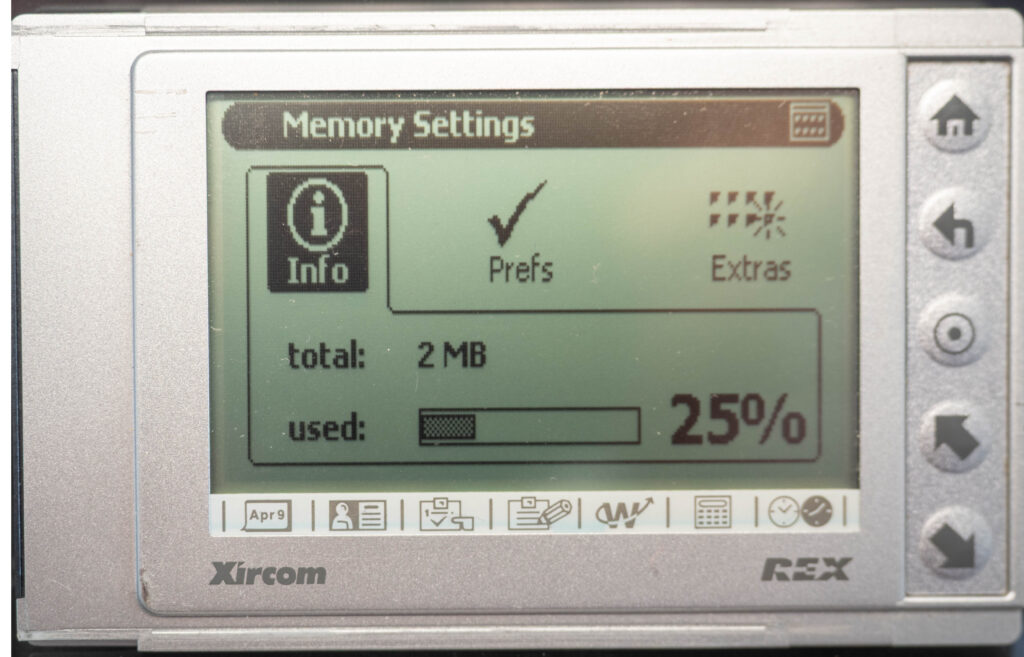
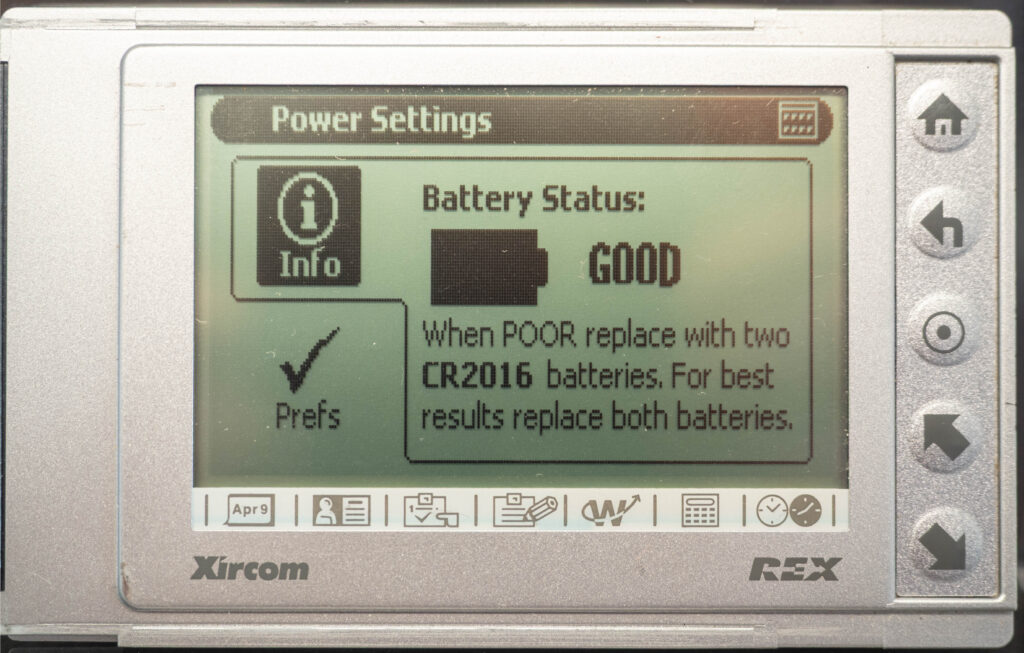
Quick facts
- CPU:
- Toshiba emulating Zilog Z80
- RAM (KB):
- 32
- Storage (MB):
- 2 (flash)
- Display:
- 240x120 pixels monochromatic
- Operating system:
- Proprietary
- Year introduced:
- 2000
- Power source:
- 2 x CR2016 lithium cells
- Connectivity:
- PC-Card
- Dimensions (mm):
- 87x54x3
- Weight (g):
- 34
- Built-in apps:
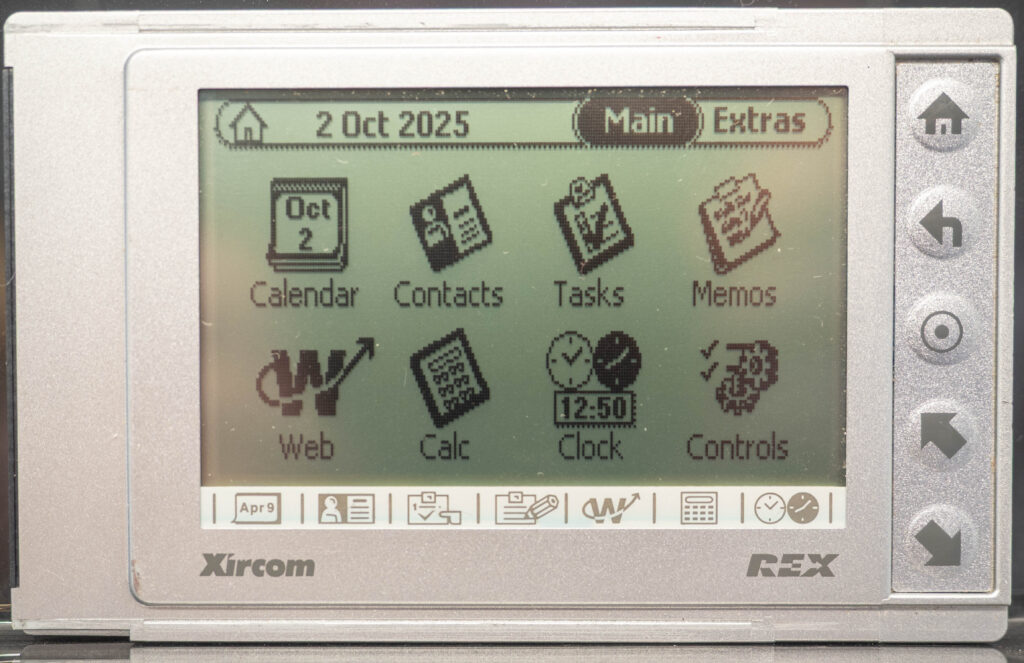
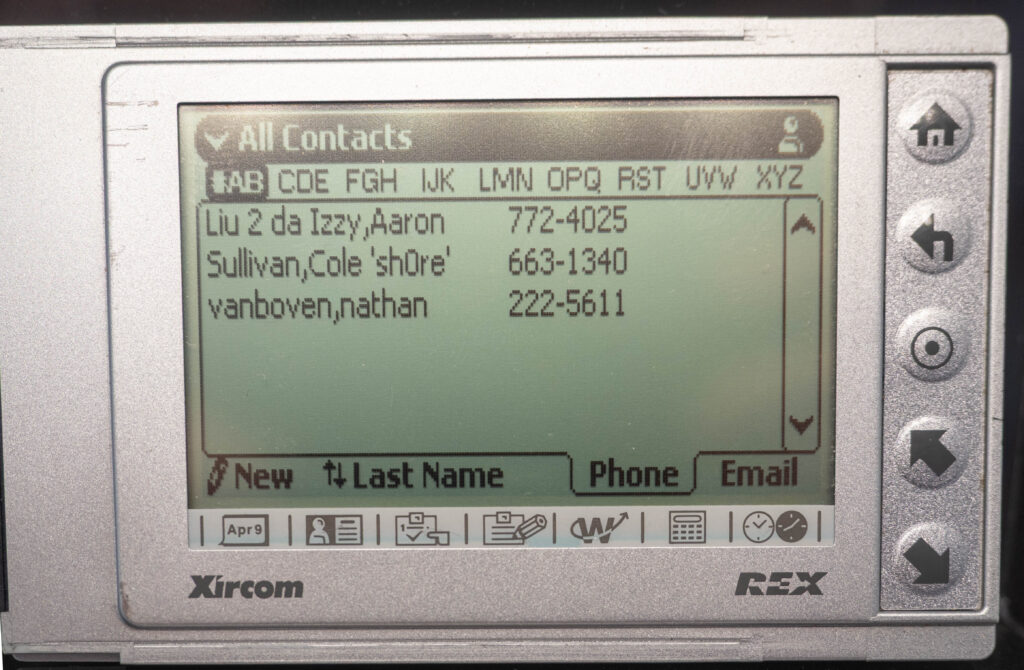
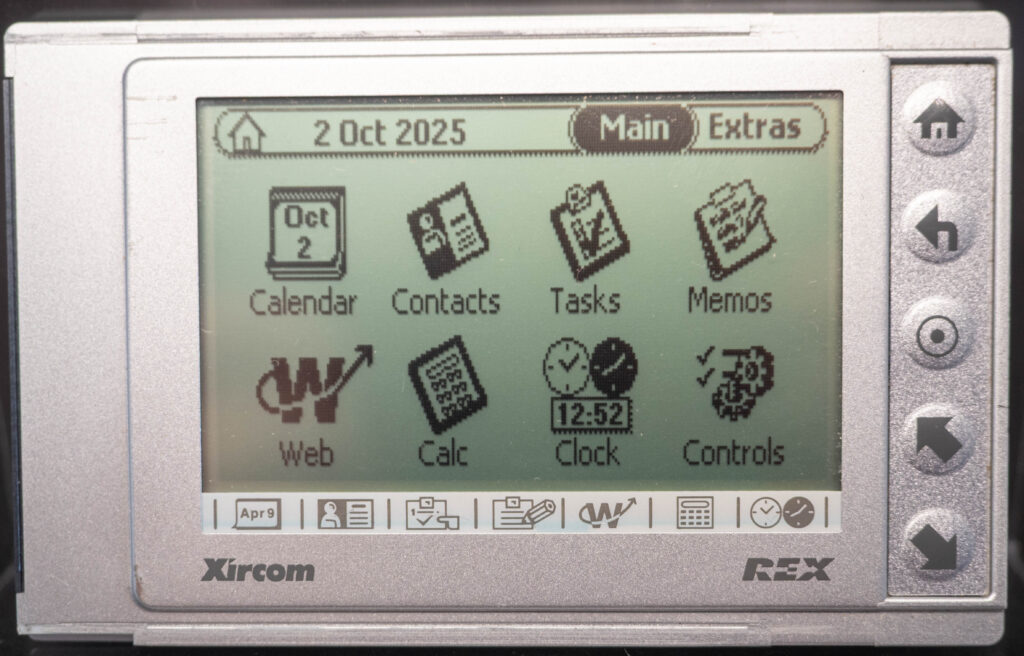
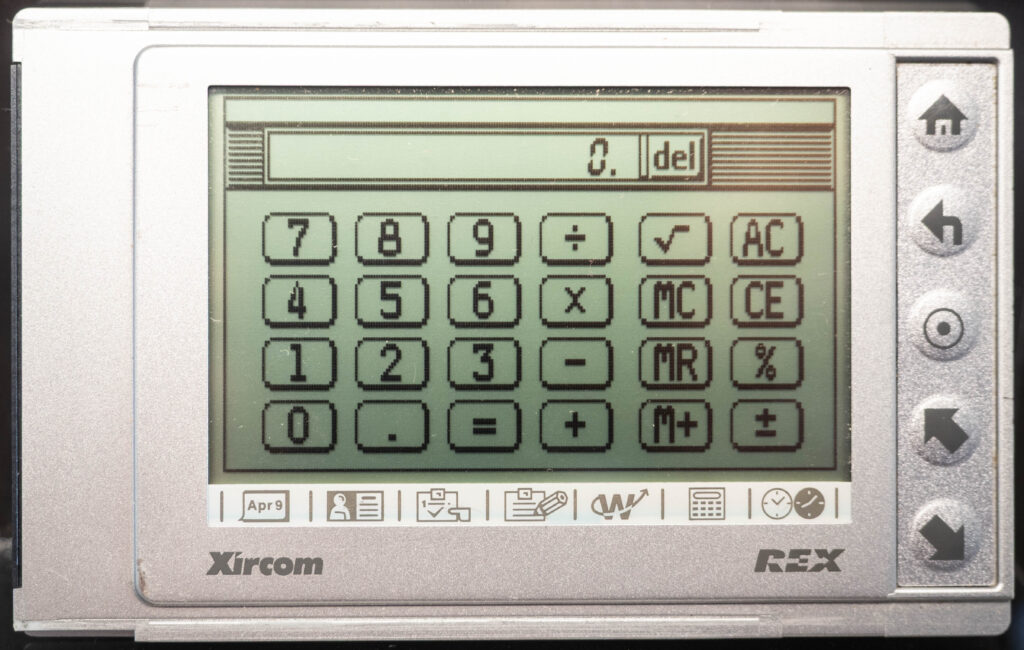
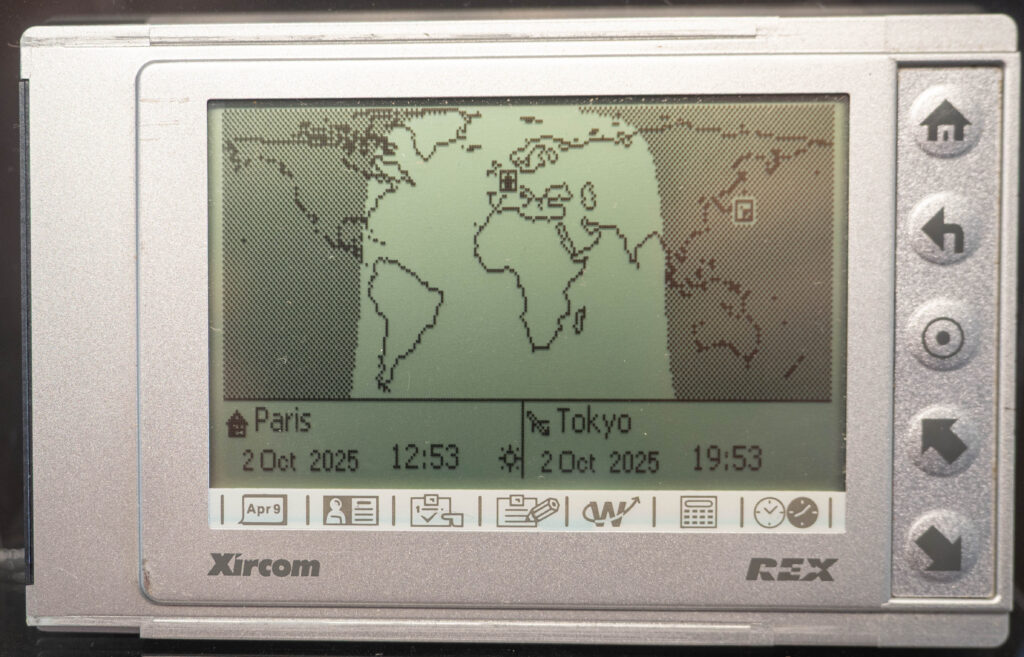
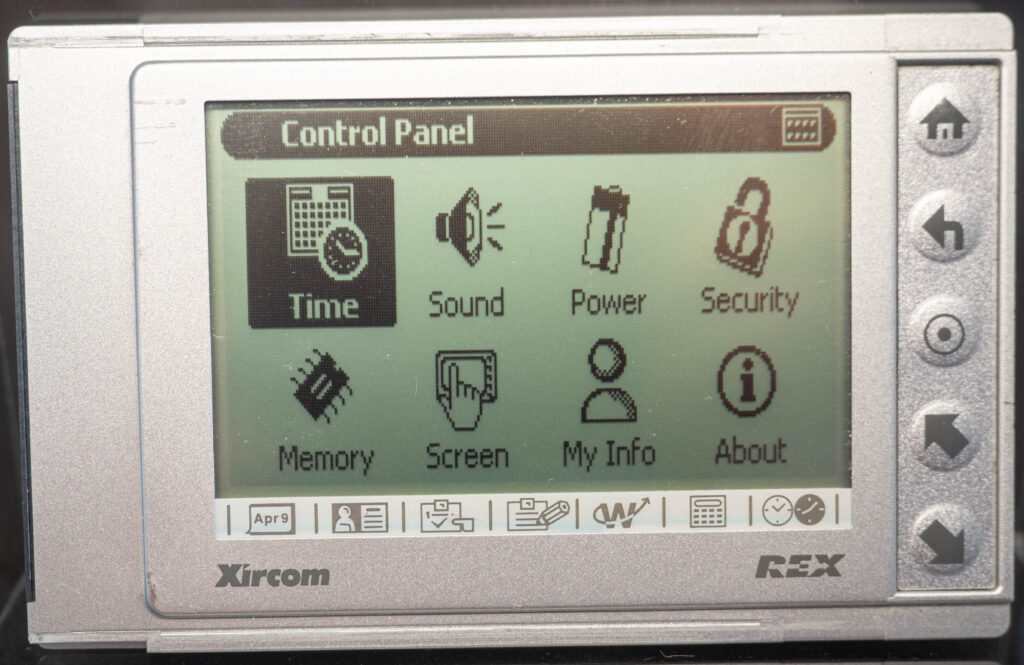
- Organizer, Contacts, ToDo, Notes, World clock, Calculator, Web (read downloaded contents), Settings
- Input method:
- Pen
Overview
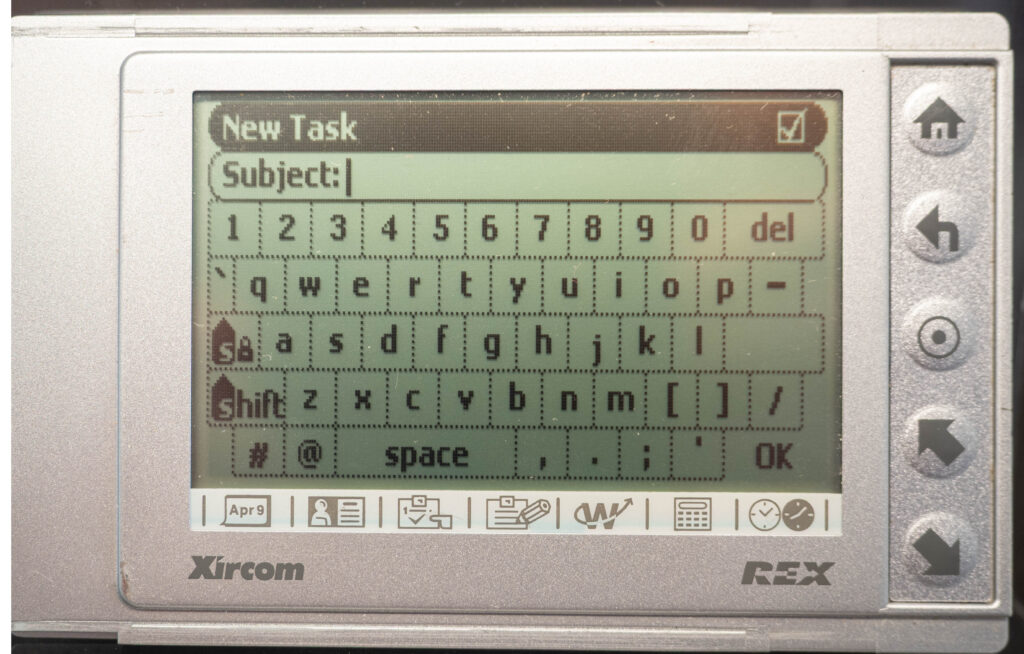
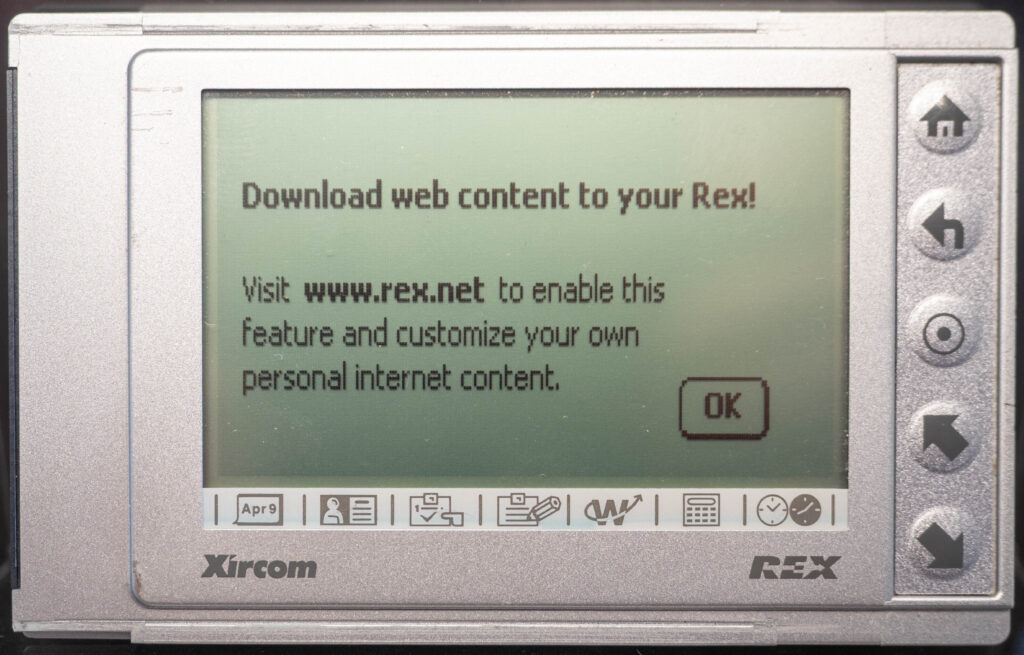
Rex 6000 was the last in a series of credit-card sized PDAs from Franklin, and later Xircom. It addressed one of the perceived weaknesses with the previous models, namely the inability (REX-3) or difficulty (REX-5) of entering data into the unit while on-the-go. The Rex 6000 added a touch-screen and pen in order to input any text on-the-go. However, since the screen is very small, you have to have a steady hand to pick the correct letters and numbers from the on-screen keyboard. Another new feature was the ability to load additional apps into the PDA. For this purpose, it featured a 2MB flash memory. Application developers would write code in small-C and would have 12KB of RAM at their disposal (the rest of the RAM was used by the operating system). So, because the Rex 6000 was a much more advanced PDA than its predecessors, it draw more power from its two lithium coin-cells. Because the digitizer required space, the coin cells would have to be the thinner variant CR2016 instead of the previously used CR2025, making things even worse from a battery-life point of view. In fact this was one of the main reasons that it never became a real hit and never got a follow-up. When Intel aquired Xircom, the product line was terminated.
The REX 6000 demonstrates that not all design decisions lead to better products.
While the REX Pro introduced a constrained but effective way of entering information using pre-defined phrase lists, some users felt this was insufficient compared to the then-popular PalmPilot, which allowed free text input on the go.
In response, Xircom — which had taken over the REX line from Franklin — introduced a touchscreen, a very small stylus, and several other enhancements. However, these changes came at a cost: battery life was significantly reduced, and using a tiny pen on an equally small screen proved impractical in everyday use.