
A PDA small enough to carry in your wallet!
Quick facts
- CPU:
- Toshiba emulating Zilog Z80
- RAM (KB):
- 256
- Storage (MB):
- (only RAM)
- Display:
- 160x90 pixels mono
- Operating system:
- Proprietary
- Year introduced:
- 1997
- Power source:
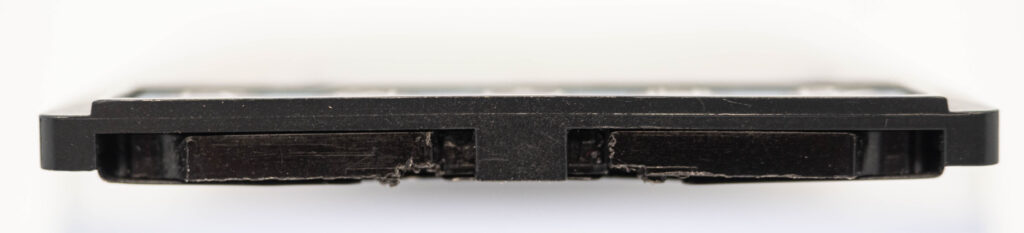
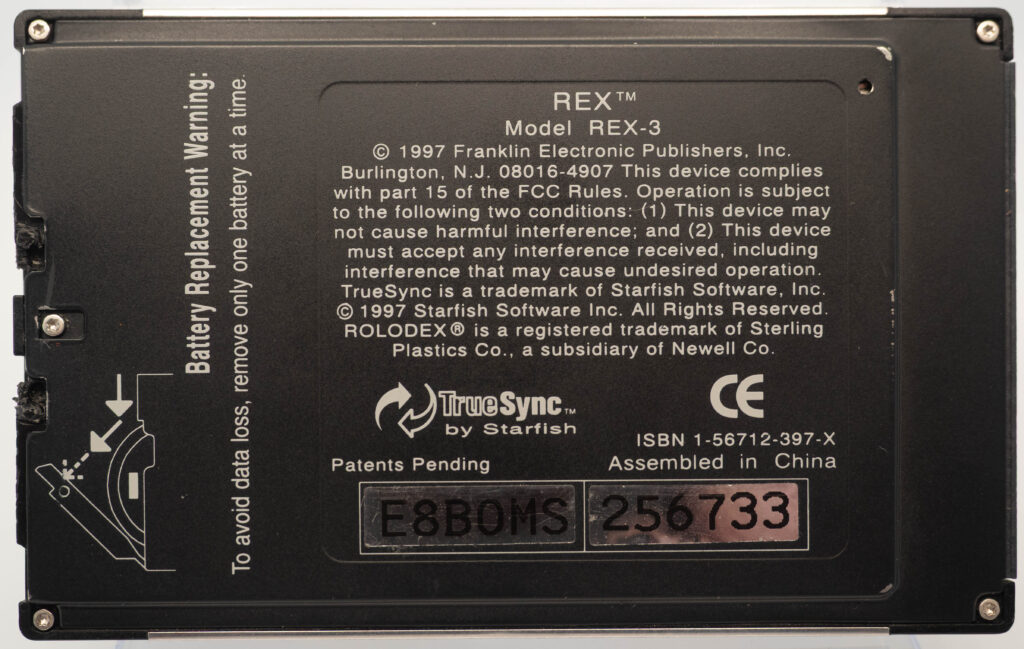
- 2 x CR2025 coin cells
- Connectivity:
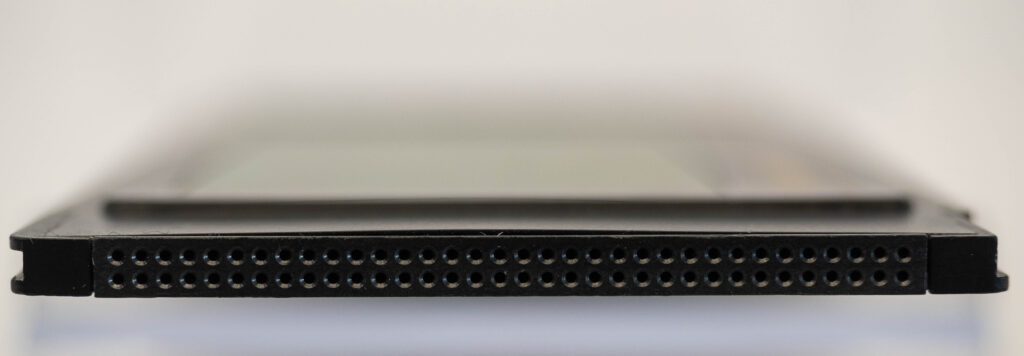
- PCMCIA
- Dimensions (mm):
- 87x54x3
- Weight (g):
- 34
- Built-in apps:
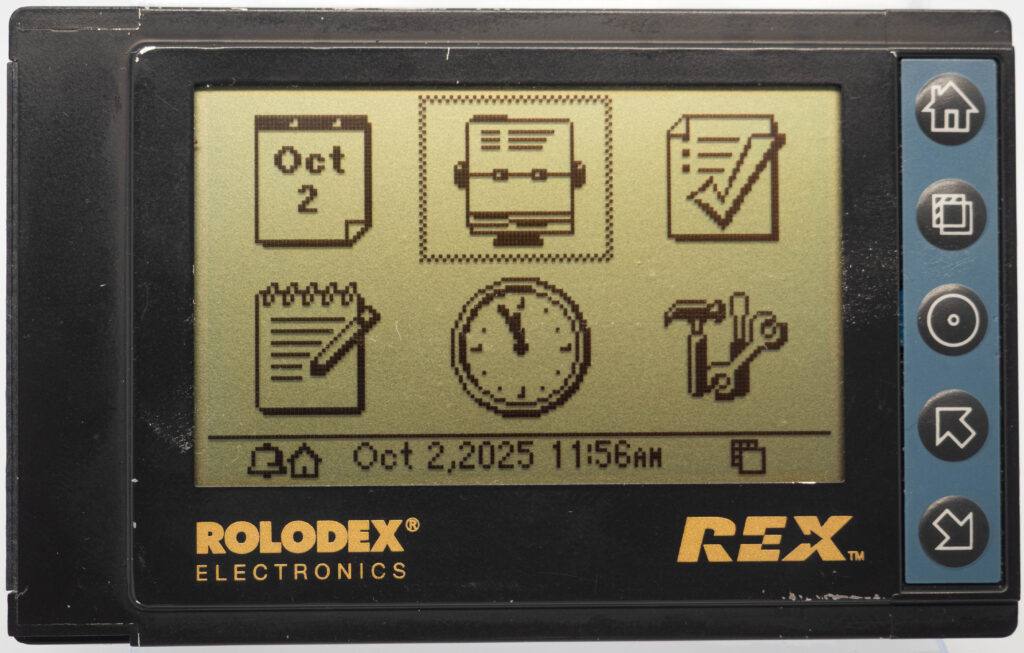
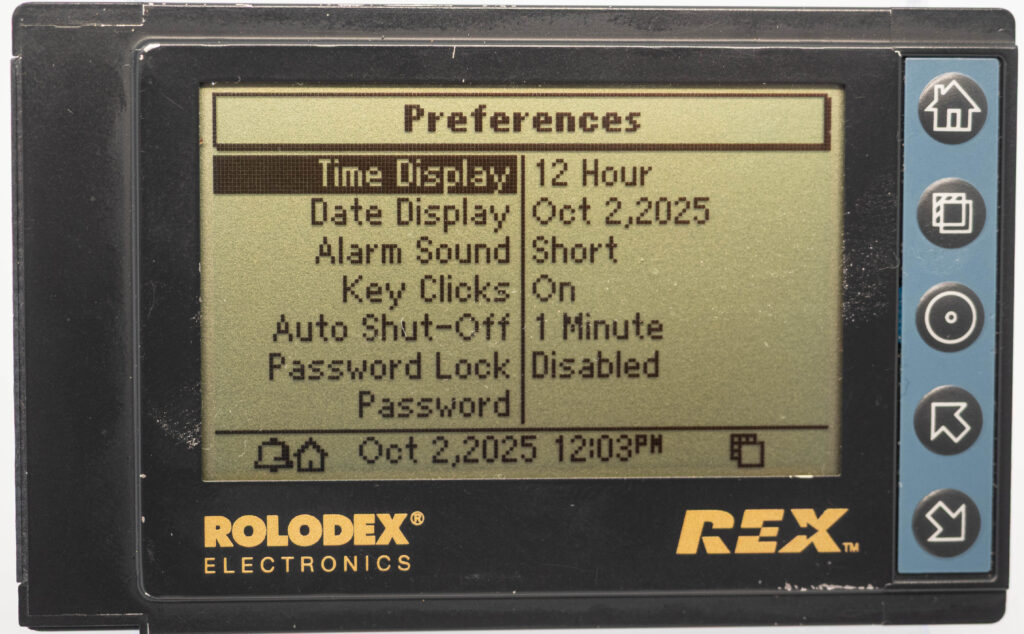
- Organizer, Contacts, ToDo, Notes, World clock, Settings
- Input method:
- Input only by downloading information from host. Navigation using 5 buttons alongside right edge.
Sales pitch from when it was new
Use your desktop or laptop to enter and manage organizer data, synchronize it with REX and then view it anytime, anywhere! REX comes with REX TrueSync Information Manager, a full-featured organizer software, or you can import data from your current organizer. REX-3 has 256 K of memory and stores up to 3000 entries. Just five buttons control all features.
Information
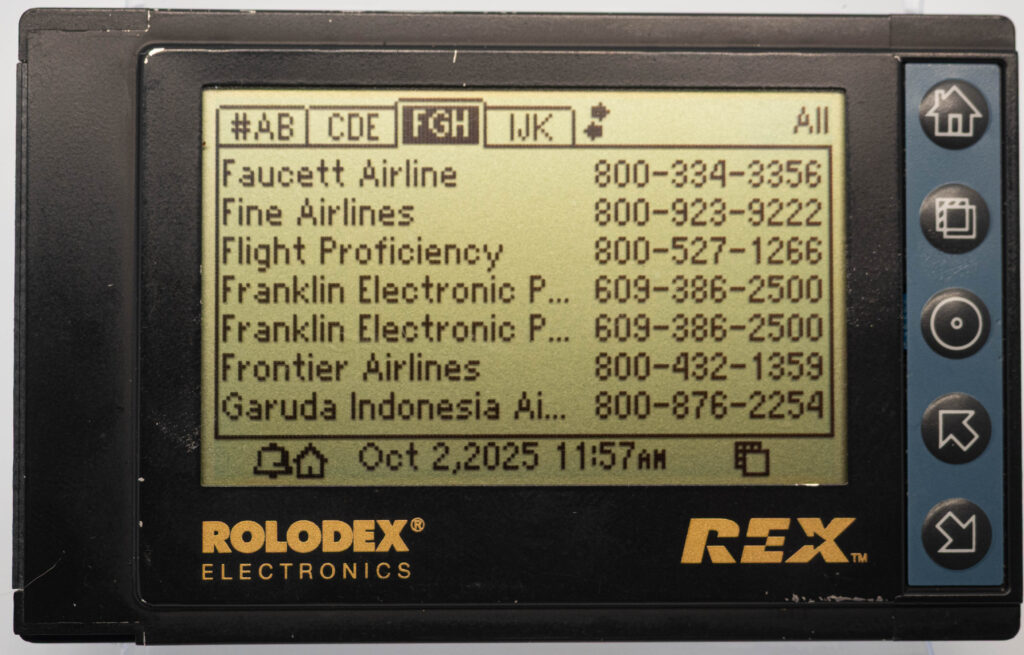
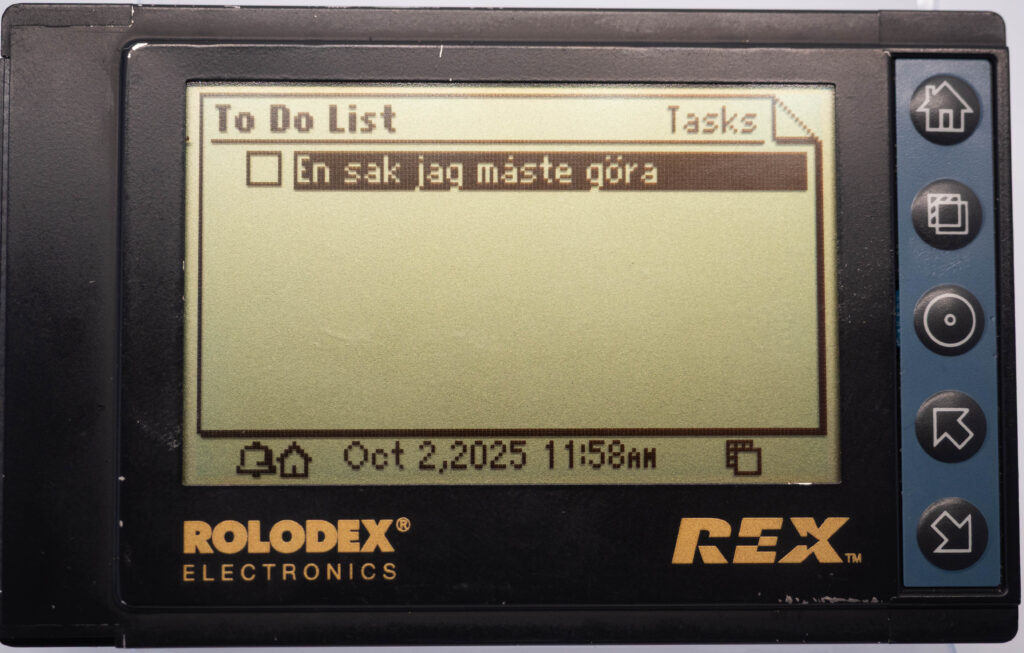
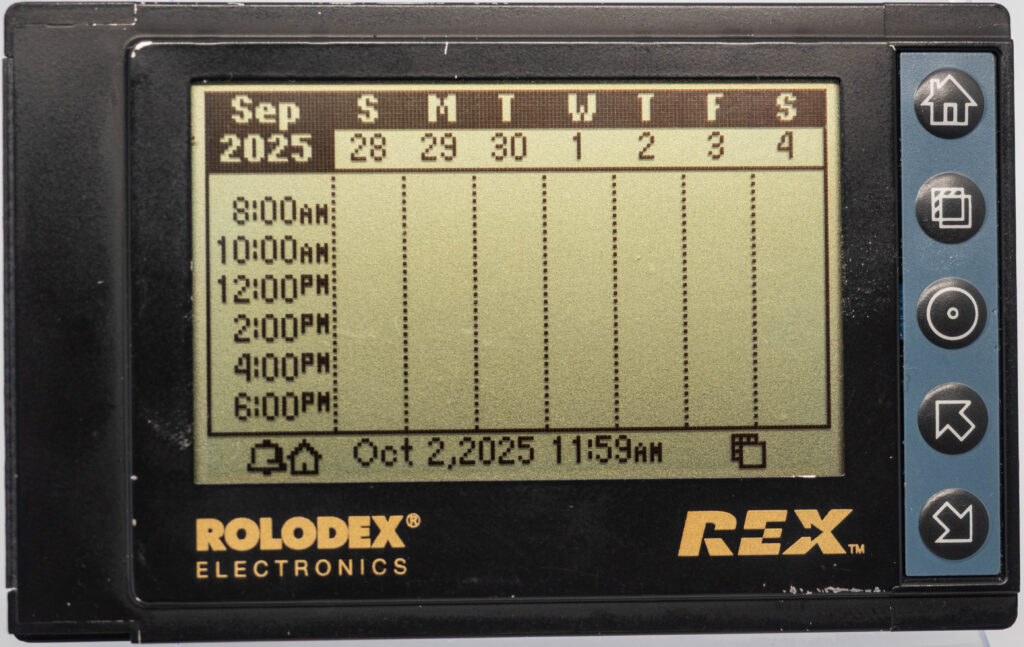
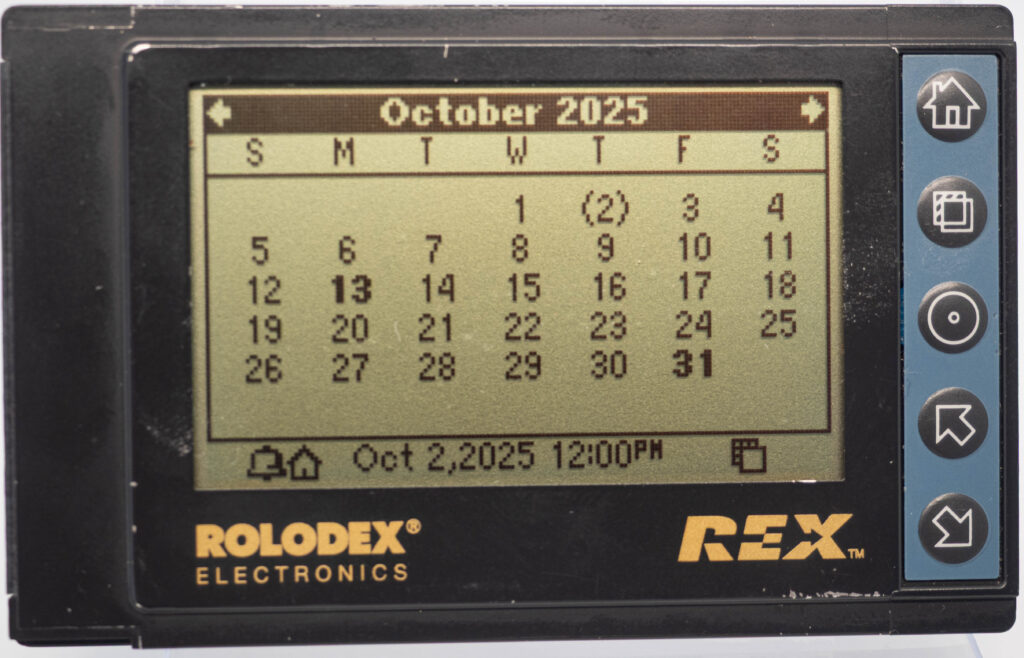
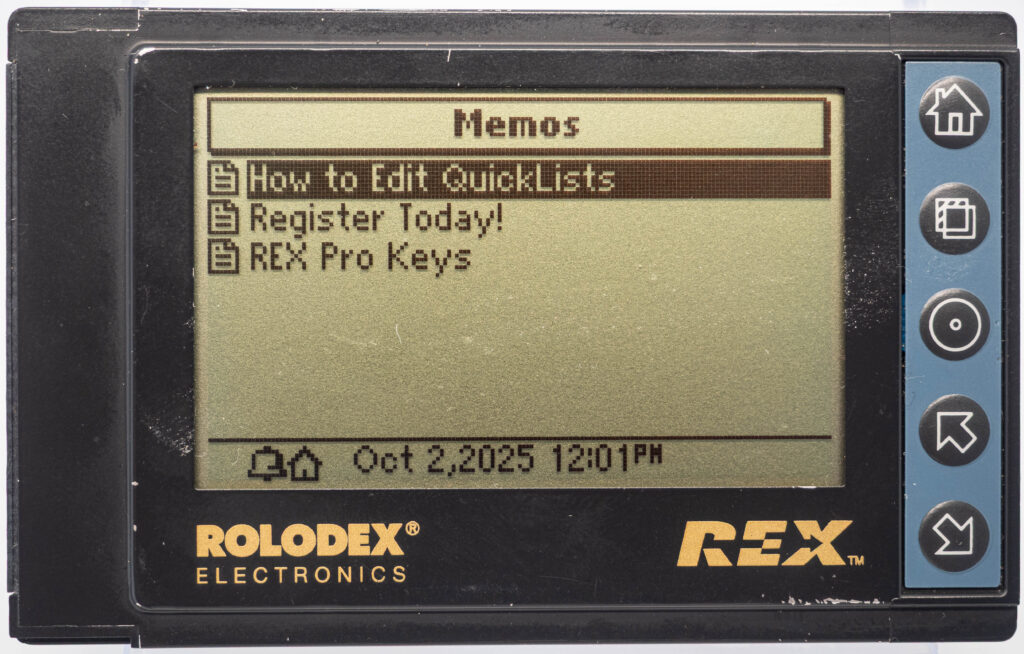
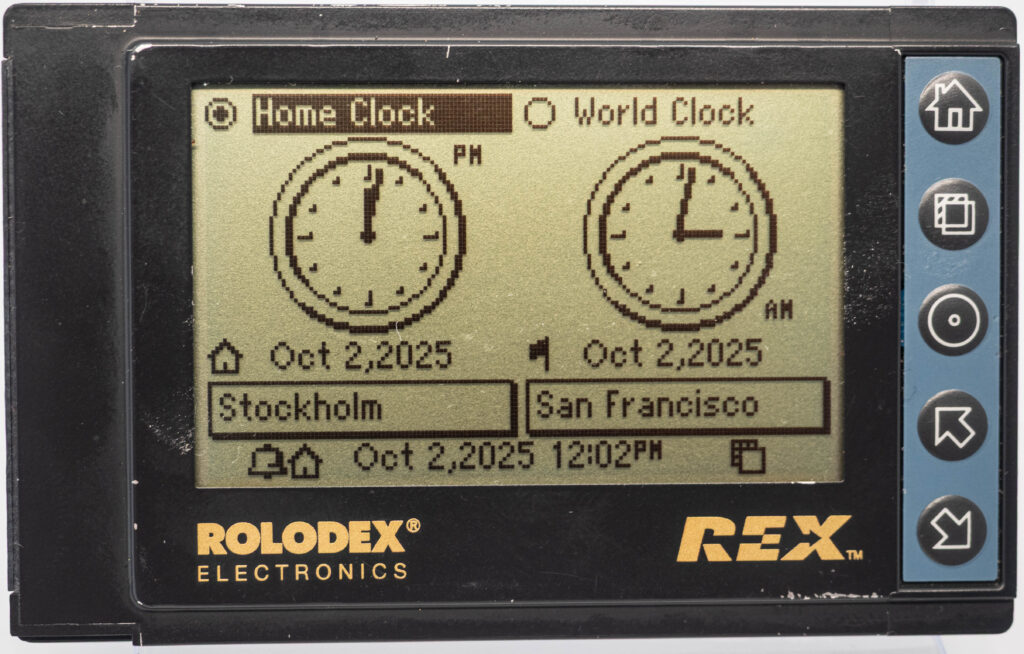
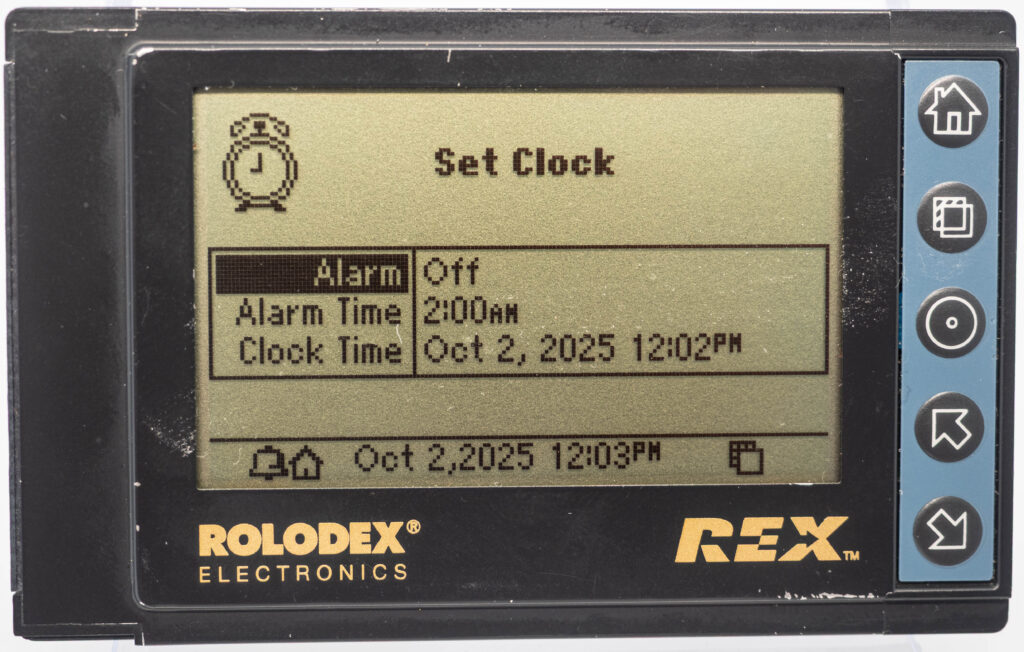
The Rolodex Rex also known as “Franklin Rex”, “Xircom Rex” and “REX-3” is in my opinion one of the smartest little PDAs ever made. It has the size of a credit card (or more appropriately the size of a PCMCIA card) and so is very easy to carry around in your wallet or pocket. The first model in the series (this one) ws strictly a “read-only” device, since it didn’t have any means of inputting data on the device itself. Data was loaded into the device from the “host” computer, often a laptop PC, either by inserting the Rex directly into an empty PCMCIA (PC-Card) slot, or by using a docking-station (sold separately) that connects to a serial port of the host computer. Synchronization with various programs was provided for by the accompanying TrueSync software developed by Starfish. The Rex has the following functions:
- Calendar
- Address book
- ToDo list
- Notes (view only)
- World clock
- Settings
You navigate using the five buttons located to the right of the screen:
- Home
- Options
- Enter
- Up/Left
- Down/Right
The display has a very good contrast compared to other PDAs of the era.
There is supposed to have been a REX-1 before this model, but I have never seen that unit and it appears it was never sold in the US or in Europe. Please correct me if I am wrong. It was later followed by the Rex Pro (aka REX-5 or Rex 5000) that had more memory and a clever way to enter data “on-the-go” and later also the Rex 6000 model that had a touch-sensitive screen and several other features that made it popular. However, it also had some severe shortcomings that you can read more about on its page. Eventually, after Intel had aquired the rights to the Rex, it was put to rest and noone has ever since made an attempt to create a new credit-card sized PDA. What a shame!
With the Rolodex REX, Franklin introduced a completely new form factor to the PDA market: a device small enough to carry in your wallet.
The method used to synchronize the device with a PC was also a fresh departure from previous solutions. All you had to do was insert the card into the PCMCIA slot of your laptop and press the Sync button in the accompanying software — simple and elegant.