
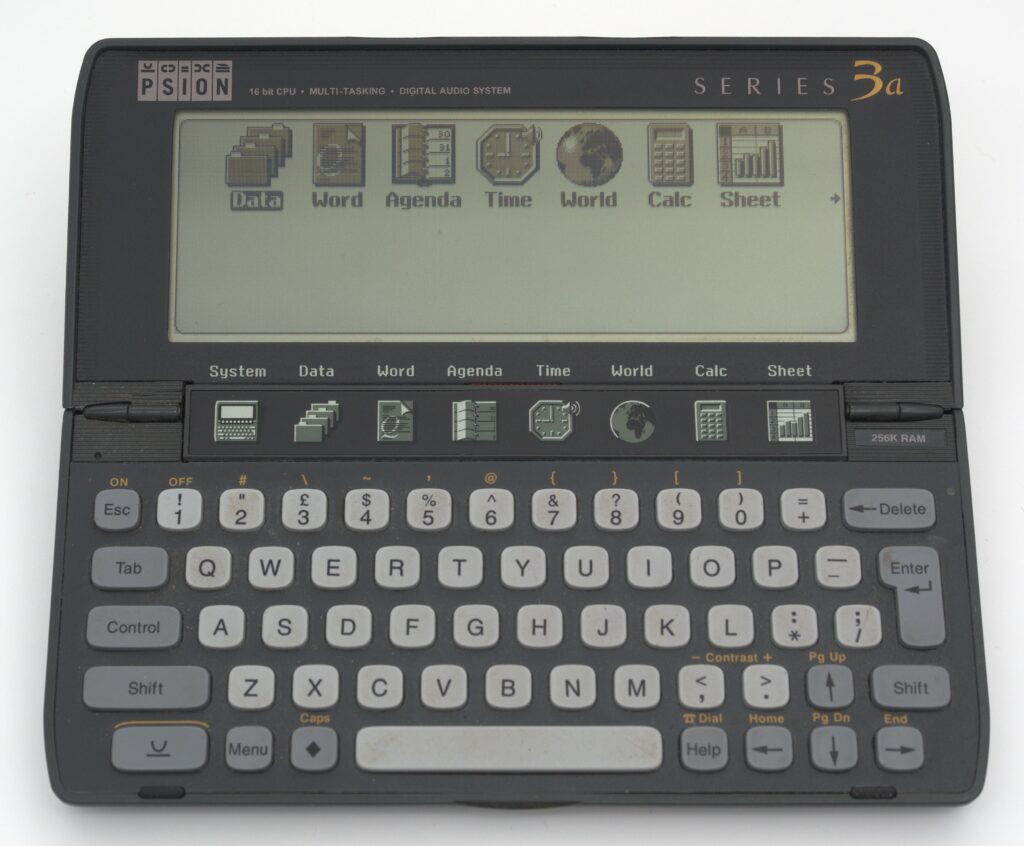
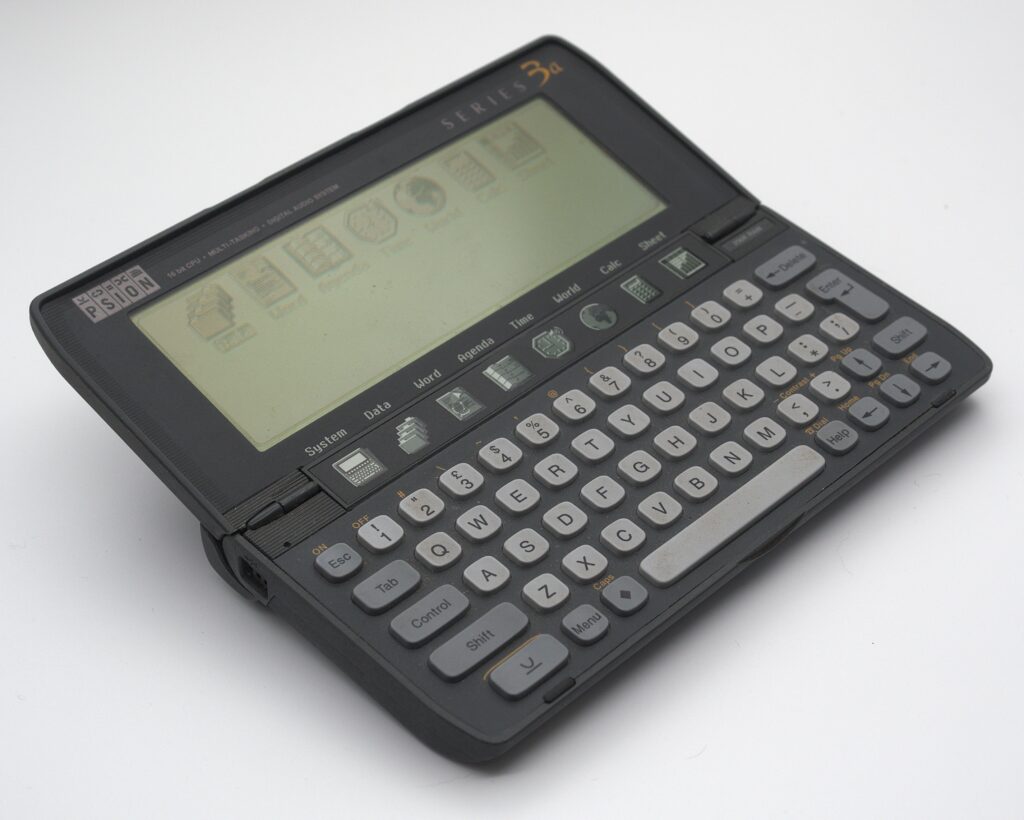
Probably the most popular palmtop with keyboard entry ever
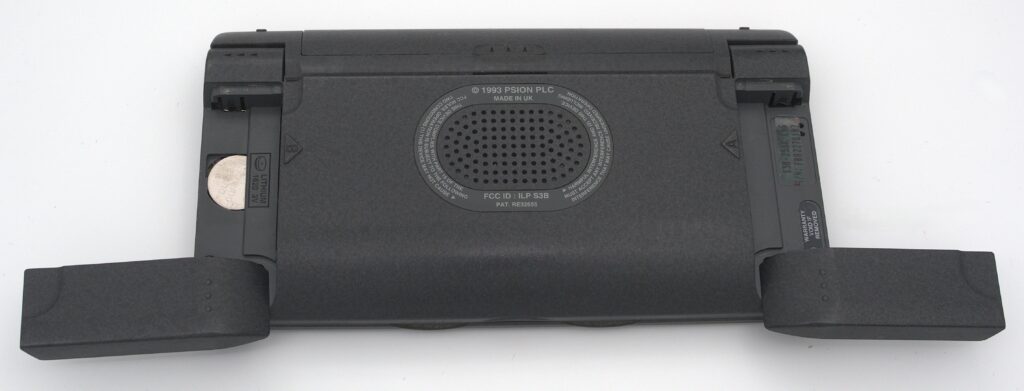
Quick facts
- CPU:
- NEC V30H@7.68MHz (emulating 8086, CMOS)
- RAM (KB):
- 256
- Storage (MB):
- -
- Display:
- 480×160 monochrome
- Operating system:
- Epoch16 (SIBO)
- Year introduced:
- 1993
- Power source:
- 2 AA batteries and CR1620 for backup
- Connectivity:
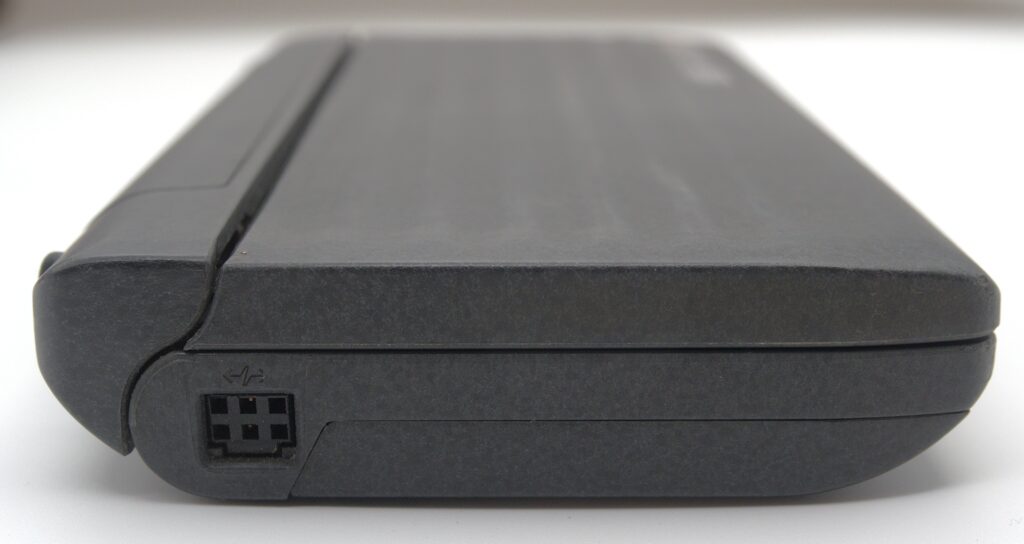
- RS232 and Parallell port (proprietary connector)
- Dimensions (mm):
- 165×85×22
- Weight (g):
- 275
- Built-in apps:
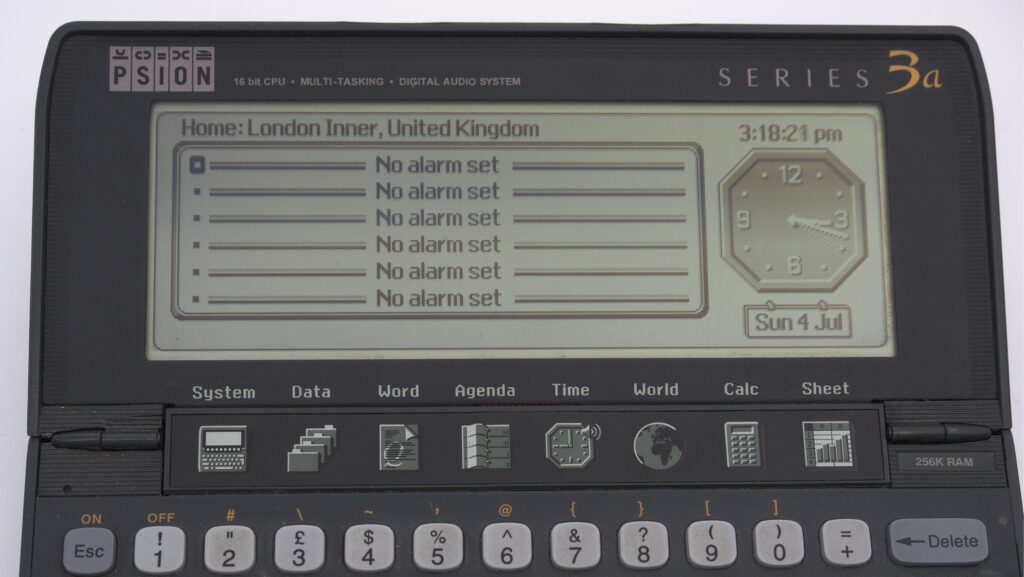
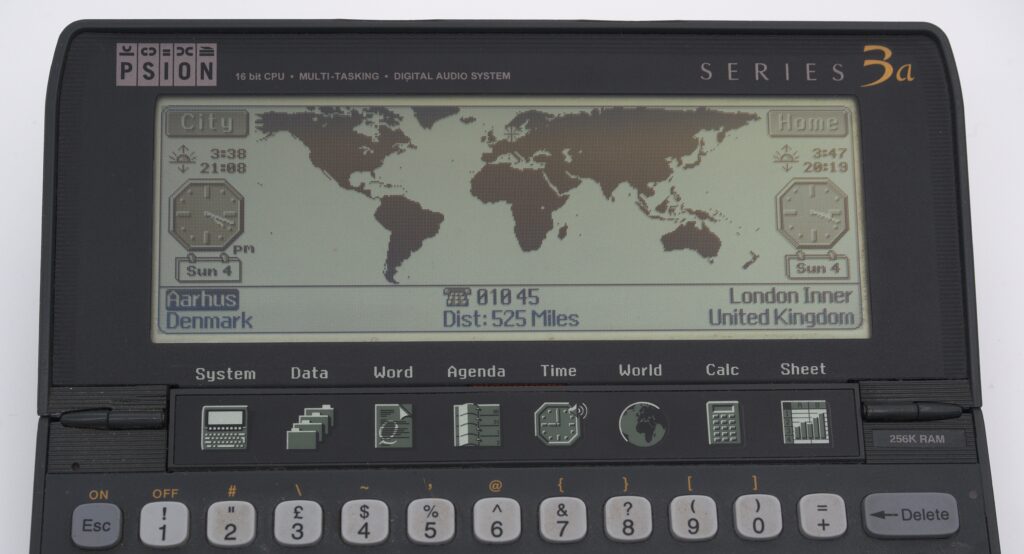
- Data, Word, Agenda, Time, World, Calc, Sheet, Record, Program
- Input method:
- Keyboard
Overview
The original Psion Series 3, Psion’s first PDA to feature both a QWERTY keyboard and a graphical display, was a commercial success. However, as competition in the PDA market increased, Psion needed a successor that could build on this success. The result was the Series 3a.
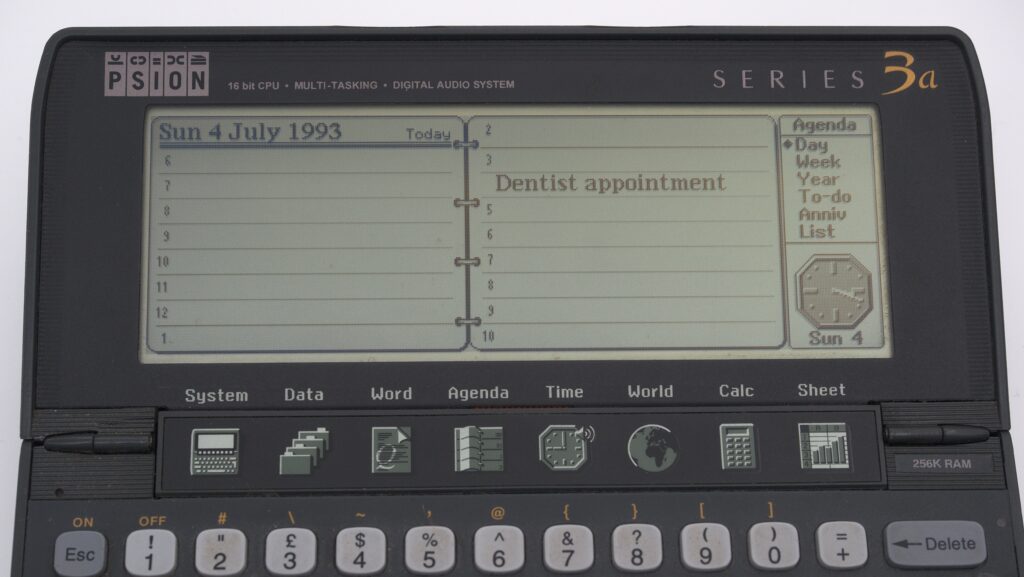
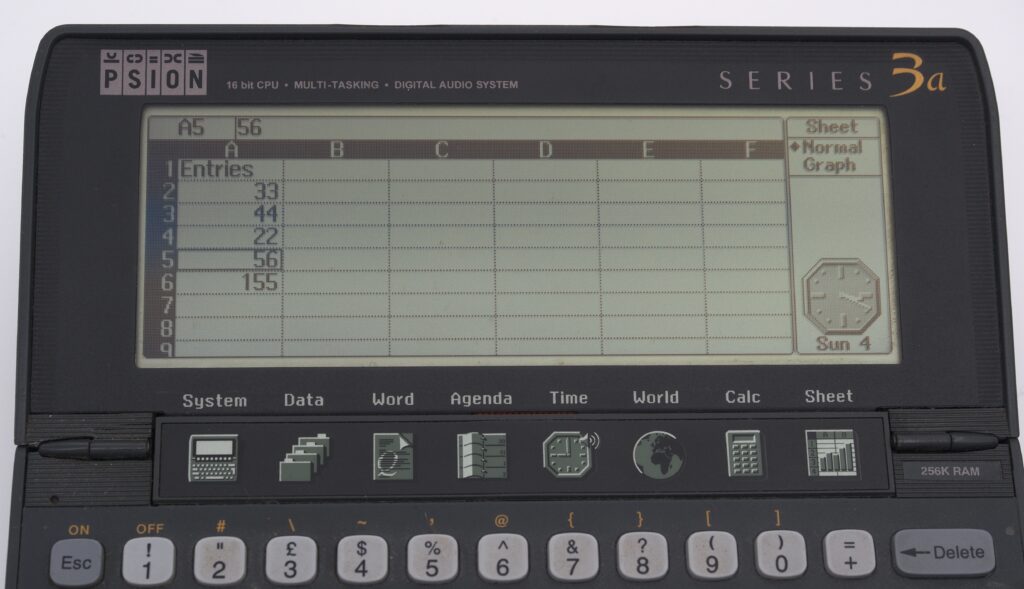
Despite the seemingly minor change in name, the Series 3a introduced a number of significant improvements. These included a much larger and higher-resolution display, a CPU running at nearly twice the speed of its predecessor, and twice the amount of RAM in the base model (256KB compared to 128KB – a 512KB version was also available). In addition, the Sheets spreadsheet application was now included as standard, alongside numerous smaller refinements and usability improvements.
This was therefore far from a minor update. Yet despite the increased performance and functionality, the Series 3a retained the excellent battery life of the original Series 3, typically running for several weeks on just two standard AA batteries under normal use.
Commercial success
The Series 3a went on to become one of the most successful keyboard-based PDAs ever sold. Exact sales figures for individual models in the Series 3 family (Series 3, 3a, 3c, and 3mx) are difficult to obtain, but collectively they are estimated to have sold around 1.5 million units. Among these, the Series 3a appears to have been the most popular.
Only the PalmPilot line sold in greater numbers, though it represented a fundamentally different design philosophy, relying on stylus input rather than a physical keyboard.
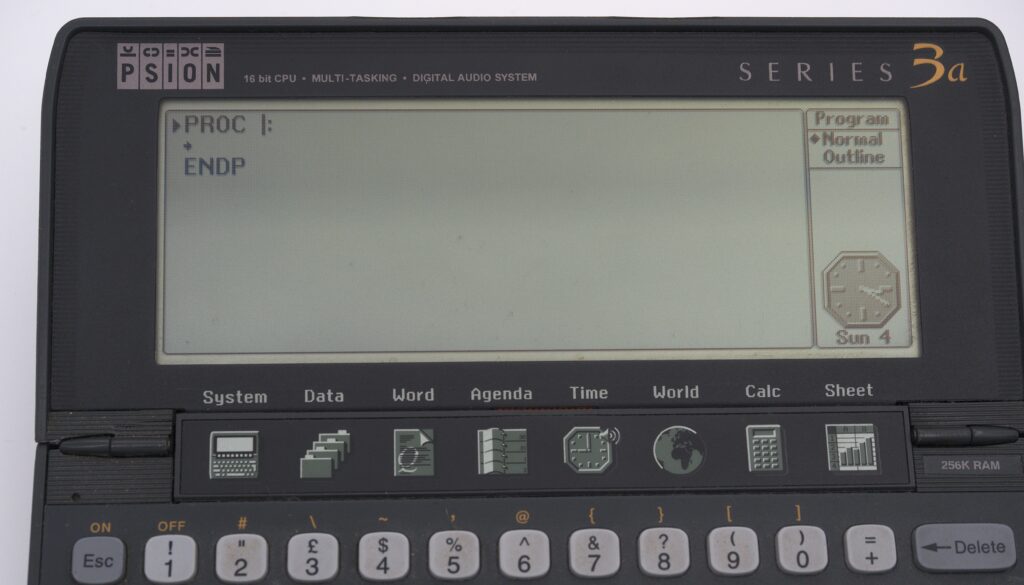
All Psion devices were supplied with extensive printed documentation, often running to several hundred pages. For users interested in software development, a separate manual was available for programming in OPL, a BASIC-like language included as a standard part of the operating system. OPL also featured built-in graphics routines, making it possible to develop games as well as productivity applications.
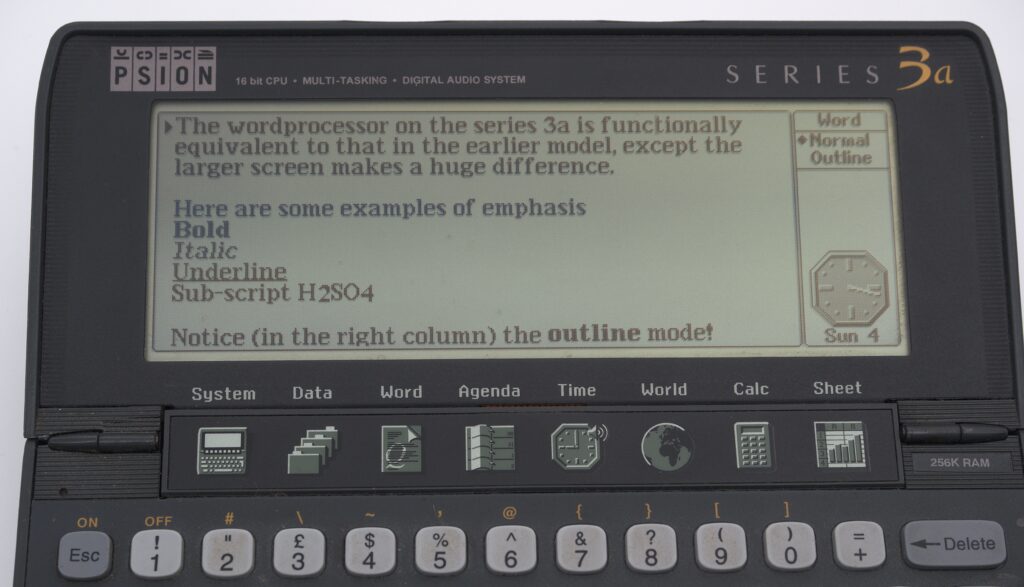
For more serious writing tasks, the Series 3a supported printer connectivity, including laser printers, so-called “bubble-jet” printers (now known as inkjet printers), and simpler text-only printers. The built-in word processor offered features that were advanced for the time, such as text emphasis (bold, italics), indentation, outlining, and close integration with other applications, including the DATA application.
Notable applications
Some of the built-in applications deserve special mention:
DATA
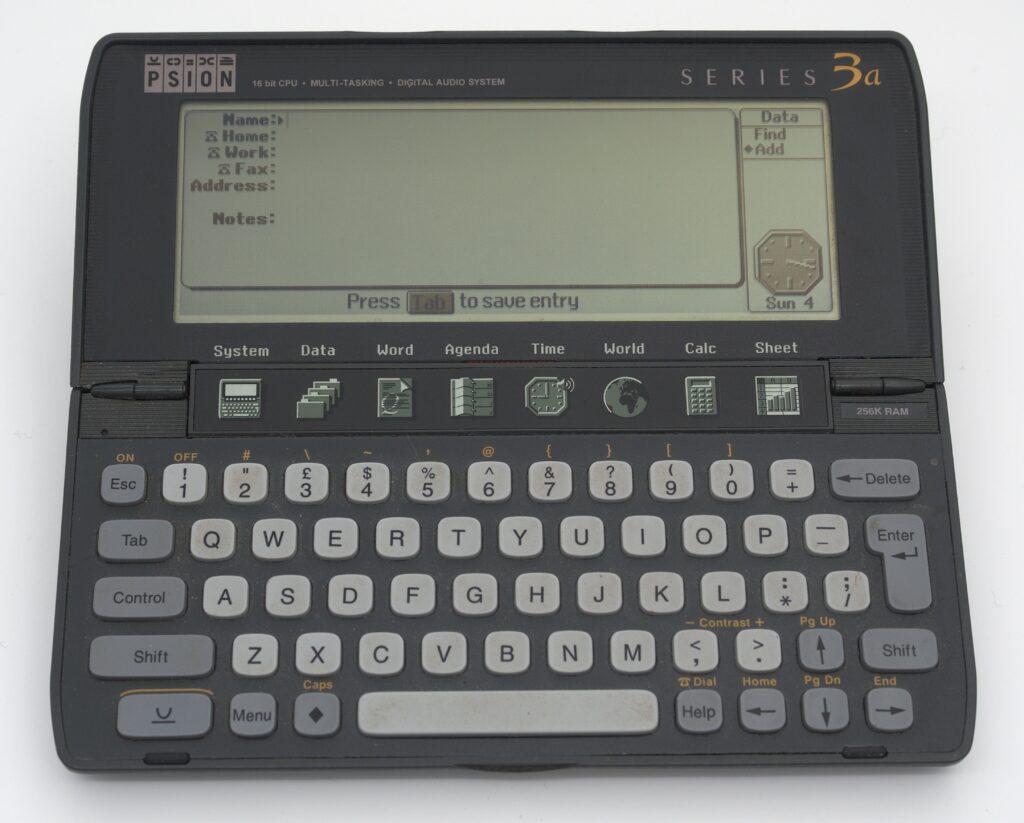
While comparable to an Address Book on other PDAs, Psion’s Data application was far more flexible. It allowed the user to create arbitrary databases based on key–value pairs, making it suitable for many different types of structured information.
CALCULATOR
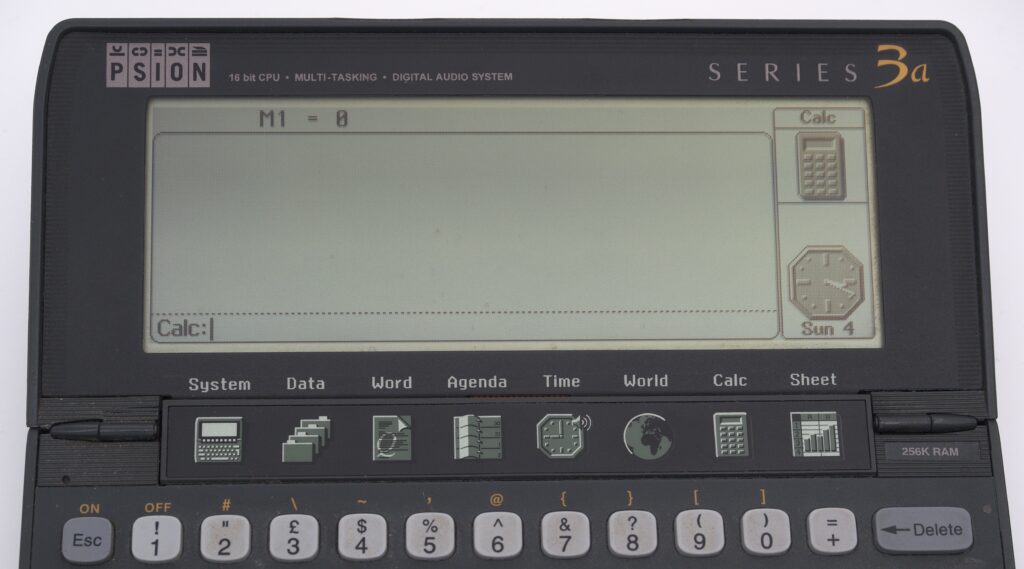
Psion took an unconventional approach with the calculator application. Instead of mimicking a physical calculator with on-screen buttons, calculations were entered as expressions on a command line, such as 2 + 3 =. Results appeared on the line above, and previous calculations scrolled upward, resembling the output of a calculator with a paper tape. Supposedly this approach was taken because of the lack of a touch-sensitive screen.
RECORD
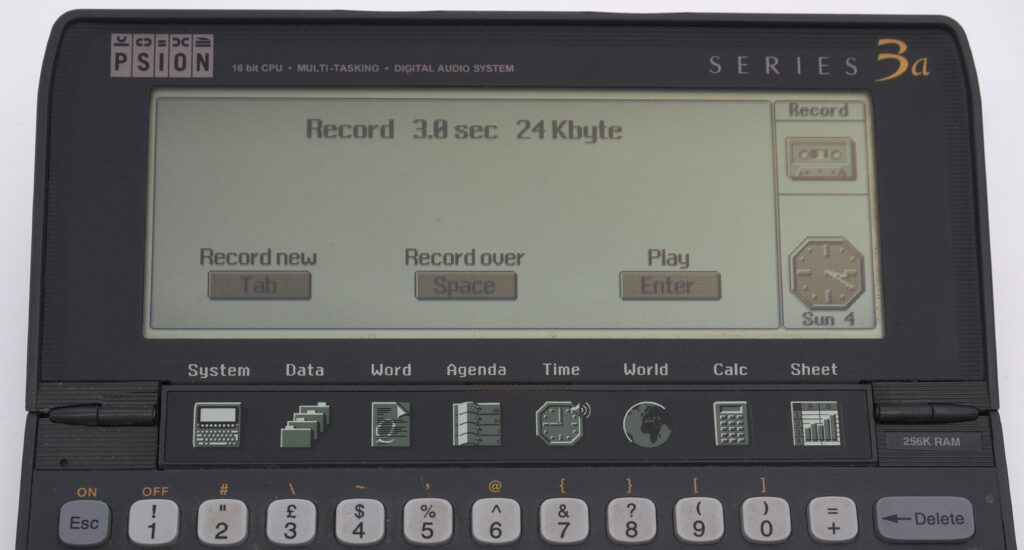
Introduced with the Series 3a, the Record application allowed users to capture short voice recordings and save them as files. These were most likely intended as simple voice memos, although their precise intended use remains somewhat unclear today.
Accessories
A wide range of accessories was available for the Series 3a, including:
- A docking station enabling connection to a PC or Macintosh computer
- SRAM and solid-state memory cards, which could be inserted into one of the two expansion slots
- ROM-based application cards produced by Psion and third-party developers; software could also be installed into RAM, and it is estimated that more than 1,500 third-party programs were available
- The Psion Travel Modem, a landline modem that allowed the Series 3a to connect to bulletin board systems and early email services
Psion 3a being the most sold PDA of the keyboard input type, makes it a must-have in any collection. It was also the first PDA I ever came in contact with.
References
Wikipedia page on all Series 3 models