
Computing power in your hand
Quick facts
- CPU:
- Hitachi 6301@0.9MHz CMOS processor with built-in 4K ROM
- RAM (KB):
- 2
- Storage (MB):
- Datapaks available, e g 8K SRAM
- Display:
- 16 alphanumeric characters on one line
- Operating system:
- No real OS
- Year introduced:
- 1984
- Power source:
- 9V alkaline battery
- Dimensions (mm):
- 142×78×29.3
- Weight (g):
- 225
- Built-in apps:
- Data, Calc, Time
- Input method:
- Keyboard
Sales pitch from when it was new
One way or another you can have a computer in your pocket
No we are not exaggerating. Thanks to the Psion Organiser (that’s the one on the right), you can now walk around quite comfortably with a computer in your pocket. You can travel on a bus without taking up two seats. Or stroll through a revolving door with confidence. In fact, you’ll be carrying an expandable computer system with a microprocessor that’s significantly more advanced than those commonly found in micros costing 20 times as much.
If you would like to see the entire advert from August 1984, look in the References section below for the link.
Overview
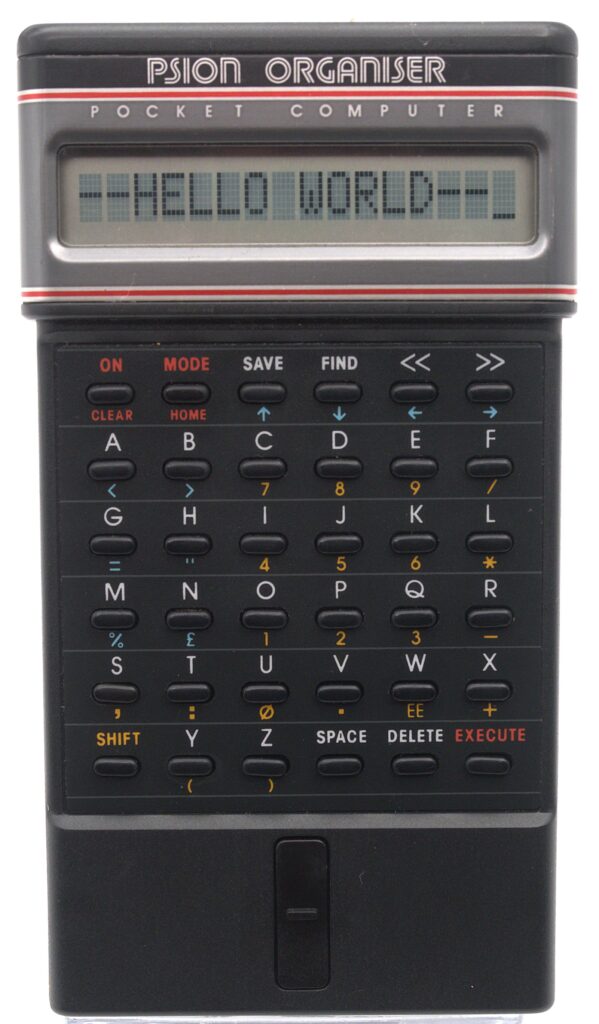
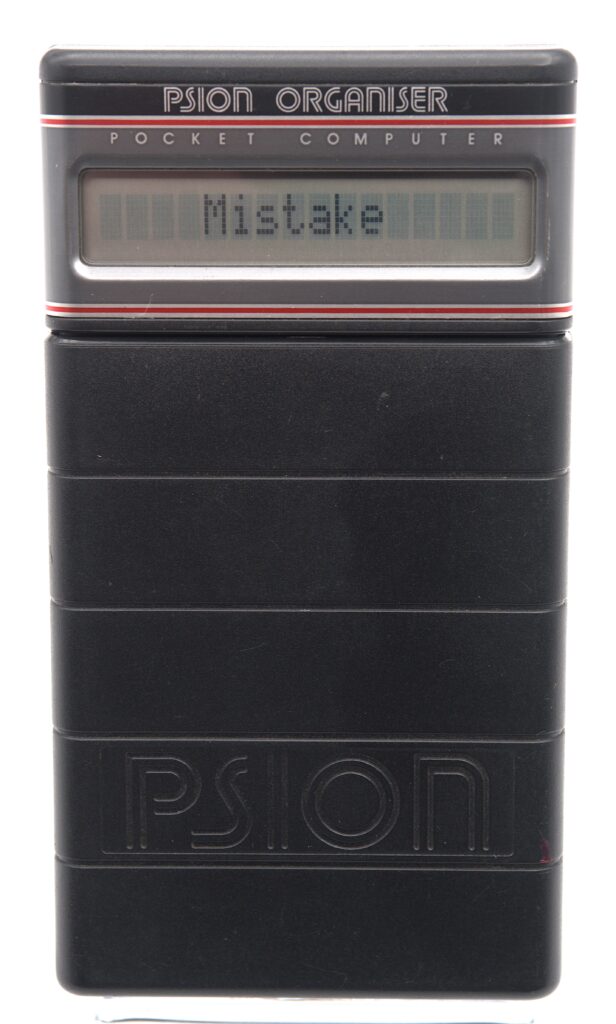
The Psion Organiser (1) is generally regarded as the first general-purpose handheld computer. Introduced in 1984 by the UK company Psion Plc, it predates the term PDA, which was later coined by Apple in connection with the Newton. Despite this, the Organiser clearly exhibits many of the defining characteristics of a PDA: it could store personal information, perform calculations, and run a variety of applications.
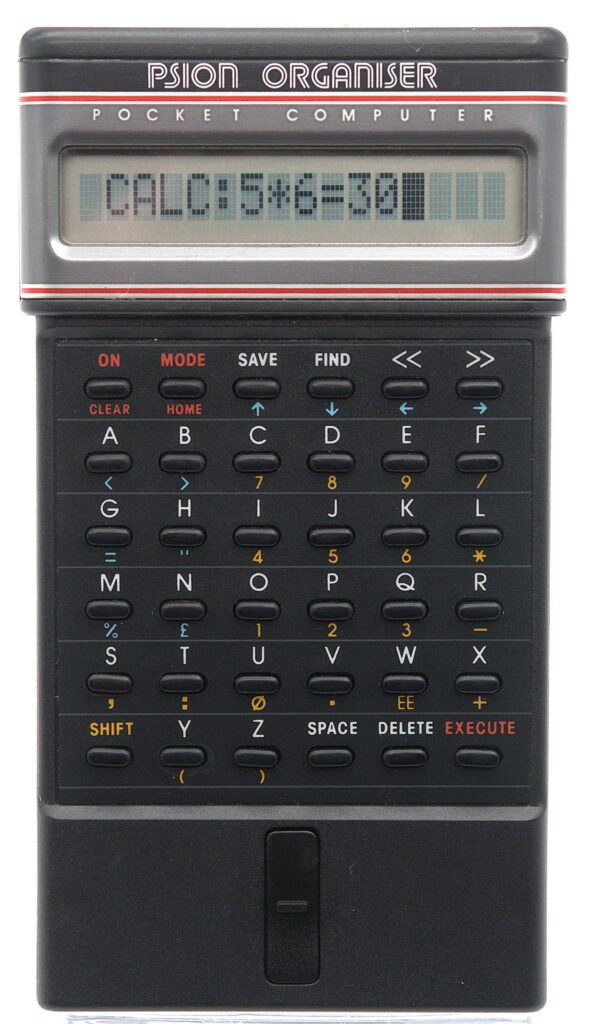
Input was provided via a full alphabetic keyboard. Rather than using the QWERTY layout of typewriters, the keys were arranged alphabetically, reflecting its emphasis on data entry rather than text composition. The display was extremely limited by modern standards, showing up to 16 alphanumeric characters at a time on a dot-matrix LCD, with each character formed by a 5×8 pixel matrix.
Powered by a single 9-volt battery that typically lasted several weeks, the Organiser was equipped with just 2 KB of RAM, while its operating system resided in 4 KB of ROM. By any measure it was not a powerful machine. Nevertheless, many users found it highly valuable in professional contexts, and a growing ecosystem of third-party software soon emerged.
Software was developed either in assembly language for the Hitachi 6301 CPU or using Psion’s proprietary POPL language.
Software and expansion
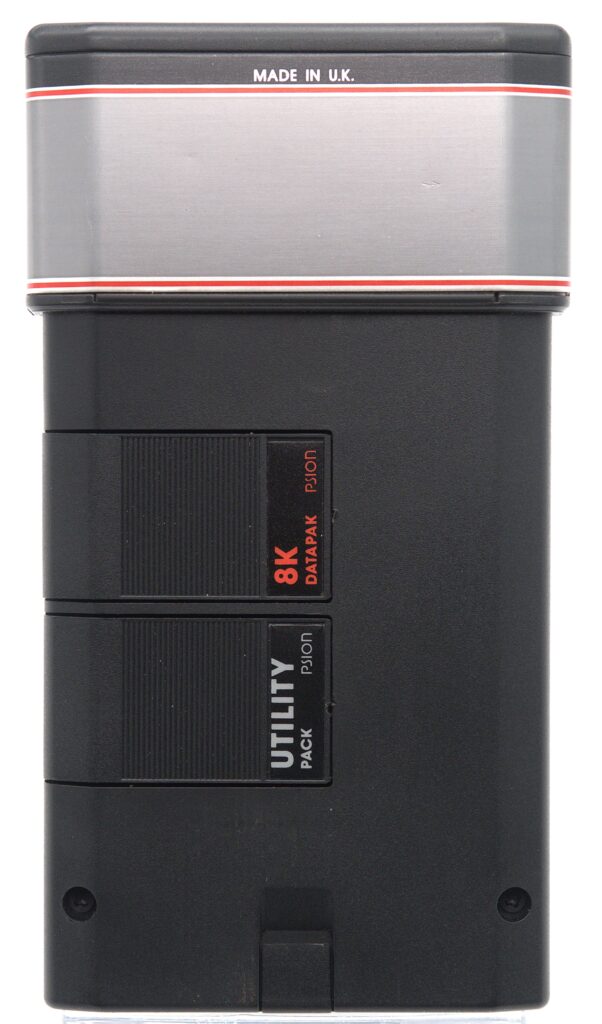
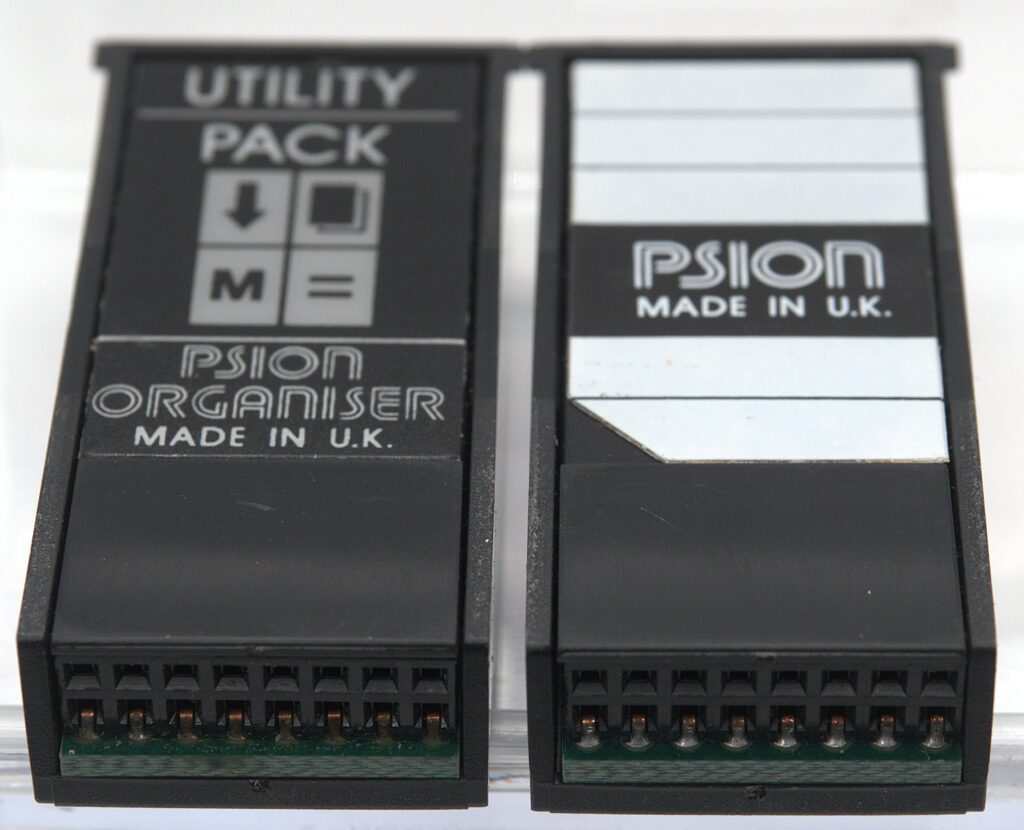
Applications were distributed on plug-in ROM modules known as Program Paks. One such module, the Utility Pack (shown in the gallery above), extended the otherwise minimal calculator with functions such as trigonometry.
At launch, the following Program Paks were available:
- Science Program Pak
- Maths Program Pak
- Financial Program Pak
Each retailed for £29.95.
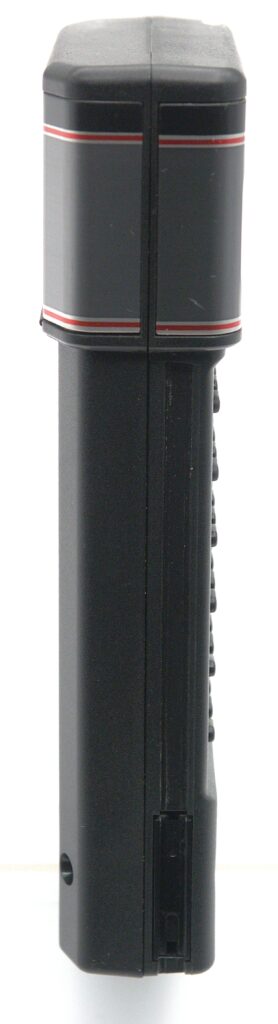
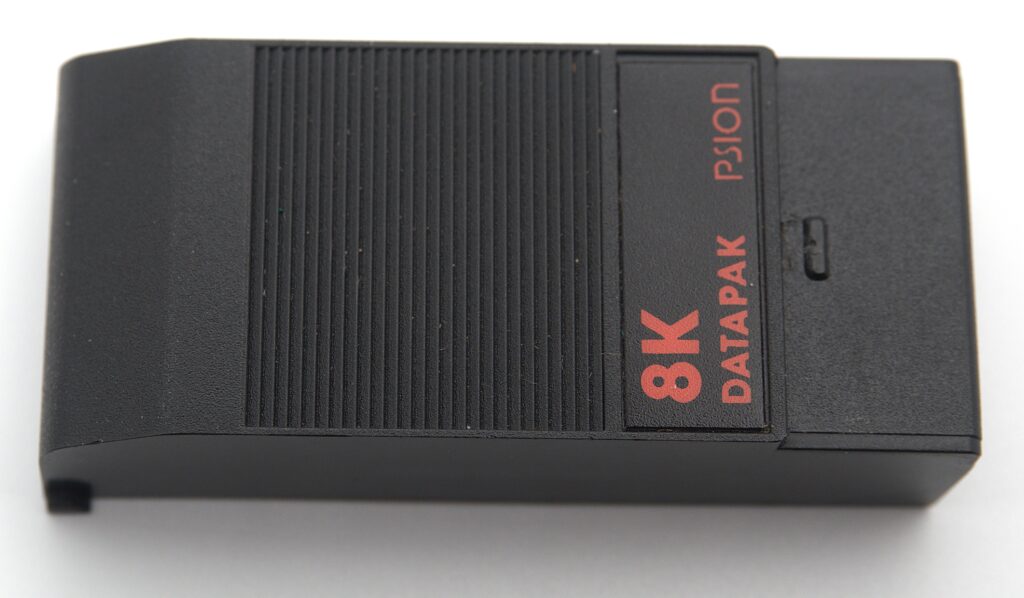
Memory expansion was handled through plug-in static RAM modules, also in Pak form, which could be inserted into the two slots located on the rear of the Organiser. An 8 KB SRAM module is shown in the gallery. Both the Organiser and the RAM modules were included in the base price of £99. An optional 16 KB Datapak could be purchased separately for £19.95.
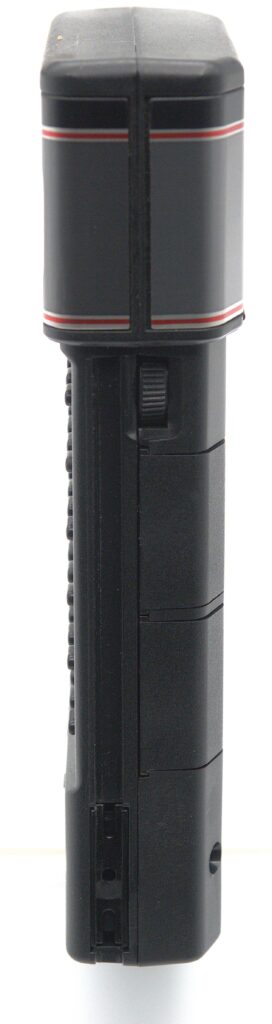
It is worth noting that flash memory did not yet exist in 1984. Because RAM was volatile, stored data required continuous power. Each Datapak therefore included a small coin-cell battery housed behind a hatch to preserve its contents.
As described in the Wikipedia article referenced below, Psion later developed Datapaks based on EPROM technology. These had the advantage of being non-volatile and required no battery to retain data. Their drawback was that once written, the contents could only be erased using ultraviolet light — a cumbersome but technically innovative solution at the time.
For a deeper discussion of memory technologies used in early PDAs, see the linked article in the References section.
Connectivity
Psion itself did not provide any official connectivity options for the Organiser. However, third-party solutions did emerge. One such system consisted of two Paks: one containing a hardware interface connecting the Organiser to another computer or printer via RS-232 serial communication, and another containing the necessary software.
This arrangement made it possible to develop software on a PC, cross-compile it, and transfer the resulting program to the Organiser for execution. A link to further information on this solution can be found in the References section below.
Generally considered the first PDA — even though the term had not yet been coined — the Psion Organiser marks the beginning of the modern era of handheld computing. That era would last for roughly twenty-five years, until PDAs eventually lost their relevance with the rise of smartphones. As such, the Organiser is an essential and foundational exhibit in any PDA museum.
References
Comprehensive Wikipedia page on the Psion Organiser (1)