
Minor improvements to the models introduced at launch
Quick facts
- CPU:
- Motorola Dragonball 68328 @ 16 MHz
- RAM (KB):
- 1024
- Storage (MB):
- 1
- Display:
- 160x160 4-level of greyscale
- Operating system:
- Palm OS 2.0
- Year introduced:
- 1997
- Power source:
- 2 x AAA batteries
- Connectivity:
- Serial with proprietary connector
- Dimensions (mm):
- 81x119x18
- Weight (g):
- 160
- Built-in apps:
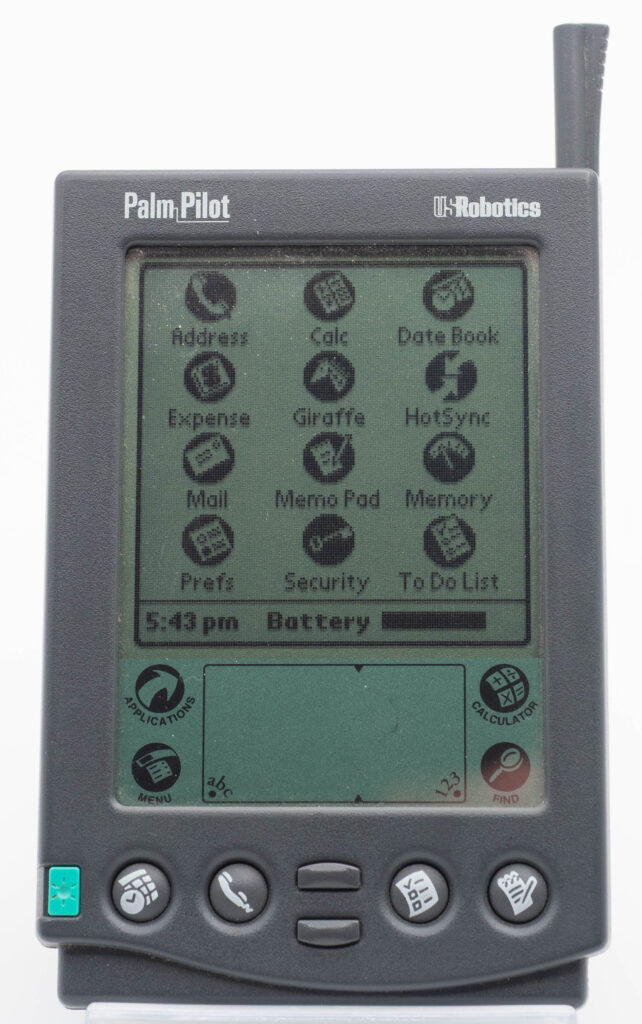
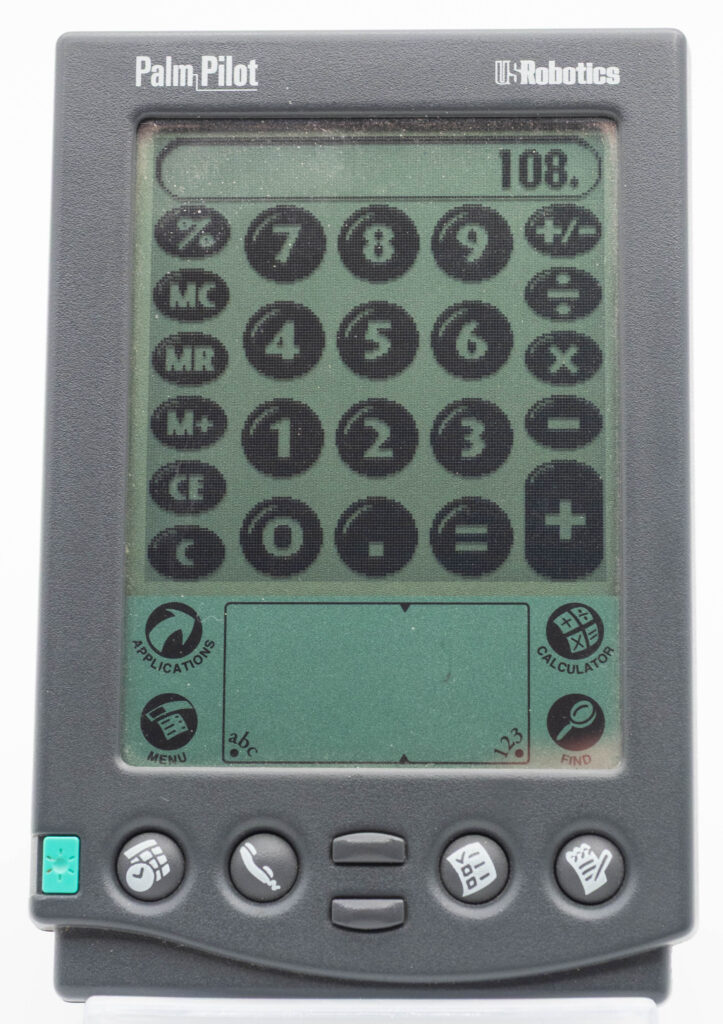
- Address, Calc, Date Book, Expense, Giraffe, Mail, Memo Pad, To Do List
- Input method:
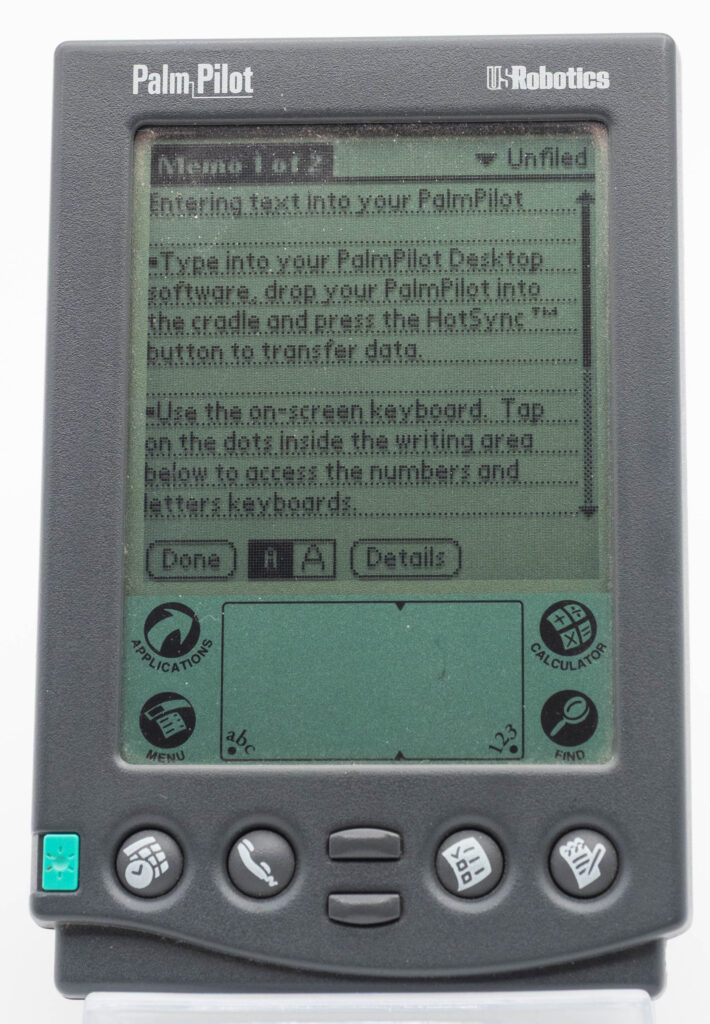
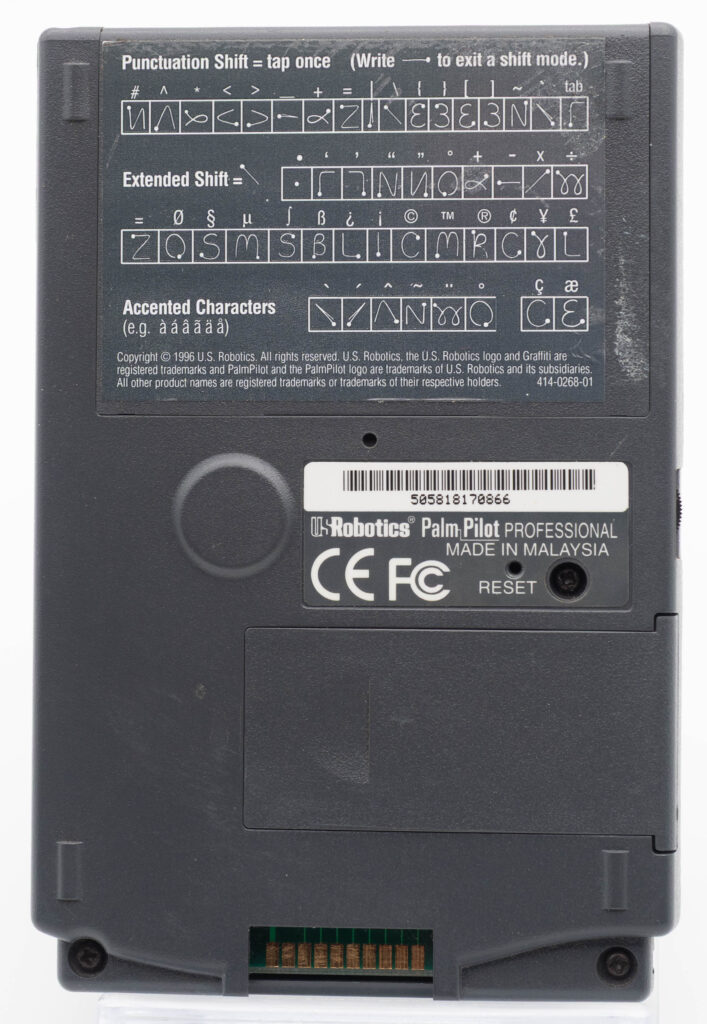
- Pen-input, Graffiti
Overview
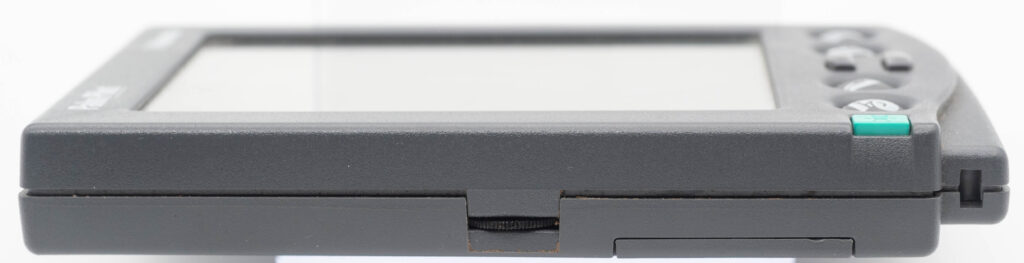
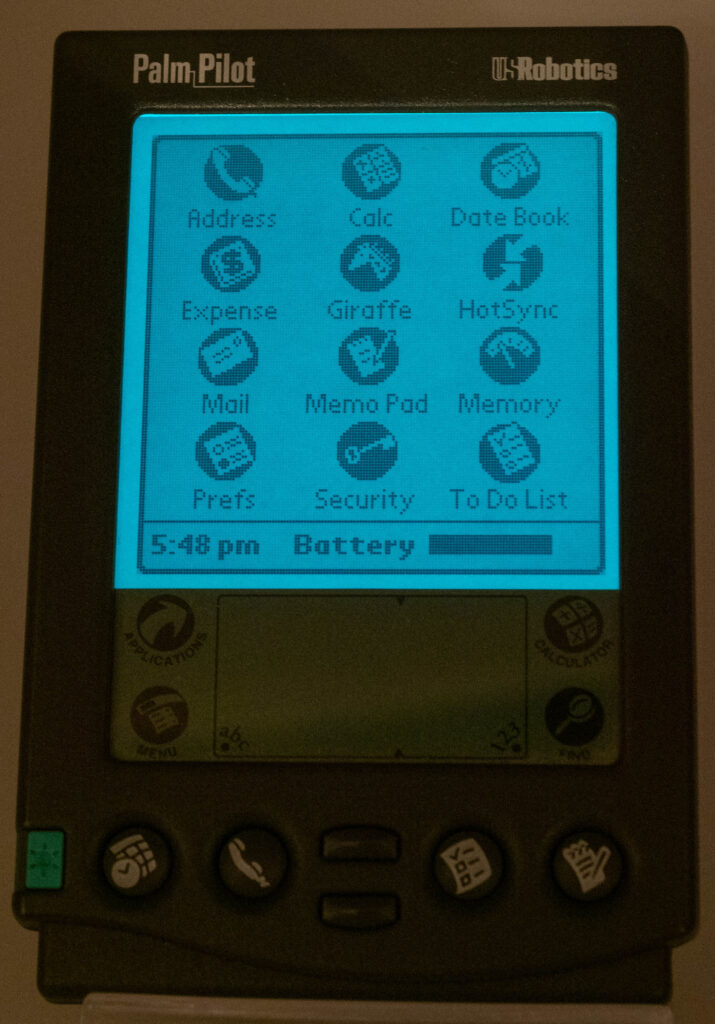
Introduced in March 1997 as a direct replacement for the Pilot 5000 model released just ten months earlier, the PalmPilot Professional offered a handful of incremental improvements. These included 1 MB of RAM instead of 512 KB, as well as a built-in backlight for the display. Both models were branded with the logo of Palm’s then parent company, U.S. Robotics.
The device is powered by the Motorola DragonBall 68328 CPU running at 16 MHz. This processor formed the backbone of all early Palm devices, from the original Pilot models up to and including the Palm V. Later generations increased clock speeds, and before exiting the PDA market, Palm transitioned to the ARM architecture with the Tungsten series. The evolution of the Palm devices are highlighted in this article.
In the early days, Palm clearly targeted two distinct customer groups: consumers and professionals. The Pilot 1000 and PalmPilot Personal were aimed at consumers, while the Pilot 5000 and PalmPilot Professional were positioned for professional users. The primary differences between these models were the amount of installed memory and, consequently, the price. The PalmPilot Professional had an introductory price of 400 USD whereas the PalmPilot Personal could be had for 100 USD less. Combined, they sold over 1 million units and helped establish Palm as the leading maker of PDAs.
One interesting detail about these early Palm devices is the inclusion of an application called Giraffe, designed solely to help users become proficient with the Graffiti input method. In the game, a random letter drops from the top of the screen, and the user must enter the corresponding Graffiti character in the writing area before the letter reaches the bottom. Also included was a dedicated application for displaying memory usage—something that later models, such as the Palm V, surprisingly lacked.
The display on these early devices was monochrome, but according to Wikipedia had a possibility to show 4 levels of grey. Later Palm models would introduce 16 levels of grey before moving on to colour displays. The backlight added to the PalmPilot Professional made the device usable in dimly lit environments, although the illumination itself was relatively weak by modern standards.
Power was supplied by two standard AAA batteries, which Palm claimed would provide approximately 30 hours of continuous use.
Owning both early and later Palm models, it is striking how much continuity Palm maintained over time. Screen size, input method, and core applications changed very little from generation to generation. What evolved most noticeably was the amount of available RAM, and to a lesser extent CPU performance and expansion options. As a result, a user who invested in one of these early models would have had little incentive to upgrade again in the short term.
References
PalmPilot Professional spec sheet from Phonedb.net
Wikipedia page listing all Palm OS models