
Thin, sleek, elegant — and a commercial success
Quick facts
- CPU:
- Motorola Dragonball 68EZ328 @ 20 MHz
- RAM (KB):
- 8192
- Storage (MB):
- 16
- Display:
- 160x160 pixels, 16-levels of grey, EL backlight
- Operating system:
- Palm OS 3.5
- Year introduced:
- 1999
- Power source:
- Built-in Li-ion battery (500 mAh)
- Connectivity:
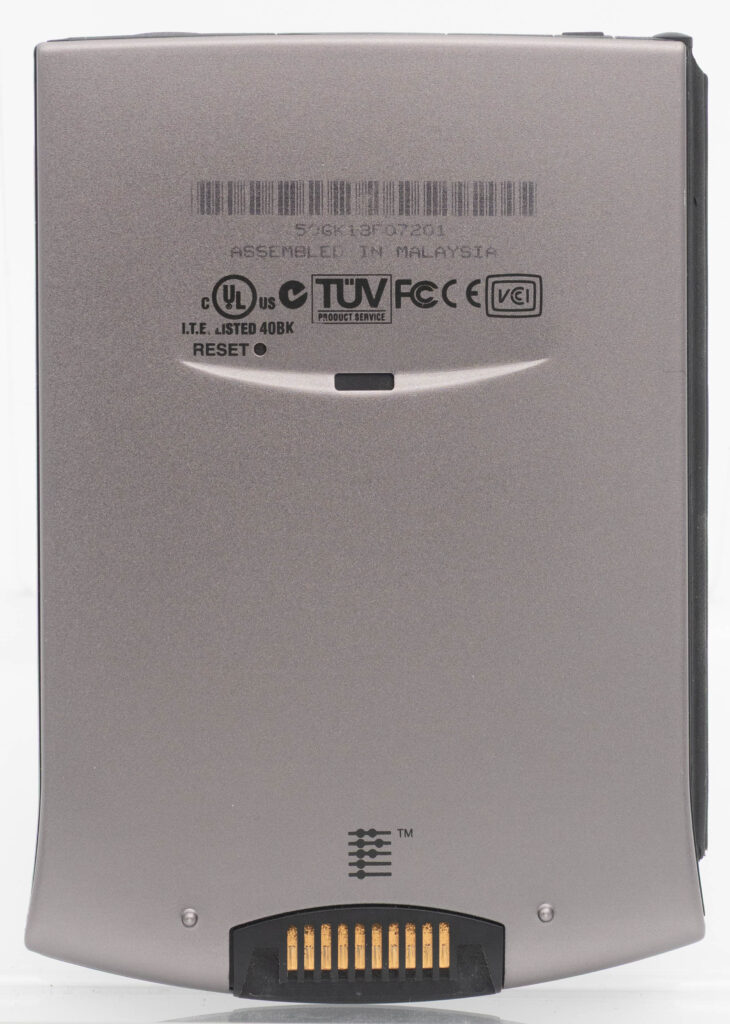
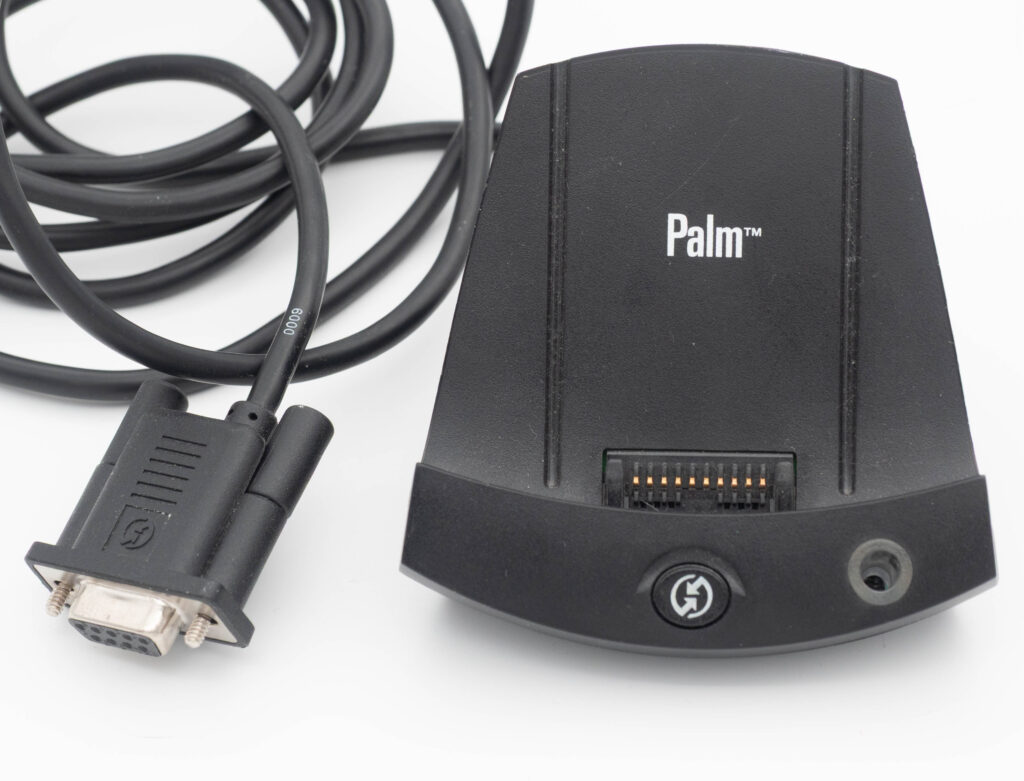
- Serial via cradle + IR
- Dimensions (mm):
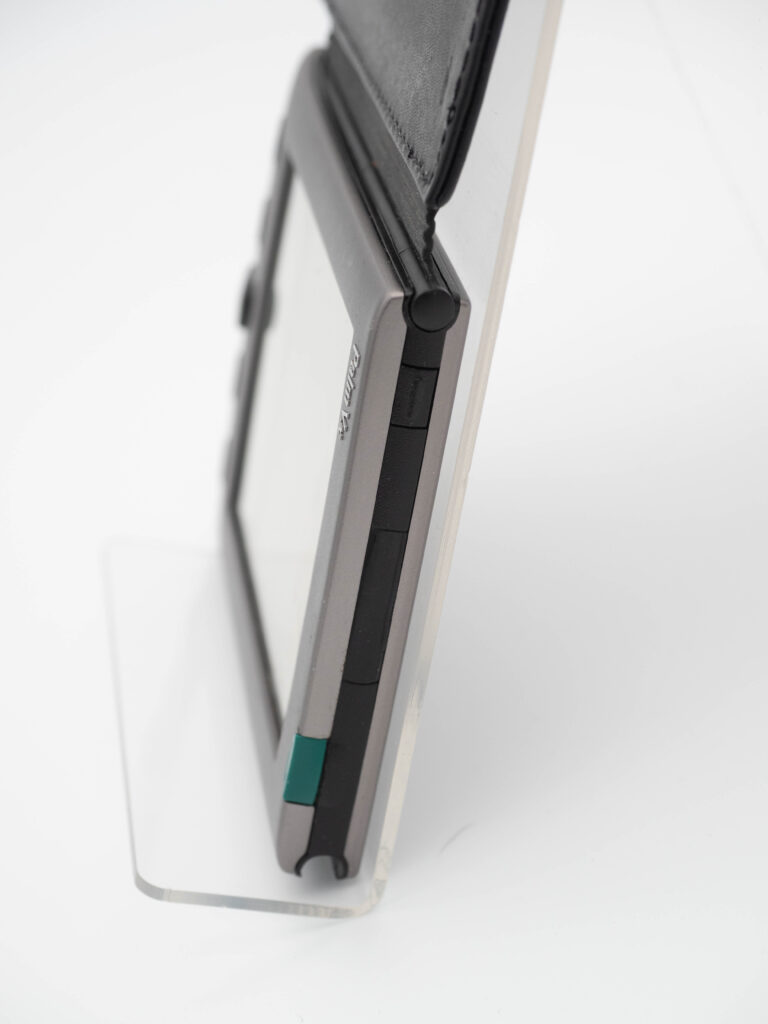
- 115x80x10
- Weight (g):
- 114
- Built-in apps:
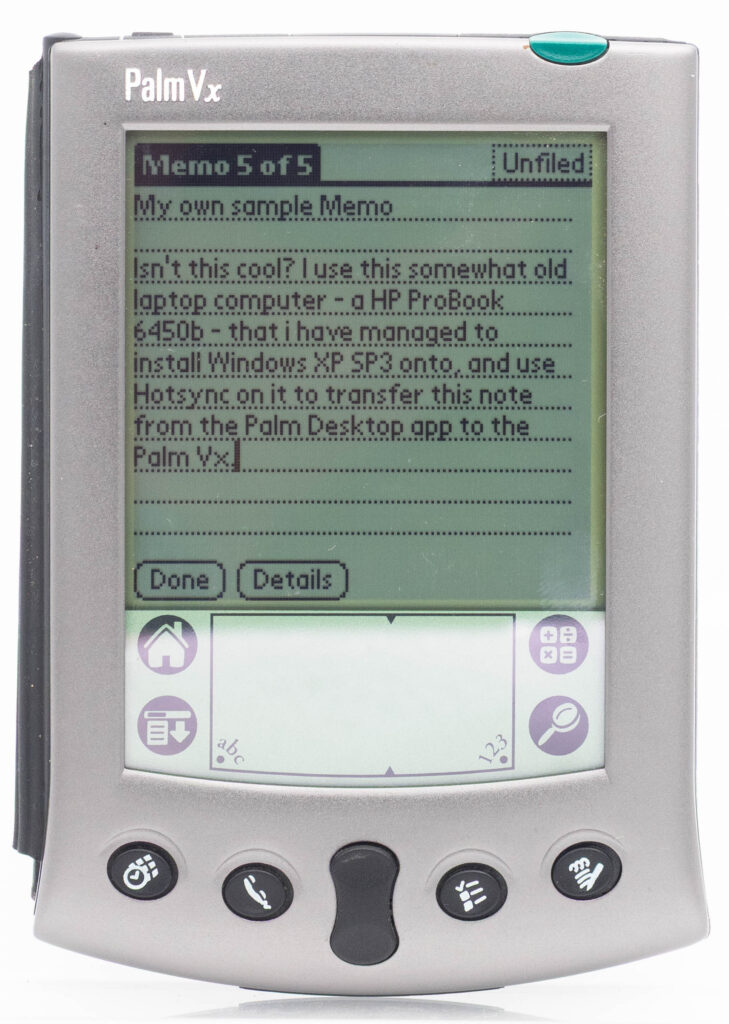
- Address, Calc, Date Book, Expense, Mail, Memo Pad, To do list
- Input method:
- Pen (Graffiti)
Overview
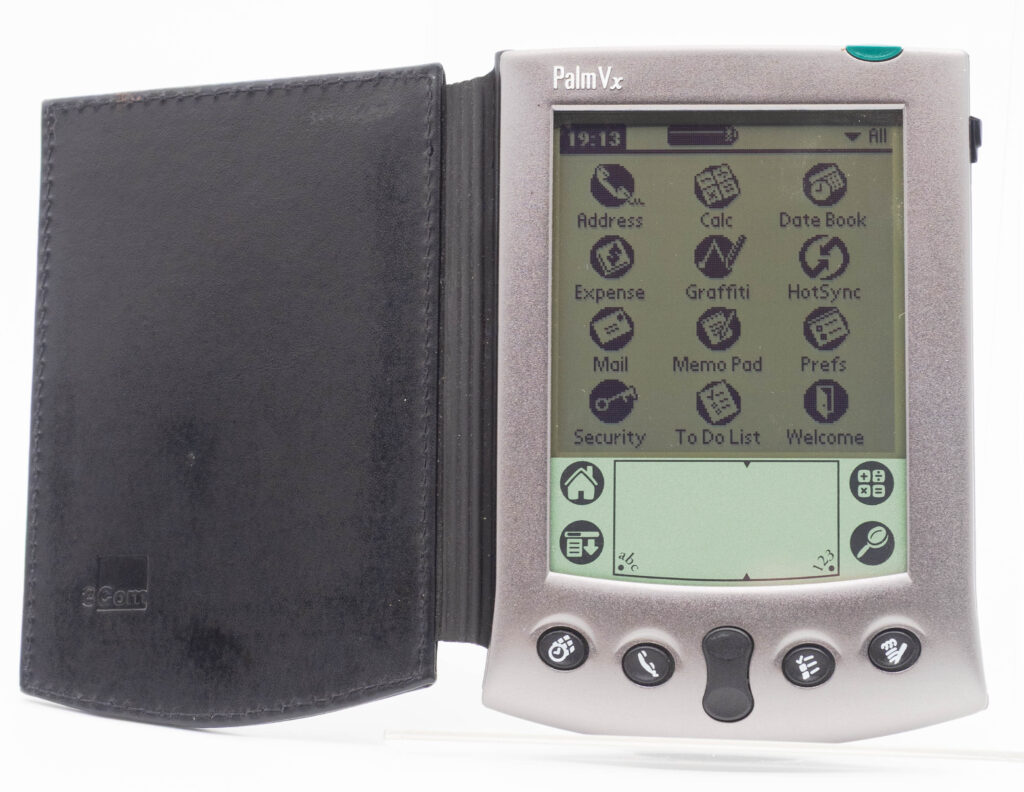
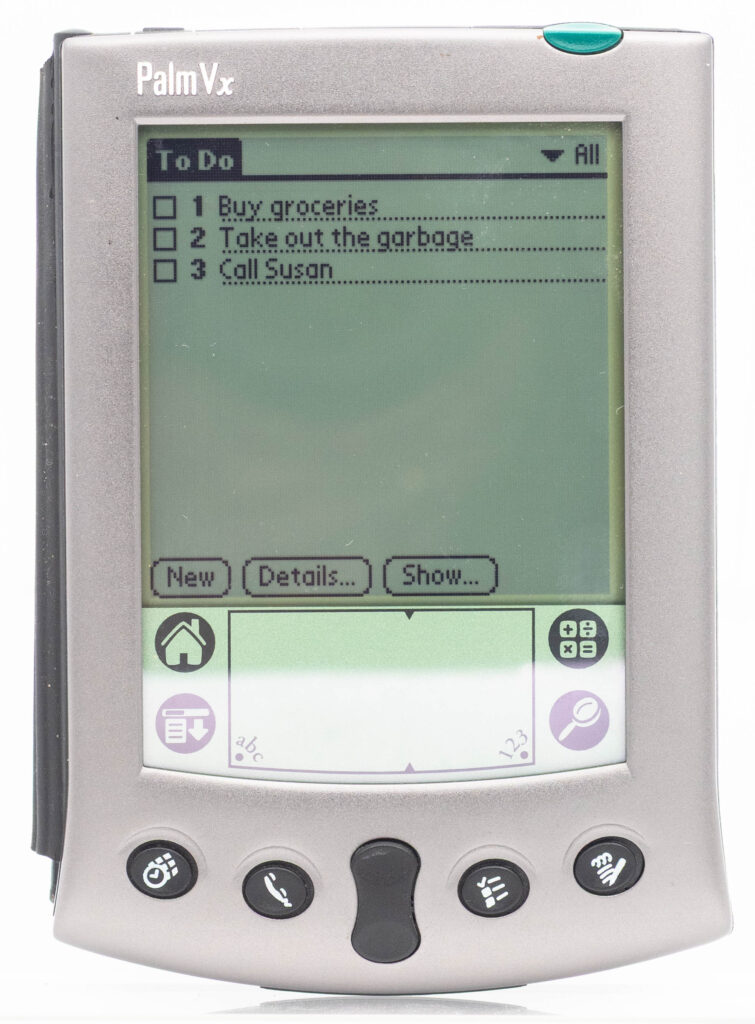
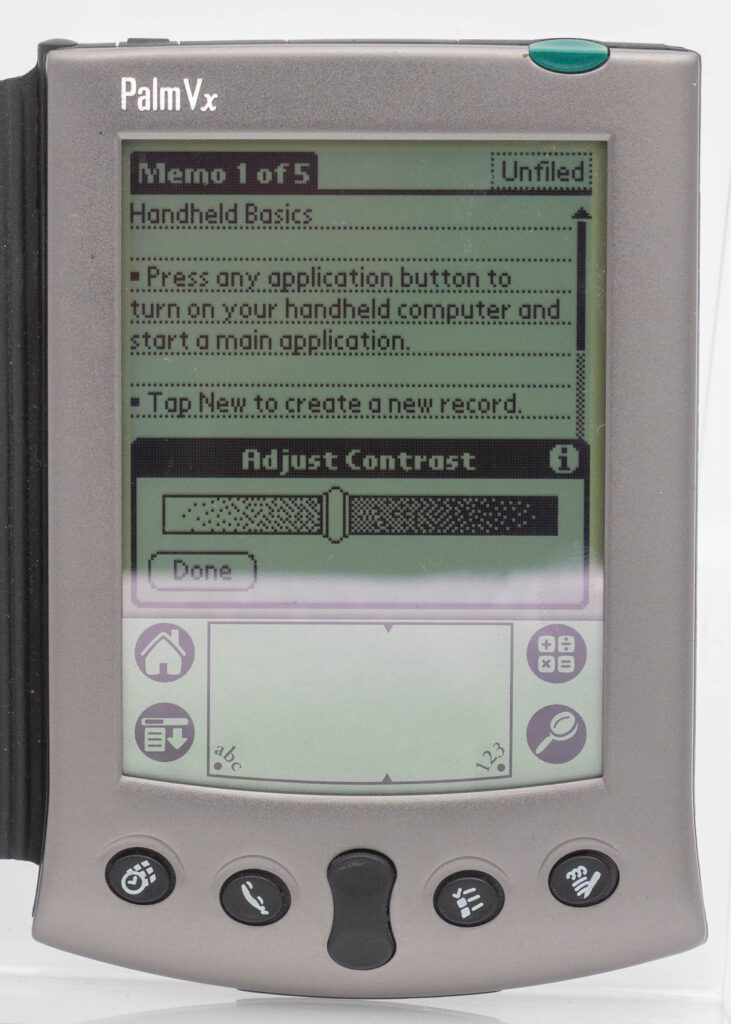
The Palm Vx represents the peak of Palm’s traditional, pre-expansion-card PDA design. Introduced in late 1999, it was an evolutionary update to the Palm V rather than a radical redesign, refining a form factor that had already proven extremely popular.
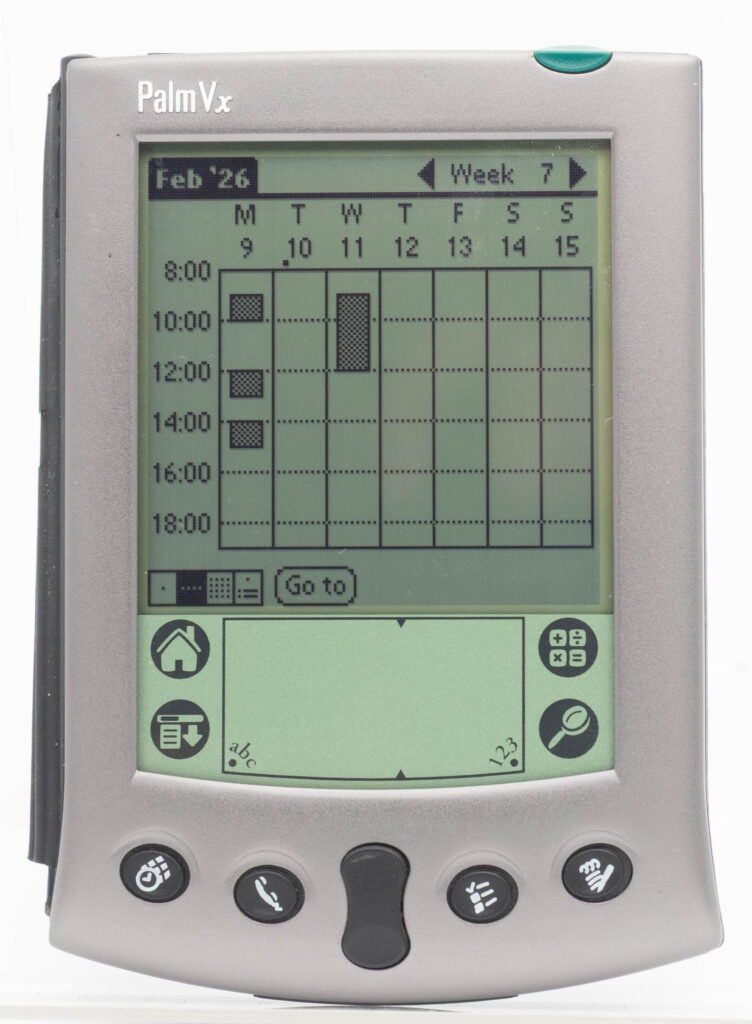
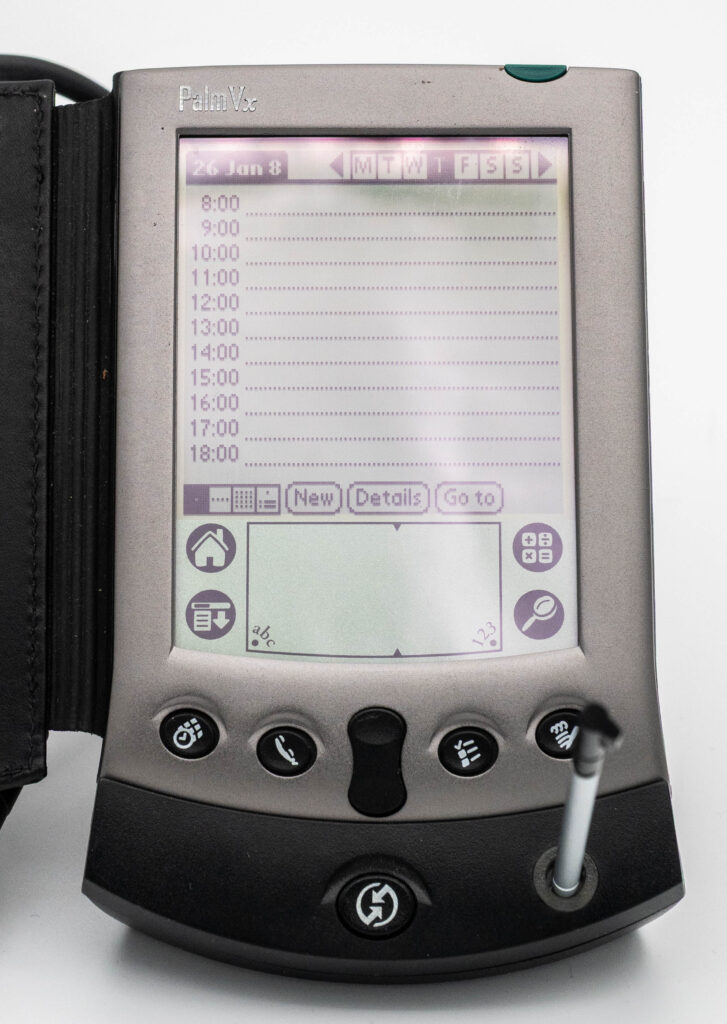
Compared to its predecessor, the Vx featured a 20 MHz CPU instead of 16 MHz and 8 MB of RAM, four times as much memory as the original Palm V and more than sufficient for typical use at the time. It retained the familiar 160 × 160 pixel grayscale display, which had become standard across Palm’s product line, including the built-in backlight that unusually illuminated the screen contents rather than the background, resulting in a distinctive reverse or negative image when used in low-light conditions.
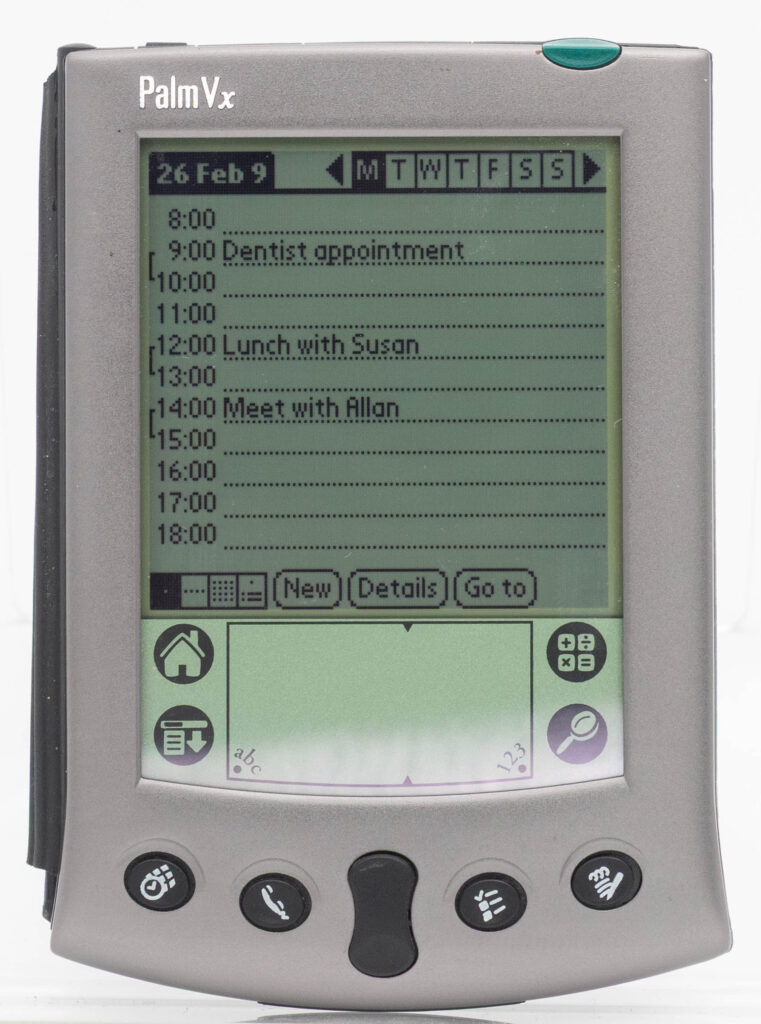
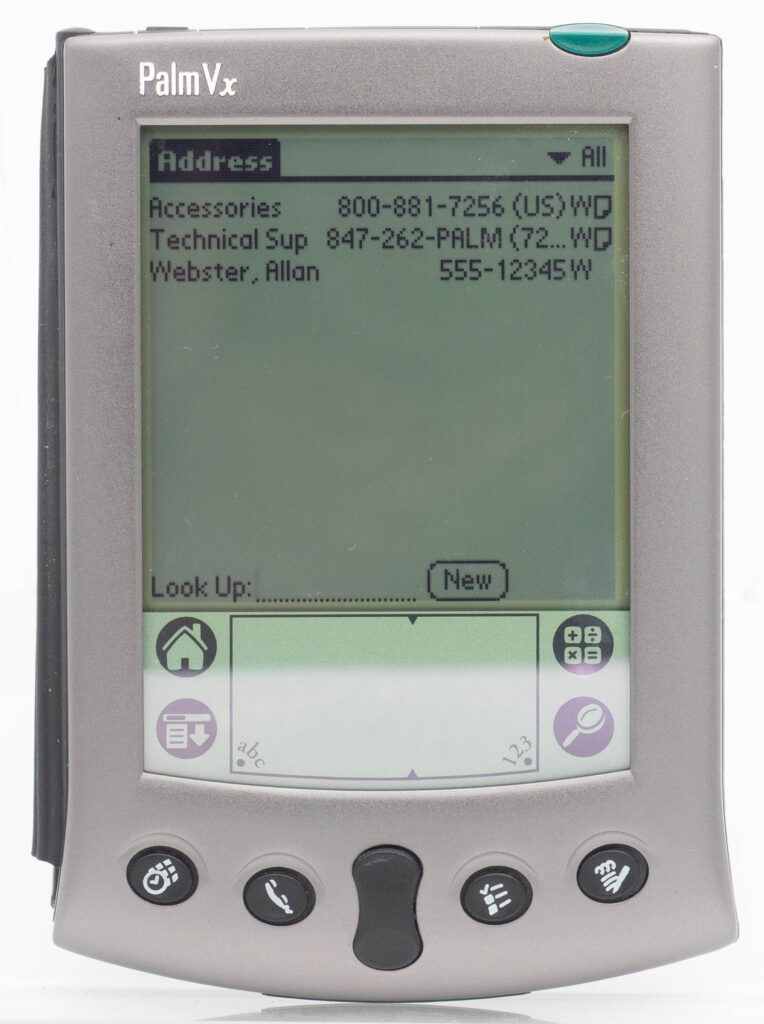
With increased ROM capacity, Palm was also able to bundle additional software with the device. New to the Palm Vx were applications such as AvantGo and Expense, along with updated HotSync software, further strengthening its appeal as a business-oriented personal organizer.
Although the Palm Vx lacked built-in wireless communication, optional accessories such as the Palm Portable Keyboard and modem add-ons made it possible to use the device for e-mail and other communication tasks, blurring the line between organizer and communicator.
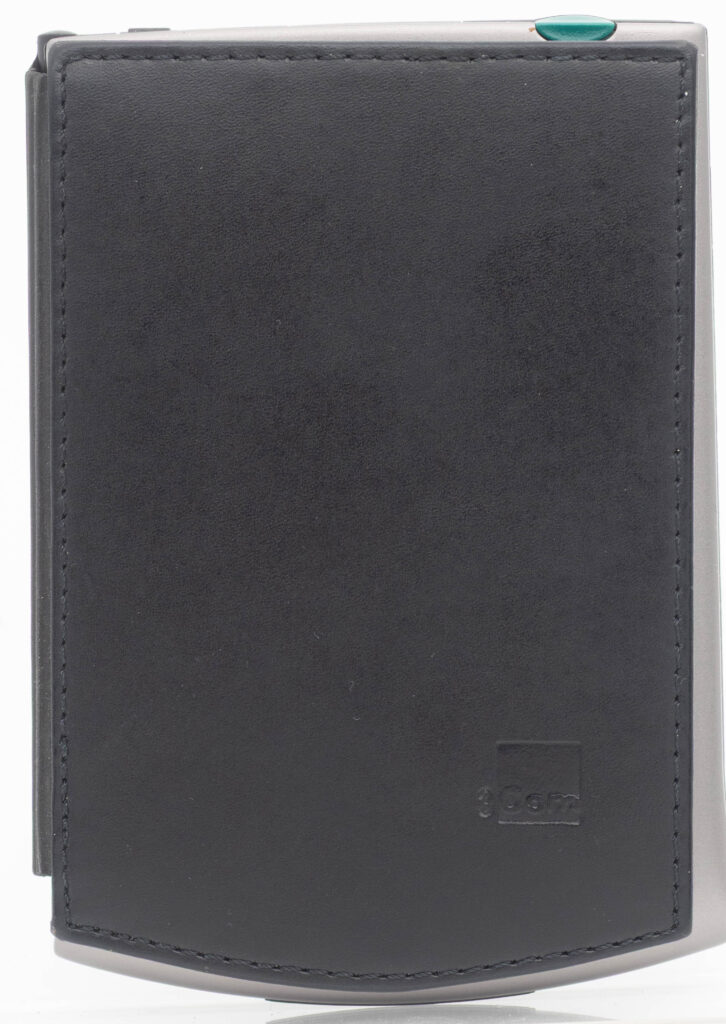
Like the Palm V, the Vx used an internal Li-ion battery. While this allowed for a slim and elegant design, the sealed aluminium case made battery replacement difficult, a compromise that would become increasingly common in later generations of mobile devices.
Despite a relatively high launch price of USD 399, the Palm Vx became a commercial success, particularly among business professionals, and remains one of the most recognizable and influential Palm devices.
For a broader discussion of the Palm PDA family and Palm’s design philosophy, see the dedicated Palm family article.
In my view, the Palm Vx is one of the most elegant PDAs ever designed. It delivers exactly what users expected at the time: speed, reliability, and simplicity, all packaged in a slim aluminium case weighing just 114 g. As with all Palm OS devices, interaction is smooth and immediate, and synchronization with a PC is effortless.
References
Palm Vx review — PeterVis (detailed contemporary perspective)
Wikipedia: List of Palm OS devices — overview of the Palm product line