
Want a colour screen? Be prepared to sacrifice readability in daylight
Quick facts
- CPU:
- Motorola Dragonball 68323 @ 33 MHz
- RAM (KB):
- 16348
- Storage (MB):
- 4
- Display:
- 160x160 pixels, 16-bit colour with backlight
- Operating system:
- Palm OS 4.1
- Year introduced:
- 2002
- Power source:
- Built-in Li-ion battery
- Connectivity:
- USB (1), IrDA
- Dimensions (mm):
- 114x81x13
- Weight (g):
- 139
- Built-in apps:
- Address, Calc, Clock, Date Book, Mail, Memo Pad, Note Pad, To Do list
- Input method:
- Pen (Graffiti)
Overview
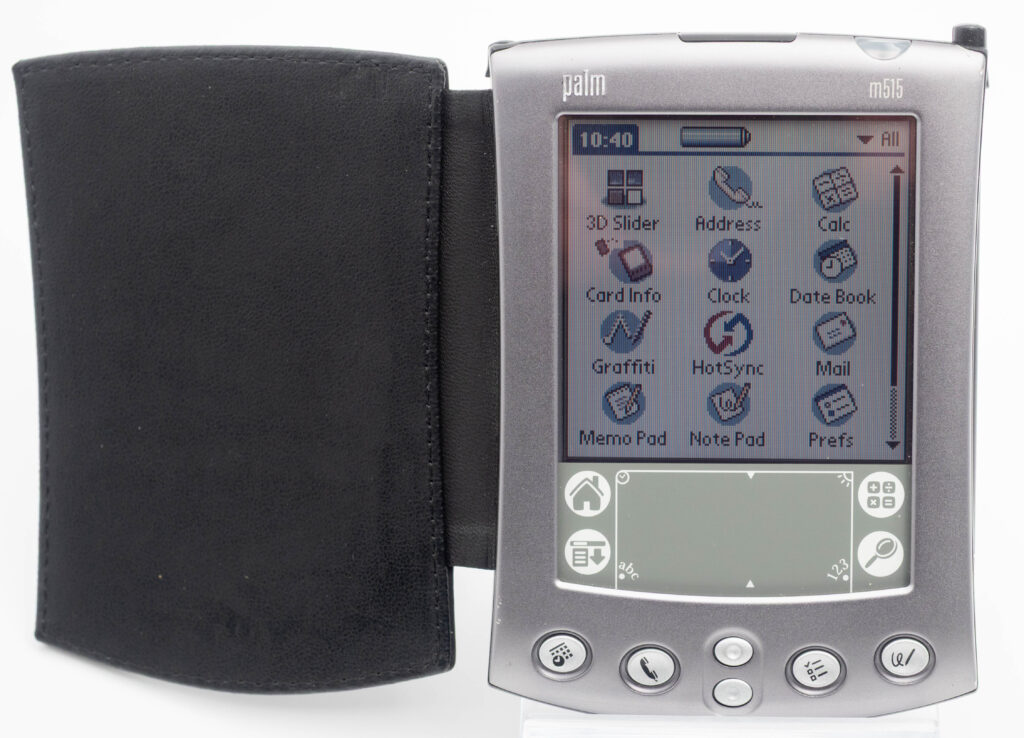
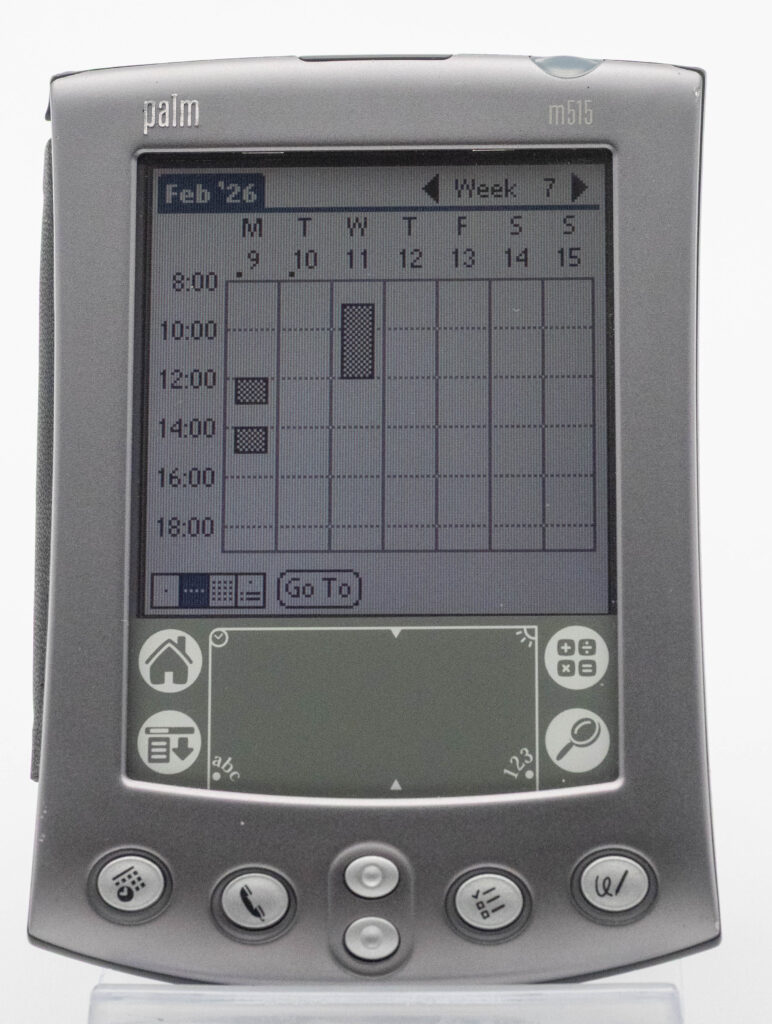
Released in 2002, the Palm m515 represents one of the last models in Palm’s regular line of PDAs before the company’s focus increasingly shifted towards connectivity and convergence. Featuring a 33 MHz Motorola DragonBall processor and 16 MB of RAM, the m515 feels quick and responsive, with the immediate user interaction that Palm OS devices were well known for.
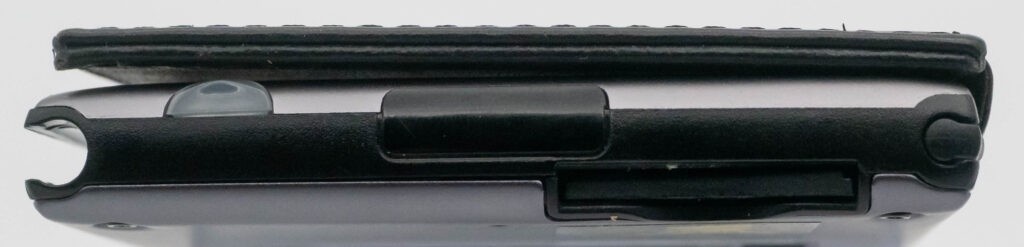
With the rapidly growing ecosystem of Palm OS applications, onboard storage had become a limiting factor. Palm addressed this by equipping the m515 with an SD card slot, allowing both applications and user-generated data to be stored externally. This was a significant usability improvement and quickly became an expected feature in the PDA market.
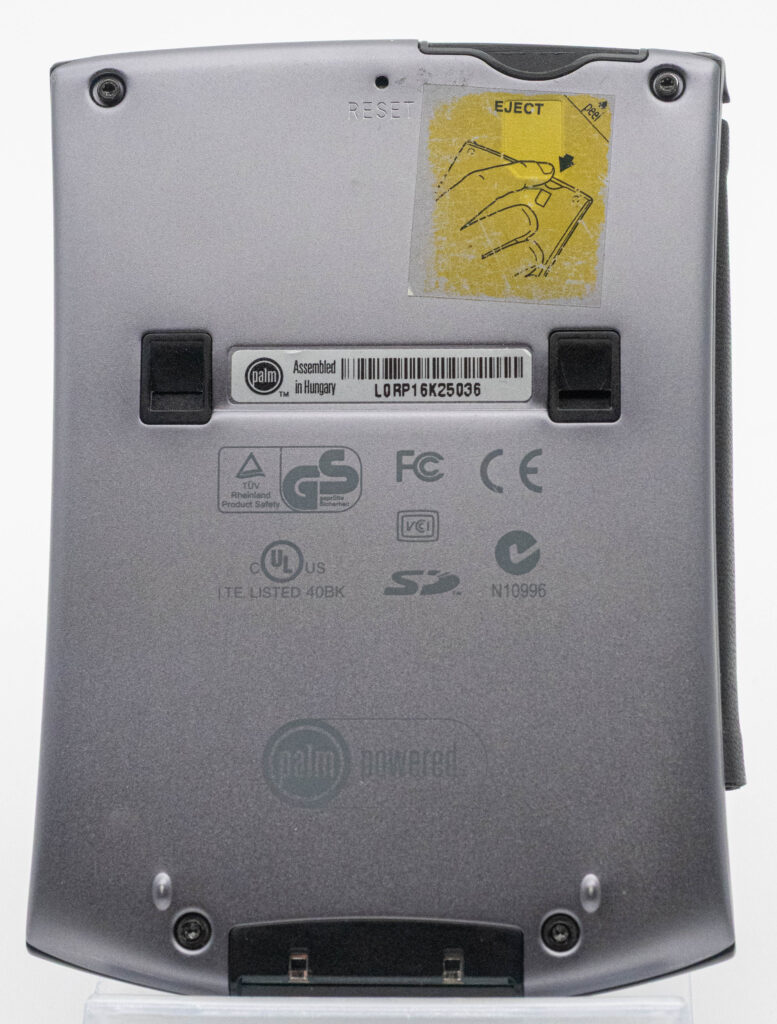
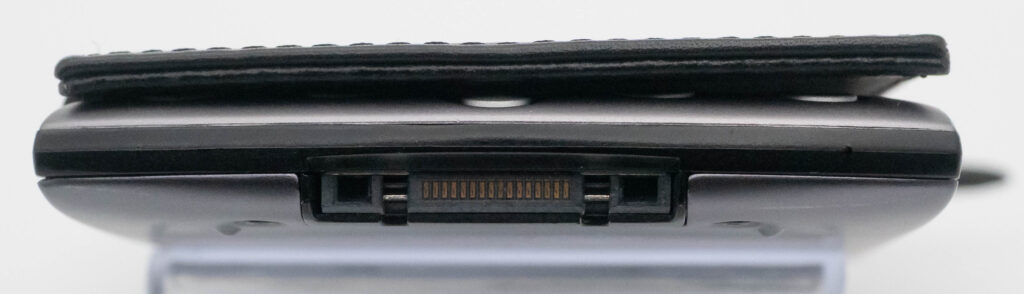
The m515 also introduced USB connectivity, which was far easier to work with than the RS-232–based serial communication used by earlier models. The new dock feels more solid than its predecessor, although it lacks the illuminated stylus holder found on earlier Palm docks. By this point, user habits may already have shifted toward performing most text input on the PC rather than directly on the device.
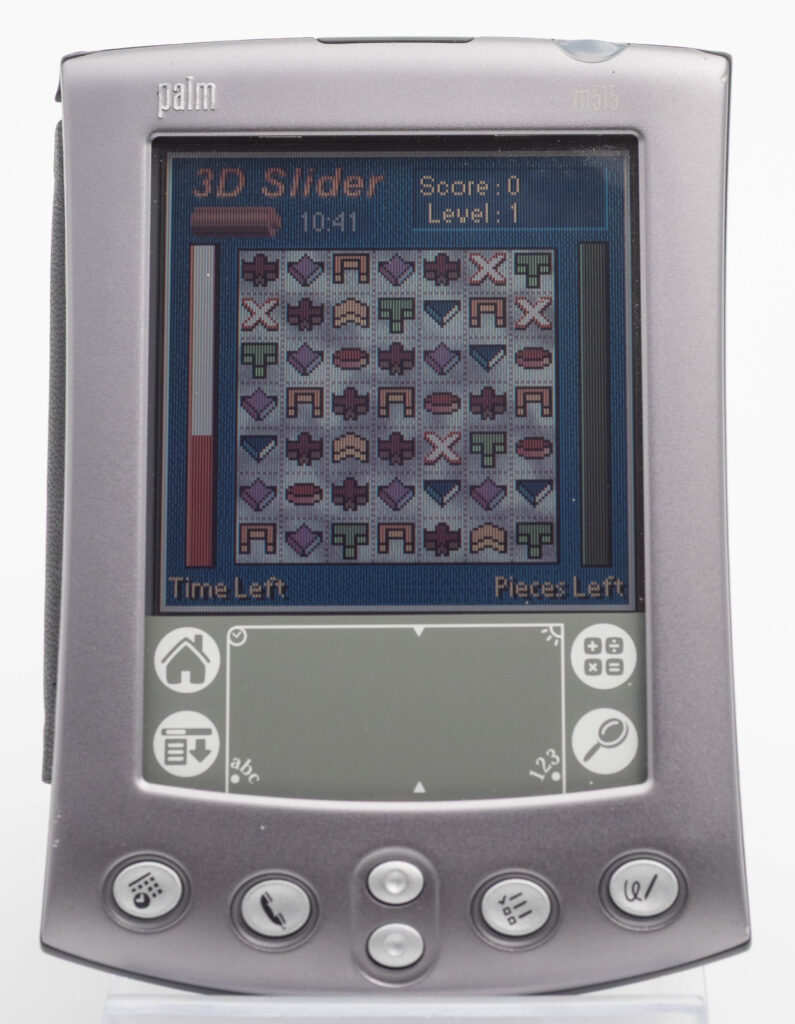
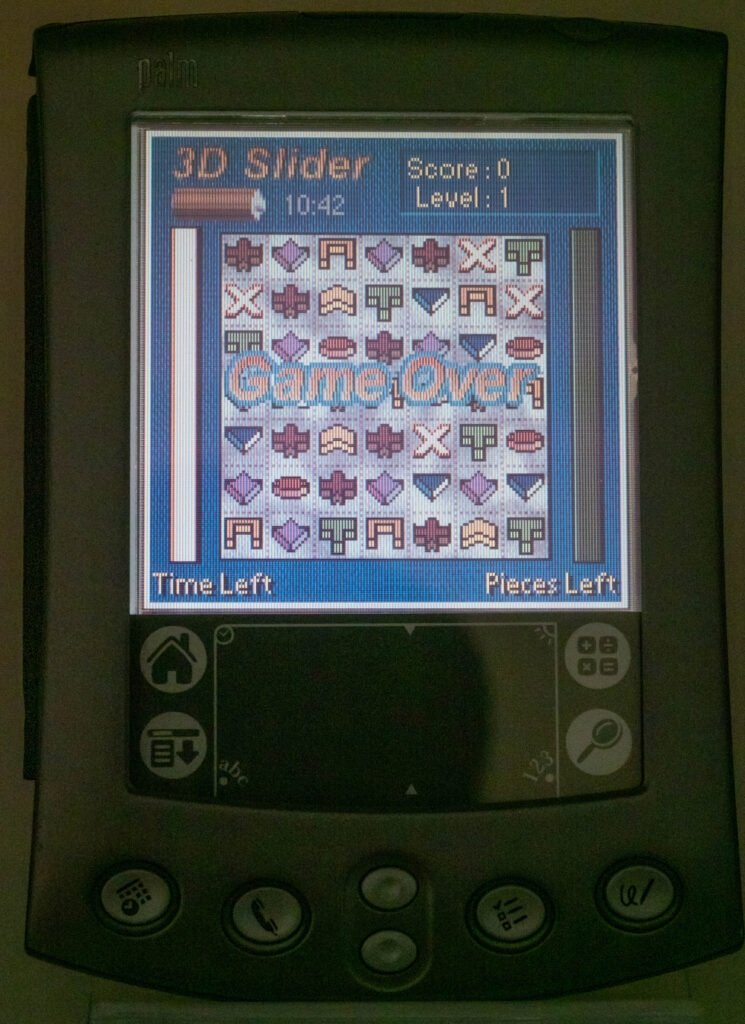
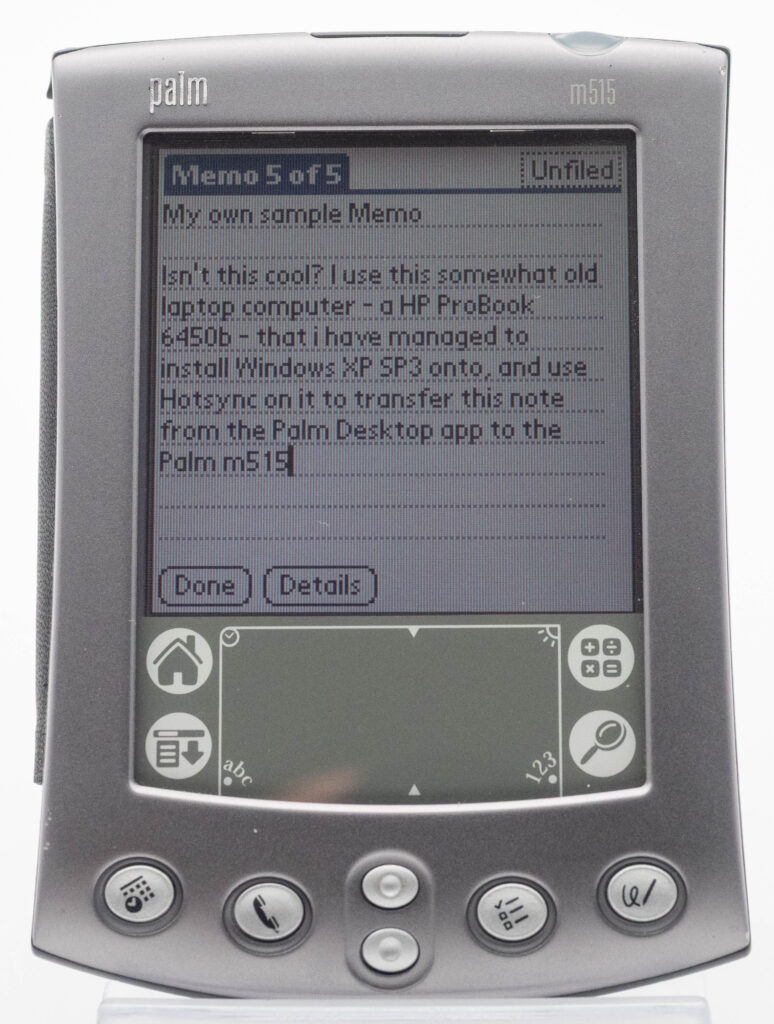
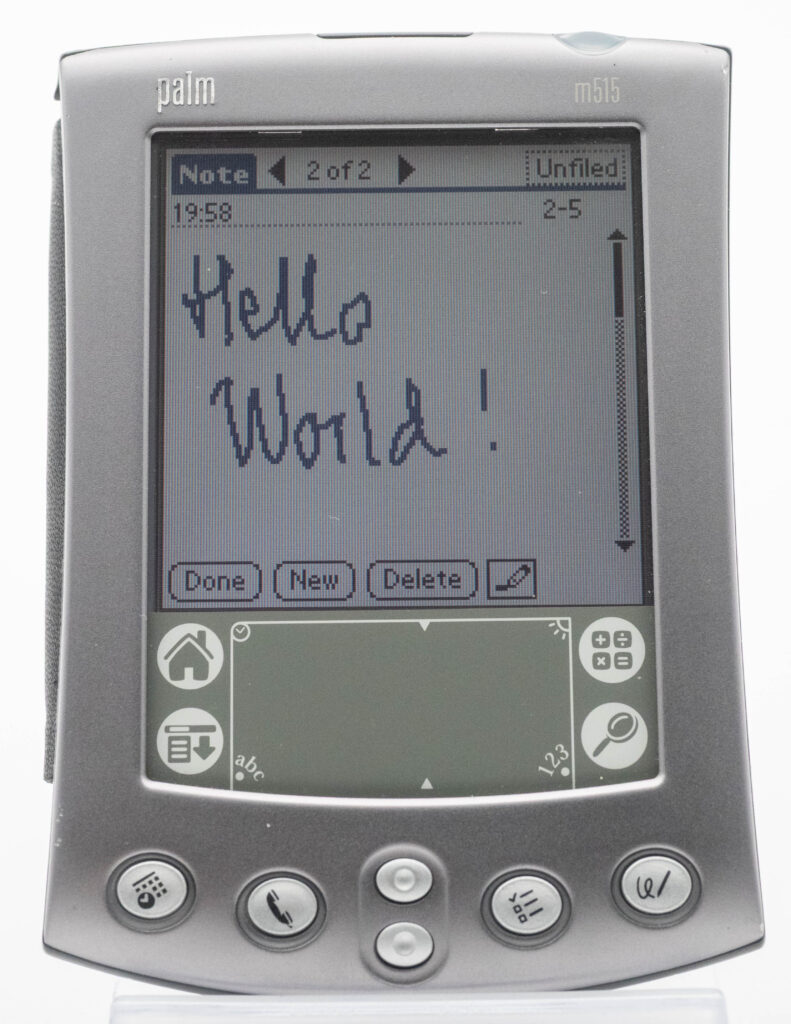
Although the m515 was not Palm’s first colour PDA—the Palm IIIc holds that distinction—it featured what Palm marketed as an “enhanced backlight,” intended to improve readability in daylight. In practice, however, early colour LCDs of the early 2000s suffered from limited visibility in direct sunlight, and the m515 is no exception. Colour fidelity is also relatively modest. Retaining the same 160 × 160 resolution as the earlier greyscale models ensured full compatibility with the extensive Palm OS software library, which by this time had grown very large.
Learning from customer criticism of the sealed, non-serviceable batteries used in the Palm V and Vx, Palm took a step back with the m515 by reintroducing screws that allow the rear cover to be removed, making battery replacement and servicing considerably easier.
For a broader discussion of the Palm PDA family and Palm’s overall design philosophy, see the dedicated Palm family article.
Marking the end of the “traditional” line of Palm PDAs, the m515 is a good illustration of what the market looked like in the early 2000s. Easy-to-use memory expansion via SD cards and straightforward PC connectivity through USB had by now become standard expectations rather than distinguishing features.
References
Palm m515 specs at Phonedb.net
Wikipedia listing of all Palm models