
All-in-one affordable PDA, turn-by-turn navigator and media player
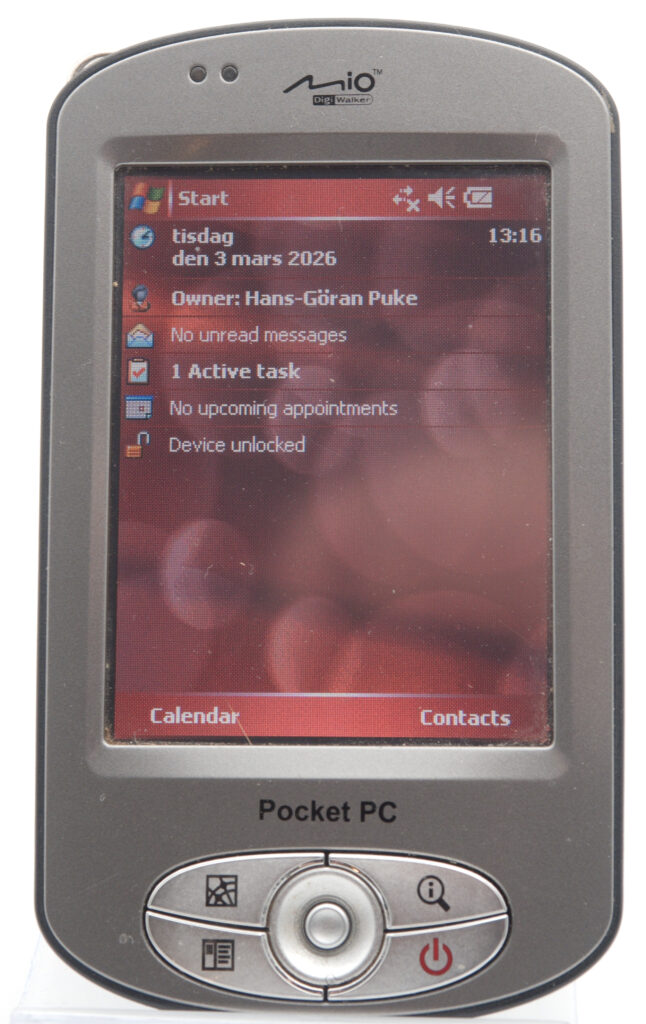
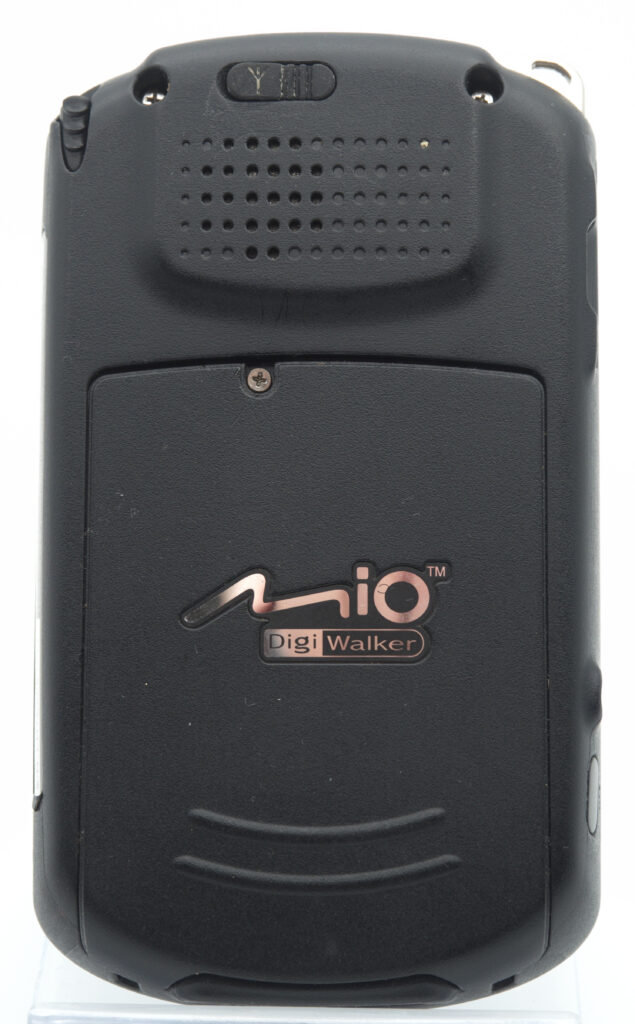
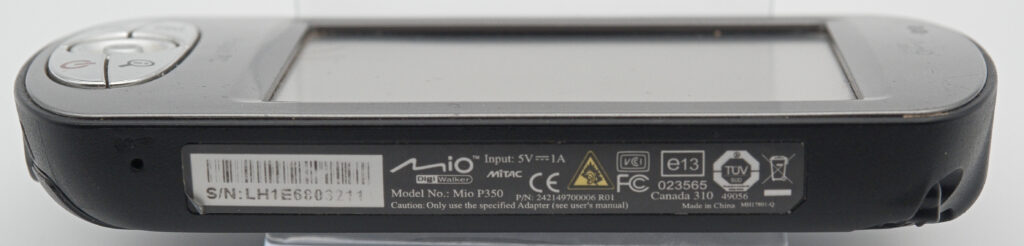
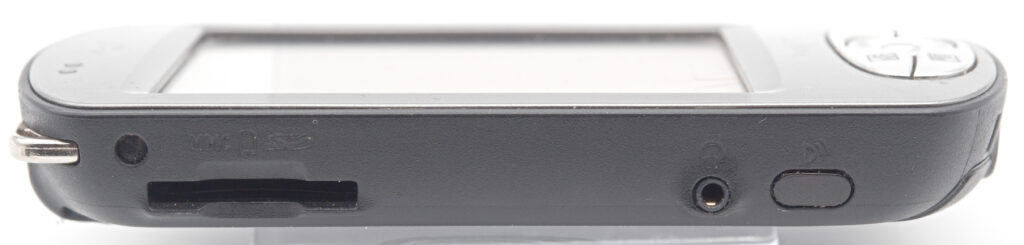
Quick facts
- CPU:
- Samsung S3C2440 @ 400MHz
- RAM (KB):
- 65000
- Storage (MB):
- 64
- Display:
- 3,5-inch LCD, 320x240 pixels, 65 000 colours
- Operating system:
- Windows Mobile 5.0
- Year introduced:
- 2006
- Power source:
- Built-in, replaceable, Li-ion battery
- Connectivity:
- USB (mini), IrDA, Bluetooth, GPS
- Dimensions (mm):
- 72x125x17.8
- Weight (g):
- 170
- Built-in apps:
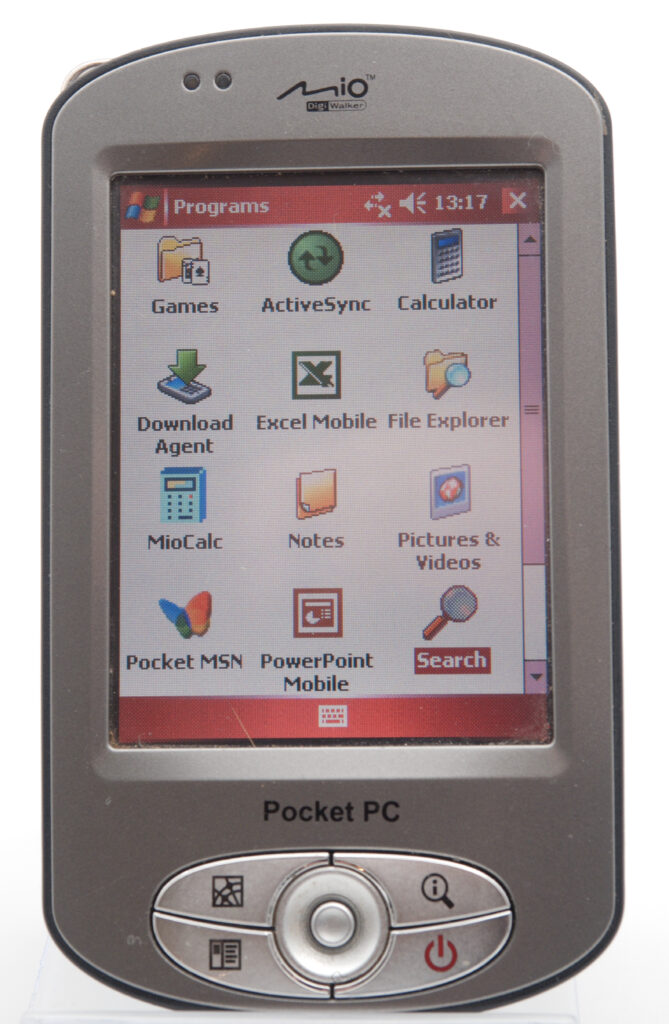
- Contacts, Calendar, Pocket Word, Pocket Excel, Pocket Powerpoint, Mio Maps, etc
- Input method:
- Stylus
Overview
A PDA born from the navigation boom
By the mid-2000s, the PDA market was already in decline, squeezed between increasingly capable smartphones and dedicated in-car navigation units. Manufacturers that traditionally built GPS devices saw an opportunity to combine both worlds — and Microsoft’s Windows Mobile platform made this relatively easy.
Mio was one of those manufacturers. Known primarily for its car navigation systems, the company introduced the DigiWalker P-series as hybrid devices: part PDA, part GPS navigator. The P350, released around 2006, can be seen as a mid-range model in that lineup.
Its main selling point was the integrated SiRFstar III GPS receiver, bundled with MioMap navigation software. At the time, SiRFstar III was considered one of the best consumer GPS chipsets available, offering improved sensitivity compared to earlier generations — although real-world reviews often mentioned somewhat slow satellite acquisition under certain conditions.
With a launch price around USD 300 (market dependent), the P350 positioned itself as an affordable all-in-one solution: a personal organizer that could double as a full turn-by-turn car navigator.
Hardware and performance
The P350 is powered by a Samsung S3C2440 processor running at 400 MHz, a typical Windows Mobile CPU of the era. Combined with 64 MB RAM (and usually 128 MB ROM), it provided enough performance to handle:
- PIM applications (Calendar, Contacts, Tasks)
- Navigation software
- MP3 audio playback
- Basic video playback (within format limitations)
The 3.5-inch QVGA display (320×240 pixels) was standard for the time. It used a resistive touchscreen designed for stylus input, though it could also be operated with a finger.
Storage expansion was possible via an SD card slot, allowing users to store maps, music, and additional applications.
Connectivity options included:
- USB (mini-USB) for charging and synchronization via Microsoft ActiveSync
- Bluetooth for wireless communication (headsets, phones, possibly GPS accessories)
- Infrared (IrDA), increasingly rare by this time but still present
Designed for the dashboard
Unlike earlier “pure” PDAs, the P350 was clearly designed with in-car use in mind. Mio bundled mounting accessories and navigation software, and the device could be connected to an external GPS antenna to improve reception inside vehicles with heat-reflective windshields.
In many ways, this type of device represents the transitional phase between:
- The classic PDA (organizer first, connectivity second)
- The dedicated PND (Personal Navigation Device)
- The emerging smartphone
Software environment
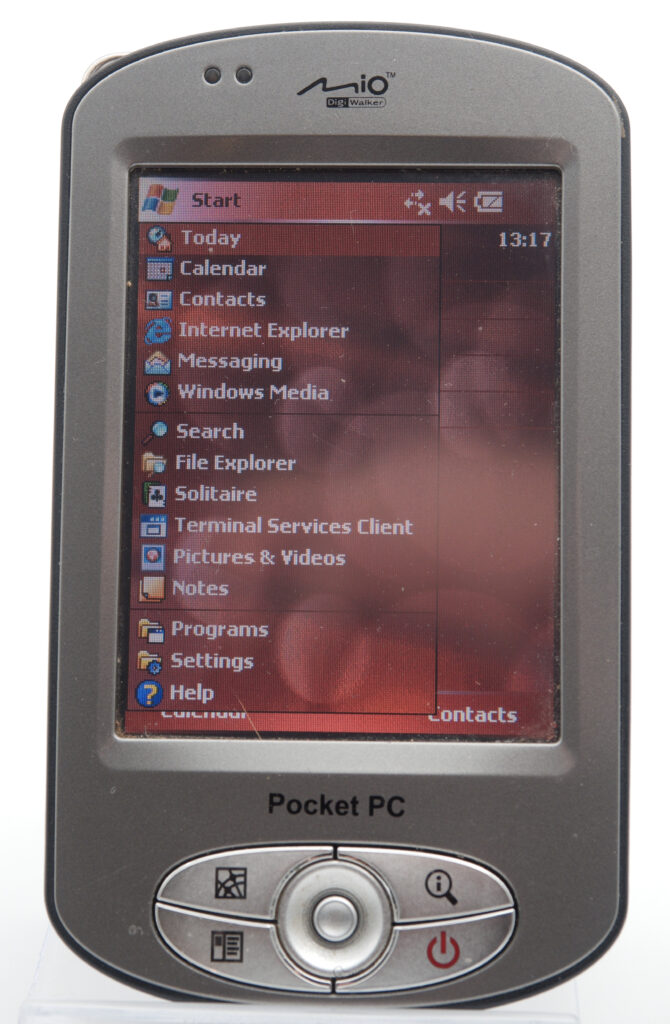
Running Windows Mobile 5.0 (Pocket PC edition), the P350 inherited the Microsoft ecosystem of the time. Users could install third-party applications, synchronize data with Outlook, and use the familiar Windows Mobile interface with its Start menu and stylus-driven UI.
It included:
- Calendar, Contacts, Tasks, Notes
- Windows Media Player
- Internet Explorer Mobile
- MioMap navigation software
While versatile, Windows Mobile devices were often criticized for their stylus-centric interface and complexity compared to Palm OS devices. The P350 reflects this: powerful and flexible, but less “instant” than earlier PDAs such as Palm or Psion.
Historical Context
The Mio DigiWalker P350 belongs to the very end of the classic PDA era. By 2006–2007, smartphones were rapidly gaining ground, and dedicated GPS devices were becoming cheaper and more specialized.
Ironically, devices like the P350 contained most of the features that would soon be unified in smartphones:
- GPS
- Media playback
- Bluetooth
- Expandable storage
- Synchronization with a PC
What they lacked was seamless mobile internet integration and a truly finger-friendly interface — two factors that would soon redefine the market.
This device entered my collection almost by accident, included in a deal for another PDA. Yet it turns out to be a fitting representative of the final stage of the PDA story.
It is neither a classic organizer nor a modern smartphone — but something in between. It shows how manufacturers attempted to extend the life of the PDA concept by adding GPS and multimedia capabilities. In hindsight, it feels like a device that arrived just a few years too late to define the market, but just early enough to still belong to the PDA era rather than the smartphone age.
References
Review from CNET (2006) – note this is for the white model, mine is grey.