
Personal Organizer marking the end of the PDA era
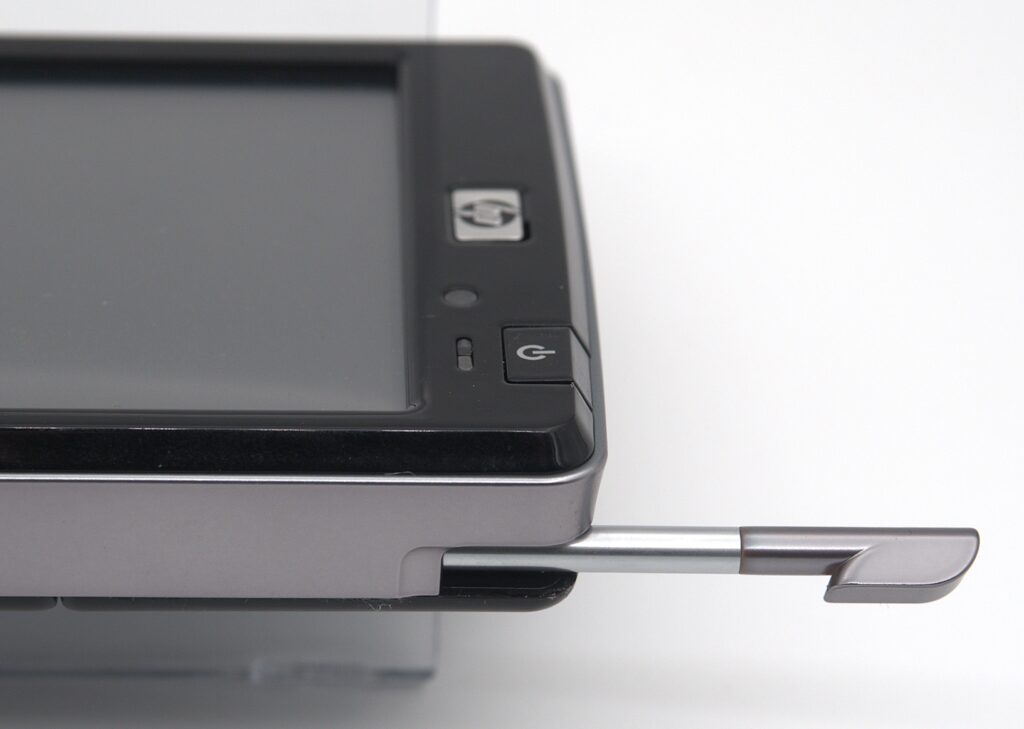
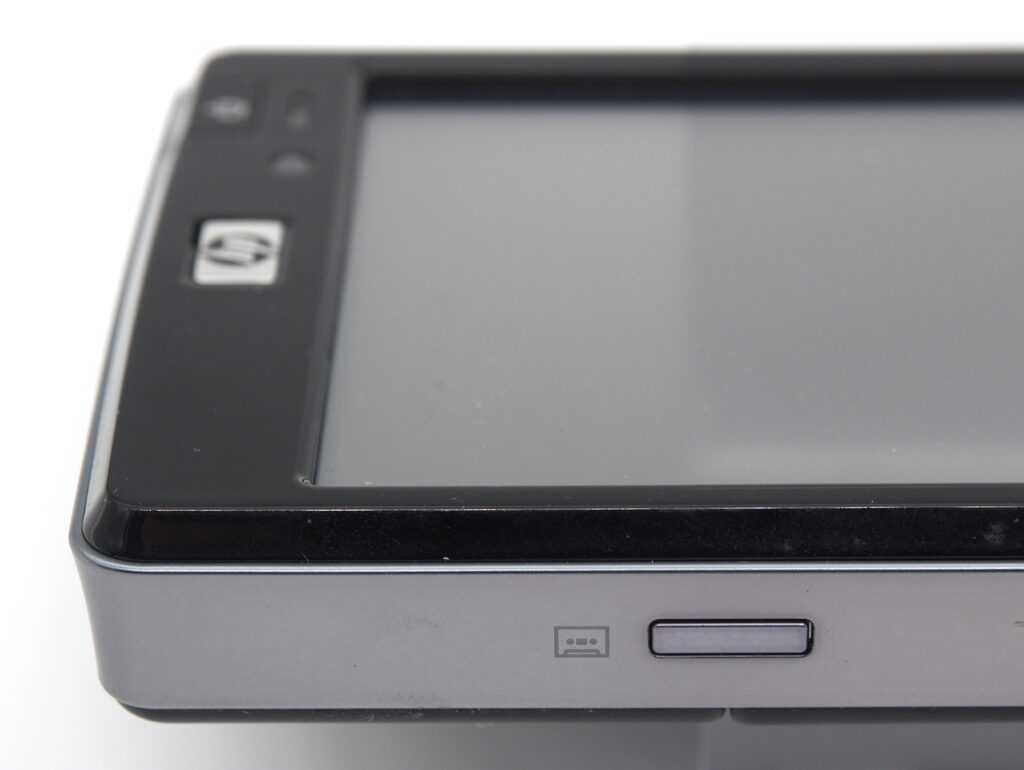
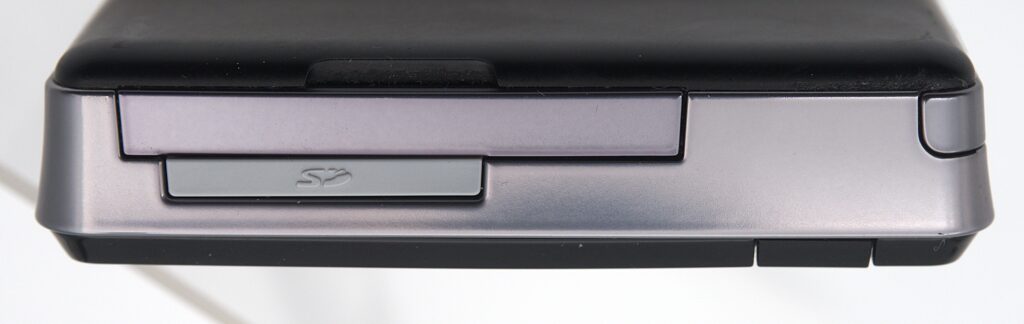
Quick facts
- CPU:
- Marvell 624MHz PXA310 @ 624MHz (previously Intel XScale)
- RAM (KB):
- 128000
- Storage (MB):
- 256
- Display:
- 4-inch full-colour VGA display with pen input
- Operating system:
- Windows Mobile 6.0
- Year introduced:
- 2007
- Power source:
- 2200 mAh Li-ion battery
- Connectivity:
- Wifi, Bluetooth, USB
- Dimensions (mm):
- 75x131x18
- Weight (g):
- 192
- Built-in apps:
- Calendar, Word, Excel, OneNote, Powerpoint, Internet Explorer, Photosmart, ClearView PDF, FileExplorer, HP PrintSmart and more
- Input method:
- Pen and a few buttons
Sales pitch from when it was new
Designed with Business in mind
There is much to appreciate about the sophisticated design of the iPAQ 200 Series. the powerful processor, large touchscreen display, SDIO and CF expansion, and the convenience of headphone, microphone, and USB connections and a voice record button. You’ll also enjoy the standard Microsoft Mobile Office suite of Word, Excel and PowerPoint; and the ability to easily synchronize Mobile Office Outlook via mini-USB or WiFi connectivity.
HP iPAQ 214 – Overview and Use
The HP iPAQ 214 Enterprise represents what many consider the last true PDA: a handheld computer focused on personal information management, without a built-in mobile phone or cellular modem. In that sense, it marks the end of an era in which PDAs existed as standalone computing devices rather than as integrated communications platforms.
HP was well aware that this market was shrinking. The company believed, however, that a small but stable niche still existed—primarily within large organizations that had invested heavily in custom applications for the Windows Mobile ecosystem, or in environments where technological change tended to move more slowly.
As early as 2006, one year before the introduction of the iPAQ 214, HP publicly acknowledged this shift in strategy:
According to Hewlett-Packard (HP), the traditional pen-based PDA market will evaporate within the next four years without significant product innovation. The company will therefore continue to focus the majority of its handheld efforts on converged smart phone devices, relegating its traditional PDAs to the entry-level consumer and SMB markets
“There’s still a market… it’s small, but it’s still there,” Chin-Teik said, citing “entry-level PDA” buyers and SMBs as the primary sources of demand for the sector.
“We are still committed to the pen-based classic PDA product segment… although it’s not growing,” said Chin-Teik, and as a result HP “is looking more to the converged space” going forward.
The iPAQ 214 remained in production until around 2011, suggesting that this assessment was largely accurate.
State of the Art
At the time of its release, the iPAQ 214 could reasonably be described as state-of-the-art within the traditional PDA category.
It featured one of the fastest processors available in a handheld of its class: an Intel XScale ARM CPU (later sold to Marvell and marketed as PXA310) running at a then-impressive 624 MHz, paired with 128 MB of RAM and 256 MB of flash ROM.
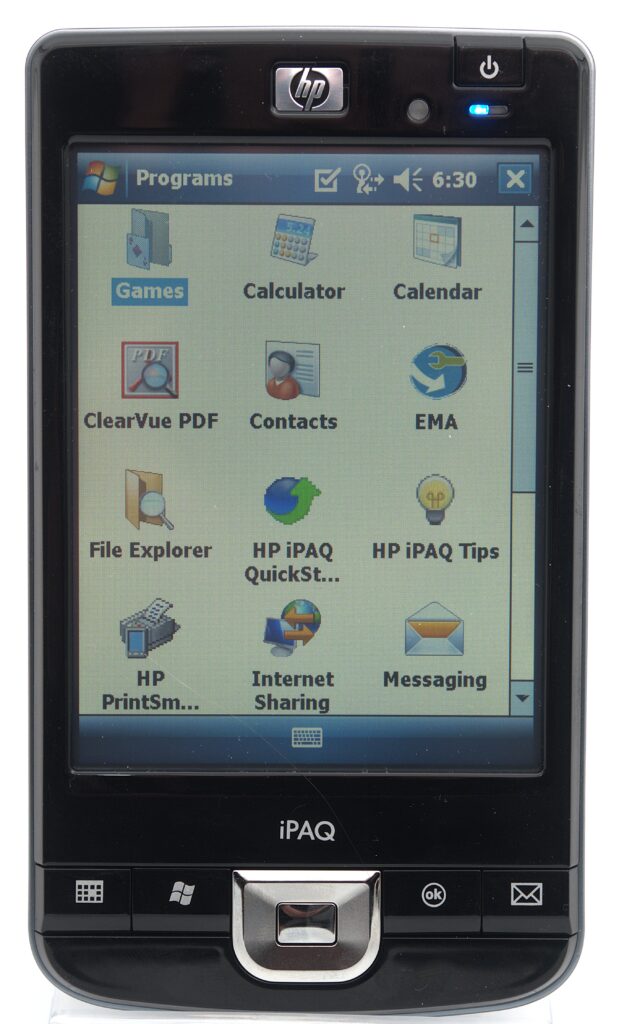
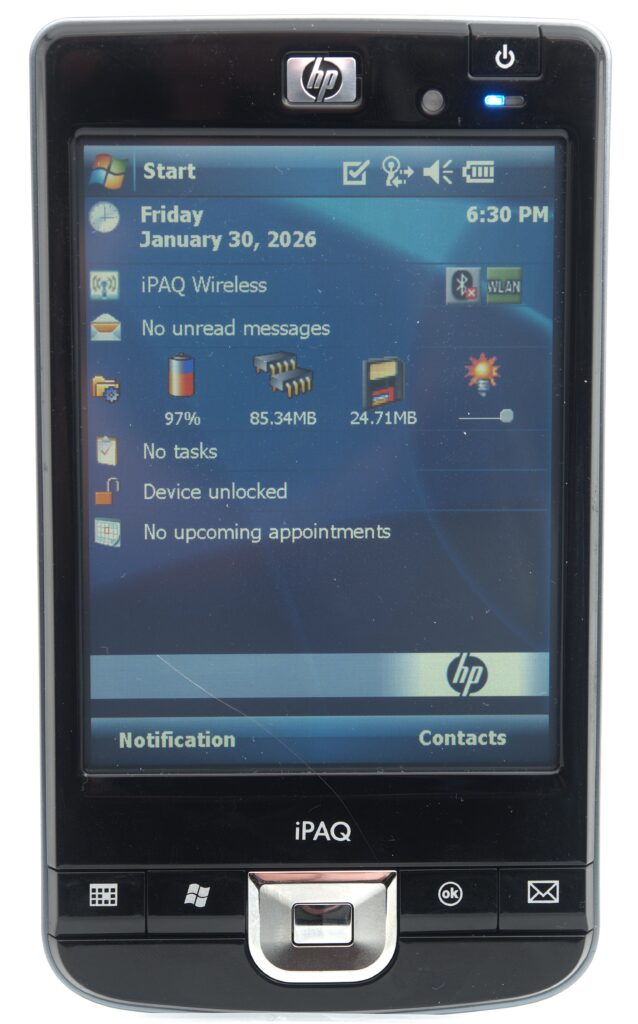
The display measured 4 inches diagonally and offered a VGA resolution of 640 × 480 pixels, matching the resolution of many desktop PCs from the early 1990s, but now presented in full color on a device that fit in a coat pocket.
On paper, this combination of hardware should have allowed the iPAQ 214 to easily outperform most competing PDAs of its era. In practice, the experience was more nuanced. Compared to devices running Palm OS, for example, the iPAQ could sometimes feel almost sluggish.
The primary reason was its operating system. Windows Mobile 6.0 was powerful and feature-rich, but also relatively heavy. In some everyday tasks, it was noticeably slower than earlier versions of Windows Mobile, to the point that even the significant increase in CPU speed did not always translate into a clear improvement in responsiveness.
Despite this, the iPAQ 214 offered an impressive feature set for its time, including:
- WiFi connectivity (802.11b/g)
- Bluetooth 2.0
- USB 2.0 connectivity
- SDHC and CompactFlash (CF) expansion slots
In the box, buyers would typically find the device itself, a 2200 mAh lithium-ion battery, a charger, a USB communication cable, a leather case (not sure if it is leather of faux leather), printed documentation, and a CD-ROM containing synchronization and utility software.
Some users criticized the absence of an infrared (IR) port, a feature that had been popular on earlier PDAs—particularly among Palm OS users—for beaming contacts, calendar entries, and small files between devices.
How to use it
PDAs running Windows Mobile were generally positioned as companions to a personal computer, rather than as fully independent systems.
Most serious work was expected to take place on the PC, with selected data then synchronized to the handheld. This synchronization was handled by Microsoft’s ActiveSync software, which was included on the CD-ROM in the box and typically used in conjunction with Microsoft Outlook or other personal information management (PIM) applications.
Windows Mobile also included mobile versions of Microsoft Word, Excel, Powerpoint and Onenote. These allowed users to view and make basic edits to documents created on a desktop computer. However, the mobile applications did not support the full range of formatting options, and synchronizing an edited document back to the PC could result in lost or altered formatting.
The iPAQ’s SDIO (Secure Digital Input/Output) slot supported not only standard SD and SDHC storage cards, but also I/O accessories. One popular option was an SDIO GPS receiver. Combined with navigation software such as TomTom, this effectively turned the iPAQ into a fully functional in-car navigation system.
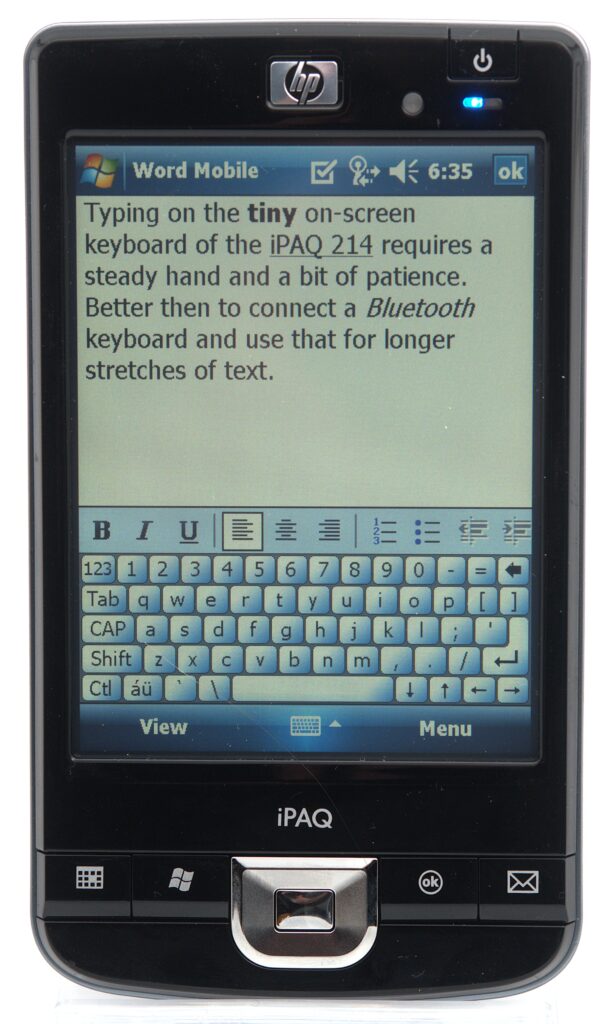
Thanks to its built-in Bluetooth support, the iPAQ 214 could also be paired with wireless headsets and external keyboards. The latter was particularly useful for extended typing sessions, as the on-screen keyboard was necessarily small and best suited for short text entry.
By many, the HP iPAQ 214 Enterprise is considered the last true PDA. In my collection, it feels as natural a milestone as the Psion Organiser, which is often regarded as the first.
What makes the iPAQ 214 especially interesting is its position in time. It captures the state of handheld computing just before the iPhone and, shortly thereafter, Android-based smartphones reshaped the entire industry.
Seen through that lens, the device stands as both a technical high point for the standalone PDA—and a quiet farewell to a category that was about to disappear.
Historical Context: From Communicators to Smartphones
When the HP iPAQ 214 was introduced in 2007, the handheld computing world was already in the middle of a profound transition. The idea of combining a mobile phone and a computer was not new—by then, it was more than a decade old. What was new was the realization that the “all-in-one smartphone” was about to eclipse the traditional, standalone PDA.
Understanding where the iPAQ 214 fits requires a look back at three distinct eras in the evolution of mobile computing.
The Communicator Era (1994–2002)
The roots of the smartphone can be traced back to the early 1990s, when manufacturers first attempted to merge telephony and personal computing into a single device.
In 1994, IBM introduced the Simon Personal Communicator, often cited as the world’s first smartphone. It combined a mobile phone with a touchscreen interface and included features such as email, a calendar, and even fax capability.
Nokia carried the concept into the mainstream with the Nokia 9000 Communicator in 1996. With its clamshell design, full QWERTY keyboard, and large internal screen, it was marketed as a serious business tool rather than a consumer gadget. Later models, such as the Nokia 9210 (2000), introduced color displays and the Symbian operating system, further blurring the line between laptop and phone.
At the same time, Ericsson entered the field with the R380 (1999), the first device officially marketed as a “smartphone.” It ran a Symbian-based operating system behind a flip-down keypad and offered touchscreen interaction alongside traditional phone controls.
These early communicators were large, expensive, and aimed squarely at professionals—but they established the fundamental idea that a pocket-sized device could be both a phone and a computer.
The PDA-Hybrid Era (2001–2006)
While Nokia and Ericsson focused on communicators, another design philosophy emerged: the PDA first, phone second approach.
Companies like Handspring and Palm began adding cellular radios to their popular PDAs, resulting in devices such as the Treo series. These hybrids combined touchscreens, stylus-based interfaces, and personal information management software with voice calling and mobile data.
At the same time, manufacturers like HTC and Samsung embraced Microsoft’s Windows Mobile platform, producing so-called “PDA phones” that closely resembled traditional handheld computers, complete with expansion slots, multitasking operating systems, and in some cases physical keyboards.
Sony Ericsson’s P800/P900/P990 series, running Symbian UIQ, further refined the concept of a touchscreen-driven smartphone aimed at both business users and early adopters.
This era was defined by experimentation. There was no single dominant form factor or interface paradigm. Devices varied widely in size, input methods, and software platforms—but all of them explored different ways of merging mobility with computing power.
The Smartphone Era Begins (2006–2007)
By the mid-2000s, smartphones were becoming mainstream consumer devices rather than niche business tools.
Nokia’s N-series, particularly the N95, emphasized multimedia, internet access, and built-in sensors like GPS. These phones were marketed as “all-in-one” devices for navigation, photography, and entertainment, not just email and calendars.
In 2007, Apple introduced the iPhone, which redefined expectations almost overnight. Its multi-touch interface, full-screen web browsing, and later its application ecosystem shifted the industry’s focus toward user experience and software platforms rather than hardware features alone.
From this point forward, the smartphone was no longer a phone with computer features—it became a computer that happened to make phone calls.
Where the iPAQ 214 Fits In
The HP iPAQ 214 stands at a fascinating historical crossroads.
Unlike most contemporary high-end devices in 2007, it was not a smartphone. It had no built-in cellular radio. Instead, it was a powerful, standalone PDA running Windows Mobile 6 Classic, equipped with a high-resolution VGA display, a fast processor for its class, Wi-Fi, Bluetooth, and both SD and CompactFlash expansion.
In many ways, it represents the final evolution of the traditional PDA: a highly capable, pocket-sized computer designed to be paired with a separate mobile phone rather than to replace it.
While the industry was rapidly moving toward tightly integrated, always-connected smartphones, the iPAQ 214 remained rooted in an earlier philosophy—one that valued modularity, expandability, and a clear separation between computing and telephony.
Seen in hindsight, this makes the iPAQ 214 something of a “last of its kind”: a mature, refined example of the standalone handheld computer, released just as that category was about to be overtaken by the modern smartphone.
References
Wikipedia page listing all iPAQ models