
PalmPilot lookalike with expandability via Springboards
Quick facts
- CPU:
- Motorola MC68EZ328 (16 MHz)
- RAM (KB):
- 2048
- Storage (MB):
- 8 (available as optional Springboard module)
- Display:
- 160x160 pixels, 4 levels of grey, touch sensitive, (backlight)
- Operating system:
- PalmOS 3.1H
- Year introduced:
- 1999
- Power source:
- 2 x AAA-batteries
- Connectivity:
- Serial, IrDA (and others through Springboard modules)
- Dimensions (mm):
- 122x76x18
- Weight (g):
- 153
- Built-in apps:
- Addressbook, Calculator, World clock, Calendar, Expenses, Mail, Notes
- Input method:
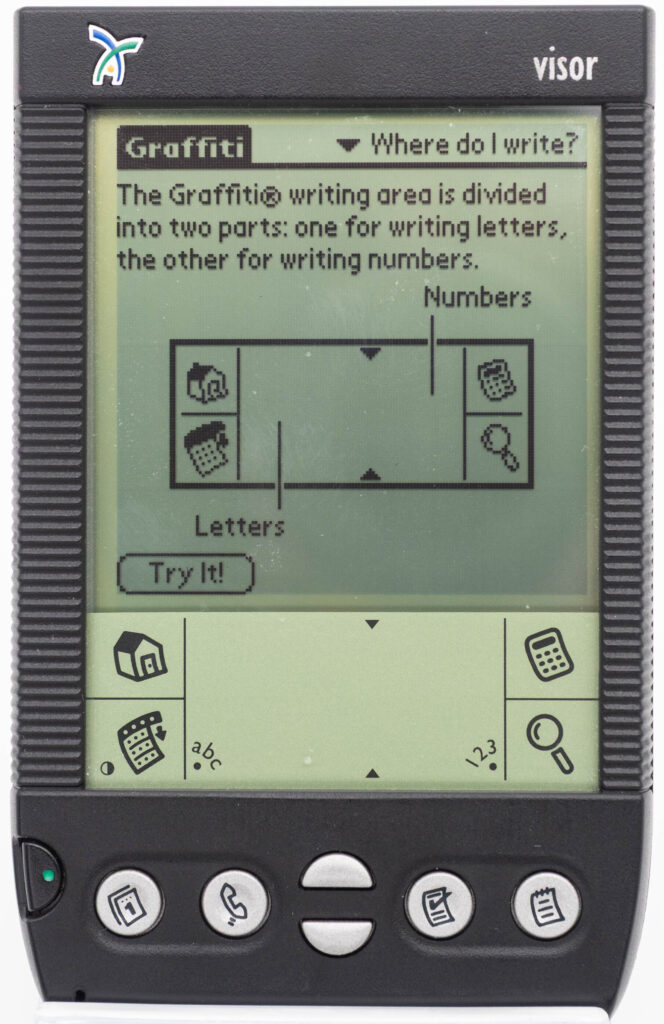
- Pen (Graffiti)
Sales pitch from when it was new
The Handspring Visor is the first expandable handheld computer. It comes with 2MB of RAM, so you have more than enough to store all your data. With your Visor handheld, you will no longer have trouble getting to meetings and appointments on time, remembering people names and personal details, or keeping track of all the items on your to do list. The Visor handheld can help you improve your track record in all these areas, both at work and at home.
Overview
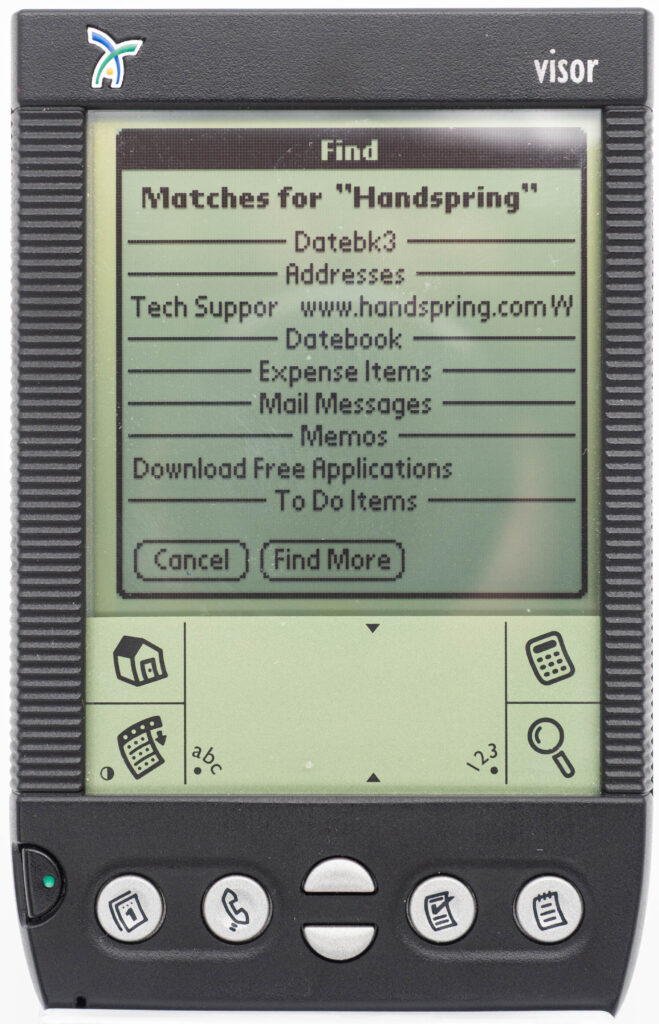
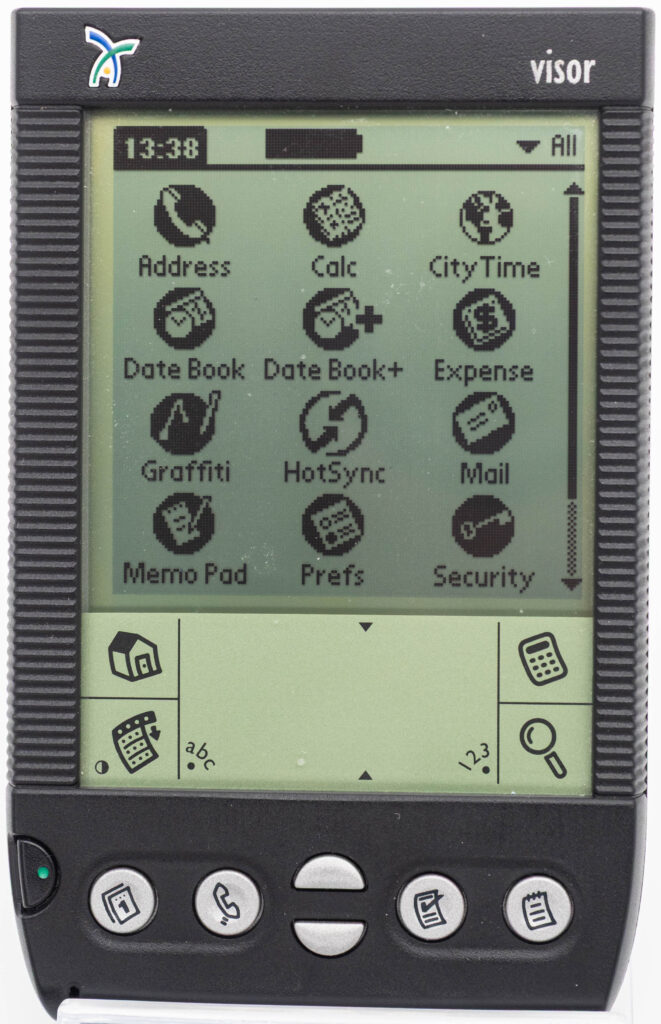
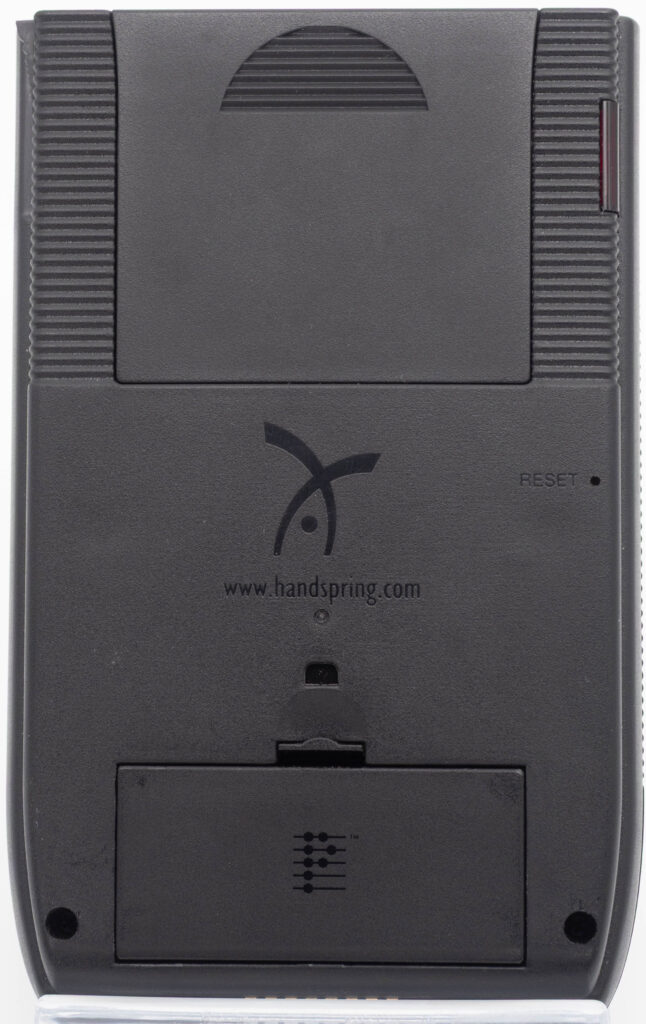
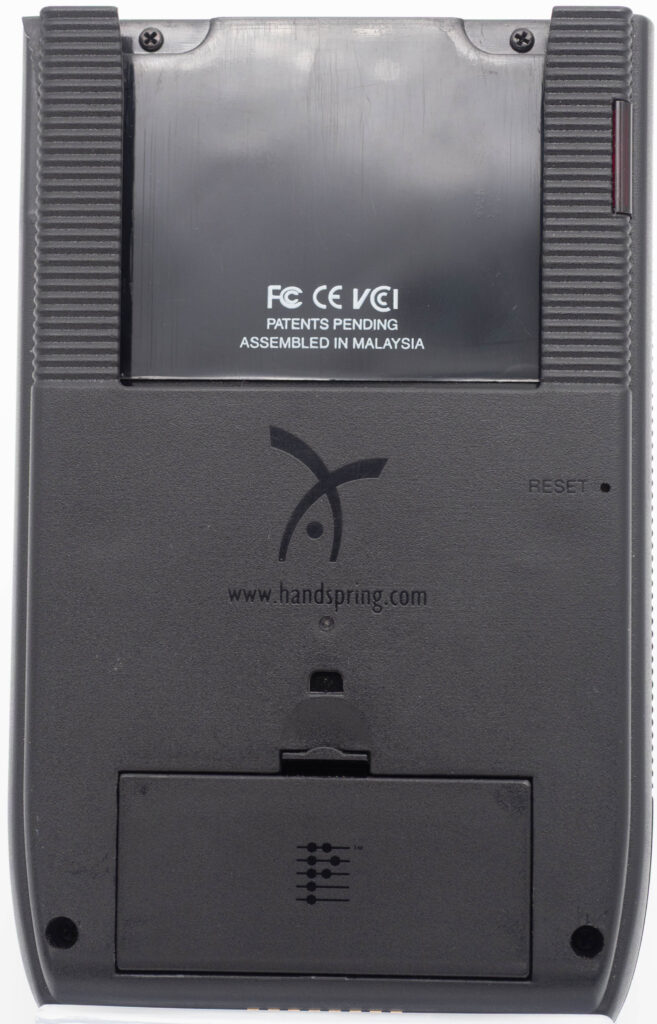
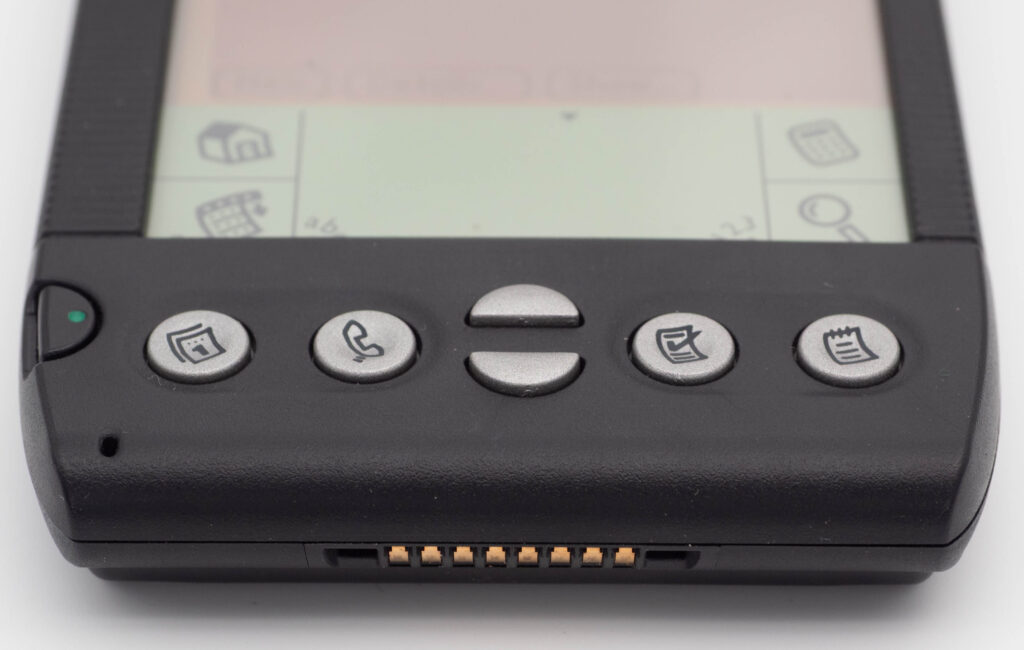
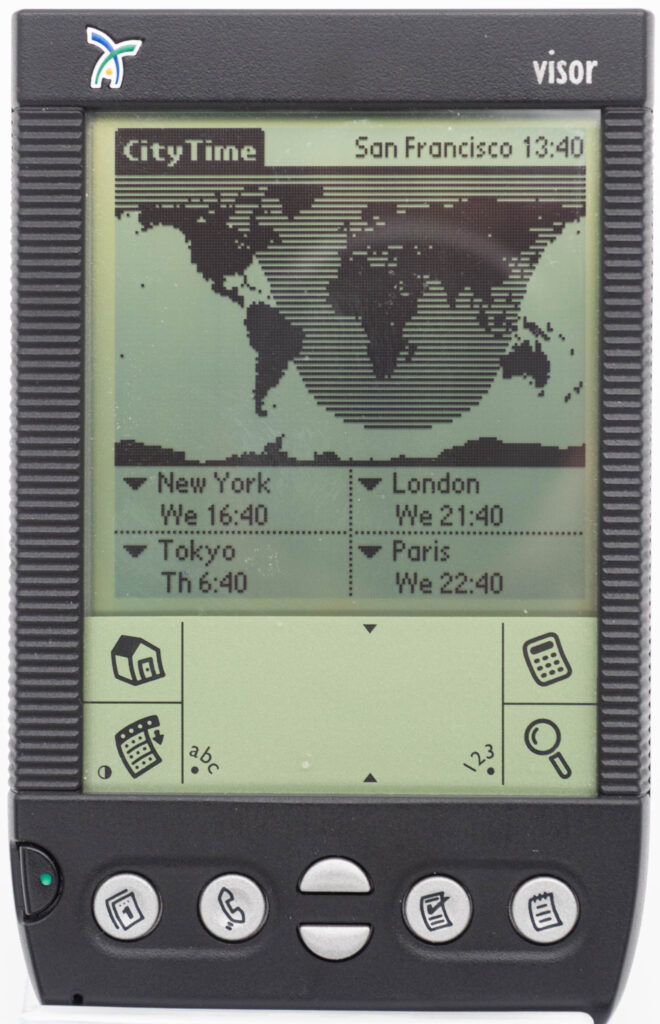
Handspring, an offspring (!) from Palm/USRobotics/3Com in 1999, basically took the Palmpilot design and made some small changes to it. The biggest change was the introduction of an expansion-port where you could put “Springboards”, proprietary expansion modules. You can see it in one of the pictures above. It also featured some enhancements to PalmOS, including a better addressbook and “City times”. The 2MB “Solo” model featured on this page was later followed by the 8MB Visor Deluxe and slightly faster Platinum, the Prism featuring a color display, the slim Edge, the lower-priced Neo and finally the 16MB Visor Pro that unlike the previous models had a built-in rechargeable battery. Visor Pro was the last “pure” PDA from Handspring. It was followed by the Treo line of more communications-centric organisers. In 2003 Handspring “re-merged” with Palm to help further develop the Treo line combined phones and PDAs. Although the connector on the bottom edge of the PDA seem to match the connector on the sync-cradles from Palm, you still cannot use a Palm cradle to sync this PDA, because the shape of the underside of the Visor is different than on the Palm Pilot so it will not fit physically.
To understand where Handspring came from, see this article about the Palm family of PDAs.
Software
The Handspring Visor featured a slightly enhanced version of PalmOS. The enhancements consisted of an enhanced Datebook, a City Time application and an advanced Calculator. Of course, as it was based on PalmOS, literally thousands of applications were available from the Internet as downloadable files. Considering the limited amount of memory available, it was amazing just how much you could actually perform with one of these.
Addon hardware
Several add-on hardware modules were available at the time, see the section about Springboard modules below. There were also addon full-sized keyboards like the GoType keyboard and other hardware items.
Springboard modules
The following text is borrowed from Whim internet magazine, thanks!
The most distinguishing attribute of the Visor is the expansion slot on the back. This expansion slot, much like the slot
on a Nintendo GameBoy, has all kind of little goodies that can be inserted into it. MP3 players, modems, beepers, back
memory modules and GPS satellite locators are among the host of add-ons with which Visor is able to work. All the
expansion devices are hot swappable, meaning you can put it in and pop it out without having to turn off the device,
and all are designed to work seamlessly with the Palm operating system without having to install additional drivers.
Handspring was the first “non-Palm” maker of PDAs that ran the Palm Operating System. Perhaps not so surprising considering that Handspring was founded by the original founders of Palm computing. However, Handspring also brought a new thing to this category of PDAs in the form of expansion modules, and this made this model particularly interesting.