
Your mobile companion
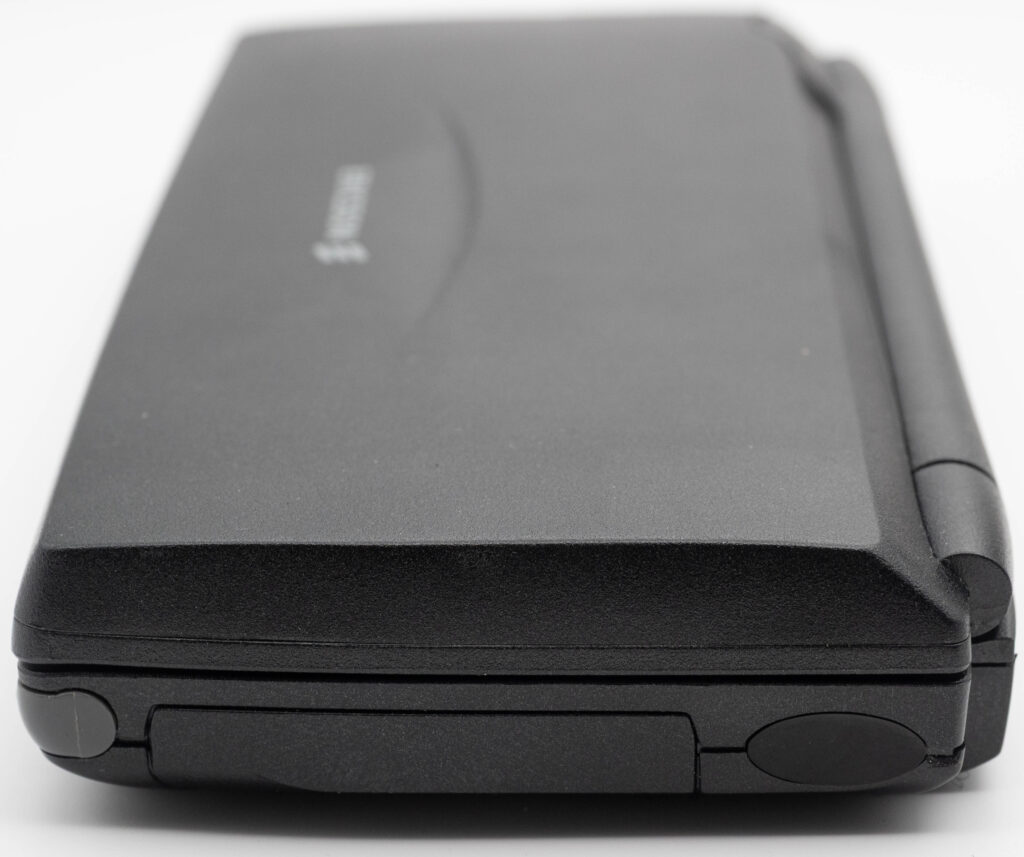
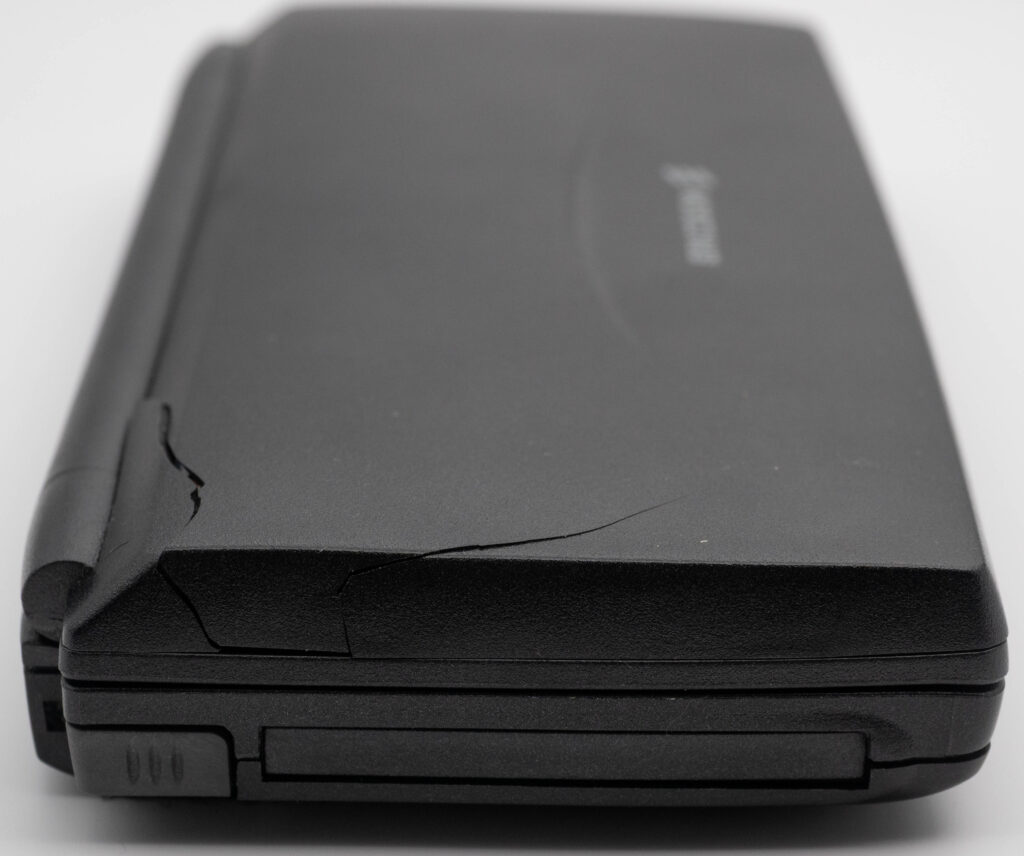
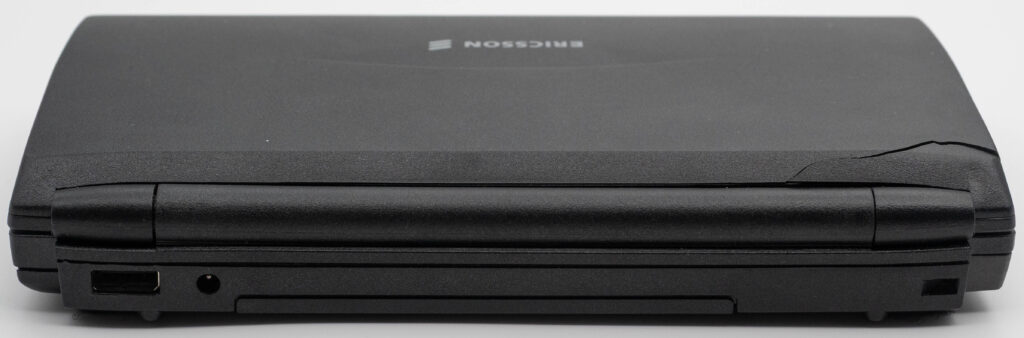
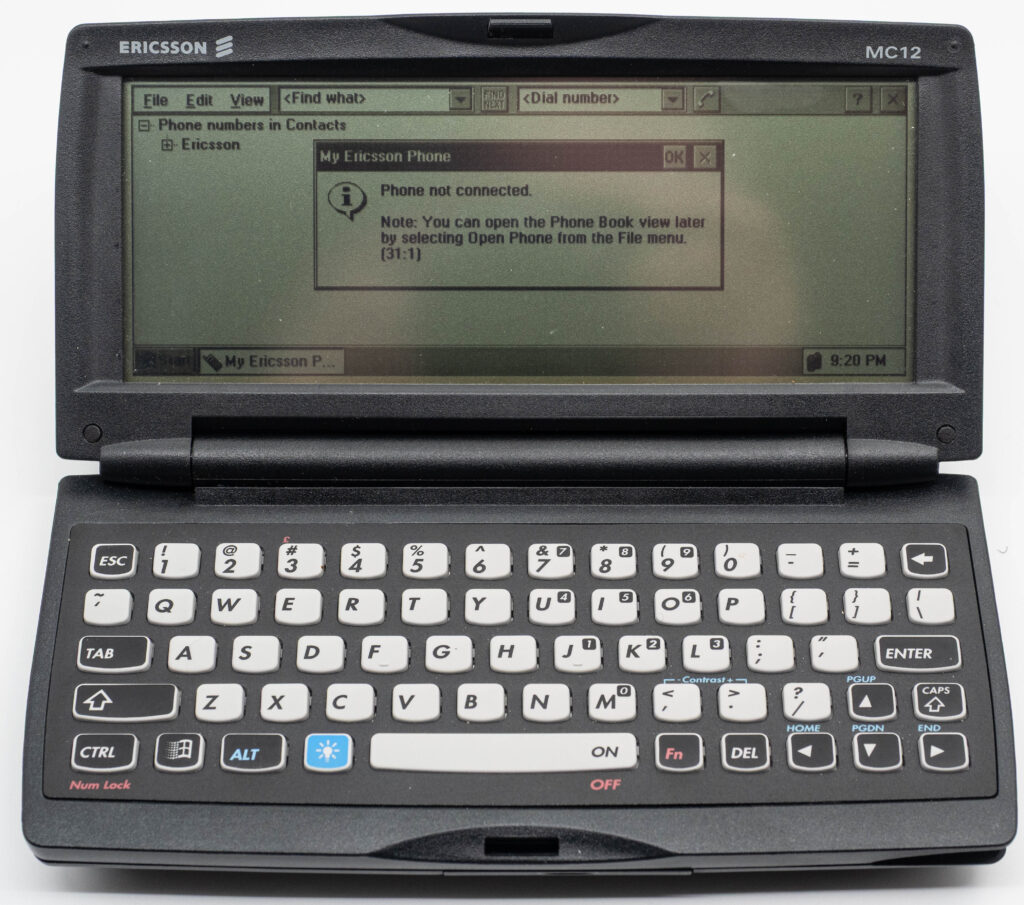
Quick facts
- CPU:
- Hitachi SH-3, 44 MHz
- RAM (KB):
- 4096
- Storage (MB):
- PC Card Type II slot, CompactFlash slot
- Display:
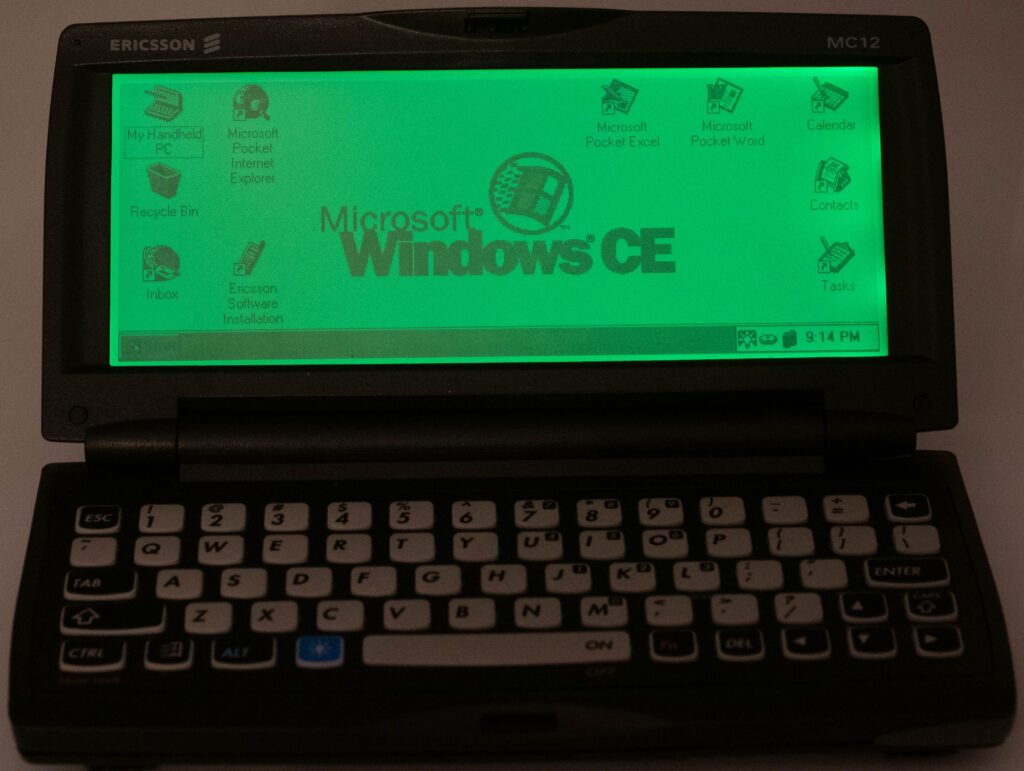
- 640x240 pixels, 4 levels of grey, touch sensitive, green backlight
- Operating system:
- Windows CE 1.0
- Year introduced:
- 1997
- Power source:
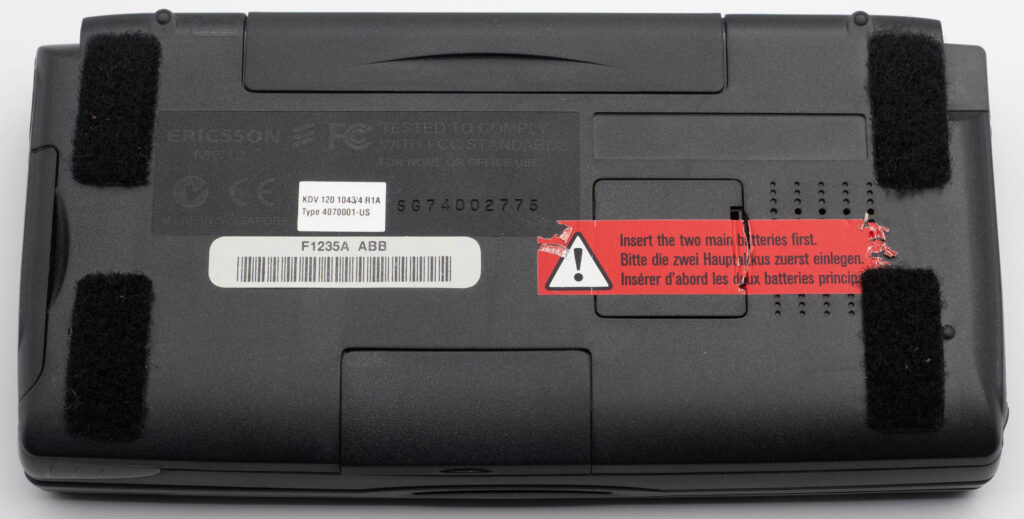
- 2 x AA Alcaline or NiCd rechargeable
- Connectivity:
- Serial (propr conn), IrDA 1.0, Softmodem, PC-Card modem, CF-slot
- Dimensions (mm):
- 94x180x29
- Weight (g):
- 442
- Built-in apps:
- E-mail, Web-browser, "My Ericsson Phone", Calendar, Contats, Tasks, Pocket Word, Pocket Excel
- Input method:
- Keyboard and Pen
Sales pitch from when it was new
TBD
Information
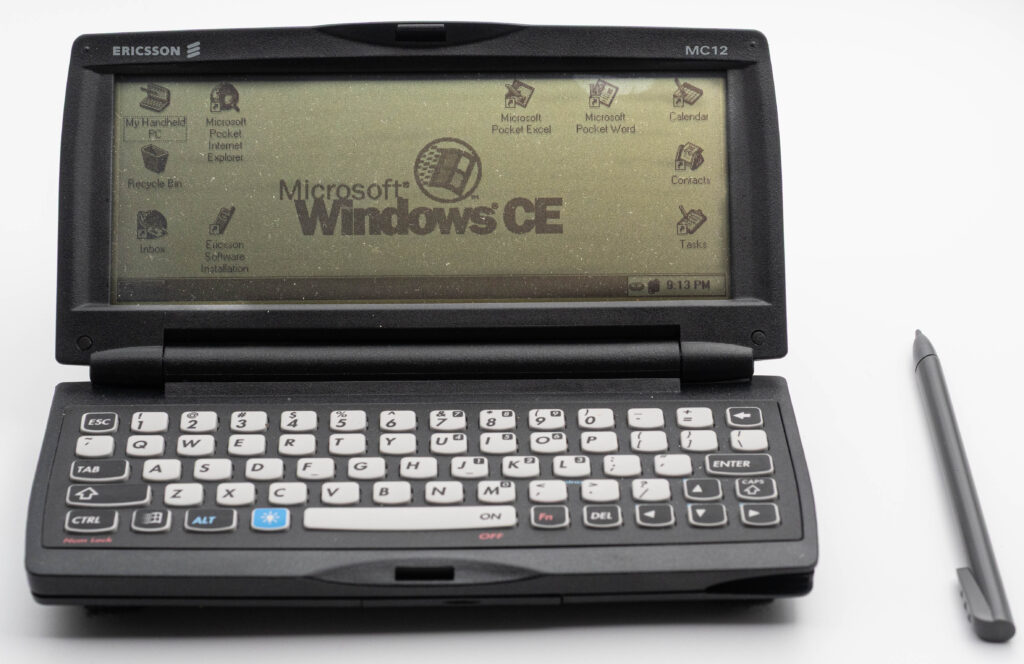
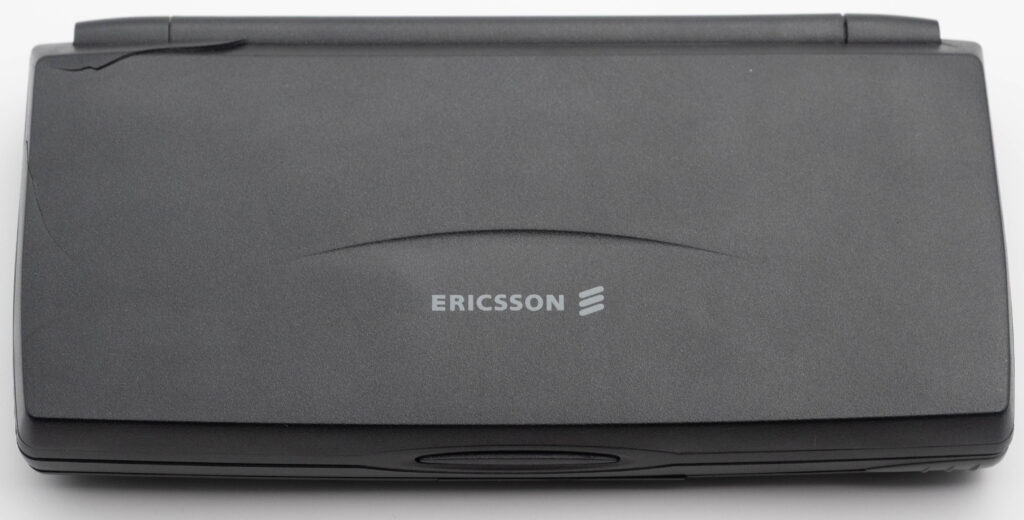
Ericsson MC12 was Ericsson’s first foray into the PDA market. The MC12 was basically a re-badged version of HP 320LX but had some
unique software that allowed easy communication between the MC12 and Ericsson’s phones of that time – in particular the SH888.
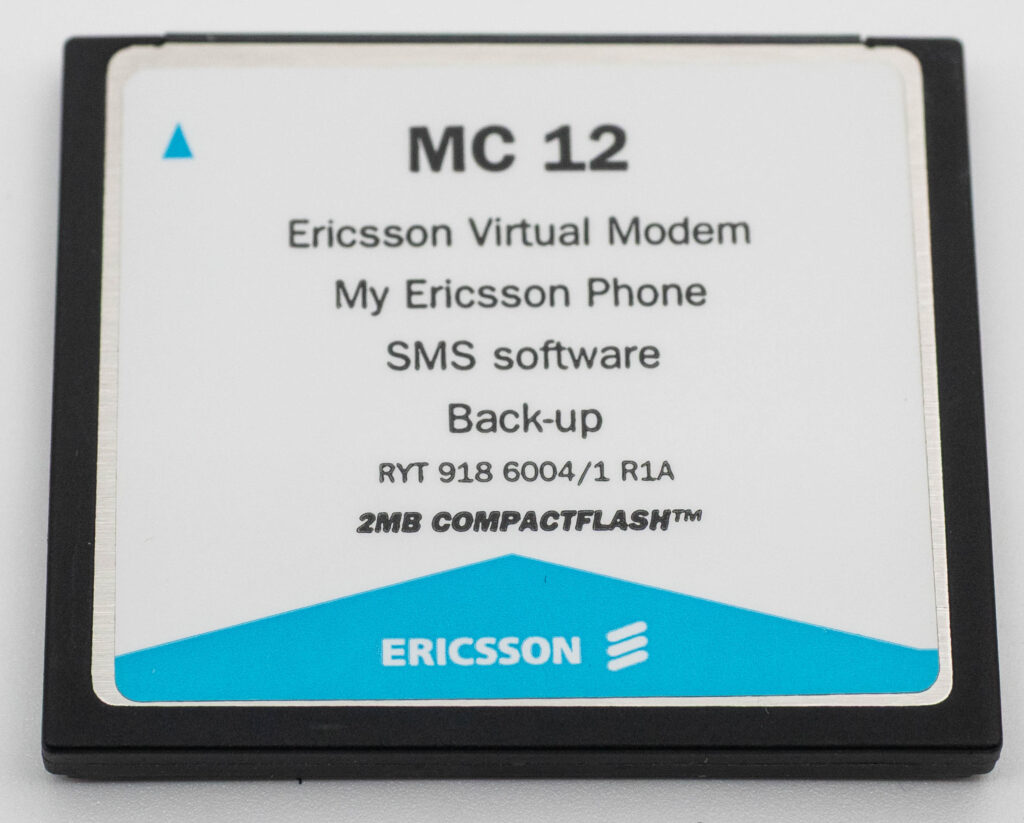
The communications software “My Ericsson Phone” and a virtual “softmodem” shipped on a separate flash memory card, allowed the
user to send and receive SMS:es and use the phone as a modem to connect to the Internet.
The MC12 used Microsoft’s first operating system for PDA’s – Windows CE 1.0. You would use the pen to select and click on things
on the screen, but use the keyboard for entering data, as Windows CE 1.0 lacked handwriting recognition.
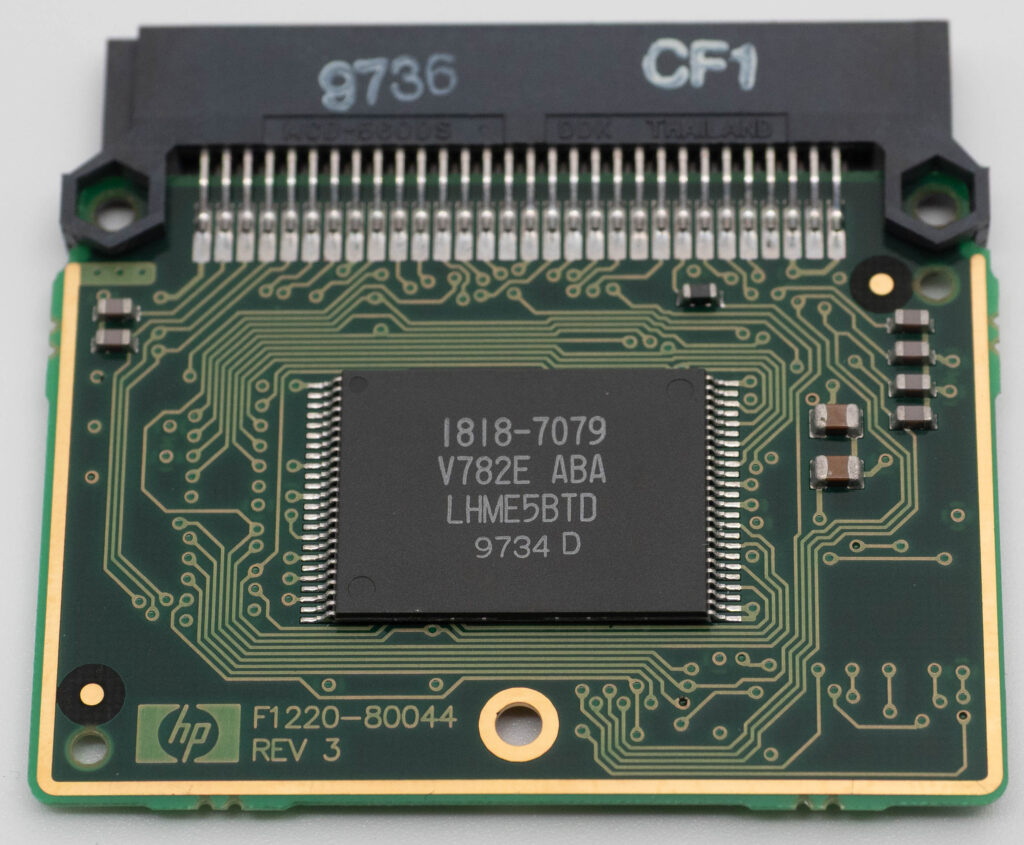
Ericsson later released an upgrade to Windows CE 2.0 for this unit. The upgrade required you to actually replace the physical ROM
circuits with new ones. The last picture in the gallery above shows the ROM circuit-board. (See links below for instructions on how to replace it).
Windows CE 1.0 offered the usual PIM applications – Contacts, Calendar, Tasks (Todo) and also “pocket versions” of Microsoft Word and
Excel. As it turned out, these “pocket versions” were very limited compared to their PC counterparts and if you used the
synchronisation feature to download a Word document onto the PDA, edit it and then synchronise it back, you would loose all the
formatting in the original document (only the limited formatting of Pocket Word was retained), in reality making it useless for anything
but very short and simple documents.
The e-mail software (called “Inbox”) was quite useful, even though it only supported the POP protocol. You could opt to only
download the first part of the e-mail messages (say 2k), but what happened in reality was that the entire message was downloaded, and only then
cropped to the specified maximum size. Needless to say, this made e-mailing over the 9.6 Kb/s speed offered by a GSM connection very slow at times.
Ericsson MC12 was later followed by the Ericsson MC16, another re-badged unit from HP (the 360LX) and then Ericsson MC218, a re-badged Psion 5MX before Ericsson gave up on the “pure” PDA market. Before creating the jointly owned company with Sony – SonyEricsson – Ericsson
released a combined phone and PDA unit called the Ericsson R380.
As a long-time employee of Ericsson, I had the opportunity to follow closely what happened in the mobile phone industry when companies were trying to capitalize on new trends such as PDAs. Ericsson took a cautious approach not trying to design a unit from ground up, but rather buy something from a recognized maker of PDAs, make a few additions and label it as their own. The success was very limited. Customers did not see the value added by Ericsson as significant enough to warrant the higher price. Moreover, Ericsson lacked sales channels for consumer electronics.
Personal notes
The MC12 was probably the second PDA I used, after the Psion 3a. Being spoiled with the speed and stability of the Psion, I remember
that I thought that Windows CE was horrible in comparison. It was slow and very buggy. While I had to reboot the Psion only once in
a one year period, I usually had to reboot the MC12 at least once a day. Also application launch, input etc was much slower on the
MC12 than on the Psion. Because the CPU on the MC12 was actually much faster than the one on the Psion, I could only draw the
conclusion that the fault was the operating system from Microsoft. The screen, although perfectly legible, was not as high contrast as
the Psion, probably because it was a touch-sensitive screen as opposed to the non touch-sensitive screen on the Psion.
The MC12 was quite bulky compared to the Psion as well. When used in its supplied leather case, it resembled one of the larger
Filofaxes on the market (quite intentionally, I suppose).
Links
Installing the HP 320LX & Ericsson MC12 Windows CE 2.0 ROM Upgrade